

Geno’s Ankle Is Uncertain. Aaron Glenn Says the Jets’ QB Debate Isn’t.
GOATIFYA coach can make a quarterback declaration in one sentence. An ankle cannot be talked into cooperating. That is the awkward split confronting the New York Jets after Geno Smith left Sunday's 31–12 defeat to the Buffalo Bills and rookie Cade Klubnik finished the game: Aaron Glenn says his starter is still his starter, while the medical staff has not yet answered whether that starter will be available for the next kickoff.
On Monday, Smith was undergoing imaging on his injured left ankle. The Jets also awaited additional information on wide receiver Omar Cooper Jr.'s ankle and guard Dylan Parham's knee. None of those pending tests should be confused with a confirmed diagnosis, a recovery timetable or a decision about who will start in Los Angeles next Sunday. Yet the uncertainty lands at a moment when New York is 2–8, riding a five-game losing streak and searching for its first touchdown in more than two full games.
That combination makes this bigger than a routine injury update. Klubnik's first NFL action offered a glimpse of why the Jets drafted him, but it did not magically solve their offensive problems. Glenn now has to protect the credibility of his veteran starter, prepare a rookie who may be needed immediately and decide how much a struggling team's remaining schedule should be devoted to evaluating the future. The key question is not whether the Jets should manufacture a quarterback controversy. It is whether their next decisions can reveal anything useful without making an injury the excuse for an organizational reset.
Glenn Drew a Line Between a Medical Decision and a Quarterback Debate
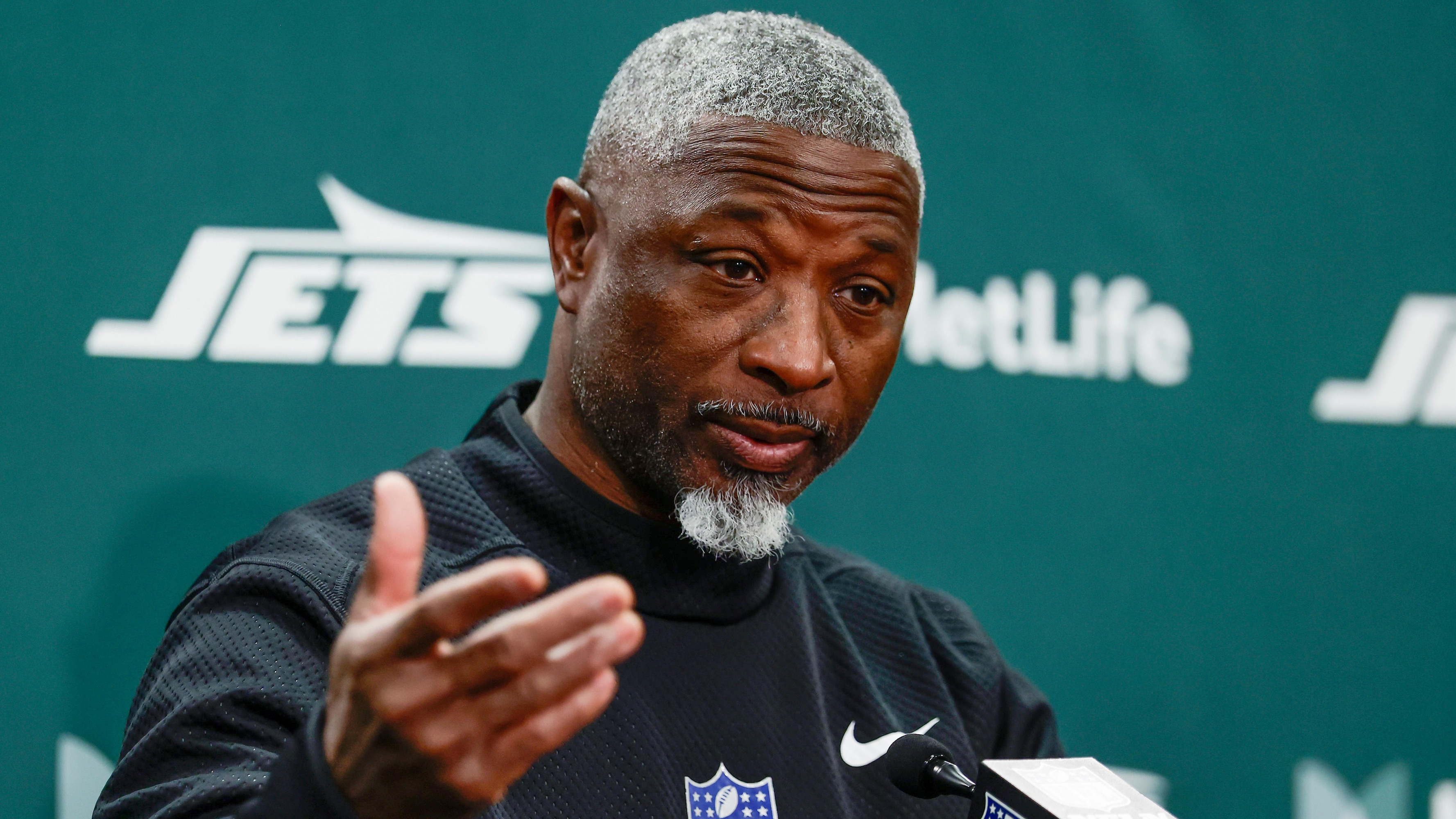
The important word in Glenn's Monday answer was not the rookie's name. It was healthy. Smith remains the Jets' starter if he can play, the coach made clear, and Klubnik is the contingency if the ankle prevents him from taking the field. That distinction matters because it leaves the medical decision with the people qualified to make it. It also means New York is not formally using the Buffalo loss as a pretext to bench the veteran. There was no announced timetable for Smith, only imaging and the expectation of updates later in the week.
Glenn was pressed on a familiar late-season argument: when a team is effectively out of contention, why not give a young passer meaningful snaps, whatever the veteran's condition? His response defended the quarterback who began the season as the starter. He said he would not treat Smith's year as disposable simply because the Jets' record is ugly. For a first-time head coach trying to maintain accountability across a locker room, that position has a practical function. Players are more likely to accept competition if the rules for earning and losing a job appear consistent rather than dictated by fan impatience.
Smith's individual production explains some of Glenn's resistance. Through ten games he has thrown for 2,226 yards, 12 touchdowns and only three interceptions while completing 67.1 percent of his passes. Those numbers do not turn a 2–8 club into a success story. They do complicate the idea that a single position change would cure everything. A passer can move the ball between the 20s, protect it reasonably well and still find himself leading an offense incapable of finishing possessions. In that case, a quarterback swap may be a diagnosis made before the symptoms have been separated.
GOATIFY
GOATIFY NFL
Aaron Glenn's Jets are sorting out an uncertain QB week. Explore GOATIFY football designs for NFL fans following the debate.


That does not mean Glenn's public support should settle every future decision. Coaches can stand by a starter and still demand more from an offense. Smith, who arrived from Las Vegas during the offseason, is not entitled to immunity from evaluation, especially if New York keeps losing. But there is a difference between asking him to play better and announcing a permanent change before clinicians have explained the ankle injury. Glenn chose the first message on Monday. The rest of the week will show whether the circumstances permit him to stick to it.
The side effects could reach beyond quarterback. Cooper and Parham were also due for tests after the Bills game, adding uncertainty at receiver and on the offensive line. A rookie already learning the speed of the league would have a harder assignment if his supporting cast is changing at the same time. New York therefore needs a medical plan, a protection plan and an offensive plan before anyone can sensibly claim that one quarterback gives the team an uncomplicated answer.
Klubnik's Debut Offered Mobility, Not a Ready-Made Cure
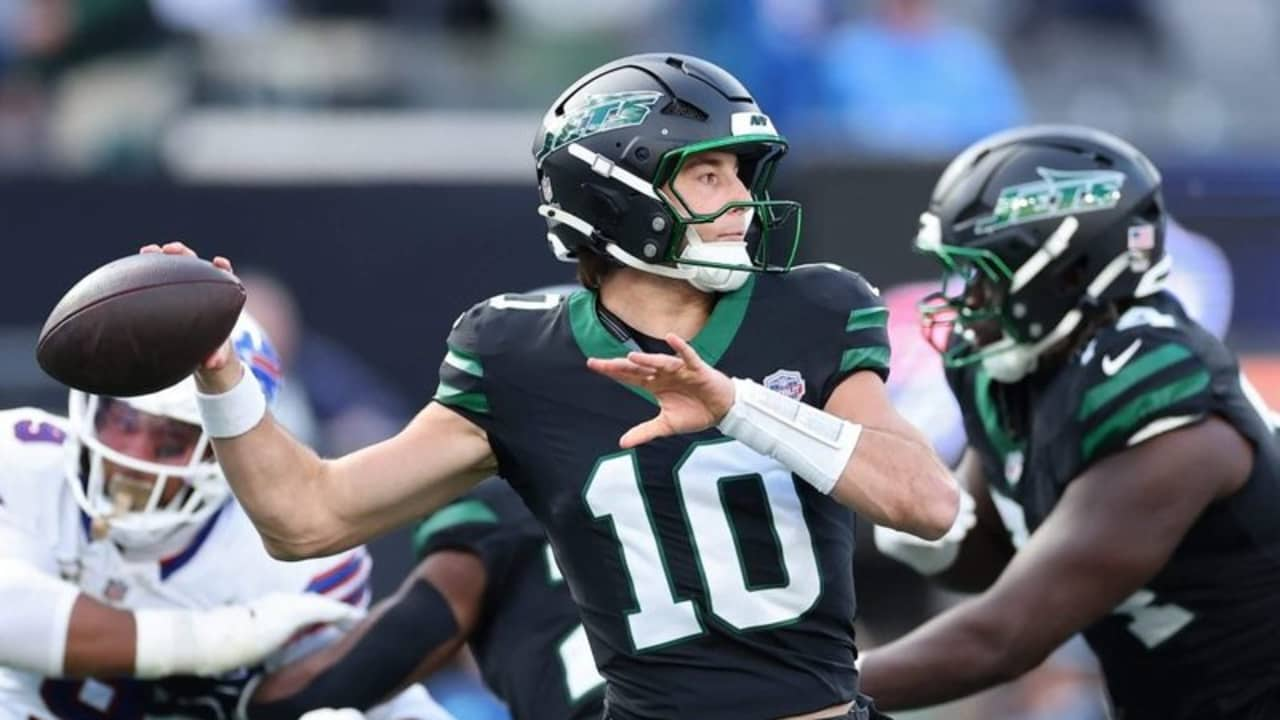
Klubnik's first professional outing is interesting precisely because it was not a clean audition. The fourth-round rookie from Clemson entered after Smith was evaluated for a possible concussion late in the first half, watched Smith return after clearance, and then took over again when the veteran hurt his ankle in the third quarter. A relief quarterback has almost none of the normal preparation advantages. He inherits the scoreboard, the opponent's pressure plan and an offense that may have been built around a different player's preferred reads.
The raw line offers both encouragement and warning. Klubnik completed 11 of 20 passes for 137 yards, threw one interception, carried three times for 26 yards and took three sacks. His mobility was immediately noticeable. So were the limitations of a young passer facing live NFL coverage before getting a full week of first-team repetitions. It would be an overreaction to call him a solved answer after those plays, just as it would be absurd to declare him unready forever because the debut included a turnover and sacks.
What stood out was his willingness to operate rather than simply survive. On his first extended appearance he helped steer a scoring drive, and Glenn later praised his poise. That quality is valuable, but it is not the same as consistent down-to-down efficiency. One calm sequence tells a coach that a player can handle a sudden entrance. Several games against defenses that have studied his tendencies would tell the organization whether he can identify disguised pressure, move safeties with his eyes and sustain third-down conversions when opponents no longer treat him as an unknown.
Mobility also changes the playbook's geometry. Klubnik can escape a collapsing pocket or threaten a defense with designed movement, potentially adding options when traditional dropbacks stall. The Jets could lean on quick throws, play-action and simplified reads if he starts against the Chargers. But those are accommodations, not guarantees. Scrambling can become a costly reflex if it abandons an open receiver, and the same offensive-line problems that bothered Smith do not vanish when a quarterback is younger and faster.
GOATIFY
GOATIFY NFL
The rookie's debut has everyone talking about football's next wave. Browse NFL-themed GOATIFY gear while the Jets prepare for Los Angeles.
New York faces a difficult evaluation problem. If Smith is ruled out, Klubnik deserves the preparation and patience appropriate to an injury replacement. A rushed declaration that the future has arrived would place unnecessary weight on one game. If Smith is cleared, coaches can still build developmental reps for Klubnik in practice and study the Buffalo tape for tendencies worth testing later. Whatever happens next Sunday, the rookie should be judged by decisions and repeatable skills rather than whether his first appearance gave frustrated fans a brief jolt of novelty.
Two Quarterbacks, Four Field Goals, the Same Red-Zone Problem
The Jets did not lose to Buffalo because their second quarterback arrived with the wrong résumé. They lost while settling for four field goals and no touchdowns, extending a scoring drought that has now lasted nine quarters. The first problem to fix is not the name on the quarterback's jersey. It is why possessions that show promise repeatedly end with a kicker rather than six points. That is a coordinated offensive failure involving play design, down-and-distance management, protection, execution and the decisions made under pressure.
One sequence near halftime captured the frustration. On third-and-4 from the Buffalo nine-yard line, Smith rolled right and tried to improvise a jump pass toward the end zone. The throw fell incomplete as defenders closed, and he was hit while airborne. Glenn visibly protested the absence of a flag. Smith was checked for a possible concussion, and the Jets chose a field goal rather than ask Klubnik to take the next snap on fourth down. The argument about the contact is real, but so is the result: another promising drive produced three points.
Later, Klubnik helped move the offense far enough for another field goal. That did not mean he failed the situation individually; it meant the same structural limitation persisted with a different player. The Jets cannot reasonably expect the quarterback position alone to solve every red-zone possession when the available calls, protection schemes and timing have so little margin for error. At the goal line, the defense has less ground to protect, windows close quicker and a team that depends on improvised plays can become predictable even when it moves the ball elsewhere.
There is enough offensive talent to make the stagnation uncomfortable. Breece Hall can create yards without a perfectly blocked lane, and Garrett Wilson remains capable of winning difficult matchups. The issue is converting individual wins into reliable scoring sequences. Can a coordinator produce a straightforward first-down throw rather than reaching third down with no room for error? Can the line keep interior pressure away long enough for an option route to develop? Can the quarterback take an easy completion instead of attempting the rescue play that looks spectacular only when it succeeds?
The questions are sharper because injuries may disrupt both the passing game and blocking unit. Cooper and Parham were awaiting imaging, and no responsible game plan can assume they will both be fully available before test results emerge. Coaches need contingencies, including packages that do not require the perfect protection snap. Whether Smith or Klubnik starts in Los Angeles, a useful offensive reset would be measured by fewer wasted short fields, better third-down management and touchdowns. Changing the passer while preserving the same red-zone habits risks changing the headline without changing the outcome.
The Chargers Game Is a Short-Term Test With a Longer-Term Shadow

The next step should be straightforward in principle. Smith's medical evaluation determines whether he is a viable option for the trip to Los Angeles; the staff then prepares the starter it actually expects to play. The complication is that a team with two wins has more than one clock running. There is Sunday's competitive obligation, the development of a rookie who could matter next year, and the longer question of how the franchise builds an offense that can score consistently after a season of false starts.
GOATIFY
GOATIFY NFL
Whether it's another field goal or a long-awaited touchdown, NFL fans have strong opinions. See GOATIFY football designs for game day.
If Smith is cleared and physically capable of executing the offense, Glenn's public declaration suggests he will start. That is not a promise of health, a guarantee of performance or proof that the broader quarterback plan is settled. Smith would still need to manage pressure, turn field position into points and protect himself from unnecessary hits. His passing efficiency this year provides an argument for stability, while the red-zone drought supplies a reason for the coaching staff to scrutinize the system around him. Both assessments can be true at once.
If the ankle rules Smith out, Klubnik would have a different assignment from his Buffalo relief stint. An entire week of first-team work can help a young quarterback rehearse pressure answers, cadence, checks and situational football with the teammates he will use on Sunday. It also lets the opponent prepare specifically for his mobility and his passing tendencies. A full start therefore reveals more than a late-game cameo, but it is hardly a controlled laboratory. The Chargers will try to win, not provide a fair developmental assessment of New York's fourth-round pick.
The temptation for the Jets will be to treat every remaining game as a referendum on the 2027 depth chart. That can distort decisions in either direction. A strong Klubnik drive should not erase the importance of processing, accuracy and pocket habits across many situations. A mistake should not outweigh everything coaches have seen in practice. And an effective Smith performance should not end the organization's search for the next long-term answer. Front offices need accumulated evidence, not a weekly pendulum driven by the most recent interception or highlight.
There is also a credibility cost to getting the messaging wrong. Glenn can ask veterans to compete for jobs while investing in Klubnik's development, but he should avoid claiming certainty the medical staff has not supplied. He can acknowledge the season's disappointment without pretending the rookie alone can reverse it. The most revealing thing about the Chargers game may be less the opening lineup than how the Jets adapt when early drives stall: do they protect the quarterback, simplify decisions when necessary and keep attacking the end zone, or repeat the conditions that made Buffalo so frustrating?
New York's immediate quarterback decision is still waiting on an ankle assessment. Until a medical update arrives, a confident prediction that Smith will play—or that Klubnik has replaced him—is guesswork. Glenn has supplied the hierarchy: Smith starts when healthy, and Klubnik stands ready if he is not. That position is easier to state than to live with while the losses mount and the fan base understandably wants to learn something about next season.
The Jets can still make the next stretch meaningful without manufacturing a feud between the two passers. They can give Klubnik useful work, hold Smith to a high performance standard, find out whether injuries demand personnel changes and build a red-zone plan that produces more than field goals. The franchise should be able to learn from an uncertain season without turning one injured ankle into a complete verdict on either quarterback. The Bills loss made the questions urgent. Monday's update did not make the answers simple.
GOATIFY
GOATIFY NFL
Shop GOATIFY NFL and American football shirts, hoodies, stickers and fan gifts.


















