

Russell Says 2026 Won't Break Him — But Antonelli's Nine Wins Sting
GOATIFYGeorge Russell arrived in Mexico City with a remarkable contradiction hanging over his season. He has won three Formula 1 Grands Prix in 2026, a tally many drivers would regard as a career highlight. Yet inside the Mercedes garage, those victories have been overshadowed by the nine wins of his younger teammate, Kimi Antonelli, who is now one modest Sunday result away from becoming the youngest world champion in the sport's history.
Russell is not pretending that the comparison feels comfortable. At Thursday's October 29 press conference, the 28-year-old acknowledged the emotional toll of a campaign in which his speed has appeared and disappeared without a dependable pattern. His message was equally clear: one difficult year will not decide the rest of his career. The question is whether Mercedes can turn that conviction into a car he can trust.
Russell Admits the Pain — But Refuses to Let 2026 Define Him
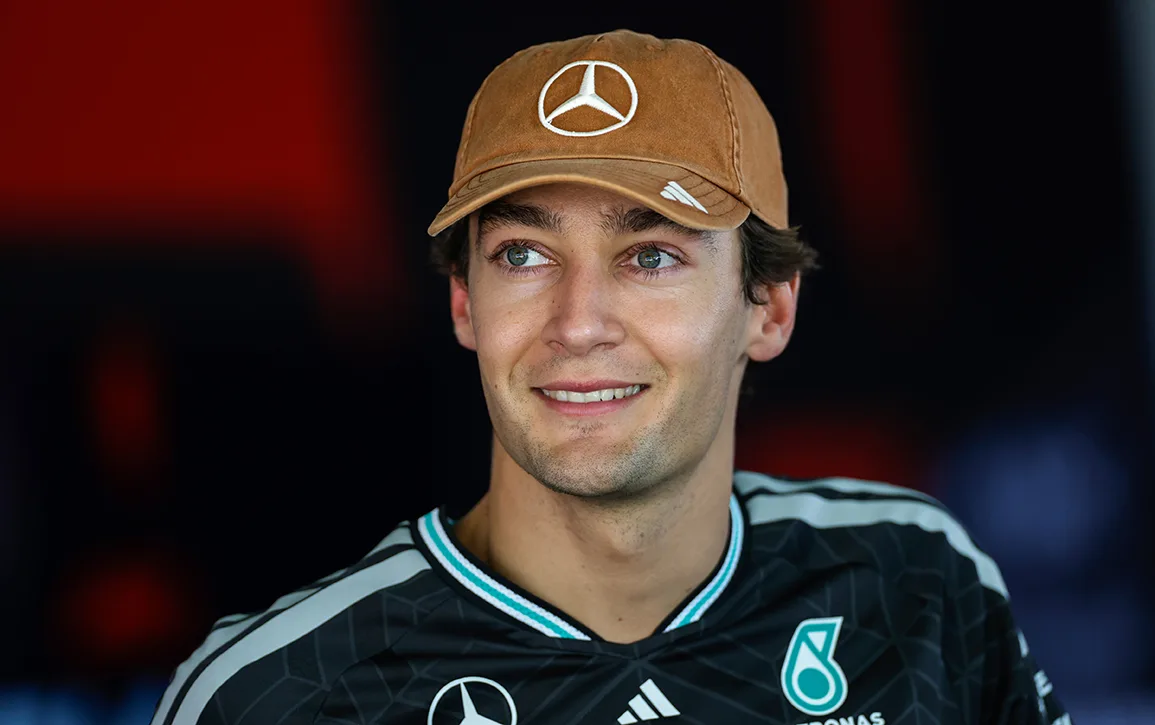
There was no attempt to disguise the disappointment. Russell had entered the new-regulation season with the credentials to lead Mercedes into a championship fight: experience, a proven qualifying record, and years of development work with the team. Instead, he has watched Antonelli convert the same broad technical platform into a runaway points lead. That contrast is uncomfortable because the garage is the most direct laboratory in motorsport. The other car supplies an unavoidable reference every time both drivers leave the pits.
Russell's Thursday comments were striking precisely because he acknowledged the scale of the personal challenge without conceding that his best opportunity had passed. He spoke about learning more about himself than he would have chosen, the emotional extremes of professional competition, and his determination to emerge stronger. At 28, he also pointed to the longevity of Lewis Hamilton and Fernando Alonso. Their continued competitiveness in their forties is not a guarantee that Russell will win a title, but it undermines the idea that this season is his last realistic chance.
The wins matter. Russell opened 2026 with victory in Australia, added a commanding performance in Austria and later won in Azerbaijan. Those are not accidental results delivered by a driver who has forgotten how to race. They are evidence that the underlying ability remains. The problem is the frequency with which the car and driver combination can access that level. Antonelli has produced it far more consistently, and the standings reward consistency rather than isolated peaks.
One of Russell's most revealing observations concerned the rhythm of his own recoveries. He has often responded to a terrible weekend with an excellent one, only to encounter another setback immediately afterward. That pattern suggests considerable resilience, but it also exposes the difference between being mentally strong and having a repeatable technical solution. A championship challenge cannot depend on a driver's ability to rebound every other Sunday. It requires a baseline that survives changes in track layout, tyre behaviour and temperature.
There is also a distinction between losing to a great teammate and becoming a lesser driver. Antonelli's rise has been exceptional, and Russell has openly credited the Italian for being the stronger performer this year. Respecting that achievement does not require Russell to accept the current pecking order as permanent. His comments sounded less like a defeated driver searching for an excuse than a competitor trying to identify which parts of the disappointment he can control.

Mercedes' W17 Problem Is Bigger Than Russell's Confidence
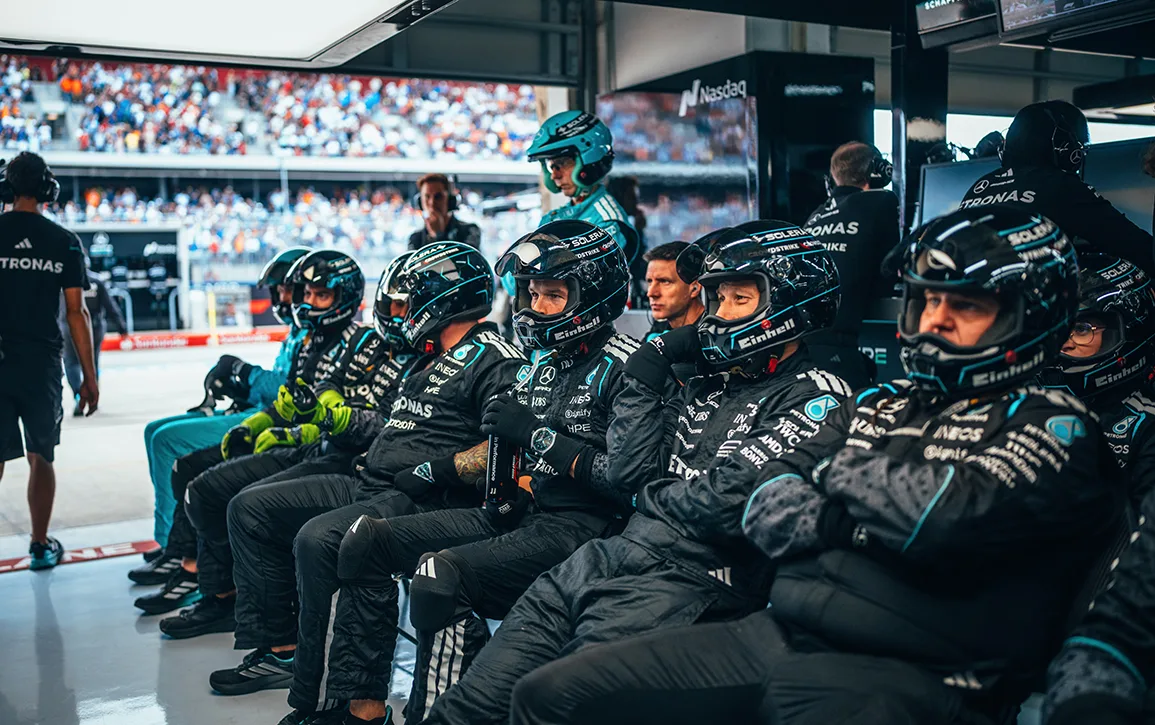
The technical argument is central to understanding why Russell can win a race convincingly and then look ordinary a week later. Formula 1's 2026 power units place a greater emphasis on electrical energy deployment and recovery. A driver must manage not only braking points, corner entries and tyre temperatures, but also how energy is harvested and spent over a lap. Small differences in technique can affect both straight-line performance and the way a car behaves through a sequence of corners.
Russell has indicated that the new energy-management demands, together with higher rear tyre pressures, do not naturally reward his preferred driving style. That does not mean the regulations are unfair to him; every driver must adapt. It does mean that a car's fastest theoretical setup may not be equally accessible to both people driving it. A teammate who can keep the tyres and energy systems in their preferred operating range more naturally will accumulate advantages that are difficult to recover with determination alone.
The situation became more complicated after Mercedes introduced an upgrade package during the autumn run of races. The team found performance, but its effective operating window appeared narrow. Antonelli exploited that window spectacularly in Austin. Russell, meanwhile, struggled to reproduce his teammate's pace, finished eighth and spent much of the race unable to make the progress expected of a front-running Mercedes. A five-second penalty hurt his result, but it did not account for every missing tenth of a second.
Team principal Toto Wolff has publicly resisted the suggestion that the gap proves Russell lacks championship-level talent. His diagnosis has focused on the car's sensitivity and the need to understand why Russell loses so much more performance when conditions fall outside the ideal range. That distinction matters. It is entirely possible for Antonelli to be the better driver across the season and for Mercedes still to have a solvable setup problem on Russell's side of the garage. Both statements can be true.
There is no instant mechanical fix for that combination of problems. Engineers need to correlate simulator work, telemetry, tyre temperatures and driver feedback across circuits that reward very different characteristics. They also need to avoid designing a solution that sacrifices Antonelli's strengths. The most productive question is not whether Russell should imitate his teammate's every input. It is how Mercedes can broaden the car's useful range so that two capable drivers can extract competitive performance through different but valid approaches.
Mexico's altitude adds another layer of complexity. The thin air changes cooling demands and aerodynamic efficiency, while teams still have to optimise the electrical systems and tyre preparation. It is a useful test of whether Mercedes has learned anything from Austin, although Friday's opening practice will be complicated by reserve driver Frederik Vesti taking Russell's car. That makes Russell's later sessions particularly important for building a reliable setup before qualifying.

Antonelli's Nine Wins Have Changed the Mercedes Conversation
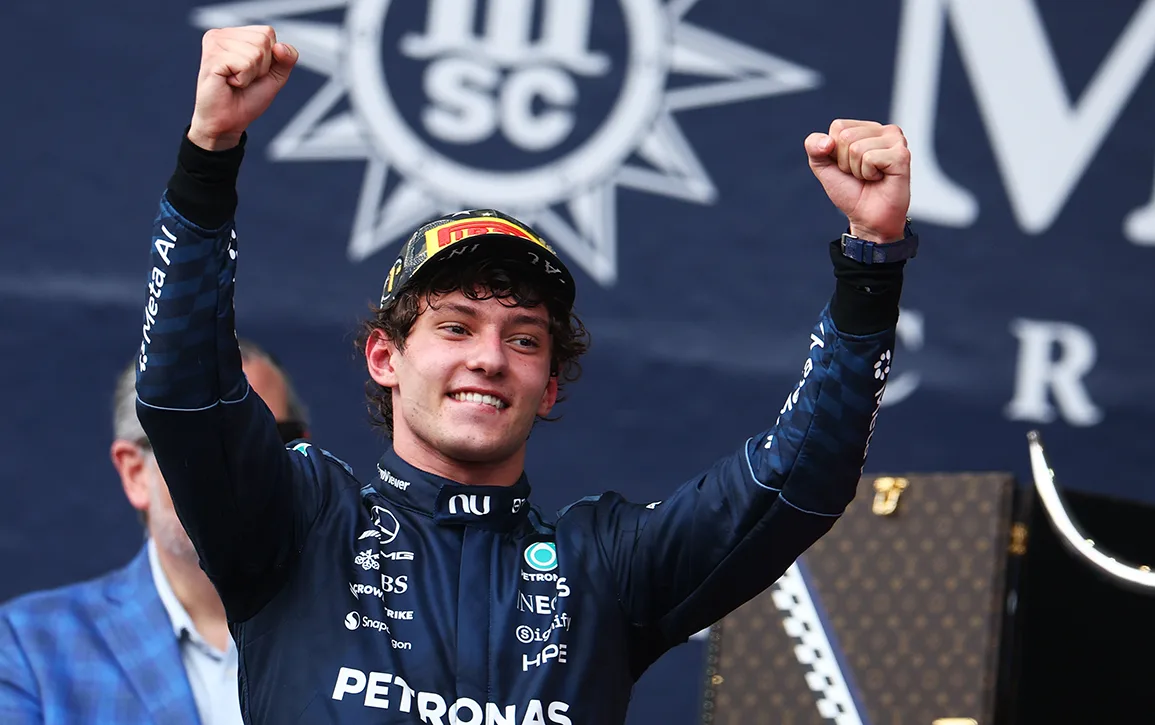
Antonelli's season has moved beyond the normal language of a promising young driver. Nine victories in the first 18 races, including his commanding United States Grand Prix success, have made him the overwhelming championship favourite. With five rounds remaining after Austin, he leads Russell by 123 points and Hamilton by 124. A ninth-place finish in Mexico would secure the title regardless of the result achieved by either rival. The prospect of a 20-year-old champion is extraordinary, but the margin in the standings is even more revealing.
Russell began the campaign with a win and a reasonable expectation that his experience would make him Mercedes' leading championship candidate. Antonelli then took five consecutive victories early in the season and established an advantage that his teammate has never seriously reduced. There have been moments when Russell looked capable of turning the contest around, particularly in Austria and Baku, but they have been exceptions rather than a sustained trend.
It would be easy to turn this into a simple generational story: the young prodigy replaces the established leader, and the older driver is left behind. That is a compelling headline, but it flattens the real complexity. Russell is only 28. Antonelli is performing at an exceptional level, not merely benefiting from Russell's difficulties. Mercedes can celebrate the Italian's breakthrough while still needing to understand why its other driver has become so inconsistent in the same championship-winning machinery.
Russell's willingness to recognise Antonelli's superiority this year is important for the team. Public denial would create an unnecessary rivalry inside a garage that has two ambitious drivers and a constructors' championship to protect. It does not remove the tension. Both drivers want to win, both need engineering attention, and the car's setup compromises may not suit them equally. But a functional relationship gives Mercedes a better chance of learning from the contrast rather than becoming distracted by it.
The numbers also create a useful warning against overreacting to one race. Antonelli's Austin win was outstanding, yet it came after a season of repeated success across different types of circuits. Russell's strong weekends deserve the same context. A single podium or an excellent qualifying lap in Mexico would not suddenly erase the championship gap. What would change the narrative is a run of weekends in which Russell consistently understands the car, executes cleanly and finishes close to his teammate on merit.
Antonelli's possible title celebration will belong to Antonelli. Russell cannot and should not make it about himself. His opportunity is quieter: to demonstrate that a disappointing season has sharpened his understanding of the car, the team and his own preparation. Those lessons may be less visible than a trophy, but they are what he needs if he is to challenge the next champion rather than simply congratulate him.

The Real Test: Beat Hamilton for Second, Then Reset for 2027
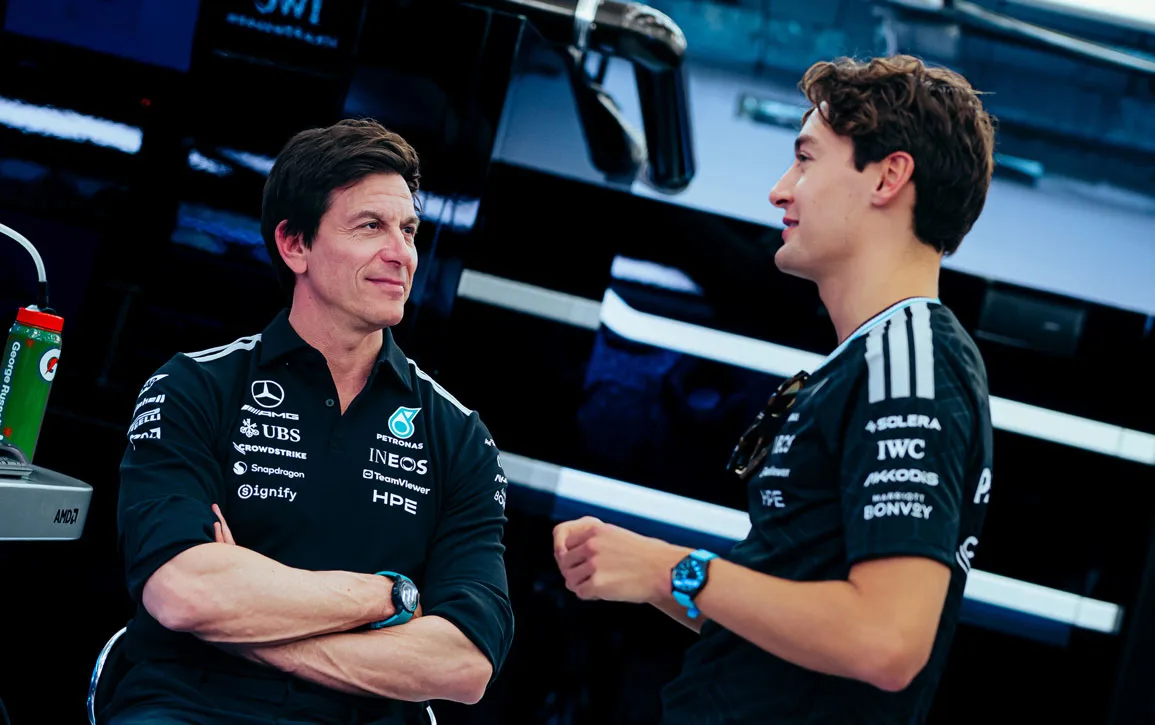
Russell is not racing for a drivers' championship in Mexico so much as defending what remains of a difficult campaign. He sits second on 242 points, just one ahead of Hamilton and six ahead of Verstappen. That makes the final five races a genuine contest even if Antonelli settles the title this weekend. A poor result could turn a disappointing season into a fourth-place finish; a strong run could secure runner-up status and provide a more constructive platform for the winter.
Hamilton has his own reasons to push hard. Ferrari is trying to improve its position in the constructors' standings, and the seven-time champion is searching for performance that can carry into 2027. Verstappen remains a threat whenever Red Bull finds a circuit that suits its car. Russell cannot rely on either rival losing interest simply because the championship crown appears out of reach. Second place is not the prize he expected to fight for, but it is a meaningful target and a measure of whether his late-season response is real.
For Mercedes, the question extends beyond the drivers' standings. The team has benefited enormously from Antonelli's wins, but championship-level organisations want both cars scoring heavily. When one driver can unlock the W17 and the other cannot, points are left available to Ferrari, Red Bull and the rest of the field. Wolff's support for Russell is therefore more than a personal vote of confidence. Solving the inconsistency has a direct competitive value, especially when the team begins planning its next car.
Russell has spoken about the prospect of racing for another 12 to 15 years. That should be read as confidence in his longevity, not a contractual prediction or a promise that he will remain in Formula 1 until his forties. Drivers must continually earn their places. His examples of Hamilton and Alonso show that age alone is not the barrier it once appeared to be. What matters more immediately is whether he can combine the experience he already has with a driving approach that works under the new regulations.
There is a risk in turning every technical issue into an argument that next year's car will automatically fix everything. Mercedes still has to build it, and its rivals will also develop. Antonelli will enter 2027 with more experience and potentially a world title, making the internal benchmark harder rather than easier. Russell's best response is to work through the weaknesses in the current car now, rather than postpone every answer until winter testing.
Mexico provides an early examination of that approach. Friday is for gathering evidence, Saturday is for converting it into a qualifying setup, and Sunday's 71 laps will test whether Russell can maintain pace as fuel loads, tyres and track conditions evolve. He cannot rewrite the first 18 races. He can, however, begin to show that his public resilience has become an operational plan. That is the difference between a driver saying a bad season will not define him and actually making sure it does not.
Russell's declaration in Mexico is not a demand for sympathy. He knows his teammate has driven the stronger championship and that three victories cannot erase the gap between them. But the same record also shows why writing him off would be premature: he has won races in three different settings this season, and his best weekends still resemble those of a genuine title contender.
The more consequential verdict will arrive after Mercedes understands why the W17 responds so differently to its two drivers. Russell can still protect second place, contribute to a constructors' title push and prepare for 2027. If the next car gives him a wider, more predictable performance window, this uncomfortable season may be remembered as a turning point rather than an ending.

















