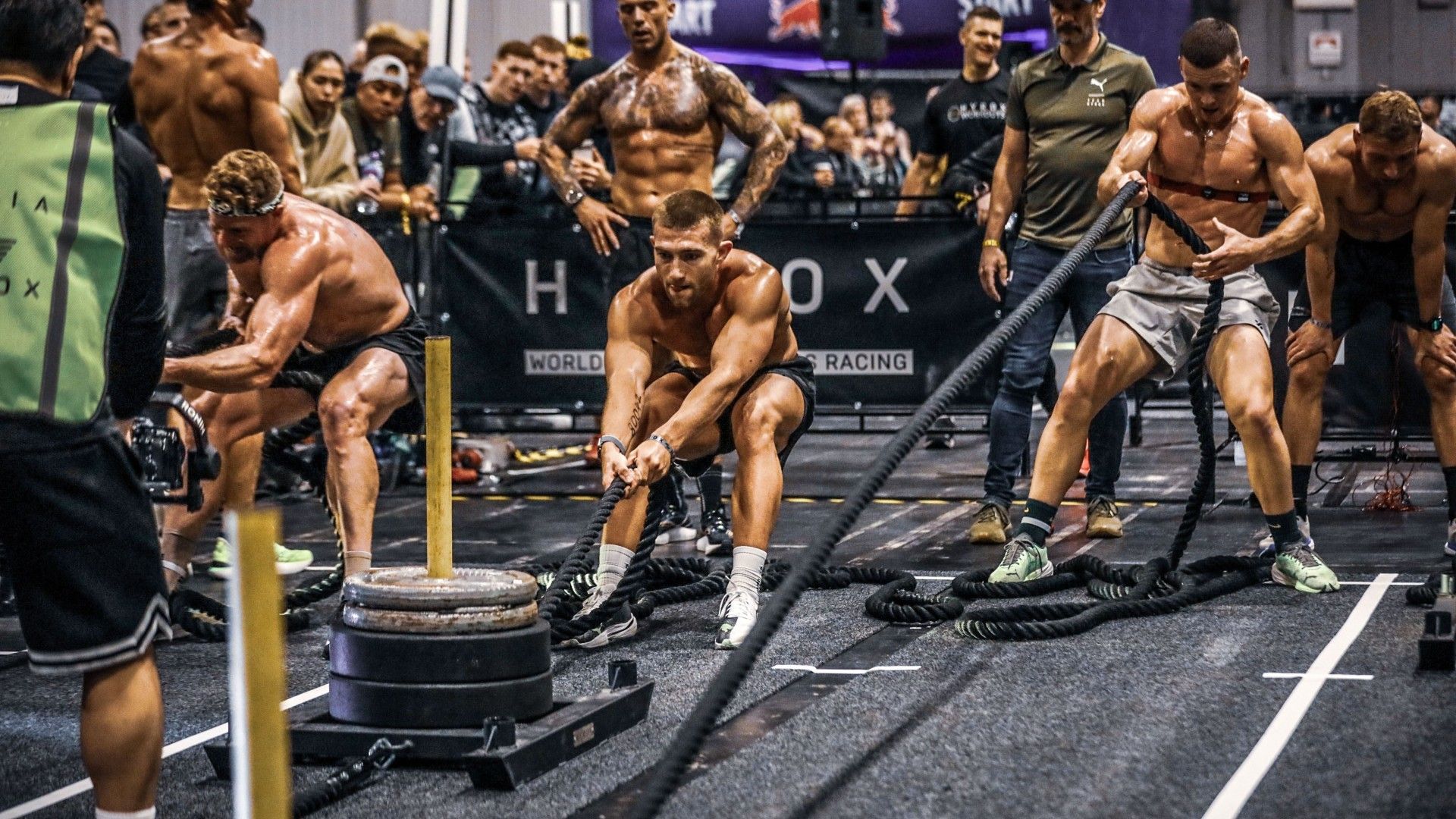
HYROX Doubles Strategy: How to Divide the Workload
UPLIFT IRON CLUBHYROX Doubles looks easier on paper because two athletes can share the work at the functional stations. That description is technically true and strategically misleading.
You do not get to split the running. Both partners complete every run together, both need to arrive at each station together, and only the station work is divided. The result is a race that rewards partnership much more than equal fitness. A team with two individually strong athletes can still lose large chunks of time if they pace the runs badly, switch at the wrong moments or insist on a rigid 50/50 split that does not match their strengths.
The best doubles strategy starts with a simple idea: your goal is not to make the workload look fair. Your goal is to keep the team moving as fast as possible while protecting whichever athlete is most likely to become the bottleneck later in the race.
What HYROX Doubles Actually Changes
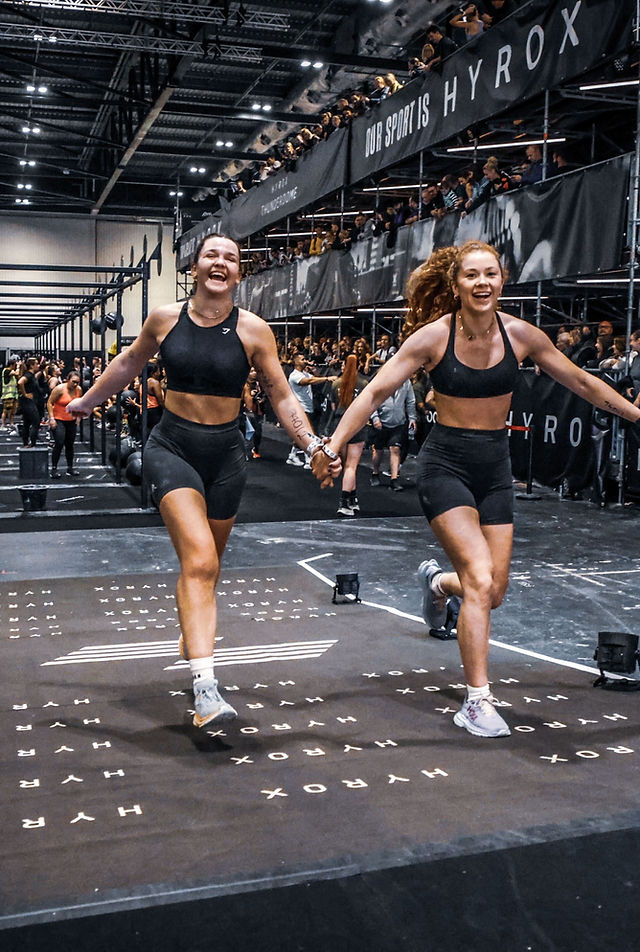
In Doubles, both athletes run the full race together. At the workout stations, the work can be split between the two partners, with one athlete working while the other rests. That changes the limiting factor from individual work capacity to team management.
The important consequence is that rest is built into the stations but not into the running. A strong athlete can take extra sled metres or a larger chunk of wall balls, but that only helps if the extra work does not slow the next kilometre enough to erase the gain.
That is why doubles should be planned around total race time rather than station pride. The fastest team is not necessarily the one that destroys every station. It is the team that avoids expensive collapses.

The Running Pace Is the Shared Constraint

The biggest mistake is setting the run pace from the faster partner's fitness. HYROX rules require doubles partners to stay together, and strategically it would be foolish to do otherwise even if the rule did not exist. If one athlete spends every kilometre hanging on at threshold, that athlete will arrive at the stations already compromised.
A useful starting point is to run at the pace the slower runner can repeat eight times after functional work. The faster runner should feel slightly under-controlled early. That is not wasted fitness. It is reserve capacity that can later be spent on the stations where it creates more value.
Communication should be simple. Agree on a target effort before the race and use short cues such as “hold,” “ease” or “good” rather than conducting a full conversation at race intensity. If the weaker runner's breathing becomes ragged on kilometre two, the solution is not motivational shouting. The pace is probably too aggressive.
Why a 50/50 Station Split Is Usually the Wrong Default
Equal work feels fair, but race strategy is not an accounting exercise. If one partner is substantially stronger on sleds, that athlete may be able to do 60 or 70 percent of the work faster while the other athlete recovers. The same logic can apply in the opposite direction on burpees, ergs or wall balls.
The key is to compare the cost, not just the speed. If Partner A can push the sled much faster but is also the weaker runner, giving that person an enormous sled share could be a bad trade. If Partner B is stronger and recovers quickly while running comfortably, asking B to absorb more strength work is often efficient.
Build the plan by identifying each person's expensive weaknesses. Protect those first. Then allocate extra work to the athlete who can perform it with the smallest downstream penalty.

Ergs: Switch Before Power Collapses

The SkiErg and row are ideal places to use planned switches because output is measurable and transitions are relatively cheap when rehearsed. The mistake is waiting until the working athlete is completely cooked before changing.
Think in repeatable chunks. Strong, technically efficient athletes may prefer longer turns. Teams with similar fitness often do better with shorter intervals that keep stroke quality high. The exact distance is less important than preserving average power and making the switch automatic.
Practice the physical handover. Know which side the resting athlete stands on, how the working athlete exits and whether you switch on a distance marker or a verbal cue. Saving two seconds in a chaotic switch is not worth losing rhythm, but a rehearsed change can be nearly free.
Lunges and Carries: Protect the Weaker Link

Farmers carries and sandbag lunges are deceptively expensive because they combine local muscular fatigue with posture and grip demands. They also arrive late enough that earlier mistakes start showing up.
If one athlete has much better grip endurance, let that athlete carry a larger share rather than forcing repeated switches just to make the numbers equal. On lunges, the stronger lunger can again take more work, but do not forget the wall balls waiting later. Burning the best wall-ball athlete's quads on lunges can turn a smart-looking split into a bad race.
This is where a doubles plan should include secondary roles. Decide who is the primary worker on each station, but also know what happens if that athlete has an unexpectedly bad day. A good plan can bend without becoming improvised chaos.

Wall Balls: Decide the Set Pattern Before You Get There
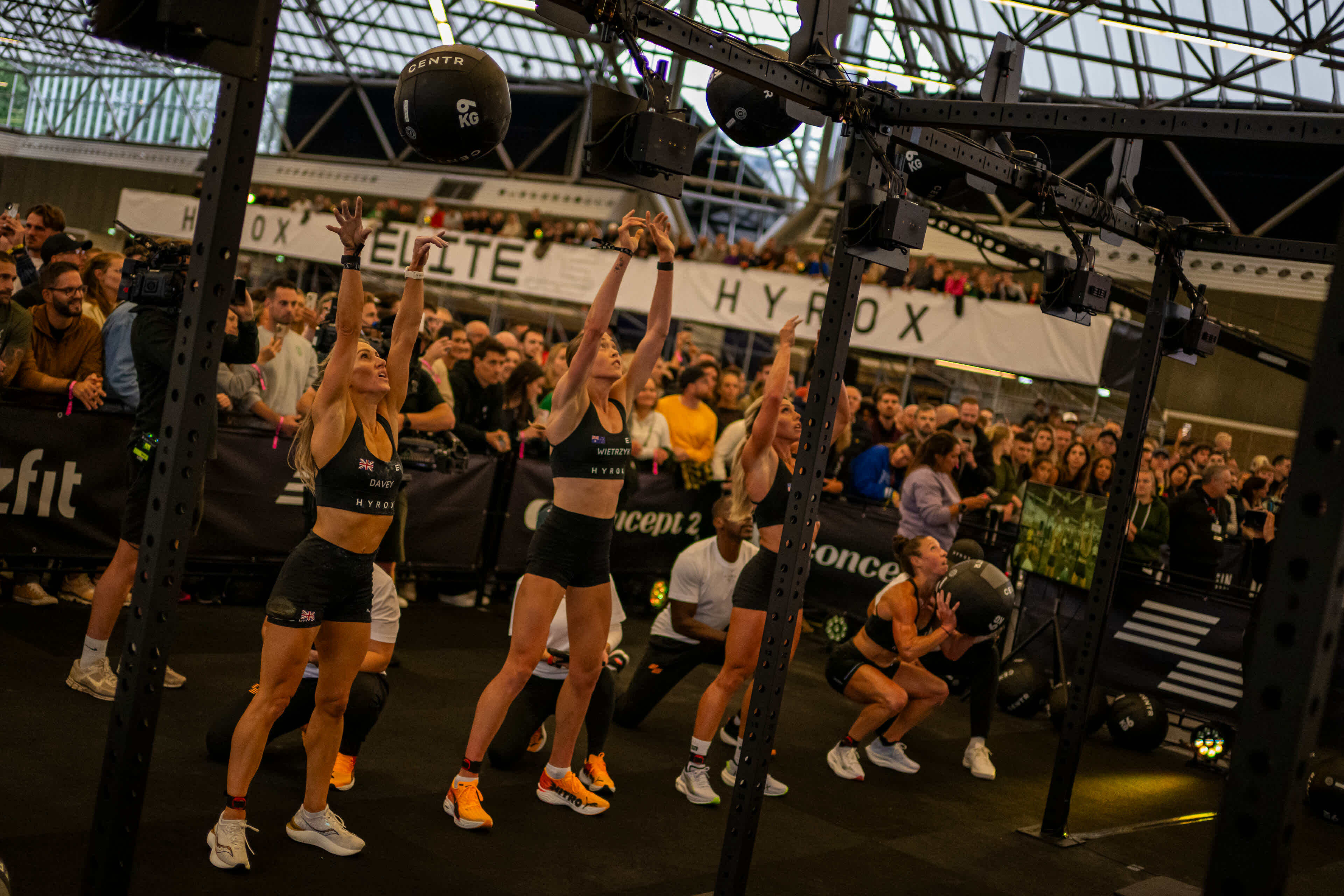
Wall balls are where ambitious early splits get audited. The legs are tired, heart rate is high and a no-rep costs more than the time of the failed repetition because it breaks rhythm.
Do not wait until the station to decide who starts or how long each turn lasts. If one athlete is clearly better at wall balls, plan an uneven share. If you are similar, short predictable sets can be more robust than asking each athlete to go until failure.
A planned 15 or 20 reps that finish cleanly can be faster than attempting 30, failing at 23 and then needing a long recovery. The resting athlete should be ready before the partner's final rep so the handover is immediate. Your goal is continuous team output, not individual hero sets.
Communication and Switch Cues Are Free Speed

The easiest doubles gains often come from removing indecision. Every switch should have a cue. Every athlete should know where to stand. Every station should have a primary plan and a simple fallback.
Good cues are short: “five more,” “switch,” “hold pace,” “take it.” Bad communication is vague, late or emotional. If one athlete suddenly asks the other to take over after already reaching failure, the resting partner loses the chance to prepare.
Use training to rehearse race roles under fatigue. Run 800 to 1,000 metres, enter a station together, execute the planned split and immediately run again. That teaches you whether a theoretically fast station split actually survives contact with the next kilometre.
A practical plan might look deliberately uneven: stronger athlete takes most sled work; faster-cadence athlete handles more burpees; rowing is split into controlled chunks; better grip athlete takes more carry; lunges are divided with wall-ball fatigue in mind; wall balls go to the athlete with the cleaner high-rep technique. None of that needs to be 50/50.
The final principle is simple: build the race around the team you actually have. Doubles rewards complementary strengths, disciplined pacing and fast decisions. Use the stronger athlete where strength creates the most time, protect the weaker athlete where failure would cost the most time, and keep both partners fresh enough to run together all the way to the finish.