

What Jeff Cavaliere’s Physical Therapy Background Changes About How He Programs Training
UPLIFT IRON CLUBJeff Cavaliere’s training advice has always had a slightly different flavor from the typical bodybuilding playbook. He is not just a strength coach who learned anatomy along the way; he holds a master’s degree in physical therapy, is a Certified Strength and Conditioning Specialist, and spent 2006 through 2008 working with the New York Mets as Head Physical Therapist and Assistant Strength Coach.
That background does not make every exercise cue he gives automatically correct, and it certainly does not mean his programs are injury-proof. What it does explain is why so much of his programming starts with questions about joint position, movement quality, weak links, and whether an exercise can be loaded hard without the lifter losing the mechanics that made the movement useful in the first place.
For regular lifters, that is the interesting part. You do not need to copy every corrective drill or treat every ache like a diagnosis. But there are several programming habits worth stealing from a coach who tends to look at strength training through both a performance and rehabilitation lens.
The Physical-Therapy Lens Starts With the Movement, Not the Exercise Name

A traditional gym program can become a checklist: bench press, squat, row, pulldown, curls, go home. Cavaliere’s approach tends to ask one extra question before accepting the movement: what is the body actually doing during the rep?
That sounds obvious, but it changes programming decisions. A barbell press is not simply “chest.” It is a shoulder, scapula, elbow and torso-position problem that also trains the chest. A deadlift is not simply “posterior chain.” The setup changes the demands on the quads, lats, trunk, glutes and upper back before the bar even moves.
This is why his exercise explanations often spend so much time on setup details. The goal is not to make lifting complicated for the sake of it. It is to make the repeated rep look enough like the intended rep that progressive overload actually means something. Adding 10 kg while shortening the range, changing the torso angle and letting the joint position collapse is technically more load, but it is not necessarily more useful training.
The practical lesson is to define the movement standard before you chase numbers. Pick the stance, grip, range and tempo that fit the exercise’s purpose, then progress that version rather than quietly changing the movement every time the weight gets heavy.

Exercise Selection Is Usually About Tolerance Plus Training Effect

One of the most useful ideas to borrow from physical therapy is that two exercises can train a similar movement pattern while creating very different stress at a particular joint or position. That gives you options.
If a movement consistently irritates you, the answer is not always “stop training the muscle.” It may be to change the grip, stance, implement, range, tempo or direction of resistance while preserving the training goal. Cavaliere frequently uses this logic when presenting alternatives: keep the stimulus you want while removing the part of the setup that is not agreeing with the lifter.
That does not mean every uncomfortable repetition is dangerous, or that you should diagnose yourself from a YouTube checklist. Training is supposed to be demanding. Muscular effort, stretching and normal fatigue are different from sharp pain, numbness, sudden loss of strength or symptoms that worsen from session to session.
For programming, think in categories rather than sacred exercises. If a straight-bar curl bothers your wrists, a dumbbell or cable variation can still train elbow flexion. If a particular press angle aggravates the shoulder, another press angle may be perfectly tolerable. If deep knee flexion feels poor today, changing the setup may let you train the quads productively while you work out what is limiting the original pattern.
The important distinction is that substitution should solve a specific problem without turning into random exercise hopping. Once you find a variation you tolerate well, keep it long enough to progress.
Warm-Ups and Primers Should Have a Specific Job

A physical-therapy influence also shows up in the way Cavaliere uses activation drills, mobility work and lighter preparatory movements. The useful version of this idea is not “do 20 minutes of random band exercises before every lift.” It is: use the warm-up to prepare the positions your training session actually requires.
If your session starts with overhead pressing and you struggle to reach a comfortable overhead position, thoracic movement and shoulder-blade control may deserve a few minutes. If your first heavy lift is a squat, a ramp-up that rehearses the squat pattern is more specific than stretching every muscle you can name.
A good primer should make the main work feel better without fatiguing the muscles so much that performance drops. That usually means low-to-moderate effort, clean repetitions and a clear reason for doing it. Two rounds of a useful drill can be valuable. Six rounds because the drill looks “corrective” on Instagram is just extra volume.
The same logic applies to warm-up sets. Instead of jumping from an empty bar to your work weight, use a few increasingly heavier sets to rehearse the exact skill. Those sets give you feedback: does the joint feel normal, is the bar path consistent, and does the working range feel controlled today?

Range of Motion Is Something to Control, Not Automatically Max Out

Another place where the therapy mindset matters is range of motion. Full range is a useful default when a lifter can control it, but “full” is not one universal joint angle that every body must hit on every exercise.
Anthropometry, joint structure, training history, mobility and the implement all change what a controlled range looks like. A lifter with long femurs will not squat like someone with short femurs. A very wide-grip press changes shoulder and elbow positions compared with a narrower grip. A machine with a fixed path may fit one person beautifully and another awkwardly.
Cavaliere’s coaching frequently emphasizes owning the position rather than simply forcing the deepest or longest-looking rep. That is a useful distinction. You want enough range to train the target tissue meaningfully, but you also want control at the endpoints. If the final few centimeters require you to lose spinal position, dump the shoulder forward or bounce out of a joint angle you cannot control, that extra range is not automatically a bonus.
Progress can include gradually expanding a comfortable range as control improves. It can also mean keeping the same range and adding reps or load. Range is one programming variable, not a morality test.
“Corrective” Work Makes the Most Sense When It Supports Heavy Training
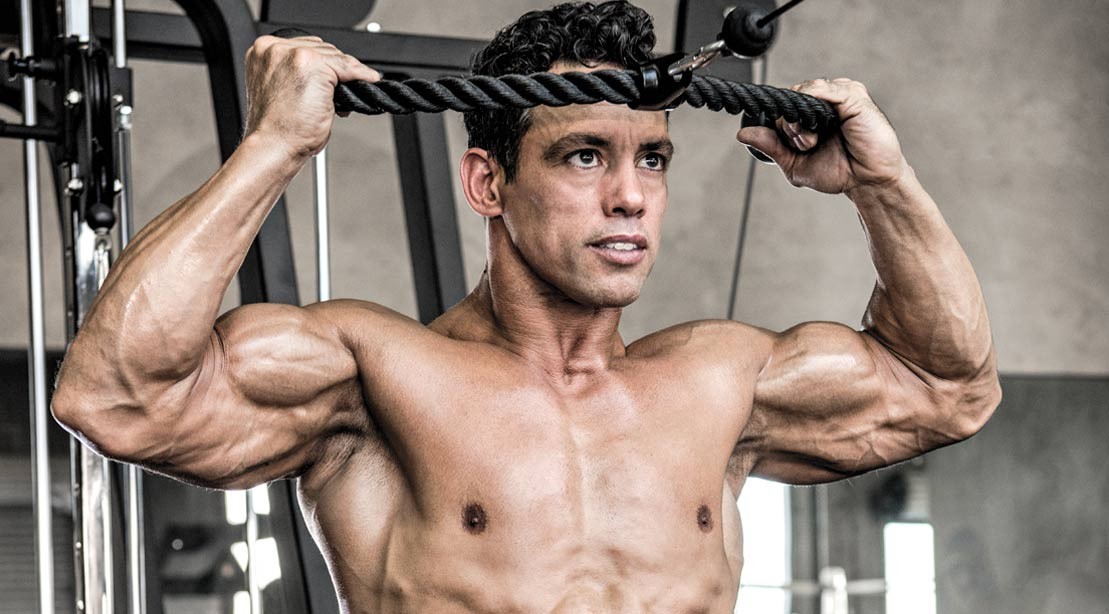
The face pull is probably the exercise most associated with Cavaliere because he has promoted it for years as a way to train the rear shoulders, upper back and external-rotation pattern that can be underemphasized in push-heavy routines. Whatever you think of the meme status it eventually achieved, the programming idea behind it is sensible: build the structures that support the big lifts, not just the muscles that look impressive in the mirror.
That might mean rows and rear-delt work around a lot of pressing, direct hamstring work around squat-dominant training, calf and ankle work for running, or trunk training that helps you keep position under load. Assistance work should solve a performance need or add useful hypertrophy volume.
The mistake is turning every small weakness into a 45-minute rehabilitation session. A lifter who wants a stronger deadlift still has to deadlift or train a close enough hinge pattern with meaningful resistance. Face pulls do not replace rows. Band work does not replace progressive pressing. Corrective exercises are most valuable when they support the main program rather than becoming the whole program.
This is also why dosage matters. Small-muscle and stability work often responds well to moderate loads and controlled reps because the point is not to turn every accessory into a maximal strength test.

Progression Still Has to Drive the Program
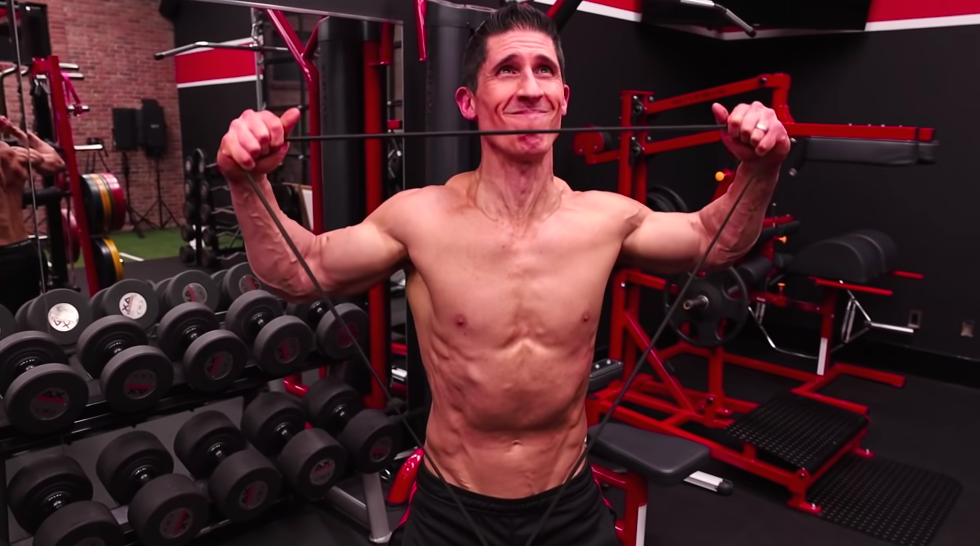
The biggest danger in copying a “physical therapy” style of training is becoming so obsessed with perfect movement that you never train hard enough to get stronger or grow. Good mechanics are not the opposite of progressive overload. They are what make progressive overload easier to measure.
For a hypertrophy-focused lifter, that can be as simple as choosing a stable exercise and keeping it in the program for several weeks. Work in a rep range such as 6–10 or 8–12. Stop most sets with roughly one to three good reps in reserve. Once you can reach the top of the range while preserving the same setup and range of motion, add a small amount of load and repeat.
For strength work, the same principle applies with lower rep ranges and more specific practice of the competition or primary lift. Assistance exercises should improve the limiting pieces without exhausting you so much that the main lift suffers.
Cavaliere’s deadlift teaching is a good example of how the two worlds can coexist. He talks about setup, foot position, lat tension, trunk rigidity and weak links, but the end goal is still a stronger deadlift. Technique work is not the destination; it is the platform from which you can apply more force safely and consistently.
A useful rule is to ask whether a drill or exercise is making the main training better. If it is not improving comfort, control, performance, muscle stimulus or confidence under load, it may not deserve permanent space in the program.
What Regular Lifters Should Steal—and What They Should Not
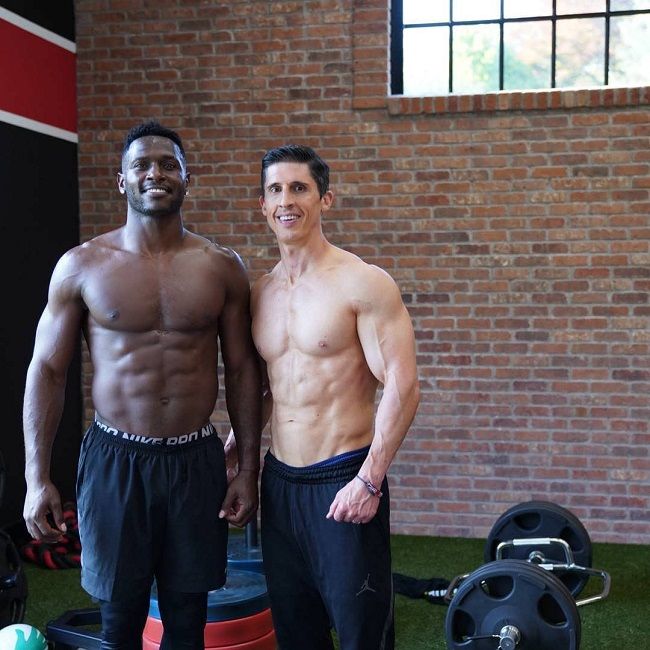
The best takeaway from Cavaliere’s physical-therapy background is not that every lift needs a medical explanation. It is that good programming can be both ambitious and adaptable.
Steal the assessment mindset. Notice which positions feel strong, which movements repeatedly break down, and which accessories actually improve the main lifts. Steal the exercise-substitution mindset. If a variation consistently irritates you, find another way to train the same pattern instead of forcing it for ego points. Steal the consistency. Once you find a productive variation, keep it long enough to get stronger.
What should you avoid? Do not self-diagnose injuries from a checklist. Do not assume a movement is dangerous simply because somebody on the internet dislikes it. Do not spend more time “activating” muscles than training them. And do not confuse perfect-looking reps with productive training if the load and effort never progress.
Persistent pain, neurological symptoms, a sudden injury or a meaningful loss of function belongs with a qualified health professional who can actually assess you. A training article can help you think about programming; it cannot examine your shoulder, back or knee.
Cavaliere’s background is most useful as a reminder that the body is not a collection of isolated muscles. Exercises are coordinated movements performed by joints, tissues and nervous system together. The strongest programs respect that complexity without becoming paralyzed by it: choose movements you can own, train them hard, progress them, and adjust intelligently when your body gives you a reason to.

Science, Strength and Gym T-Shirts
Browse workout tees and pump covers for lifters who like training hard—and arguing about the details.
EXPLORE COLLECTION










