

Caleb Wilson's Surgery Leaves the Bulls With a Bigger Problem Than Their 1–9 Start
GOATIFYChicago's first ten games were supposed to be the beginning of Caleb Wilson's development, not an early lesson in how quickly a promising season can be interrupted. The 20-year-old forward had made an immediate case that the Bulls' fourth overall draft pick could become the center of their rebuild. He started every game, scored in different ways and brought the sort of energy a struggling team cannot manufacture on command. Now the Bulls must work out how to play without him.
Wilson fractured his right hand during Wednesday's 124–119 loss to San Antonio. Chicago confirmed on Thursday, November 12, that surgery was successful and said the rookie would be re-evaluated in three weeks. A four-to-six-week absence has been reported, but that is an estimate rather than a firm return date from the team. The distinction matters: a medical check is a milestone on the path back, not permission to play the next night.
The injury arrived with Chicago at 1–9 after eight consecutive defeats. Wilson had supplied 15 points and five rebounds in just 15 minutes against the Spurs before leaving. For a franchise trying to discover which young players can eventually drive its next winning team, the damage is measured in more than points missing from a box score. Chicago is losing one of its most valuable opportunities to learn, and its remaining players will have to reveal what their own games look like when the rookie is not carrying so much of the load.
A routine contest with Wembanyama changed Wilson's rookie season

The moment that changed Chicago's week did not resemble a dramatic collision. During the third quarter against San Antonio on November 11, Wilson reached toward the ball as Victor Wembanyama gathered it. Replays and contemporaneous reports pointed to contact around the Spurs center's arm and the ball. Wilson soon appeared uncomfortable with his right hand, went toward the bench and did not return. He was ruled out before the fourth quarter. The sequence illustrates how little warning a hand injury can offer: a normal defensive instinct can become an expensive play even without a violent landing or an obvious foul.
Before the exit, Wilson had produced one of the few uncomplicated positives in Chicago's night. He scored 15 points on five makes in seven shots, including two successful three-pointers, and collected five rebounds in 15 minutes. The efficiency matters because he was not merely taking a large number of attempts to pile up rookie statistics. His quick decisions were making defenders pay, and his mobility gave Chicago an unusually versatile frontcourt option.
The Bulls lost 124–119 after surrendering a substantial lead to the Spurs, who had Victor Wembanyama operating as both an offensive focal point and a disruptive defensive presence. A defeat like that would normally generate a familiar list of concerns about Chicago's late-game execution. Instead, the discussion shifted to whether the team had just lost the rookie who made the tough opening schedule feel more useful. What happened on the court and what happened to Wilson are connected, but they are not the same problem: one is about winning possessions, the other about protecting the next several seasons.
On Thursday, the Bulls supplied their most important medical update. Wilson had undergone successful surgery to repair the fractured right hand and would be evaluated again in three weeks. Reports placed his likely absence at four to six weeks. That range should not be translated into an exact game of return, especially before the first follow-up examination. Healing, pain, range of motion, ability to handle the ball and readiness for contact all matter. A player can be medically progressing well and still be unready for the unpredictable impacts of an NBA game.
GOATIFY
GOATIFY Basketball
A single defensive contest changed Chicago's season. Explore GOATIFY Basketball gear as the Bulls prepare for weeks without Caleb Wilson.


LeBron James – LeGOAT Champion Decal Gift Sticker
Add basketball personality to your favourite gear.
Shop Now ↗
Michael Jordan Crying Jordan Muscle Shirt Gift Tank
A basketball fan design for everyday wear.
Shop Now ↗
Crying LeBron – Emotional NBA Basketball Decal Sticker
Add basketball personality to your favourite gear.
Shop Now ↗
There is a reason to be careful with language around a hand injury in Wilson's case. His single season at North Carolina was interrupted by problems involving both hands: a left-hand fracture and a later injury involving the right thumb that ended his college campaign. Those are separate events, not proof that Thursday's operation will be more complicated or that the new fracture has the same cause. But repeated interruptions can affect a young player's competitive calendar even when each injury is ultimately manageable.
Chicago's officials have given a clear checkpoint and avoided promising a specific return. That is the appropriate starting position. Wilson is a 20-year-old with a long runway, not an established veteran racing a postseason deadline. The team can be frustrated about the timing without turning frustration into pressure. During the next three weeks, the story should be the progress of the recovery rather than a countdown invented from the most optimistic interpretation of an initial estimate.
Buzelis and Giddey cannot just replace 18.9 points a night

Wilson's absence would be serious even if Chicago were winning. In a rebuilding season that has already slid to 1–9, it is especially uncomfortable. Through ten starts, the rookie averaged 18.9 points, 6.2 rebounds and 1.9 assists while bringing active hands and the willingness to challenge bigger players. He was one of the rare Bulls whose nights could offer both an immediate performance and evidence of a future foundation. Take that combination away and the team must redistribute much more than a set of shot attempts.
The obvious place to look is Matas Buzelis. The young forward can attack closeouts, run the floor, challenge shots at the rim and supply needed athleticism around the paint. But expecting a direct exchange — Wilson out, Buzelis in, same production — mistakes two developing players for interchangeable parts. Wilson's touches have been built around his mix of size, transition activity and emerging on-ball confidence. Buzelis has his own strengths and decisions to make. He will be judged not simply by the points he scores but by whether he can keep opposing defenses honest when their scouting report no longer has to prioritize Wilson.
More responsibility should also fall to Josh Giddey, whose size and passing allow Chicago to build offense without asking every forward to create his own shot. The challenge is to turn possession into efficient looks before defenders settle. When a team loses a player who can manufacture a basket or collapse the defense, the ball often sticks. Giddey's ability to find cutters and hit the next option becomes more important, and his own scoring aggressiveness has to be balanced against getting the rest of the group involved.
Jalen Smith and the other frontcourt options have a separate task: replace the rebounding, screening and paint presence that normally help free Wilson to roam. That responsibility will not always show up in a box-score headline. A useful screen, an extra contested rebound or a clean defensive rotation may be the difference between a young lineup producing an encouraging five-minute stretch and letting another opponent manufacture a run. Chicago cannot reasonably replace a top-five pick's entire identity with a single bench player; it can try to replace the actions that have kept its offense and defense functional.
GOATIFY
GOATIFY Basketball
Buzelis, Giddey and a younger rotation face a new test without Wilson's production. Browse GOATIFY Basketball shirts, hoodies and stickers.


LeBron James – The Silencer GOAT Pullover Hoodie
A basketball fan design for everyday wear.
Shop Now ↗

Ja Morant Gun Basketball NBA Memphis Grizzlies Hat
A basketball fan design for everyday wear.
Shop Now ↗
Derrick Rose G.O.A.T. - Basketball Casual Top Tee
A basketball fan design for everyday wear.
Shop Now ↗
Paul George G.O.A.T. - Basketball - Greatest Sweatshirt
A basketball fan design for everyday wear.
Shop Now ↗The situation creates a difficult but potentially useful evaluation period for players such as Noa Essengue and Patrick Williams. Depending on matchup and availability, there may be more minutes or different combinations to test. Those experiments have costs. Young lineups are more likely to miscommunicate on switches, lose track of weak-side help and take contested shots when an early action fails. Coach Tiago Splitter has to decide which mistakes represent necessary learning and which are avoidable habits that cannot simply be excused by injuries.
One recent game shows why the missing offense matters. Against Philadelphia on November 2, Wilson delivered 24 points, seven rebounds and four assists, shooting four-for-nine from three while also contributing four steals. Those are not typical emergency scoring numbers from a raw rookie. They are examples of the varied contributions Chicago now must find through collective effort. On other nights his shot has been less reliable, but the willingness to do more than one job helped make him a fixture in the starting group.
The standings will invite short-term despair, particularly if another run of losses follows the surgery. Chicago should still make a distinction between losing with purposeful development and losing while repeatedly making the same disorganized decisions. The weeks without Wilson will show whether the Bulls have enough structure around their most promising player. That answer may turn out to be just as valuable as whatever Wilson had been going to score in the next few games.
The next three weeks are a checkpoint, not a countdown
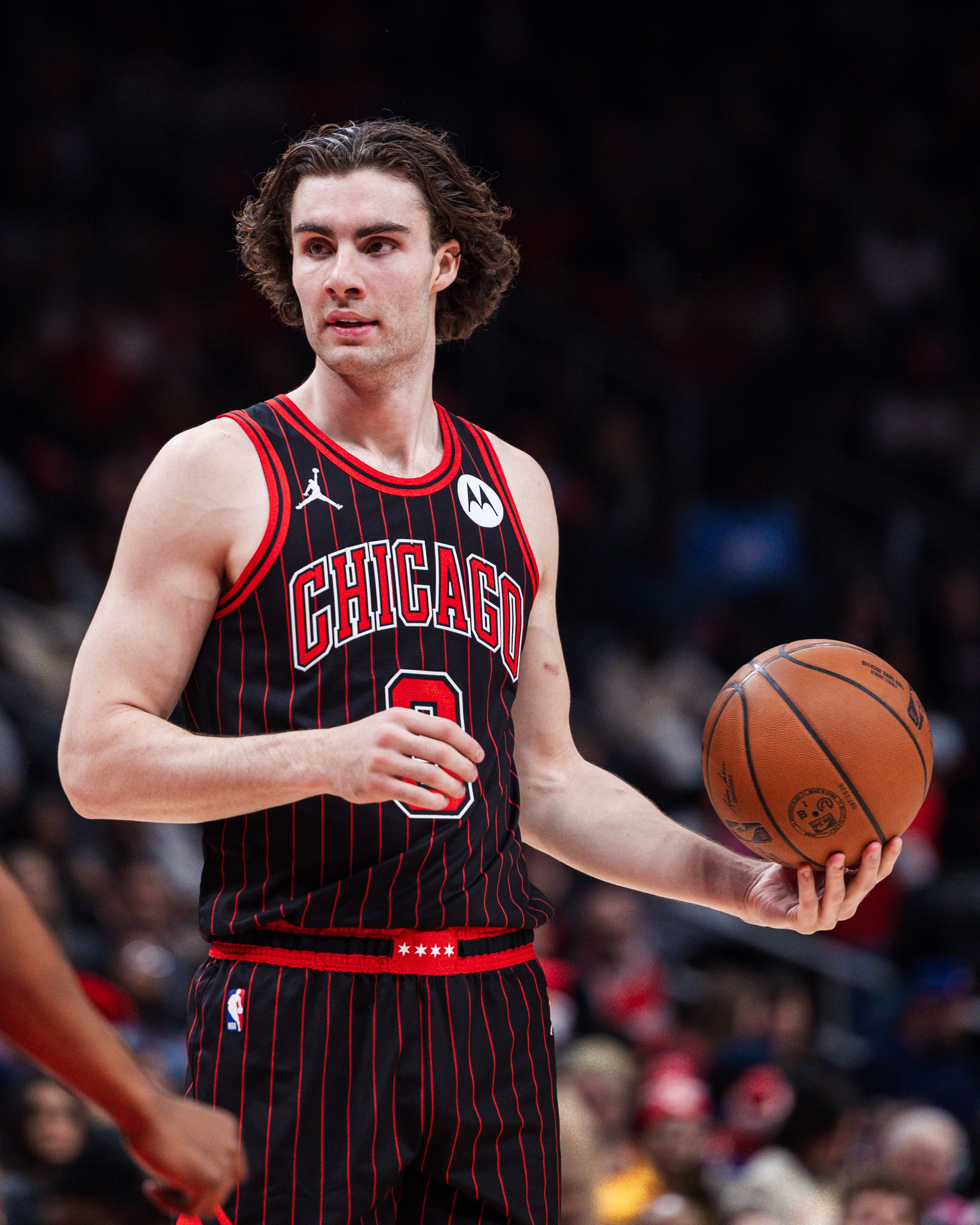
A reported four-to-six-week absence puts Chicago in an awkward position, but it should not become the basis for a frantic timetable. Three weeks from the Bulls' November 12 announcement is early December, when medical staff plan to review Wilson's progress. That appointment is an assessment, not an announced return to competition. If healing and functional tests go well, the team can decide what basketball work is appropriate next. If progress is slower, the calendar can change. The Bulls have not promised an exact date, and supporters should resist treating the earliest end of the reported range as a guarantee.
A hand fracture is particularly disruptive to a modern forward because both offense and defense repeatedly expose the injured area. The same fingers and wrist must absorb passes, control the dribble, finish through contact, rebound, and reach instinctively for loose balls. The task is not simply to regain enough motion to put up a stationary jump shot. Wilson has to be comfortable in unpredictable action, including situations similar to the defensive play that preceded the injury. A cautious return is not wasted time if it reduces the chance of another interruption.
The timeline also changes the rookie's development. Chicago gave Wilson an unusually substantial early role: ten starts, heavy minutes and situations where he was asked to make meaningful decisions against NBA defenses. That is valuable instruction which cannot be perfectly replaced with film sessions, individual workouts or observation from the bench. The coaching staff can keep him involved in meetings, scouting and playbook work, but some lessons only emerge when a player has to read an opponent at full speed.
Still, time away does not automatically erase progress. Watching the floor from the sideline may help Wilson recognize which actions created high-value looks and which possessions broke down because of spacing. Coaches can review the moments when he attacked mismatches decisively, as well as the nights when defenders coaxed him into difficult attempts. The objective should be to return with a clearer picture of how his scoring, screening and defense fit into a team that has had to adapt without him. That is a different challenge from assuming his early averages will resume immediately.
GOATIFY
GOATIFY Basketball
The Bulls' recovery plan is bigger than a calendar date. Follow Chicago's young core with GOATIFY Basketball fan designs.


Michael Jordan G.O.A.T. - Basketball Decal Sticker
Add basketball personality to your favourite gear.
Shop Now ↗
Trae Young G.O.A.T. - Atlanta Hawks Basketball Tee
A basketball fan design for everyday wear.
Shop Now ↗

Wemby G.O.A.T. - Victor Wembanyama Basketball Mug
Add basketball personality to your coffee break.
Shop Now ↗Chicago's next games underline the urgency without changing the medical priorities. The Bulls host Atlanta on November 13 before visiting Minnesota on November 14, according to the schedule available when the injury was announced. The group must now handle a short turnaround, a road trip and changing matchups with less room for error. Early losses have already exposed the dangers of poor shot selection and inconsistent defense. Without Wilson's ability to manufacture plays, those issues may become more visible rather than less.
One temptation would be to judge the next month exclusively by wins and losses. The record matters, especially to a fan base understandably tired of rebuilds, but the front office also needs evidence about sustainable partnerships. Can Giddey help a younger, more mobile unit generate shots without settling? Can Buzelis provide reliable two-way production when opponents target him? Does the frontcourt maintain enough physicality on the glass? Are the team's late-game possessions improving? Those questions will remain after Wilson's hand has healed.
There is also a psychological challenge for the rookie. His college season ended early after hand problems, and now his first NBA campaign has suffered another interruption just as he was earning national attention. It would be easy for outside discussion to turn every setback into a forecast of future health. That is neither a fair nor a medically grounded conclusion. The sensible focus is on this specific fracture, what doctors find at the reevaluation and whether Wilson can return to normal basketball activity without hesitation.
Chicago invested the fourth pick in a player whose best years should still be ahead of him. Protecting that investment is more important than winning the argument over whether he comes back in four weeks, five or six. When Wilson finally returns, the team will need to integrate a player who was carrying a major role into whatever system his teammates have built during the absence. A successful return is not just one healthy game. It is the resumption of development without asking him to fix every problem that existed before he got hurt.
The immediate question is whether Chicago can find enough scoring, energy and structure to compete through the coming month. The more important one is what the team learns while Wilson is absent. Buzelis will have chances to take responsibility, Giddey will be asked to organize a thinner offense, and players farther down the rotation can make arguments that are harder to make when the rookie occupies a large share of the work.
Wilson's surgery has been completed, but nothing about the recovery should be treated as a race against the calendar. The Bulls' three-week reevaluation and the reported four-to-six-week estimate describe a process, not a promise. Once cleared, he will still have to rebuild rhythm, confidence and the physical comfort required to contest possessions without thinking about his hand. Chicago cannot afford to rush its most exciting new building block simply because the standings are ugly.
A 1–9 record is painful enough; losing the player who made the opening weeks feel worthwhile adds another kind of frustration. If the Bulls use the absence to sharpen the rest of the young core, however, the season can still produce useful answers before Wilson returns. That is the challenge now: protect the player, and do not waste the games he cannot play.
GOATIFY
GOATIFY Basketball
Shop GOATIFY basketball shirts, hoodies and stickers.


Pau Gasol G.O.A.T. - Basketball - Greatest Sweatshirt
A basketball fan design for everyday wear.
Shop Now ↗
LeBron James – Miami Heat Silencer GOAT Sticker
Add basketball personality to your favourite gear.
Shop Now ↗

Shaquille O’Neal GOAT - Shaq Basketball Coffee Mug
Add basketball personality to your coffee break.
Shop Now ↗



















