

Haas Kept Câmara for Vegas. His F2 Title Fight Just Got Complicated.
GOATIFYHaas have made a decision that sounds simple on the surface: Rafael Câmara will drive their Formula 1 car at the Las Vegas Grand Prix, his second start after a difficult-weather debut in São Paulo. There is a twist. The team will also put newly crowned World Endurance Champion Ryo Hirakawa in Oliver Bearman's car for opening practice. One garage, three drivers, two very different development priorities—and a rookie whose Formula 2 championship remains unsettled.
This is a more revealing test than a one-off replacement drive. The 21-year-old Brazilian already has a multi-year Haas deal for 2027, but his accelerated arrival followed Esteban Ocon's exit from the race seat in Mexico. Vegas provides a dry-weather street-circuit examination that São Paulo could not. Meanwhile, a single borrowed practice session reduces Bearman's preparation and the F2 calendar raises a decision Haas has not publicly resolved for the season's final two rounds.
Haas confirmed the Vegas seat—not the whole triple-header
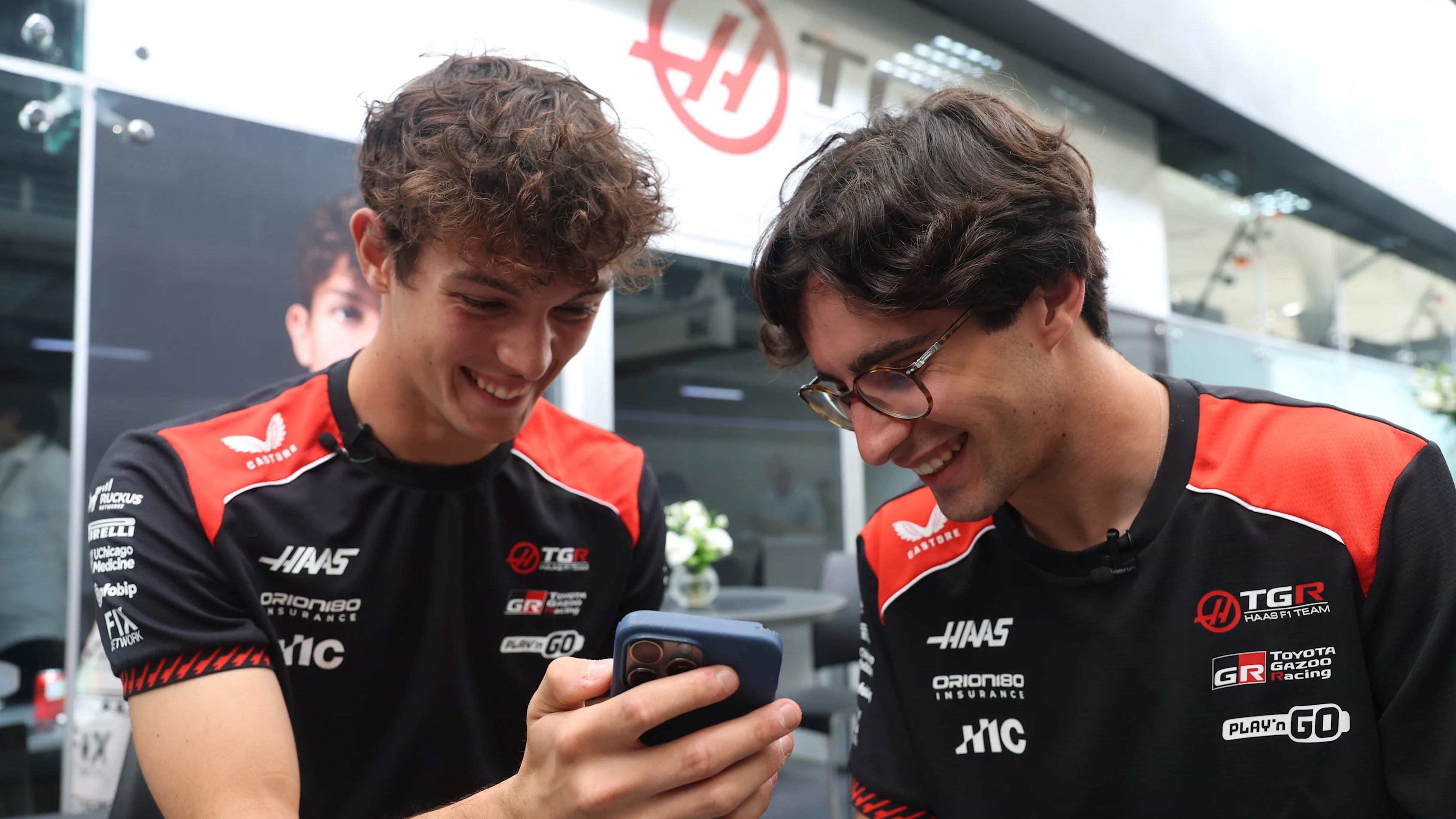
The clearest part of the announcement is also its most important limit. Câmara is confirmed to race at Las Vegas alongside Oliver Bearman. Haas have not, in that announcement, settled precisely who will occupy the second car in Qatar or Abu Dhabi. It is tempting to turn a second consecutive outing into an entire end-of-season plan. That would get ahead of the evidence, particularly with the young Brazilian's other championship reaching its decisive weekends.
Only a few weeks ago, the original Haas plan looked different. Esteban Ocon was expected to complete the season before leaving, with Câmara preparing for a full-time 2027 promotion. The Mexico City weekend changed the timetable. Haas removed Ocon from race duty, reserve Hirakawa stepped in, and the Japanese driver ultimately collected a point on his Grand Prix debut after post-race penalties. His World Endurance Championship commitments then opened the way for Câmara to make his own debut at Interlagos. The current Vegas call extends that emergency opening into an intentional learning opportunity.
São Paulo taught the team something useful even without a points finish. A rookie asked to learn a modern Formula 1 car in difficult conditions has to absorb procedures, communication and rapidly changing grip while avoiding a mistake that destroys the team's running. Câmara managed to bring the car home. That does not prove he is already operating at Bearman's level; it does show why the engineers might prefer a second weekend of comparable data rather than another handover in the same seat.
His 2027 contract also changes the calculation. A team without long-term plans for the driver might maximise each remaining weekend for immediate championship points. Haas can still pursue points, but a lap that teaches Câmara how the car reacts when he adjusts brake balance, tyre preparation or energy use has future value. The important challenge is to avoid confusing development with a free pass: he must keep learning while giving the engineers useful, repeatable feedback. Vegas will be his first chance to test that process on a circuit he has not raced in F1 before.
Hirakawa gets FP1. Bearman pays the practice-time bill.
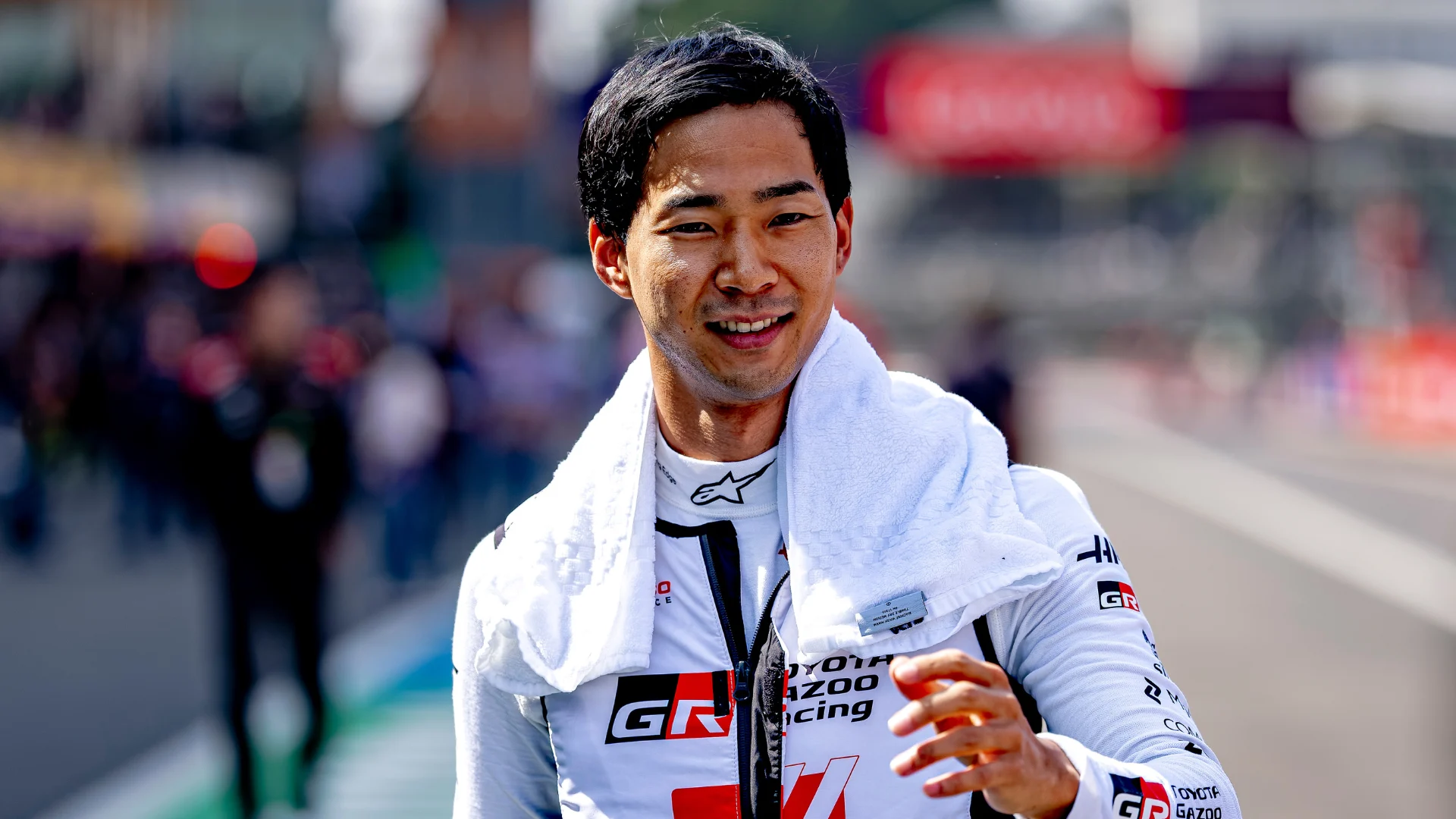
Thursday's first practice creates a second storyline that should not be mistaken for a second race-seat change. Ryo Hirakawa will drive Bearman's car in FP1, then Bearman is due back for the competitive part of the weekend. Câmara remains in the other Haas throughout. Those details matter: Hirakawa is not replacing Câmara for the race, and the opening-session switch is not evidence that Haas has reopened Bearman's future.
GOATIFY
GOATIFY Formula 1
Câmara's second Haas start is a big step toward 2027. Explore GOATIFY Formula 1 race-week designs and racing gifts.


The Japanese driver arrives with a different résumé from his younger colleague. He has just become a 2026 World Endurance Champion with Toyota and already knows how to manage a complex race programme at the highest level of sports-car competition. He also possesses very recent Formula 1 race experience. In Mexico, he was called up after Ocon's removal, qualified toward the back, reached the chequered flag in 13th and was elevated to 10th following penalties for other drivers. The solitary point is real, but his direct on-track finishing position is an equally important part of the story.
Hirakawa's role in Vegas is therefore not simply a reward for a championship trophy. Additional F1 running helps him remain useful as a reserve and gives Haas another experienced perspective on its car, especially in a season where driver availability has already become unusually fluid. He has completed practice appearances for the team and knows the language of its engineers. A planned FP1 is a different proposition from discovering during an event that he must suddenly race a car.
Bearman, however, loses an hour of preparation. On a normal race weekend that is manageable; on a street track with evolving grip, sharp braking zones and little margin for mistakes, the missed session is valuable. His engineers will have to share useful early telemetry and setup conclusions as soon as Hirakawa climbs out. A constructive outcome is not necessarily a headline-making Hirakawa lap time. It is a clean run plan, trustworthy data, no damage and a Bearman car ready to move straight into its normal qualifying preparation.
That split reveals Haas's immediate priorities. One car develops the confirmed 2027 newcomer across the entire weekend; the other accommodates a reserve-driver obligation before returning to its regular race driver. The operational challenge is to avoid making either programme weaker through divided attention.
Câmara's Formula 2 lead makes the next decision harder
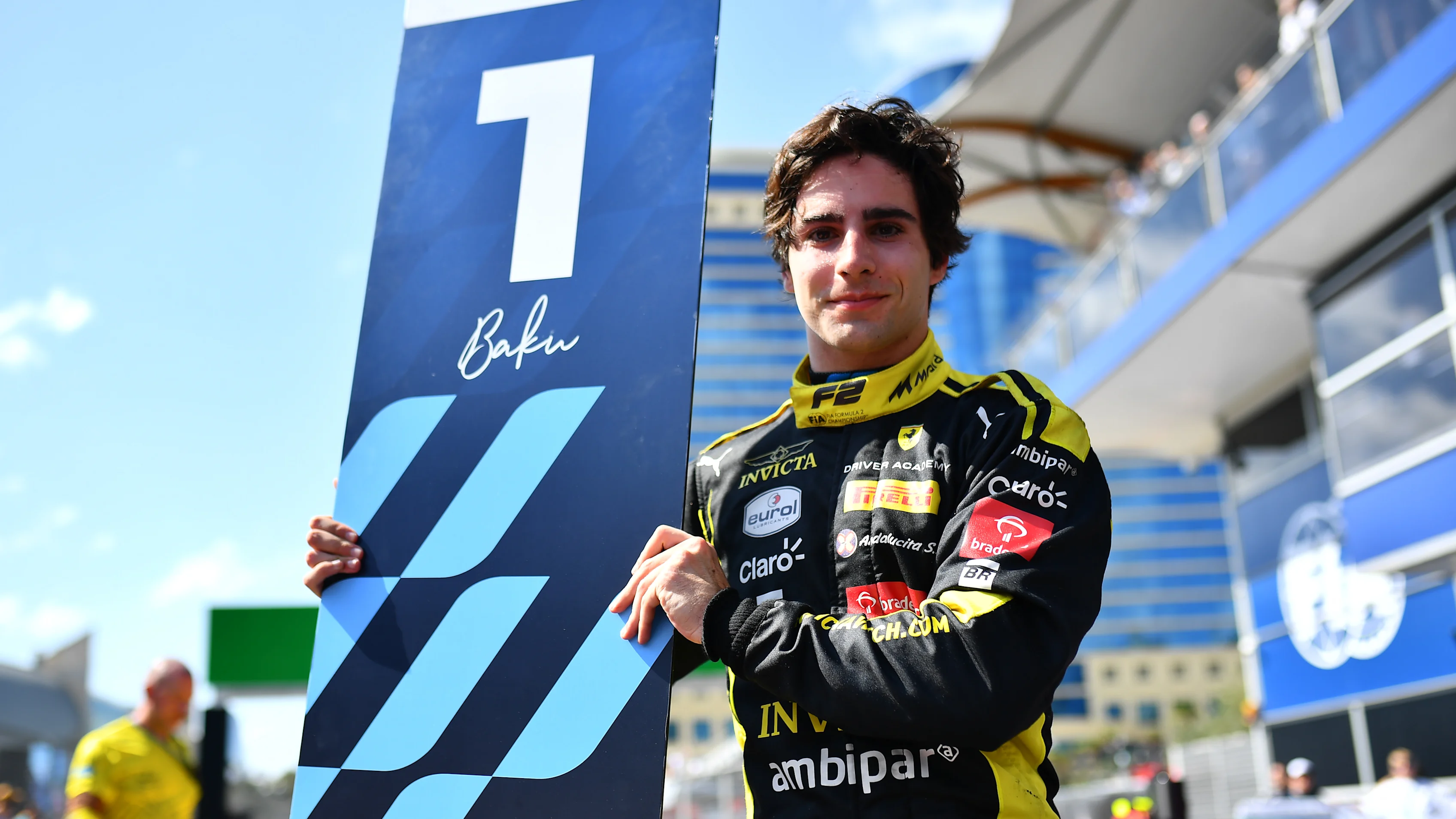
Câmara's Formula 1 promotion is not occurring at the end of a finished junior campaign. The final Formula 2 championship rounds remain ahead. After the September Baku weekend, he led Nikola Tsolov by seven points, 207 to 200, with Alex Dunne on 189. Those are the published post-Baku figures, not a prediction of what the final classification will become. The margins are close enough that a small error in qualifying, tyre management or a pit-stop sequence could still determine who takes the title.
His advantage in Azerbaijan was itself a lesson in why those tiny details matter. Câmara crossed the line second in the final Feature Race but inherited the win after Dunne received a five-second penalty for crossing the pit-entry white line. Tsolov climbed from 11th on the grid to second after the classification was adjusted. A driver can execute most of a weekend well and still lose crucial points through one procedural mistake. For a young competitor preparing for Formula 1, it is exactly the kind of detail that cannot be dismissed as junior-category bookkeeping.
The outstanding rounds are scheduled for Qatar from November 27–29 and Abu Dhabi from December 4–6. Formula 1 visits Qatar and Abu Dhabi during the same closing stretch. That overlap creates a potential conflict between maximising time in the Haas and defending a narrow Formula 2 championship lead with Invicta Racing. It does not, by itself, prove which option will be chosen. Haas's November 16 confirmation names Las Vegas; it does not announce that Câmara is withdrawing from F2, and no responsible preview should silently assume the issue is settled.
GOATIFY
GOATIFY Formula 1
The F2 title decision will shape this rookie's winter. Browse GOATIFY F1 fan shirts, accessories and motorsport humour.


An F2 title would be a significant credential, but the logic is more complicated than collecting one final trophy. Câmara already owns the Haas contract that most junior drivers spend their entire seasons pursuing. F1 laps in a current car are rare and valuable, particularly before a regulation year has fully matured. At the same time, leaving the F2 contest without attempting to finish a title challenge could carry a competitive cost for the driver and the team that helped develop him. A carefully coordinated decision is worth more than an automatic preference for either badge.
Vegas is the one weekend where the dilemma is manageable: the Las Vegas F1 race precedes the remaining F2 fixtures. He can concentrate on his second Grand Prix start before the overlap becomes immediate. The choice facing Haas after that should be reported when the team actually makes it, not folded into a confident claim today.
Las Vegas will tell Haas something the rain at Interlagos could not
São Paulo and Las Vegas offer two very different entry exams. The Brazilian Grand Prix asked a first-time Formula 1 driver to stay composed while weather disrupted the normal rhythm. Las Vegas promises a more conventional schedule on paper, but its combination of long straights, heavy braking, low-grip street sections and cool nights can make the car difficult to predict. The forecast published before the event suggested cool, dry weather with temperatures ranging from roughly four to 14 degrees Celsius. Forecasts can change, but preparing tyres under those conditions is already central to Haas's planning.
The schedule matters. Opening practice is set for Thursday, November 19 at 4:30 p.m. Las Vegas local time, with the second session at 8 p.m. On Friday, FP3 begins at 4:30 p.m., qualifying follows at 8 p.m., and the Grand Prix itself is scheduled for Saturday, November 21 at 8 p.m. local time. That means a rookie receives distinct opportunities to understand how the circuit behaves in daylight, dusk and the full night-time running window before he is judged against the clock.
Learning the venue is only part of the work. Câmara needs to know how aggressive he can be in the final phase of braking, when the fronts start responding, how to warm tyres without wasting their best lap and how much battery deployment to spend on each stretch of the Strip. The correct braking reference can shift as temperatures fall and rubber builds on the surface. A simulation can predict much of that, but it cannot fully substitute for the driver's feedback during a live run with traffic and wind.
A good Thursday is unlikely to be defined by a spectacular practice ranking. It might be a sequence of laps where each adjustment has a measurable effect, no wall contact ruins a session, and the feedback matches what the engineers see in the data. By Saturday, the question becomes whether the accumulated learning has shortened the gap to Bearman over representative runs. Comparing their fastest laps without accounting for tyre compound, fuel, engine mode and traffic would miss the point.
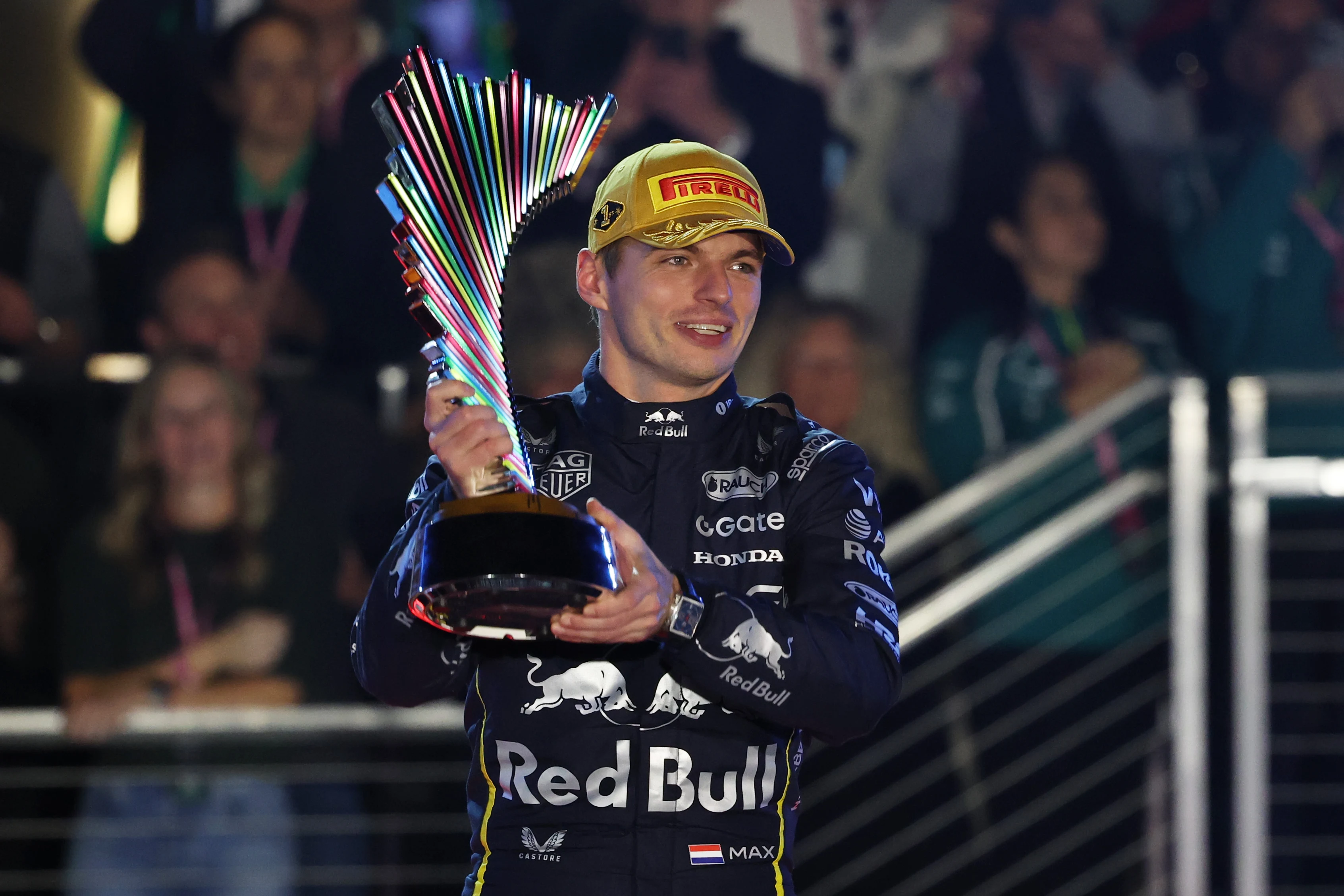
The 2025 images of cars under the Las Vegas lights illustrate the circuit's environment; they are not photographs from the upcoming 2026 event. The result of this Grand Prix remains unknown. That makes the more useful preview question what concrete evidence of a driver's progress can appear before anyone knows the finishing order.
GOATIFY
GOATIFY Formula 1
Cold Vegas nights make every lap count. Check out GOATIFY Formula 1 apparel and racing-inspired gifts for the final stretch.


Komatsu's gamble is about how fast a rookie can become useful
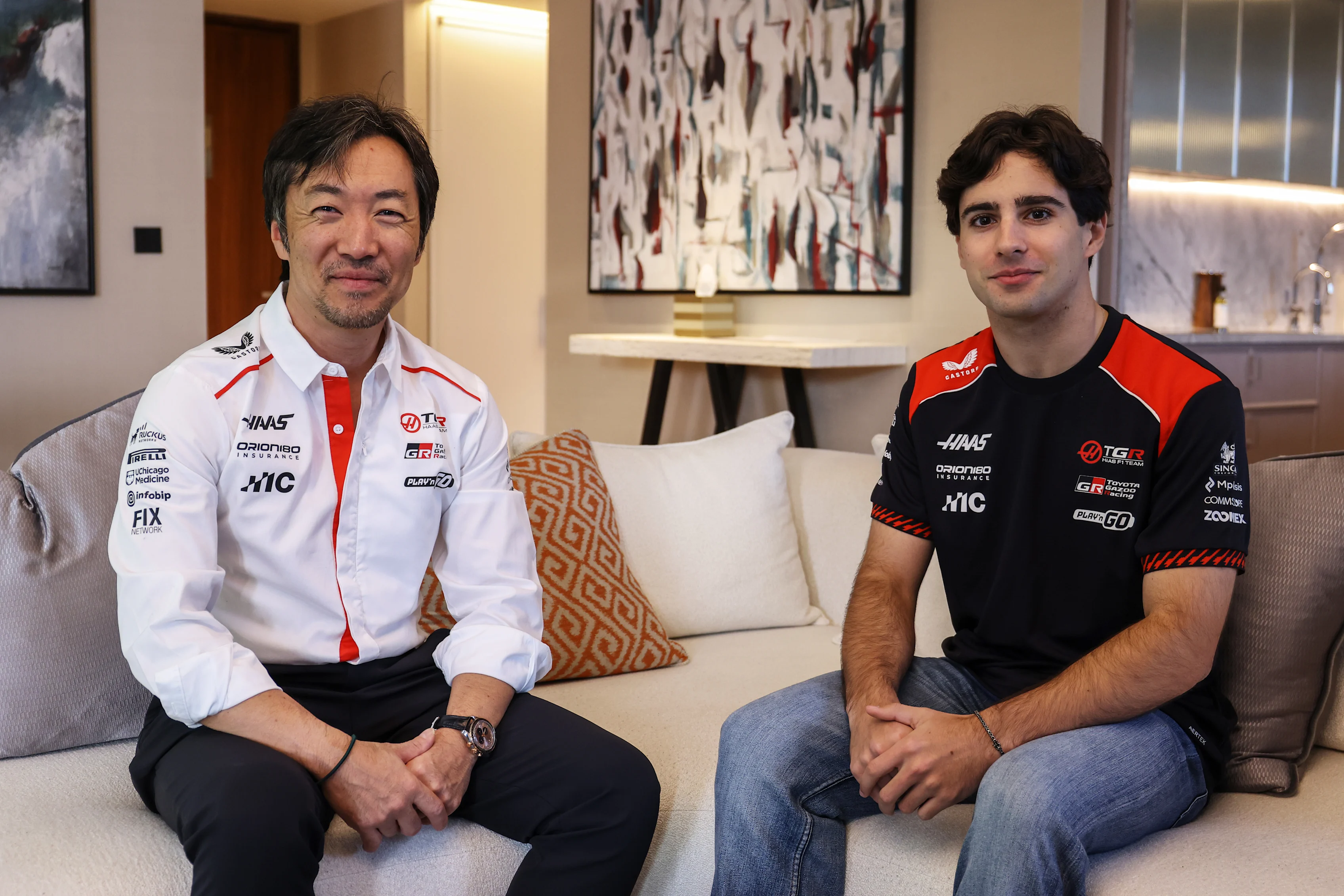
Ayao Komatsu did not choose Câmara simply because his results list looks promising. When Haas confirmed its 2027 signing, the team principal highlighted how quickly the Brazilian adapted during a test of an older Formula 1 car at Portimão. His record provides the obvious foundation: a Formula Regional European title, a Formula 3 championship and a Formula 2 campaign that put him in a narrow title fight. The reason the team can learn something new in Vegas is that raw junior speed must now become repeatable work inside the demands of a current Formula 1 programme.
That process is less glamorous than the announcement. The race engineer needs concise observations rather than a stream of sensations. The performance engineer needs to know whether an unexpected lap-time drop came from traffic, tyre temperature, a poor exit or a real balance limitation. The mechanics need a driver who avoids avoidable damage and can recognise a problem before a minor issue destroys a session. A rookie who communicates clearly can help make the car faster even when he is not the fastest driver on that particular day.
Bearman offers the most useful internal reference. Both are Ferrari Driver Academy products, and Câmara has previously spoken about watching the Briton's approach and extracting lessons from it. Yet learning from a teammate does not mean copying every setup or driving habit. Two drivers can reach similar lap times through different ways of loading the tyres and handling a corner entry. If Haas can separate what is a personal technique from what is a genuine car limitation, it has a better chance of nurturing a reliable 2027 pairing rather than forcing two styles into one template.
The broader timing is awkward for an independent team. Haas has lost the continuity of its original 2026 race-seat plan, and its reserve programme now has to share bandwidth with a confirmed rookie and an existing young driver. The temptation is to treat every difficult qualifying session as a referendum on the team's October decision. That would be premature. A proper assessment will consider progression across sessions, the number of clean laps, the quality of feedback and whether race pace becomes more consistent. The team should not erase an error from the record, but it should weigh the response to that error as carefully as the error itself.
All of which makes Las Vegas a useful test of Haas as well as of Câmara. Can the garage run three drivers across one weekend, supply Bearman with enough information after Hirakawa's FP1, and still give its new recruit a coherent development plan? The answer will not establish the 2027 pecking order. It will reveal whether Haas's accelerated transition is beginning to function like a long-term project rather than an improvised end-of-season substitution.
Câmara's Las Vegas seat is confirmed; Hirakawa's FP1 session is confirmed; Bearman remains the race driver in the other car. The unresolved question is not who drives this weekend, but how Haas balances its rookie's F1 development with a Formula 2 championship that still has two rounds to run. The next decision deserves its own announcement, not an assumption built into this one.
By the time Saturday night's race finishes, the most meaningful result may be visible in the team's data rather than the points table. Cleaner preparation, improving tyre understanding and feedback the engineers can act on would justify a second chance even without a breakthrough finishing position. For a team building toward 2027, that is a more durable measure of progress than the novelty of another rookie on the grid.
GOATIFY
GOATIFY Formula 1
Shop GOATIFY Formula 1 shirts, hoodies and racing stickers.


















