

Piastri and Webber Split After Seven Years — Why McLaren's Driver Is Changing His Inner Circle
GOATIFYOne of Formula 1's most successful recent driver-management partnerships is over. Oscar Piastri and the team led by former Grand Prix winner Mark Webber and his partner Ann Webber confirmed on Monday, November 9, that they have mutually ended their agreement. Piastri will continue his career under a different management structure. The announcement came the morning after a wet and demanding São Paulo Grand Prix, where the Australian climbed from tenth on the grid to sixth for McLaren.
This is a significant split because Webber was not simply an adviser who arrived after Piastri became famous. He helped guide an exceptional junior career into a Formula 1 seat at a time when Piastri's route through Alpine looked blocked. Seven years later, both sides are moving on, with Piastri already an established Grand Prix winner and McLaren's long-term future still demanding attention.
Neither party has publicly alleged a falling-out. The announcement confirms that their working arrangement had already changed during 2026, when Webber's regular appearances alongside Piastri at races became less frequent. That distinction matters: the concrete news is an orderly management separation, while claims about a deeper personal dispute remain unsupported. The more useful question is how Piastri reached this point and what the new structure could actually change.
Webber's crucial intervention came before Piastri's first F1 start
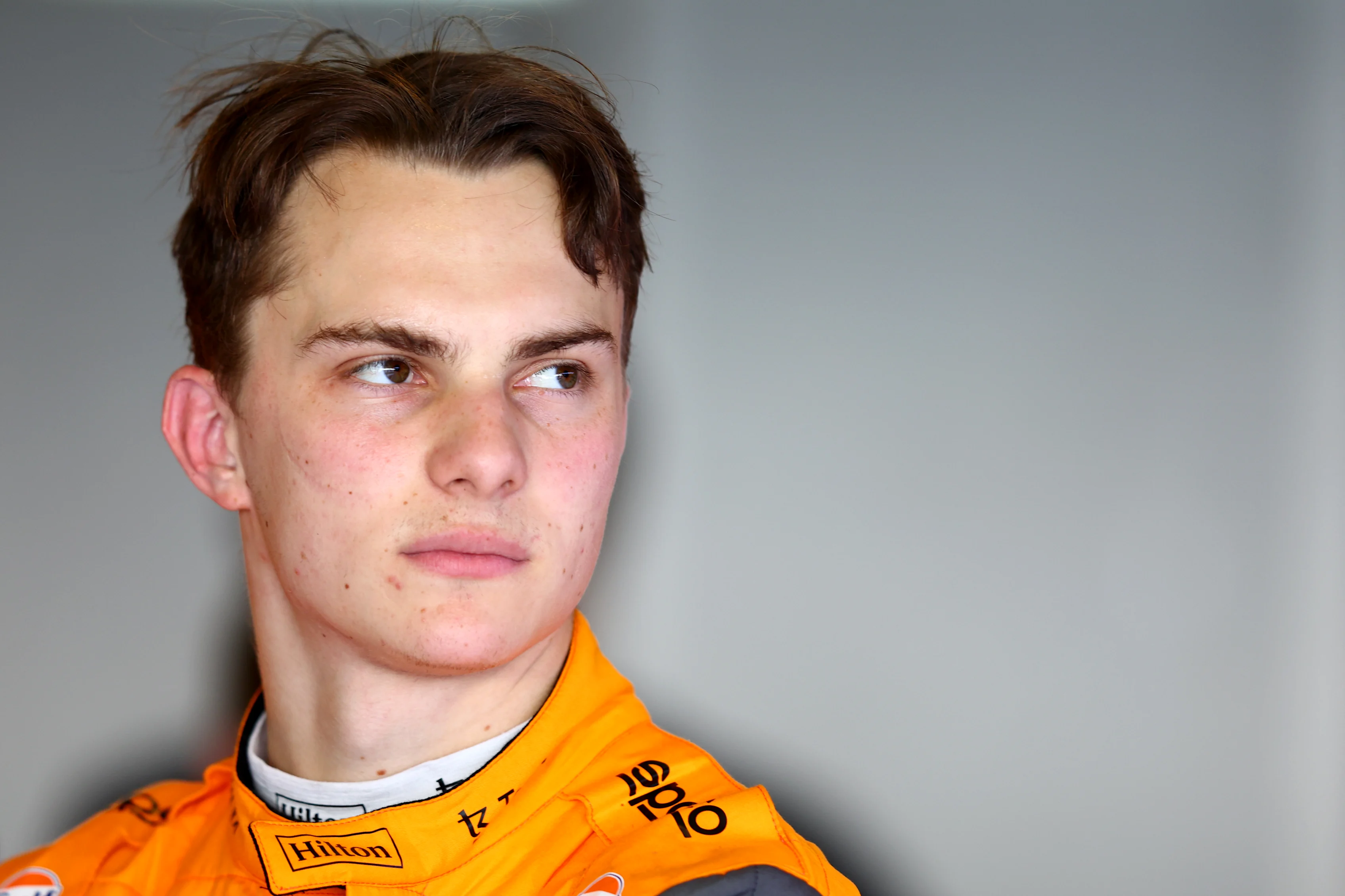
Webber's connection with Piastri stretches back to 2019, long before the Australian became one of the faces of McLaren. Piastri was progressing through junior single-seaters and won the Formula Renault Eurocup that year. He followed it with the FIA Formula 3 title in 2020 and the Formula 2 championship in 2021, an unusually persuasive sequence for a driver trying to earn one of only twenty Formula 1 race seats. An outstanding junior record, however, does not automatically translate into a place on the grid.
The hard part was converting those championships into an opening with the right team. Piastri was attached to Renault's junior programme and then the Alpine organisation. By 2022 he had the profile of a future star but was still serving as a reserve rather than starting a Grand Prix. Teams have their own commercial priorities, existing driver contracts and succession plans; a title in Formula 2 is not a guarantee that an academy can create room immediately. A management group must judge when to be patient and when waiting becomes the larger career risk.
That is where Webber's role became decisive. With the Alpine route unresolved, his team helped open negotiations with McLaren. The resulting move put Piastri into a race seat for 2023, replacing compatriot Daniel Ricciardo. The switch attracted unusual scrutiny because the public dispute over which organisation held Piastri's services played out before he had started his first Formula 1 race. What mattered for the driver's career was the final outcome: instead of another year watching from the sidelines, he would gain real mileage in machinery with the potential to improve.
For a young driver, the difference is enormous. A reserve role can preserve relationships but offers little opportunity to demonstrate tyre management, feedback under pressure, wheel-to-wheel judgment or qualifying adaptation against the established field. A race seat forces development into public view. McLaren could evaluate Piastri as an active competitor, and Piastri could build his value through results rather than promises about what he might achieve later.
It is also important not to rewrite the partnership's history in the light of its ending. A management agreement can conclude amicably even when its most consequential decision proved correct. Whatever happens next, that negotiation is a central part of why Piastri's journey from junior champion to Grand Prix contender accelerated so quickly.
GOATIFY
GOATIFY Formula 1
From junior titles to an F1 seat, celebrate the sport's biggest career breakthroughs with GOATIFY Formula 1 fan gear.


Podiums, a first win and a title fight made the partnership worthwhile
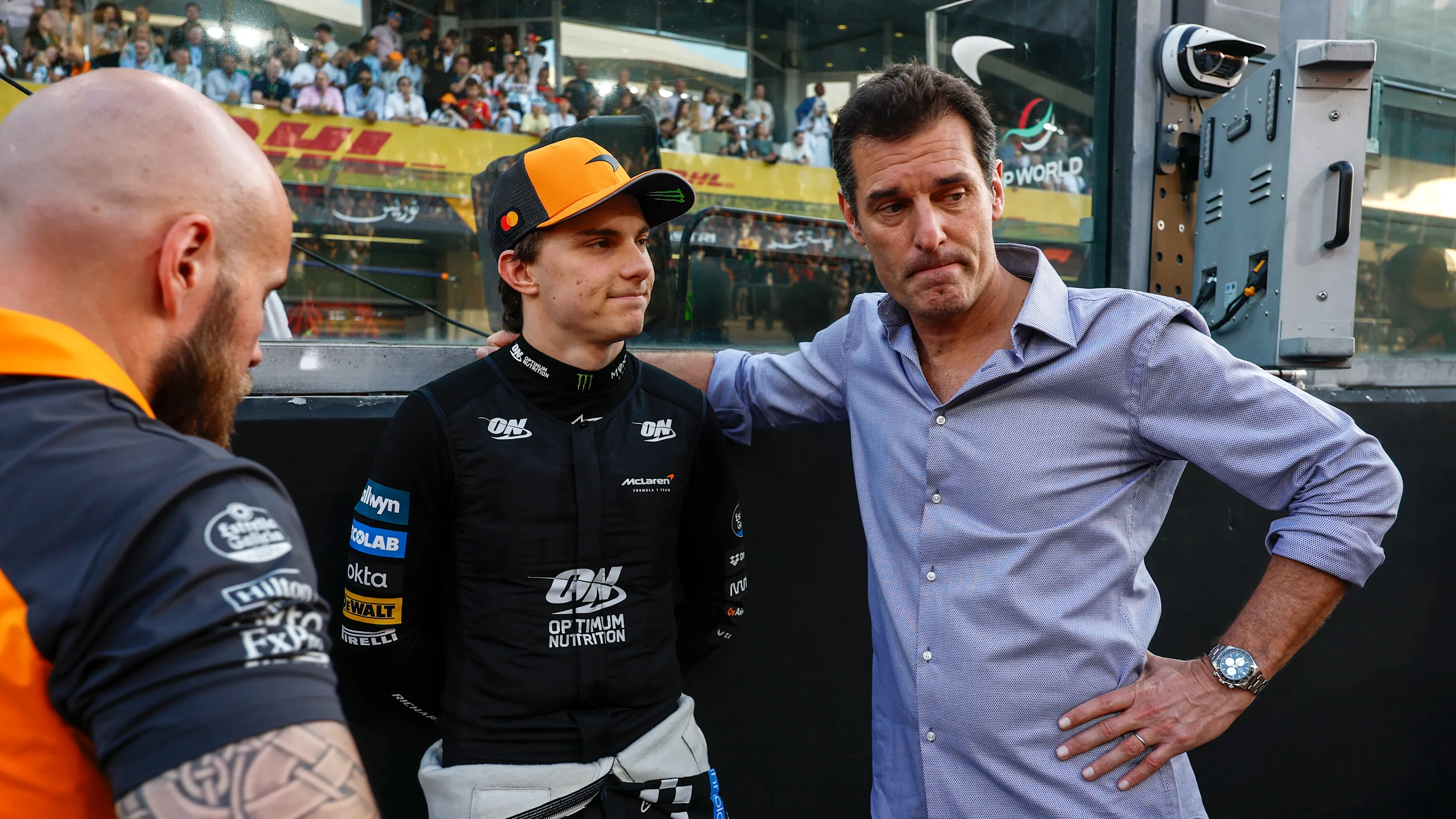
Once Piastri reached McLaren, the argument for his place on the grid became much easier to make. His rookie year in 2023 yielded two Grand Prix podiums. Those results were valuable not just as isolated trophies but as evidence that his junior-series achievements transferred to a radically different environment. Formula 1 asks drivers to manage tyres over much longer distances, adapt to changing aerodynamic behaviour and deliver under scrutiny every weekend. Piastri began answering those questions in his first season.
The next step came in Hungary in 2024, when he claimed his first Grand Prix victory. It was a marker of the career progression the management group had worked to unlock. He was no longer simply a highly rated prospect sharing a garage with Lando Norris; he was a race winner capable of delivering when McLaren had the machinery to compete at the front. Piastri has now reached nine Grand Prix wins, a level that would have seemed distant during the uncertainty of the Alpine reserve year.
By 2025, the story had grown into a championship challenge inside one of the sport's highest-profile teams. Piastri mounted a serious title campaign before losing out to Norris. That result invites two different but compatible conclusions. First, he had reached a position where a world title was a realistic ambition, vindicating the original McLaren gamble. Second, the demands on his entourage had changed. Supporting an unknown junior seeking a contract and supporting a race-winning driver fighting his own teammate for a championship require overlapping skills, but the day-to-day priorities are not identical.
At the top of Formula 1, a driver's career is shaped by several parallel relationships. There is the sporting relationship with engineers and team management, the contractual and commercial relationship handled by representatives, and the personal performance environment that helps a driver recover, prepare and stay focused. Those parts can intersect without being interchangeable. Success on track often creates the opportunity to reconsider how each part is organised.
None of this proves that the 2025 title contest caused the change announced in November 2026. The parties have not publicly made that connection, and their joint statement does not identify a disagreement over team orders, results or future negotiations. It would be easy to turn the split into an imagined behind-the-scenes power struggle, but the verified record is stronger without that embellishment. The partnership helped Piastri reach the grid, win races and challenge for the biggest prize. Its end does not erase that record.
What actually changes for Piastri after the São Paulo weekend?
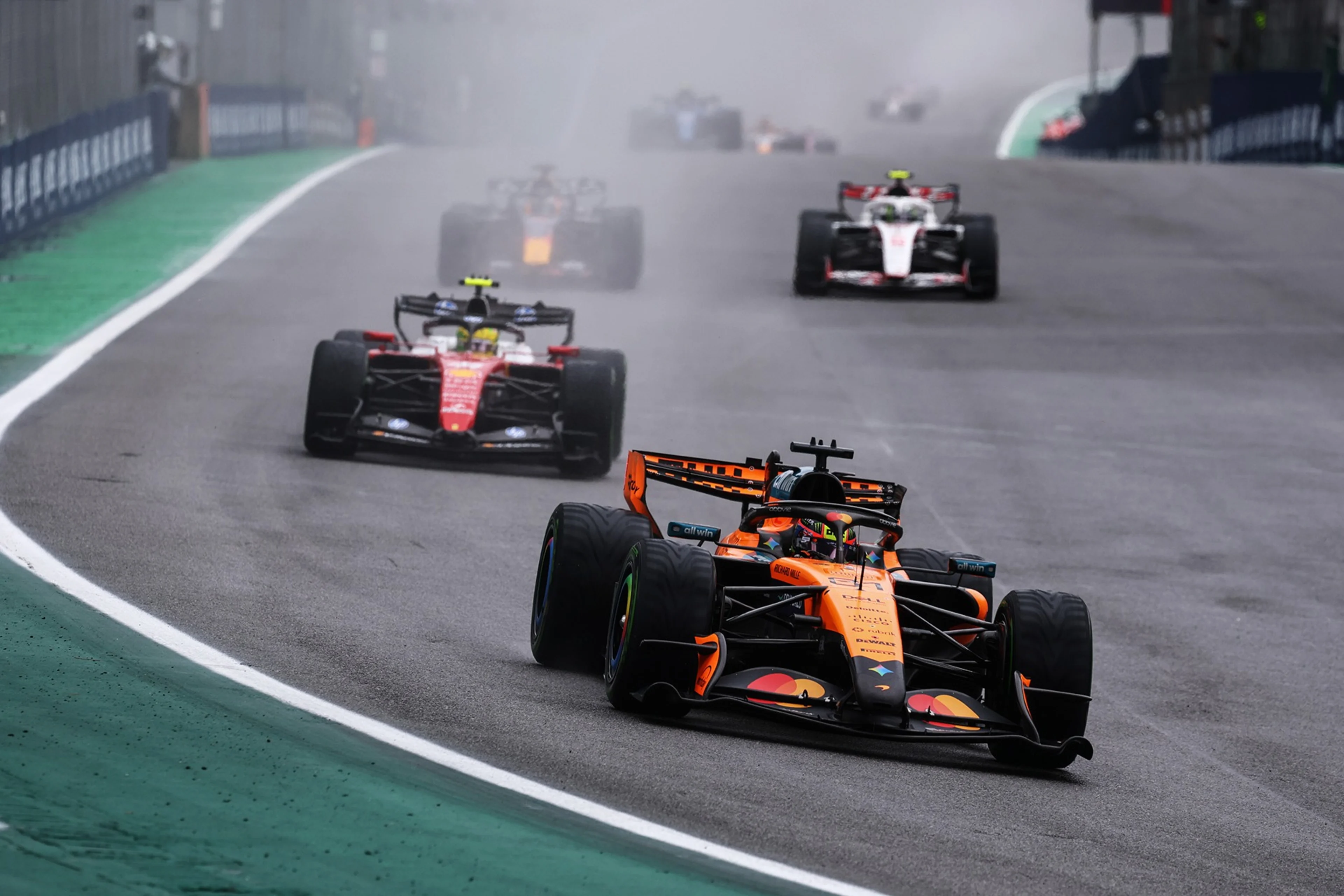
The timing of the separation is noteworthy, but timing alone is not evidence of a dramatic break. On Sunday, November 8, Piastri started tenth at Interlagos and finished sixth in McLaren's eventful race. The conditions shifted from a damp track to slick-tyre running and back toward rain. Piastri gained ground in the early laps, briefly climbed to fifth, and then lost track position during the later tyre cycle. Norris won the race for McLaren, giving the team a strong weekend even as Piastri was left looking for more.
That sporting context matters because it underlines how many decisions already sit within the team rather than with an external manager. Engineers and strategists handled the rapidly changing conditions, discussed tyre choices and executed pit stops. The people representing a driver away from the circuit are important, but they do not replace the race engineer, the pit wall or the team's responsibilities during a Grand Prix. Monday's announcement concerns Piastri's management structure, not an announced change of race team or car.
Another reason the separation should not be treated as an abrupt disappearance is that Webber's involvement had already become less visible at races during 2026. In his statement, Webber specifically acknowledged reduced trackside involvement. That detail suggests the practical transition began before the formal contract termination. Piastri's former Prema race engineer Pedro Matos and mental coach Emma Murray have taken larger roles around him in the paddock. Those are different areas of expertise from commercial representation, yet they indicate that his close working circle has continued to evolve.
There are still crucial questions the announcement does not answer. It does not name a replacement lead manager, spell out the precise commercial responsibilities moving to another person or confirm whether the existing performance-support group will change further. It gives no verified basis for claims of a dispute with McLaren, a contract renegotiation or a sudden attempt to move teams. Even the most compelling theory about paddock politics remains a theory unless Piastri, his representatives or McLaren provide more information.
As Piastri heads through the final part of 2026, the immediate task remains competitive rather than administrative. The Australian is seventh in the Drivers' Championship according to the announcement, while McLaren is trying to extract more from its late-season upgrades. A clear management arrangement could be useful in reducing distractions, coordinating commitments and handling long-term decisions. Whether it provides a measurable on-track benefit is something only future races can demonstrate.
The November announcement therefore marks a change in career infrastructure rather than a public verdict on either side's character. Webber can move toward new ventures after a successful chapter. Piastri can choose a structure tailored to the expectations placed on an established driver. Those two outcomes do not have to contradict each other.
GOATIFY
GOATIFY Formula 1
The next chapter begins on track: explore GOATIFY F1 apparel and racing-inspired designs.


The cleanest reading of the November 9 announcement is that a partnership which succeeded in getting Piastri to Formula 1 has reached the end of its natural chapter. Webber and his team helped secure the opportunity; Piastri turned it into podiums, victories and a genuine championship challenge. Those achievements survive the split. So do the relationships and experience both sides have accumulated.
For McLaren fans, the next development to watch is not a dramatic prediction about a transfer or feud. It is the practical identity of the new management structure, how Piastri separates off-track representation from his technical and mental-performance support, and whether a clearer arrangement helps him build consistency through the final races of 2026 and into 2027. The decision changes the people around the driver, not the fact that Piastri remains one of the grid's major talents.

















