

Prochazka Lost to an Injured Champion. Now He Wants to Fight Without Emotion.
GOATIFYJiri Prochazka has spent most of his career making the most dangerous moments look like invitations. He walks forward through chaos, changes angles while opponents are trying to find him, and turns exchanges that seem reckless into highlight finishes. That willingness to live with risk also helped cost him a light heavyweight championship in April. Now, two days before his UFC Qatar main event against unbeaten Navajo Stirling, the former champion says the part of his game that needs changing is not his appetite for violence but his response to the emotions inside it.
In a November 18 interview, Prochazka described a new emphasis on psychological control after losing to Carlos Ulberg at UFC 327. Ulberg was visibly compromised by a knee injury, yet caught the advancing Czech fighter and won the vacant belt. Prochazka is not presenting Saturday, November 21, as a gentle comeback. He is facing an 11-0 striker from Ulberg's own City Kickboxing camp, a man with momentum, knockout power and far less accumulated damage. The stakes are both tactical and personal: whether Prochazka can preserve the attacking identity that made him a champion while refusing the one invitation that ended his last title opportunity.
The winner in Doha will not automatically receive a championship bout. But the result will reveal considerably more than a name in the rankings. It will test whether the division's most spectacular former champion can become a more reliable five-round problem, and whether Stirling's rise is already strong enough to bypass the usual apprenticeship.
Ulberg's damaged knee did not make him a harmless opponent
An injured fighter is not the same as a beaten fighter. That distinction is at the center of Prochazka's account of UFC 327. Carlos Ulberg damaged his knee in the first round of their vacant light heavyweight title fight in Miami. The New Zealander was visibly having difficulty moving, and Prochazka appeared to have an opening that few title challengers ever receive. Yet the apparently vulnerable opponent still possessed his hands, timing and enough balance to deliver a decisive left hook. Ulberg landed the knockout and left with the championship.
The result was spectacular precisely because it overturned the usual expectation. A contender sees his opponent stumbling, increases pressure and assumes the finish is approaching. That is often sensible in mixed martial arts: a compromised leg can limit lateral movement, make defensive pivots harder and leave an athlete struggling to plant for counters. It can also encourage the pursuer to shorten the distance carelessly. Ulberg's win illustrated how even an injured striker can make one clean connection more important than several minutes of apparent control.
Prochazka's own explanation adds a mental dimension without removing Ulberg's achievement. Speaking before the Qatar card, he said that he had allowed emotion to interfere with his focus and had worked with his coaches to change that response. It is his interpretation of the loss, not an independently measured finding about his thoughts during the exchange. The visible tactical lesson is narrower and more useful: a finish becomes dangerous when a fighter advances without retaining the defensive responsibilities that existed before the opponent was hurt.
That matters especially to Prochazka because his style routinely blurs the line between controlled offense and surrendering position. He uses irregular rhythm, changing levels, spinning attacks and unexpected entries to disrupt opponents who prefer a predictable exchange. The price of unpredictability is that his own guard can become loose during transitions. Against a sharp counterpuncher, the window required is small. Prochazka cannot erase the risk from his game without erasing the very movement that forces rivals into mistakes.
One tempting conclusion is that he simply needs to become conservative. That is too easy. A conservative Prochazka who waits at long range and gives the other man a clean first strike may lose his greatest advantage: pressure built from a sequence of problems that cannot be rehearsed in a textbook stance. The better adjustment is selective discipline. When a rival is hurt, a veteran can attack with an exit route, keep one hand in position as the other fires and reset rather than chasing a single exchange past the point of control.
GOATIFY
GOATIFY UFC & MMA
The champion found one opening and changed everything. Explore GOATIFY MMA fan clothing for the next big fight night.


MMA GOAT Gold Middle Finger Fight Crewneck Sweatshirt
A MMA fan design for everyday wear.
Shop Now ↗


Rogainz Joe Rogan UFC MMA Martial Arts Sticker
Add MMA personality to your favourite gear.
Shop Now ↗
The April defeat also affects how Saturday's fight should be judged. An instant first-round knockout would be emphatic, but it would not necessarily prove that Prochazka solved his recurring weaknesses. A patient performance that survives failed attacks and disciplined resets might tell observers more. The chance to show growth exists whenever Stirling resists the initial assault, forces a technical adjustment or threatens with a counter. What matters is whether Prochazka treats those moments as information rather than provocation.
The champion still holds the physical result that Prochazka wants to reverse. Doha is not a rematch, and nothing that happens there rewrites April. But it can provide evidence of whether the same mistake is likely to recur. A fighter who learns from a knockout without losing his identity is a very different challenger from one relying on the belief that the next injured opponent will finally stay down.
The 'new Jiri' needs a working guard, not a new personality

Professional fighters often describe a technical redesign in language that sounds like a complete reinvention. Prochazka's version is both more modest and more credible. In an official UFC interview this week, he specifically discussed keeping his hands higher, becoming more tactical and reacting less emotionally during difficult exchanges. These are not exotic additions to a training plan. They are fundamentals made unusually important by an athlete whose greatest weapon has always been his ability to create unstructured fights.
A higher guard alone will not guarantee protection. Fighters can raise their fists and still enter straight lines, finish combinations with their chin uncovered or remain in range after an attack ends. For Prochazka, the real test will be the moments between movements. Does he leave the pocket after a missed spinning attack? Does he square his stance while changing direction? Can he defend the immediate return shot after he throws the kind of unconventional punch that makes the crowd erupt?
The difference between aggressive and reckless fighting is often the ability to make a second decision. Aggression starts the exchange. Control decides whether to extend it. A fighter can pressure with feints, force a rival toward the fence and then change his mind when the opponent times a counter. That pause can create a better opening than the punch that seemed available a moment earlier. The ability to abandon an imperfect sequence is a skill, not evidence of hesitation.
Five-round readiness adds another layer. Prochazka's finishes have made his fights exciting, but a main event scheduled for 25 minutes punishes extended bursts that do not pay off. Stirling can force the veteran to spend energy reading threats rather than simply creating them. A more disciplined Prochazka should be willing to bank minutes with defensively sound attacks, use low-risk movements to preserve position and retain enough stamina to pursue a finish late instead of demanding it early.
None of this means abandoning the philosophy or odd angles that distinguish him from conventional kickboxers. He can still work from unusual stances and find entries that other fighters will not attempt. The evolution lies in being able to return to a sound base immediately afterward. A creative athlete becomes harder to beat when his mistakes do not automatically create clean scoring opportunities for the opposition.
His preparation also has a personal backdrop. Prochazka became a father after the April title fight and has said the experience has encouraged more structure, consistency and discipline in daily life. That story is meaningful without proving a sporting outcome. Motivation can sharpen a camp, but opponents do not hand over points because the other fighter has found a new purpose. The only proof will be observable decisions under physical pressure, particularly when the familiar impulse to engage in a wild exchange begins to surface.
GOATIFY
GOATIFY UFC & MMA
Clever technique matters as much as power. Browse GOATIFY UFC and MMA-inspired tees, hoodies and fight-fan designs.


UFC GOAT Gold Middle Finger Fight Decal Sticker
Add MMA personality to your favourite gear.
Shop Now ↗


The line between self-expression and control is the central story of his return. Fans do not need a bland version of Jiri Prochazka. They need a fighter whose unorthodox attacks remain threatening when an opponent survives them. If the Czech star can retain that chaos as an offensive weapon while reducing the needless exposure after each strike, the proposed new version could be more formidable than the old one.
Stirling has the weapons to make that experiment uncomfortable
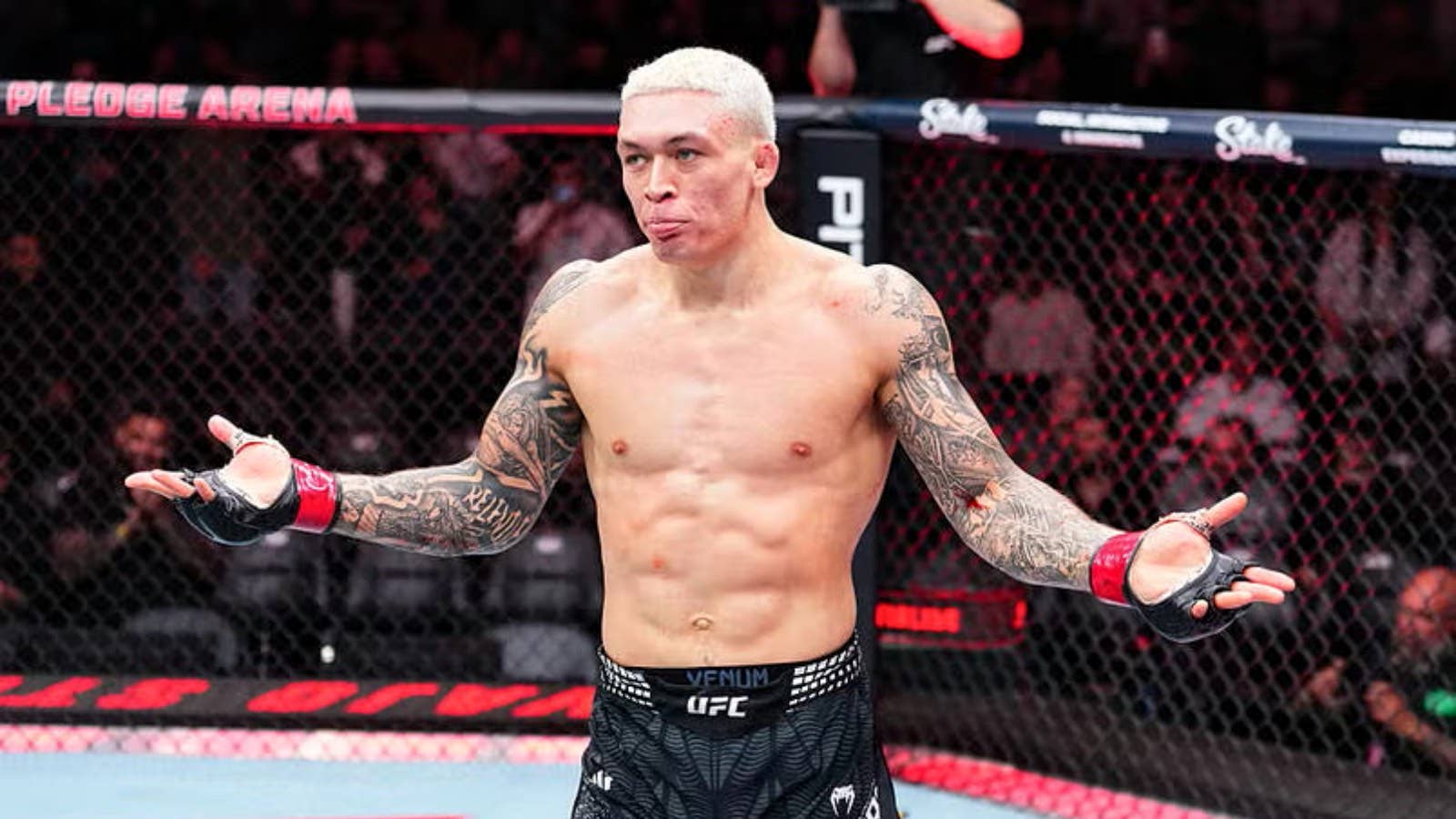
Calling Navajo Stirling a prospect would understate the work he has already done. The Auckland-based contender enters the November 21 headliner at 11-0, having won six UFC bouts since earning his contract through Dana White's Contender Series. His 2026 run includes stoppages of Bruno Lopes, Ion Cutelaba and former light heavyweight champion Jan Blachowicz. Those results have turned an intriguing new face into a legitimate threat to the former champion waiting across from him.
Stirling's background in kickboxing and Muay Thai makes this a particularly meaningful test of Prochazka's defensive adjustments. He is comfortable managing a striking contest, and his recent finishing streak suggests that his ability to hurt opponents now translates against increasingly serious MMA opposition. Prochazka's awkward rhythm can frustrate a technical striker. But loose entries can just as easily give that striker clear targets and opportunities to time his next move.
Stirling is also not arriving as a lone fighter trying to solve an unfamiliar puzzle. He trains with City Kickboxing, the New Zealand gym associated with Carlos Ulberg, Israel Adesanya and other experienced elite fighters. The Ulberg connection is intriguing because the current champion was the man who punished Prochazka in April. It would be wrong to assume Stirling can simply replicate Ulberg's finish, or that teammates have a perfect formula. Still, access to a room that has already prepared for this opponent is a meaningful analytical detail.
His rise has followed a useful progression. Early UFC decision wins supplied rounds in which he had to manage the clock and opponents who would not quickly go away. The more recent finishes demonstrated that he could convert positioning and pressure into decisive offense. Against Prochazka, those two capabilities need to coexist. A headliner can quickly become the most demanding 25-minute assignment of a young fighter's career even when his previous opponents looked overwhelmed.
Stirling will need to resist Prochazka's attempt to drag him into exaggerated reactions. A patient jab, measured leg work, defensive footwork and counters after missed attacks could reduce the former champion's opportunity to turn chaos into offense. But excessively passive movement can cede ground and scoring initiative. Stirling must decide when to hold position, when to exchange and when to make the champion pursue him on terms that favor the younger striker.
The most difficult part of the assignment may be emotional rather than technical. This is Stirling's first UFC main event, opposite a former champion who has built an international following through improbable comebacks and spectacular finishes. The story surrounding Prochazka's reinvention can make Stirling seem like a supporting character. The betting market, ranking stakes and arena atmosphere do not alter a basic fact: he is an unbeaten opponent with enough recent evidence to be treated as a live threat, not a ceremonial tune-up.
For both men, the first round will reveal tactical information but should not be mistaken for an entire fight. A hesitant Prochazka might be absorbing reads rather than losing confidence. A Stirling who wins early exchanges could still be forced into unfamiliar late-round adjustments. Saturday's result will reflect which man can repeat good decisions once the opponent begins changing the questions.
GOATIFY
GOATIFY UFC & MMA
A new contender can change an entire division. Find GOATIFY MMA apparel for fans following the next wave of fighters.

UFC GOAT Gold Middle Finger Fight Decal Sticker
Add MMA personality to your favourite gear.
Shop Now ↗A path back to Ulberg runs through risk, not entitlement
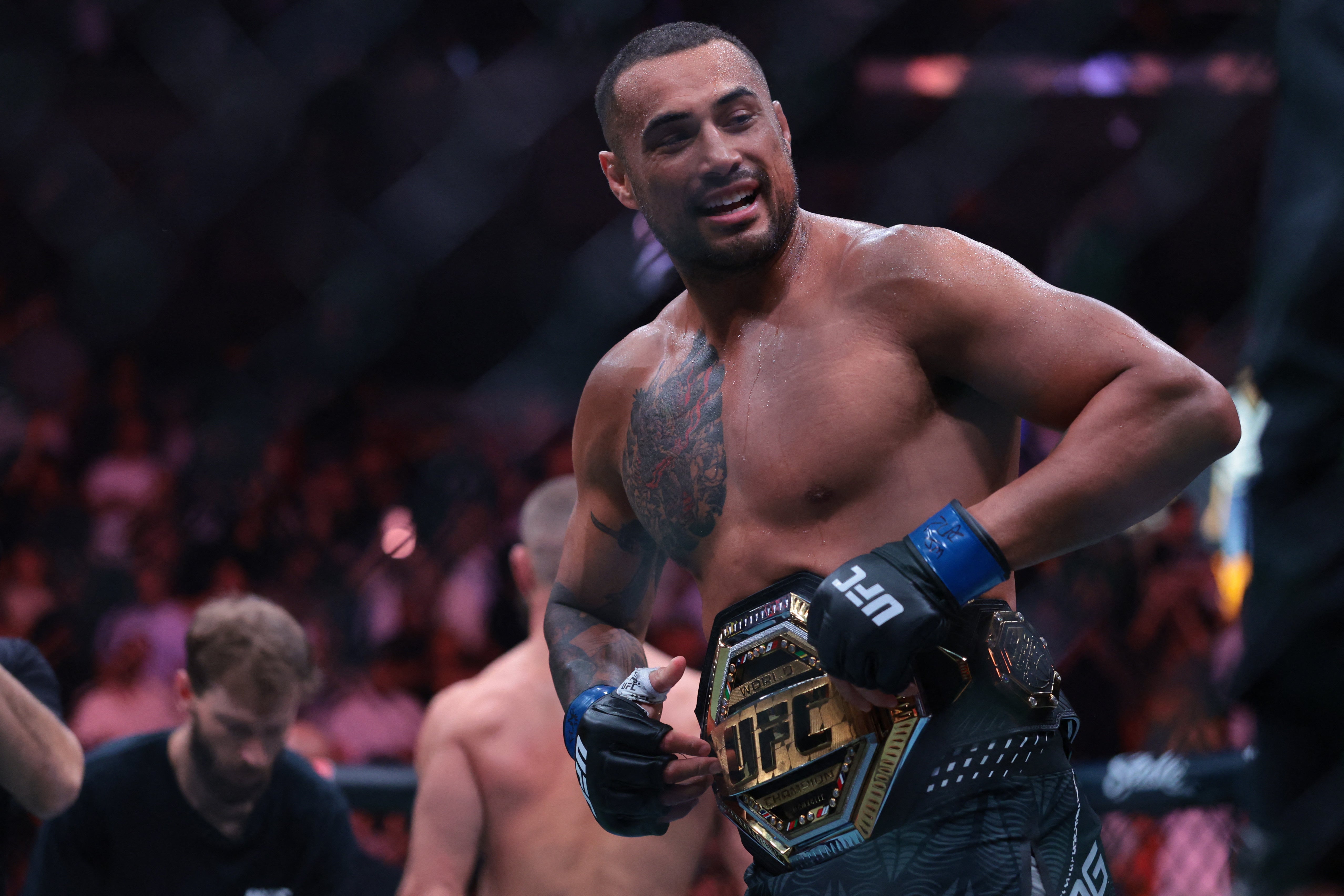
A victory in Qatar would strengthen Prochazka's argument for another light heavyweight title shot, especially because it would come against an undefeated contender from the reigning champion's own gym. It would not create an automatic contractual right to fight Ulberg. Championship matchmaking also depends on the titleholder's health, other contenders, calendar availability and the UFC's priorities. A convincing performance would make the case easier to sell, but the promotion would still make the decision.
Ulberg's injury adds unavoidable uncertainty. He tore his ACL during the April bout yet still finished Prochazka, and the recovery timeline of a major knee injury can shape when a champion is ready to defend his title. That is separate from how many impressive wins the division produces in his absence. A fighter's position in the queue can improve while the actual title date remains unresolved. Predictions about an immediate rematch should therefore be treated as possibilities, not announced plans.
If Stirling wins, the consequences could be even more dramatic. An unbeaten contender would have beaten a former titleholder in his first five-round UFC headliner, after already stopping another former champion in Blachowicz. The victory would demand attention across the top of the rankings and raise the unusual prospect of two men from the same New Zealand training camp competing for the same championship. Whether teammates would accept that matchup, and when, would remain to be determined.
A close decision is different from a definitive finish. If Prochazka edges a difficult fight while looking more composed, he may have proved meaningful growth without generating immediate demand for a rematch. If he finishes Stirling early through his familiar swarming style, he will have restored momentum but may still leave questions about the discipline he says he has been developing. Likewise, a competitive Stirling defeat would not erase the value of his rapid progression, even as it slows the march toward a title fight.
UFC Qatar is also an international event with its own spotlight. The November 21 show at Doha's ABHA Arena includes a featherweight co-main event between Aljamain Sterling and Kevin Vallejos, but the light heavyweight headliner carries the clearer long-term championship narrative. Prochazka is attempting to re-establish himself after a shocking knockout; Stirling is attempting to turn unbeaten promise into a win that cannot be dismissed. Both have more to gain than the usual main-event exposure.
The tactical questions matter more than the belt predictions because they are observable Saturday. Will Prochazka keep structure when a finish appears close? Can Stirling pressure an experienced former champion without allowing the fight to become a frantic exchange of power shots? Who makes the better adjustments when the opening plan stalls? Those answers can forecast the fighters' chances against the division's elite more reliably than a confident post-fight callout.
In the best version of this matchup, each man forces the other to demonstrate a skill he has not fully had to prove. Prochazka must show that the lesson of April survives contact with a younger, dangerous opponent. Stirling must show that his meteoric rise includes the patience and adaptability demanded by a five-round headliner. Whichever outcome arrives, there is no need to pretend the winner has already been promised Ulberg. The strongest claim will be the performance itself.
Prochazka's message before Doha is striking because it identifies a problem that cannot be fixed by throwing harder. He has the finishing ability, experience and imagination to trouble almost anyone at 205 pounds. What he wants now is the freedom to use those strengths without letting an emotional reaction give the other fighter an easy opening.
Stirling arrives with no obligation to honor the comeback script. His unbeaten record, growing finishing resume and City Kickboxing preparation make him an opponent capable of revealing whether the adjustment is real. This is not a referendum on Prochazka's personality or an automatic title eliminator. It is a meaningful test of decisions under pressure. The winner will carry powerful evidence into the light heavyweight conversation; the loser will face a harder question about what must change next.
GOATIFY
GOATIFY UFC & MMA
Following the Prochazka-Stirling title chase? Shop GOATIFY UFC and MMA shirts, caps, hoodies and fight-fan gifts.
Rogainz Joe Rogan UFC MMA Martial Arts Sticker
Add MMA personality to your favourite gear.
Shop Now ↗MMA GOAT Gold Middle Finger Fight Crewneck Sweatshirt
A MMA fan design for everyday wear.
Shop Now ↗


















