Ten Hag Says United Broke the McTominay Promise — Napoli Made It Sting
GOATIFYErik ten Hag has reopened one of the most revealing arguments from his Manchester United tenure: the sale of Scott McTominay. Speaking in an interview published on October 20, 2026, the former United manager said he had received assurances about the club's direction after the 2024 FA Cup triumph, only to watch a player he explicitly wanted to keep leave for Napoli weeks later. His account does not prove that one transfer caused United's subsequent problems. It does, however, expose a more important question: who was actually making football decisions when the manager and the new leadership said they were building the same team?
The fee, approximately £25.7 million, looked like a practical piece of squad trading in August 2024. Two years later, McTominay has a Serie A title and a league MVP award to his name, while United have gone through another cycle of uncertainty. That contrast makes Ten Hag's latest explanation unusually consequential. The real story is about squad balance, financial incentives and the difference between agreeing on a plan and sticking to it.
The Ibiza promise Ten Hag says United broke
The timing of the dispute matters. United had beaten Manchester City 2-1 at Wembley in May 2024, with Alejandro Garnacho and Kobbie Mainoo scoring the goals. Ten Hag had delivered the FA Cup after winning the League Cup in his first season, yet his league results had put his position under serious scrutiny. Club officials eventually extended his contract, and discussions during his holiday in Ibiza were intended to establish how the manager and the new football leadership would work together.
In the October 20 interview, Ten Hag described that conversation as an agreement on loyalty, backing and communication. He says retaining McTominay was part of the understanding. His argument was not simply sentimental attachment to an academy graduate. United had struggled to find goals from midfield, and McTominay had scored 10 times in all competitions in 2023-24. Only Bruno Fernandes and Rasmus Højlund, each with 16, scored more for the club that season. For a side that often had trouble turning possession into clear chances, a midfielder who arrived late in the box offered a specific and useful threat.
McTominay was not a classic possession controller or a creative No. 10. His strongest attacking contributions came from timing, physicality and the willingness to run beyond a striker. Those qualities are easy to undervalue if a club judges midfielders primarily by passing volume or by whether they fit one idealized position. Ten Hag appears to have valued a practical alternative: a player who could change the shape of a game without requiring the entire attack to be redesigned.
United nevertheless accepted Napoli's offer, while Manuel Ugarte arrived from Paris Saint-Germain during the same window. The two deals were not a straight player-for-player swap, and it would be misleading to claim they were. They did, however, symbolize different priorities: retaining a proven late-running scorer versus investing in a more specialist ball-winning midfielder. McTominay's academy background also made a sale financially attractive under accounting rules, because a homegrown player's fee can be booked as substantial profit. That is an important possible incentive, not proof of what any individual executive privately decided.
Ten Hag's version is one side of a disagreement, not an independently established record of a binding promise. Executives can reasonably believe a transfer is necessary even when a manager disagrees. The damaging part, if his account is accurate, is the gap between the consultation he thought he had received and the authority he actually possessed. For supporters, that is more revealing than a simple argument over whether McTominay was good enough to start every week.

Napoli turned McTominay's late runs into a title-winning weapon

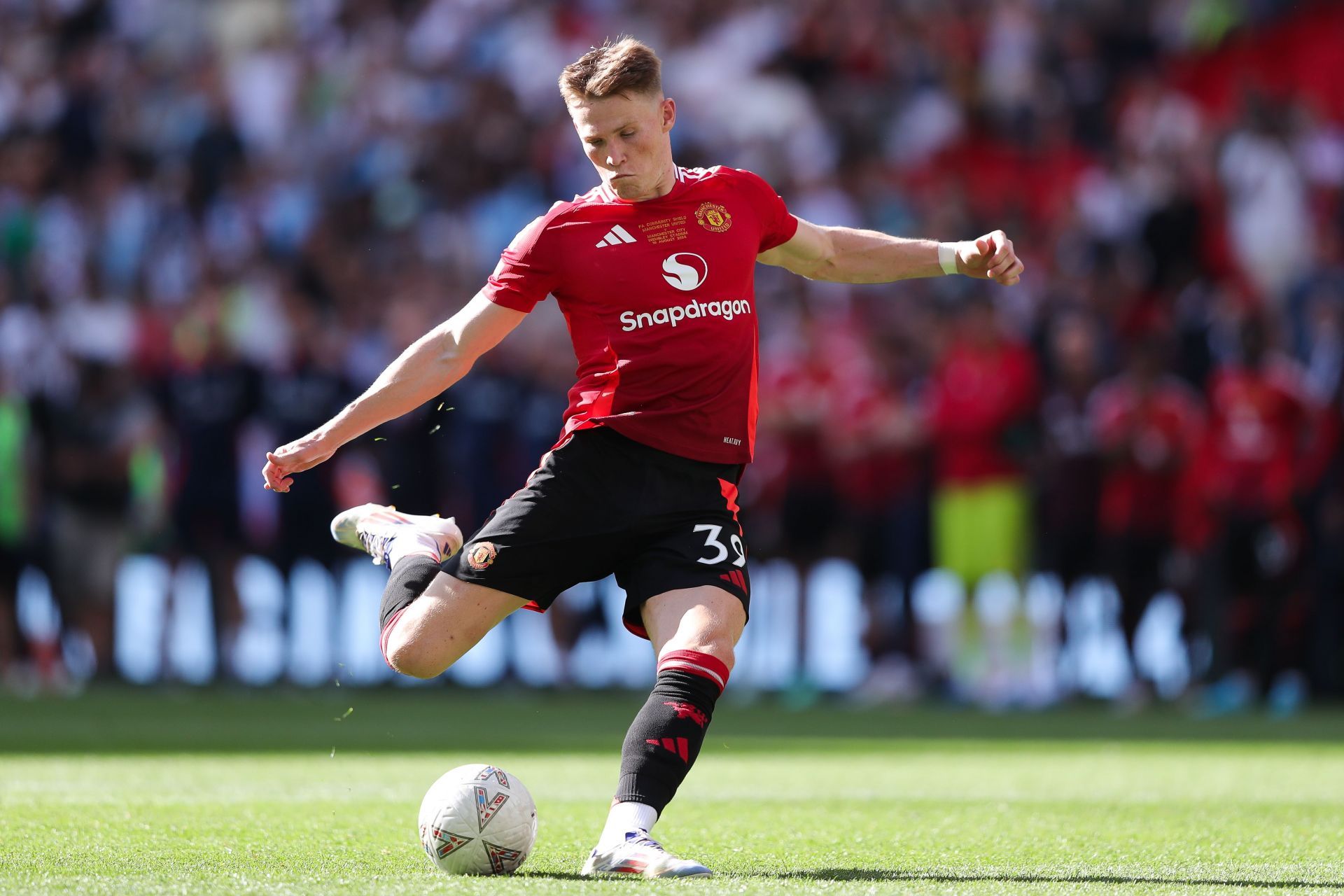
Napoli gave McTominay something he had rarely enjoyed consistently at Old Trafford: a role built around his most productive movements. Under Antonio Conte, he could break forward, attack space around the box and support the striker rather than being treated primarily as a conservative central midfielder. His debut season in Italy ended with Napoli winning Serie A, and he was recognized as the league's most valuable player. He scored 12 league goals in that championship campaign, a remarkable return for a player sometimes dismissed as limited during his years in Manchester.
Those numbers should not be used as a shortcut to the claim that United automatically would have won more matches by keeping him. The tactical environment changed. Napoli offered a different balance of defensive cover, attacking freedom and responsibility. A player can be an excellent fit in one system and an imperfect fit in another. What his success does challenge is the idea that his scoring contributions were incidental. Ten Hag had identified a repeatable strength, and a different club found a way to maximize it.
McTominay's own account of his departure complicates the story in a useful way. He later described a difficult but amicable final conversation with Ten Hag at Carrington. He emphasized the need to make a career decision for himself and spoke warmly about the club where he had spent more than two decades. In other words, a manager wanting a player to stay does not mean the player had no reason to welcome a fresh challenge. His move was not simply an asset being pushed out of the door; it was also an opportunity he chose to take.
The comparison has remained current in October 2026. After treatment for a benign heart-rhythm problem, McTominay was medically cleared to return to action, with Napoli confirming his availability in early October. Reports this month have also described discussions about extending a contract that runs until 2028. Those developments are separate from Ten Hag's 2024 dispute, but they underline how central the Scotland international has become to his new club's plans. A departure that once looked like ordinary squad housekeeping is now part of a much bigger argument about talent recognition.
It is worth separating hindsight from process. Napoli's title and McTominay's individual honors were not guaranteed when United sold him. A club must judge the player, the role, the offer and its other needs using the information available at the time. The strongest criticism is therefore not that executives failed to predict every future goal in Italy. It is that United may have lost a useful, unusually versatile attacking option while still struggling to build a coherent midfield. The player improved his career; the club has yet to demonstrate that the trade-off strengthened its own.
What the dispute says about United's 2026 rebuild

Ten Hag's dismissal in October 2024 came after United won only three of their first nine Premier League matches that season. The FA Cup had bought him another opportunity, but it did not erase the weaknesses of the league campaign. His new interview revisits that tension: a manager who believed the project was beginning to improve and a hierarchy that ultimately concluded a change was needed. Neither his two trophies nor his poor league record should be ignored when assessing the breakdown.
His comments also extend beyond McTominay. Ten Hag says he wanted United to pursue Harry Kane and Declan Rice more aggressively and that he held repeated discussions in an attempt to convince Frenkie de Jong to join. These are retrospective claims about negotiations, not evidence that the transfers were ever close to completion. Kane joined Bayern Munich, Rice moved to Arsenal and De Jong remained at Barcelona. The significance is that Ten Hag is describing a recurring mismatch between the kind of squad he thought United needed and the signings that were actually delivered.
United's current circumstances make the interview more than an exercise in settling old scores. Under Michael Carrick, the club entered the October 21 Champions League trip to Como without a win in six matches, according to the latest match preview. That run belongs to a different manager and a different squad, so it cannot fairly be blamed on a sale made in 2024. It does, however, keep the spotlight on the same underlying issue: whether recruitment, coaching style, development and financial decisions reinforce one another or pull in different directions.
There is a temptation to make McTominay the symbol of everything that has gone wrong at Old Trafford. That would flatten a complicated period into one easy verdict. United have had injuries, changes of manager, expensive acquisitions and recurring tactical problems. McTominay was neither a complete midfielder nor a guaranteed solution to those problems. But he was an available source of goals, a homegrown leader and a player whose strengths were known to the staff. Losing that combination required a credible plan for replacing its contributions, not merely a transaction that looked neat on a spreadsheet.
Ten Hag is now working as technical director at FC Twente, which gives him distance from the day-to-day pressure of the United dugout. That does not make his account impartial, but it does make the questions worth asking. Who sets the football identity? How much say does the head coach have in keeping a useful squad player? When financial logic points toward a sale and tactical logic points toward retention, who explains the compromise? Successful clubs can disagree internally; the key is to make those disagreements part of a consistent plan rather than allowing them to become surprises.

McTominay's Napoli story is an extraordinary personal success, but Ten Hag's October 20 revelations are ultimately about Manchester United's decision-making. The former manager says he asked to keep a player whose goals mattered, believed the leadership had agreed and then watched the opposite happen. United may have had defensible financial reasons for the sale; the public record does not establish otherwise. What the episode exposes is how easily a rebuilding project loses credibility when its coach, recruitment team and ownership appear to be operating from different assumptions.
For United, the useful lesson is not to reverse a two-year-old transfer. It is to ensure that the next decision about a player with a distinctive strength comes with a clear football rationale, a realistic replacement plan and genuine alignment across the club. That would do more for the future than another argument about who was right in Ibiza.