

Triay and Brea Lead by 1,980 Points — But Kuwait Could Flip Women's Padel
GOATIFYWomen's padel arrives at the Kuwait Major with a very different title race from the one that seemed to be taking shape in September. Gemma Triay and Delfi Brea still lead the 2026 standings, but Ariana Sánchez and Andrea Ustero have made the final weeks of the season genuinely competitive. A 1,980-point lead looks substantial until the next tournament is a Major worth 2,000 points to its champions.
The new pressure is not simply about one surprise result. Sánchez and Ustero have repeatedly beaten the leaders during the European swing, including another straight-sets semifinal win in Milan, and converted that form into titles. Kuwait therefore offers two stories at once: whether the established number ones can reassert control, and whether the challengers can turn a run of head-to-head success into a sustained assault on the ranking.
Triay and Brea still lead — but the 1,980-point cushion is suddenly fragile

Triay and Brea have not surrendered the top spot. Their six titles this season, including the Italy Major and Madrid P1, are evidence of how hard it is to sustain a challenge against them. The latest reported Race picture entering Kuwait puts them on 12,020 points, compared with 10,040 for Sánchez and Ustero. That is a 1,980-point lead, a margin built across months rather than a single strong fortnight.
But standings can conceal changes in form. The leaders have been stopped in the semifinals at Rotterdam, Düsseldorf and Milan, each time by the same chasing partnership. In a season-long race, reaching the last four remains a strong result; when the pair behind you is winning titles, however, those Saturdays start to carry a cumulative cost. The issue is not that Triay and Brea have become ordinary. It is that the challengers are now taking away the matches that used to protect their advantage.
The matchup also puts different demands on each half of the court. Triay's aggressive positioning can shorten points and punish short lobs, while Brea's movement and ability to redirect pressure give the partnership its stability. Against Sánchez and Ustero, the leaders need to choose their attacking moments more carefully. A rushed volley or an overambitious overhead can hand initiative to opponents who are increasingly comfortable defending, changing direction and counterattacking.
Kuwait gives the leaders a chance to restore the simplest form of authority: beat the best teams when the points are most valuable. Even a deep run without the trophy would protect some of their lead. A title, especially if it comes through their direct rivals, would change the tone of the entire closing stretch. The question is whether they can move from consistent semifinalists back to the side controlling finals.
Sánchez and Ustero have turned three semifinals into a pattern

The most revealing number is not only the gap in the Race. It is the sequence of direct meetings. Sánchez and Ustero beat Triay and Brea 6-2, 6-3 in Rotterdam, edged them 7-5, 3-6, 7-5 in Düsseldorf, then won 6-1, 6-4 in Milan. Those are three different match shapes: control from the outset, resilience in a deciding set and then an emphatic performance against the same opponents. Together they look less like an isolated upset and more like a repeatable plan.
Milan supplied particularly clear evidence. Sánchez and Ustero won 60 points to 38 in the semifinal and claimed 85 percent of their service points, according to match statistics. That is an unusually commanding platform against a pair ranked first in the world. The challengers were not merely surviving rallies and hoping for errors. They were protecting their own service games while putting the leaders under repeated pressure on return.
The partnership has a compelling balance. Sánchez supplies experience, court management and the capacity to keep a rally organized under stress. Ustero brings speed, invention and an ability to change the tempo before opponents have fully settled into a pattern. When those strengths connect, they can force Triay and Brea to defend unfamiliar angles and make attacking decisions from less comfortable positions.
The Milan title then converted semifinal superiority into ranking progress. Sánchez and Ustero defeated Bea González and Paula Josemaría 7-6(3), 6-3 in the final, taking their fifth title together in 2026. They have won three of the past four tournaments. The concern for the leaders is that this is no longer a challenger who can win one head-to-head but struggle to complete the week. The pair has learned to turn its best days into trophies.

González and Josemaría can still decide who finishes number one
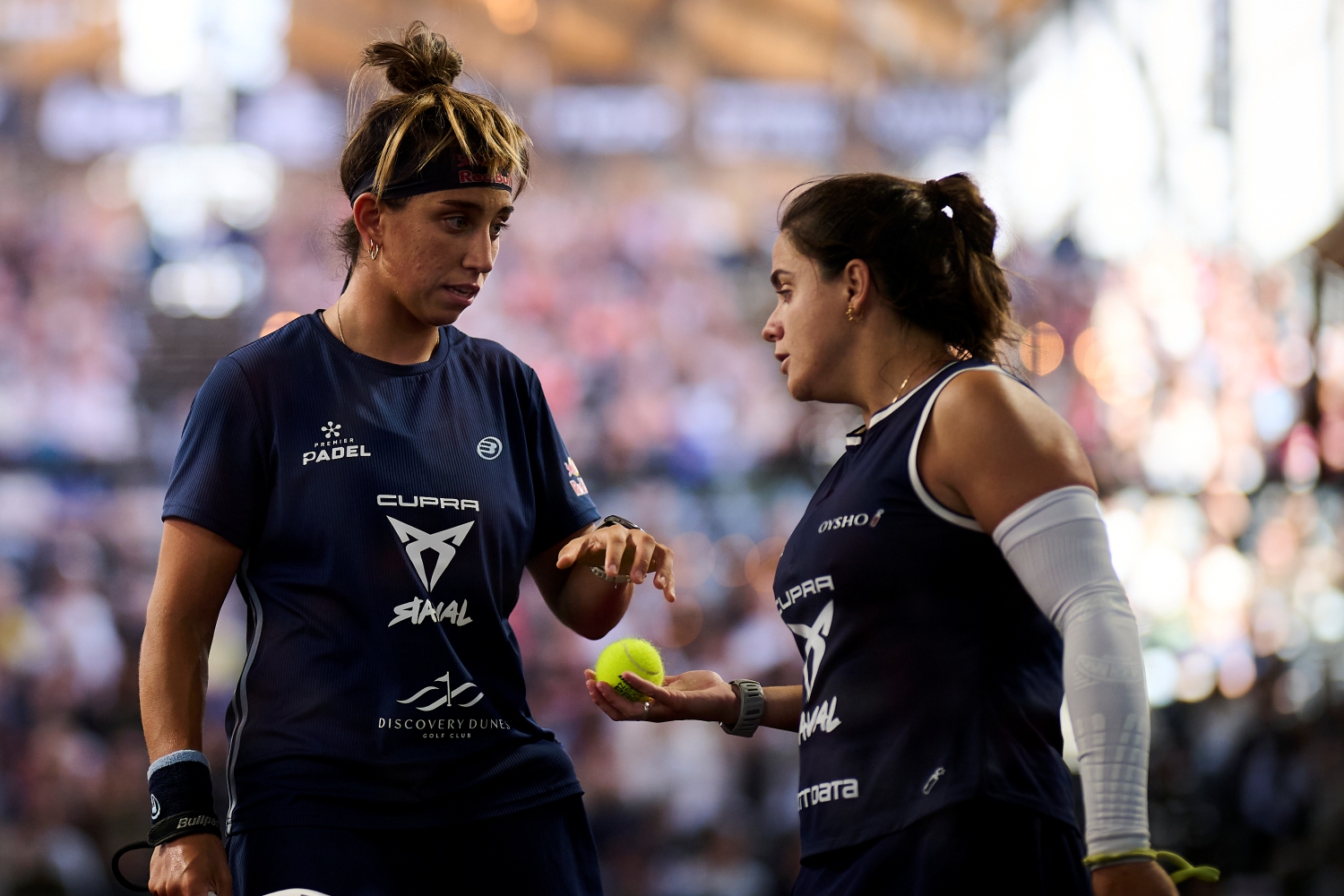
Reducing the women's race to two pairs would miss a crucial part of the story. González and Josemaría have also won six titles this season, and they remain capable of beating either of the teams ahead of them. Their path to year-end number one is more complicated, but their influence on the outcome could be decisive even if they do not finish at the top themselves.
Their rivalry with Triay and Brea has swung repeatedly during the year. In Madrid in September, González and Josemaría won the first set of the final before the leaders recovered for a 6-7, 6-3, 6-3 victory. That match illustrated both the danger they pose and the difficulty of sustaining pressure against the top pair for an entire final. Their aggressive exchanges and willingness to attack can unsettle anyone, but small lapses against experienced opponents are expensive.
Milan provided a different lesson. González and Josemaría reached the final but lost to Sánchez and Ustero after a first-set tiebreak. It was a match that reinforced the challengers' form while also showing how narrow the margins remain among the elite. One tight set could have sent the momentum of the title race in a different direction.
That is why the draw matters in Kuwait. A semifinal between two of these partnerships could remove one contender before the final, while the third could benefit from a different route. The points table records titles and rounds reached, but it does not show the difficulty of every path. The best way for González and Josemaría to stay in the conversation is to keep reaching the last weekend and force the others to beat them rather than relying on someone else's defeat.
Kuwait's 2,000 points make every round matter before Dubai and Mexico

The Kuwait Major is a high-leverage stop because a champion receives 2,000 ranking points. The official tournament runs through October 31 at The Arena Kuwait, with women's main-draw play beginning October 26. It is not a routine week that can be brushed aside in favor of the season-ending events. A deep run here can materially alter the standings before the tour moves on.
Consider the reported 1,980-point gap between Triay/Brea and Sánchez/Ustero. That number is slightly smaller than the winner's allocation in Kuwait, but it would be misleading to say a trophy automatically flips the order. Both pairs can earn points, and the outcome depends on how far the leaders progress as well as what the challengers achieve. The important principle is relative gain: a title matters most when the team ahead exits early.
One plausible pressure scenario has Sánchez and Ustero reaching the final while Triay and Brea fall before the last weekend. Another sees the leaders answer the recent defeats by making the final themselves, sharply reducing the opportunity for a major swing. Either route leaves little room for assumptions. Players must handle unfamiliar opponents before any blockbuster matchup can happen, and a Major draw punishes those who spend too much energy looking ahead.
The calendar keeps the tension alive after Kuwait. Dubai's P1 and the Mexico Major follow in November, with the Barcelona Finals in December. Those events mean the title cannot be reduced to a single October bracket, yet Kuwait can change who enters the closing weeks as favorite and who has to chase. The tactical work, physical freshness and ability to win against lower-ranked pairs are now as important as the marquee head-to-head meetings.
There is also a psychological difference between defending a lead and chasing one. The leaders can afford some imperfect days, but repeated losses to the same pair can make every close game feel like a referendum on their status. The challengers, meanwhile, have the freedom to attack the opportunity while knowing that a strong finish could change the season's story. Neither advantage is permanent. An early break against a lower-ranked team, a difficult three-set match or an unexpected injury can change the tournament before the contenders meet. That is why the strongest indicator this week may be not just who wins the biggest match, but which pair handles its first two rounds with the least disruption.

Triay and Brea remain the leaders because they have earned that position over a full season. Sánchez and Ustero have made the gap feel much smaller by repeatedly beating them and backing those wins up with titles. González and Josemaría still have the quality to disrupt either side's plans.
Kuwait is therefore more than another chance to collect a trophy. It is a test of whether the balance of women's padel has genuinely shifted. The standings still favor the champions; the recent results give their challengers a credible route to change that picture before the year is over.
Shop GOATIFY padel products from the Padel-filtered collection scope.

















