

Li Needed Ten Match Points — Sabalenka's Wuhan Collapse Has a Bigger Meaning
GOATIFYFor a moment, Aryna Sabalenka appeared to have rescued a match that had already escaped her. The three-time Wuhan champion had been down 4-1 in the deciding set against Ann Li, needed treatment for her right knee and faced a succession of match points. Somehow she dragged the contest into a final-set tiebreak. The comeback, however, stopped one point short of changing the result: Li defeated the top seed 3-6, 6-4, 7-6(5) on Wednesday, October 14, in the Wuhan Open second round.
The scoreline is only the beginning of the story. Li needed ten match points to finish a victory that ranked among the biggest of her career, while Sabalenka committed 44 unforced errors in a two-hour, 27-minute match. For the American, the afternoon was a test of whether she could keep playing boldly after repeated chances slipped away. For Sabalenka, it added a fresh problem to a season that began with the Indian Wells–Miami double but has become defined by missed opportunities at the biggest events.
Ten match points exposed how quickly control can disappear
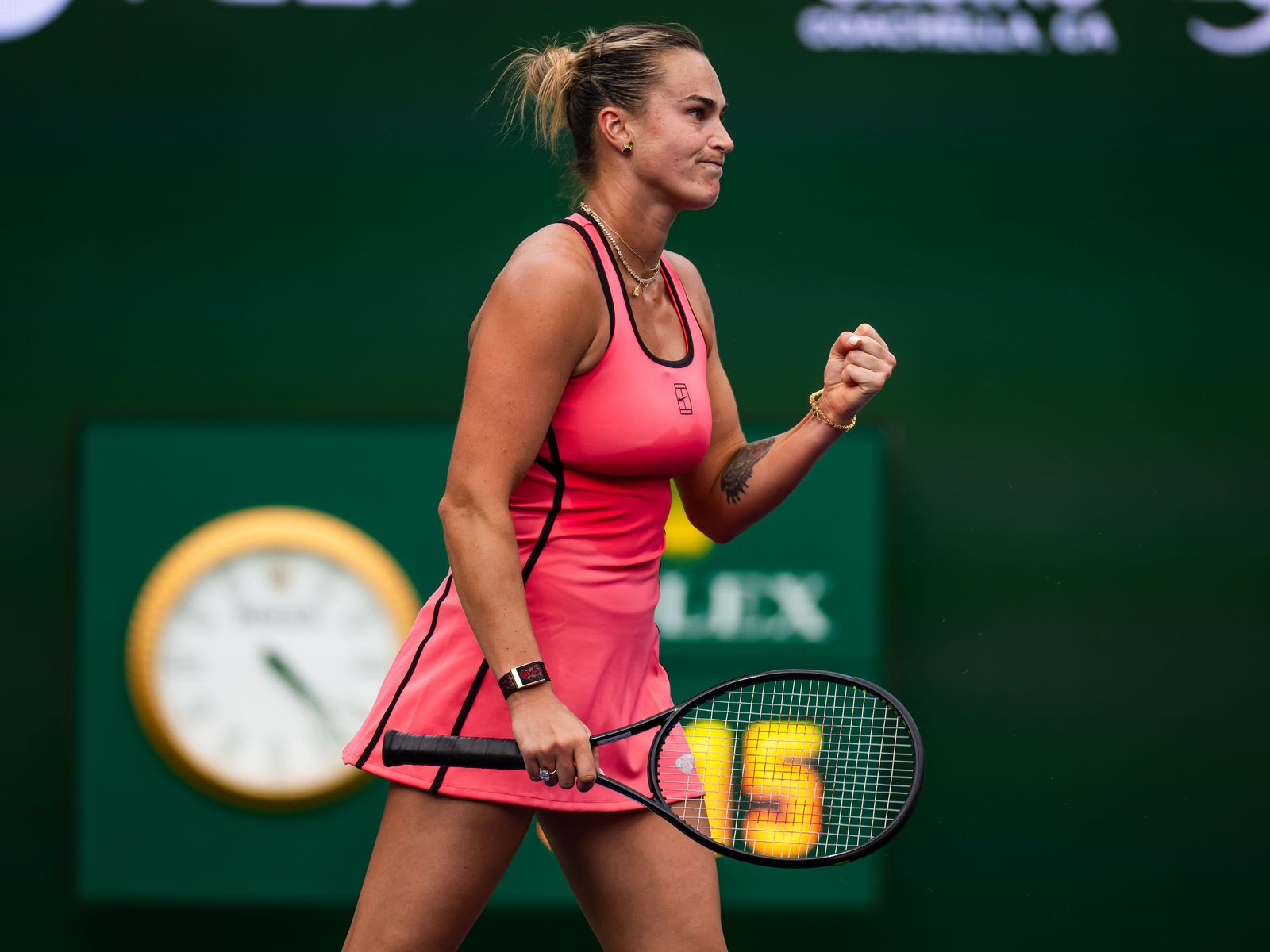
Sabalenka won the opening set 6-3 and was ahead 4-2 in the second. At that stage, the familiar script seemed available: impose her power early, keep the points short and make a lower-ranked opponent defend too many heavy shots. Li refused to accept that script. She recovered the break deficit, forced a third set and then surged to a 4-1 lead as Sabalenka struggled to maintain control of the ball.
What followed was not a straightforward closing stretch. Sabalenka received medical attention for her right knee, which was already taped, and still produced one of the more stubborn late recoveries of the week. Li reached match point repeatedly, only to see the four-time major champion extend rallies, steal time and force another game. Sabalenka ultimately erased nine match points before Li converted the tenth, with the American's decisive forehand in the tiebreak finally ending the contest.
The raw errors help explain why the comeback was necessary in the first place. Sabalenka finished with 44 unforced errors against 28 for Li. Those totals do not tell us which individual swing changed the match, and an aggressive player will always accept some misses as the price of attacking. Yet a sixteen-error gap is substantial when the final set is decided by two points in a tiebreak. Sabalenka created enough chances to escape but not enough sustained precision to make that escape complete.
There is an important distinction between a player fighting hard and a player playing cleanly. Sabalenka showed the first quality when she refused to lose at 4-1 down. Li supplied the second often enough at the end. The match was not won by a single dramatic winner; it was won by surviving the stretch in which the favorite was at her most dangerous and still finding one more attacking shot when the tenth opportunity arrived.

Ann Li's breakthrough was built on more than one afternoon

Li entered the second round as the world No. 31 and the clear underdog against a player who had beaten her in their three previous tour meetings. Their most recent encounter came in Miami in March, when Sabalenka prevailed 7-6(5), 6-4. That result offered a useful comparison: Li had already demonstrated that she could make a meeting with one of the tour's strongest ball-strikers competitive, but had not yet converted the pressure into a win.
Her 2026 season had supplied encouraging evidence before Wuhan. In Madrid, Li reached the fourth round after advancing past Iga Swiatek when the former world No. 1 retired during their third-round match. During the autumn Asian swing she beat Belinda Bencic in Beijing and continued to work through difficult draws. Those results did not make a Sabalenka upset inevitable, but they meant Li arrived with a stronger body of work than the phrase unseeded American might suggest.
The final stages of Wednesday's match required a different kind of progress. Many players can build a lead against a favorite; far fewer can watch several match points vanish and still trust their strokes. After Sabalenka recovered from 4-1 down in the decider, Li had to stop thinking about the opportunities she had missed and commit to the next one. The tenth match point was a test of concentration as much as technique.
Li's path also illustrates why a breakthrough win can matter beyond a single ranking calculation. A player hovering near the top 30 often has the tools to trouble elite opponents, but needs the confidence that comes from finishing a high-pressure match against one. Wednesday supplied that proof. The next challenge is repeating the same decision-making without requiring ten opportunities to close. That is a demanding but much more interesting problem than wondering whether she belongs on the court.
From the Sunshine Double to a title drought, Sabalenka's season has changed shape
.jpg?width=1600)
It would be misleading to describe Sabalenka's entire 2026 as a failure. She won Indian Wells and Miami in March, an exceptionally demanding pair of hard-court titles, and reached the US Open final in September. Those results remain substantial. But expectations are different for a four-time Grand Slam champion who spent so long at the top of the rankings, and her recent defeats have arrived at precisely the events where she was expected to control the draw.
Elena Rybakina defeated Sabalenka in the US Open final and took over the world No. 1 ranking. Sabalenka then exited Beijing in the third round to Nikola Bartunkova before Wednesday's defeat to Li in her first Wuhan match. That sequence has now produced back-to-back tournament losses, a sharp contrast with the authority she showed during the Sunshine Double. It also leaves her without a Grand Slam singles title in 2026, her first such season since 2022.
Wuhan makes the contrast especially stark because the tournament has historically been one of Sabalenka's best. She won the title in 2018, 2019 and 2024. The event was absent from the calendar from 2020 through 2023, so those three trophies spanned the tournament's interrupted history. Jessica Pegula ended her 20-match Wuhan winning streak in the 2025 semifinals. Li's victory now marks an even earlier exit, one that arrived after Sabalenka had briefly held the match in her hands.
It is tempting to reduce the change to confidence or fatigue, but the available evidence supports a narrower conclusion. The error count in Wuhan was high, the match required medical treatment, and Sabalenka's late surge showed that her competitive instincts remain intact. Whether the knee issue is significant beyond this match is not established by one timeout. What is clear is that her usual advantage in first-strike tennis has been less reliable under pressure. The work ahead is not to reinvent a champion, but to restore the repeatable patterns that made those early-season titles possible.

Pegula's exit turned Wuhan's second round into a wider shake-up
%20-%2003.jpg?width=1600)
Sabalenka was not the only prominent seed whose Wuhan campaign ended on Wednesday. Jessica Pegula, the No. 2 seed and last year's finalist, lost 2-6, 7-6(7), 6-3 to Jelena Ostapenko. The Latvian saved three match points in the second-set tiebreak before taking control of the decider. Two of the tournament's leading names therefore disappeared from the singles draw on the same day, and neither loss came in a routine straight-set upset.
Ostapenko's comeback had a different rhythm from Li's. Pegula established the early advantage through consistency and forced her opponent to hit one more ball. Ostapenko gradually improved the balance between risk and patience, saved match points with a mixture of a service winner and a daring drop shot, and ultimately finished with 45 winners. It was an example of a high-risk attacker finding enough control to turn a match that looked lost. Li's victory, by contrast, demanded that she withstand a late comeback from the player who had started as favorite.
The consequences extend to the bracket. Sabalenka had been placed on a potential collision course with Iga Swiatek in the quarterfinals. That meeting can no longer happen in Wuhan, and the draw has opened for players who would otherwise have faced a three-time champion. Li now has the opportunity to turn a signature result into a deeper WTA 1000 run rather than allowing it to stand as an isolated headline.
One result does not automatically transform the rest of the season, but the day's pattern is instructive. The elite players' reputations did not disappear; the margin for error simply narrowed. In a 56-player event where leading seeds receive first-round byes, a second-round loss means a favorite can be out after a single match. Wuhan has already demonstrated how quickly that possibility can become reality, and the remaining contenders will have to respond to a draw that looks different from the one they entered.
Li's win will be remembered for the tenth match point, but the lasting story is that she found a way to win after the first nine had gone. Sabalenka's fightback was extraordinary and ultimately insufficient; the errors and uneven control that put her in danger could not be erased by one final surge. With Pegula also gone, Wuhan has moved from a predictable showcase for top seeds to a tournament in which the next round may matter as much as the names that were supposed to be there.
For Li, the opportunity is to build on a career-defining result. For Sabalenka, the challenge is more complicated: take the lessons from a painful defeat without forgetting that the same season also produced two of the sport's most prestigious hard-court titles.
Shop GOATIFY tennis products from the Tennis-filtered collection scope.
















