Liverpool's Isak Penalty Was Missed. The 3–2 VAR Split Explains Why.
GOATIFYLiverpool did not get a penalty when Arsenal defender Jurriën Timber grabbed Alexander Isak's shirt at Anfield. Ten days later, the Premier League's independent Key Match Incidents panel has said the referee should have awarded one. That sounds like a straightforward vindication for the beaten team — until the votes are examined more closely.
Four of the five panellists judged the decision on the pitch to be wrong. Only three thought the video assistant referee was obliged to intervene. The first margin is emphatic; the second is narrow. Together, they explain why a single tug can be seen as a missed foul and still generate disagreement over whether technology should have corrected it.
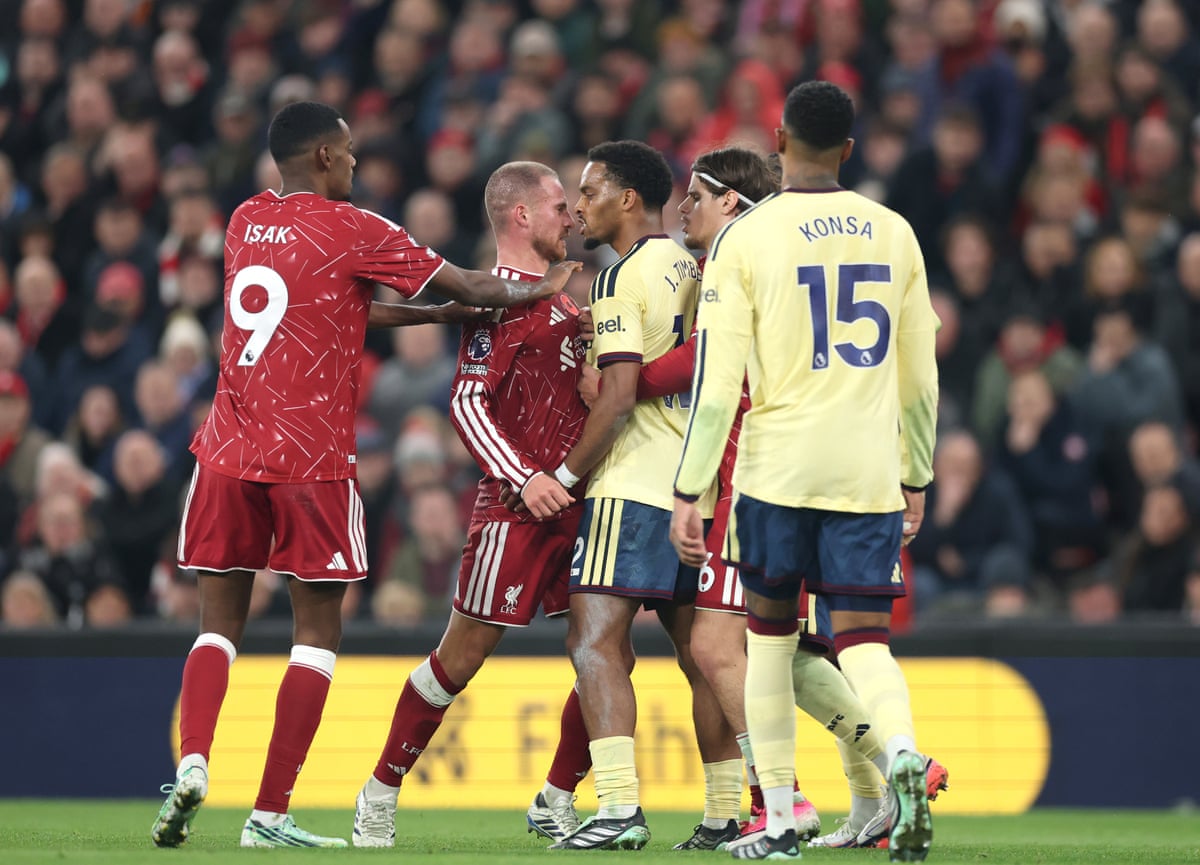
The incident took place in the 21st minute of Arsenal's 1-0 win at Liverpool on 1 November, with Kai Havertz's early goal already separating the sides. Isak remained upright while attempting to reach Bradley Barcola's cross. Andy Madley gave no penalty; Stuart Attwell did not recommend a pitchside review. The subsequent ruling cannot change that result, but it has made the question of what VAR is supposed to fix harder to avoid.
The shirt pull that Liverpool couldn't get called
When the teams walked out at Anfield on 1 November, the fixture carried the weight of a meeting between the defending champions and one of their chief challengers. Arsenal arrived knowing a win at Liverpool would end a long wait for a league victory at that ground. Liverpool wanted to test the champions with the intensity of their press and the finishing ability of Alexander Isak. By the time the disputed contact occurred, the match had already tilted toward the visitors.
Kai Havertz had scored in the 16th minute. A Liverpool attempt to play out from the back went wrong, Arsenal recovered possession and moved the ball into the six-yard area. Havertz supplied the final touch. The goal stood as the only one of the night, and it mattered because Liverpool's next major chance to get level was not a completed shot: it was Isak trying to reach a cross.
Five minutes after the opener, Bradley Barcola delivered from Liverpool's right. Isak moved toward the ball in front of goal. Jurriën Timber, positioned behind and to the side, grabbed the striker's shirt as he was preparing to meet it. The available replay shows the fabric stretching and Isak failing to reach the ball cleanly. Referee Andy Madley awarded no penalty. Video assistant referee Stuart Attwell checked the incident without recommending an on-field review.
Two separate observations matter here. First, the arm and shirt contact are visible. Second, the decision under football's holding rules is not simply whether a hand touched cloth; it is whether the holding impeded the opponent's movement. Liverpool believed the pull altered Isak's ability to attack a cross arriving in a dangerous area. Defenders of the original ruling saw a brief tug whose effect was not beyond argument. Those interpretations start from the same images and reach opposite conclusions about consequence.
Isak did not collapse. He continued his attempt, missed the header, and did not launch an elaborate appeal at the referee. That detail became central to the conversation afterward. It is tempting to treat a player staying upright as proof that no foul occurred, yet the rules do not make falling down an essential ingredient of a holding offence. A small change in a striker's stride or ability to jump can be decisive even if the player remains on his feet. Equally, the absence of a header is not automatic proof that the shirt pull caused it.
GOATIFY
GOATIFY Soccer
From Anfield's heated duel to the argument over contact in the box, celebrate the personalities and rivalries of English football with GOATIFY Soccer designs.


Championshit Tottenham Hotspur Parody , Sweatshirt
A football fan design for everyday wear.
Shop Now ↗
Bottlers FC Tottenham Hotspur Parody , Spursy Hoodie
A football fan design for everyday wear.
Shop Now ↗

Championship Tottenham Hotspur Parody , Sticker
Add football personality to your favourite gear.
Shop Now ↗
Kylian Mbappe Ninja Turtle Football Euro 2024 Hoodie
A football fan design for everyday wear.
Shop Now ↗It was not Liverpool's only complaint. There was also an appeal involving Cody Gakpo and Christos Tzolis, which the officials dismissed because of the circumstances of the ball's arrival. But the Isak-Timber incident was different in proximity to goal, the striker's realistic route to the cross and the visible grasp of the shirt. Grouping every penalty shout into a single grievance would hide the distinctive question the panel later answered.
The final score makes the moment more emotionally charged, but it cannot provide an answer on its own. Liverpool registered no shot on target across the match and struggled to turn pressure into a sustained finishing threat. Arsenal managed the lead, contested second balls and emerged with a 1-0 victory. A correctly awarded penalty might have offered an equaliser; it would not guarantee a goal, erase Liverpool's other shortcomings or prove the result should have been reversed. The argument is about a denied opportunity to take a spot kick, not an imaginary second scoreline.
That distinction also makes the later verdict important. An independent panel need not endorse every Liverpool complaint to conclude that the 21st-minute holding crossed the line. Its vote addressed a specific on-field decision in a specific moment, even as the overall match report still belonged to the side that scored the goal.
Four thought it was a penalty. Three thought VAR had to act.
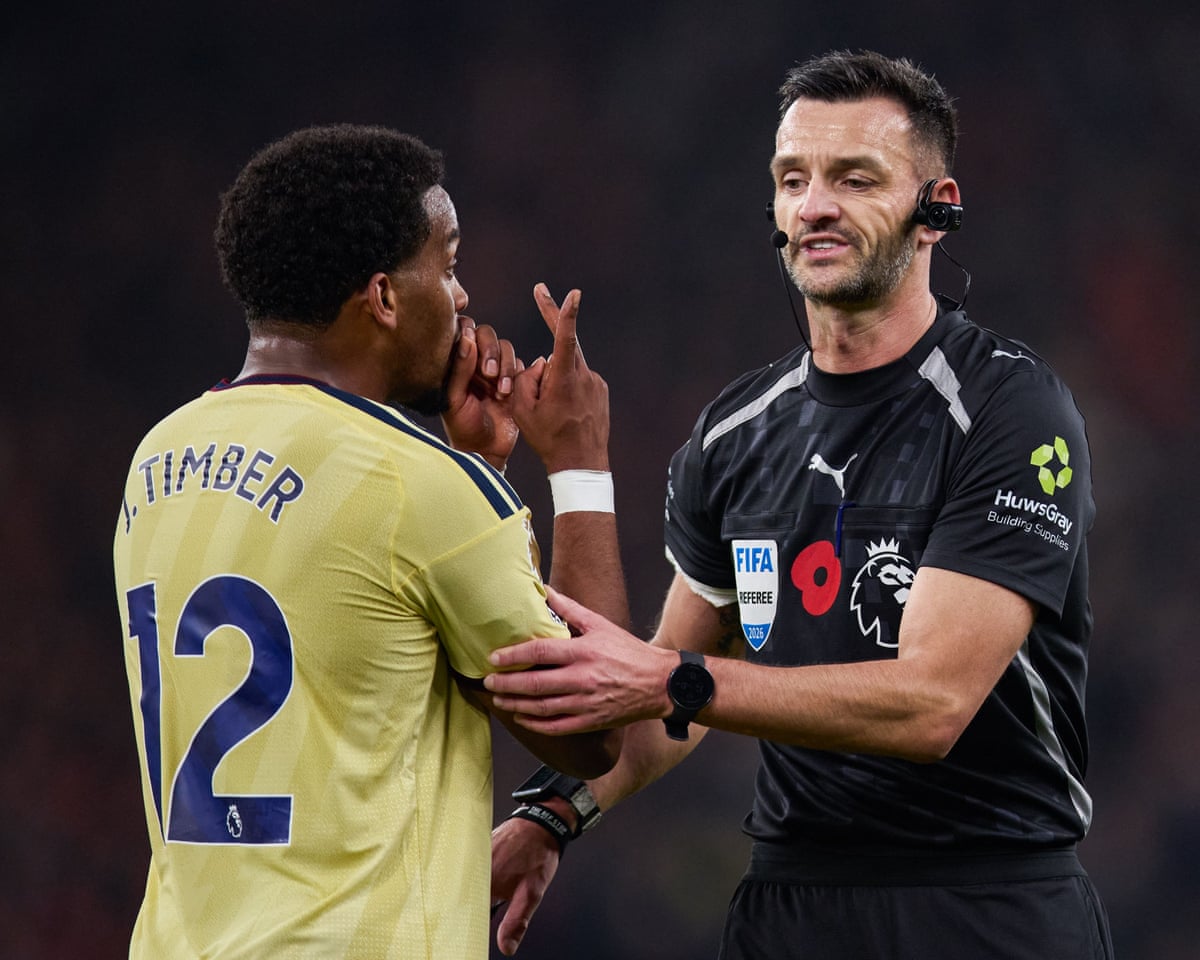
The most revealing detail in the November 11 verdict is not that the Key Match Incidents panel sided with Liverpool. It is that the panel asked two questions and produced two different levels of agreement. Four members out of five believed Madley should have pointed to the spot. Three out of five believed Attwell should have sent Madley to the pitchside monitor. The latter was still a majority, but a slender one.
These are not contradictory positions. A referee makes the initial judgment at full speed, from one viewing angle, amid live movement. VAR reviews the footage under a second and deliberately high threshold: intervention is intended for clear and obvious errors, not every borderline decision an individual official might have made differently. Someone can look at a replay, lean toward awarding a penalty, and still believe that the evidence does not justify overturning a referee's original call.
The KMI panel gives the league a way to evaluate those calls after the emotion of matchday has passed. Its five members consist of three former players or coaches, a Premier League representative and a representative of Pro Ref, the body responsible for refereeing in England. They review key incidents across the competition. That composition matters: the votes are a structured independent assessment, not a referee changing his own decision or a court handing back points.
One of the five thought Timber's holding was too brief to show a clear impact on Isak's progress. Two members felt the subjective question of exactly how much the contact impeded him failed to meet the high bar for video intervention. In other words, the panel recorded disagreement about both the factual consequences of the pull and the procedural test VAR must use. Summarising it as unanimous agreement that video technology failed would be inaccurate.
GOATIFY
GOATIFY Soccer
The Premier League's biggest moments don't end with the final whistle. Browse fan-made GOATIFY Soccer shirts, hoodies and stickers inspired by the game.


Lamine Yamal – Messi Bath Photo Parody Sticker
Add football personality to your favourite gear.
Shop Now ↗
Kylian Mbappe – El Dictator Retro Soccer Sweatshirt
A football fan design for everyday wear.
Shop Now ↗
Kylian Mbappe France Euro 2024 Ninja Turtle Tank
A football fan design for everyday wear.
Shop Now ↗
Kylian Mbappe Ninja Turtles football/ soccer Mug
Add football personality to your coffee break.
Shop Now ↗There is a compelling case for the majority view. The attacker was moving toward a ball within heading range, and Timber's hand visibly held fabric as the forward tried to get there. If that movement was impeded, it is precisely the sort of unfair advantage a holding offence is meant to prevent. But the minority view cannot be dismissed by freeze-framing a stretched shirt. A short grip can look more dramatic in a still picture than it does at normal match speed, which is why the assessment of movement and impact remains essential.
Early post-match analysis reflected that split well before the independent verdict. Former referee Chris Foy argued that contact was minimal and the impact arguable, and said the original VAR non-intervention was defensible under the clear-and-obvious standard. Other former players and pundits strongly disagreed, reasoning that a forward about to head the ball should not have to exaggerate the contact to persuade officials. Neither position changes what the panel voted, but their disagreement helps explain why the 3–2 margin is so significant.
The wider season figures offer perspective without making this particular decision disappear. Across 196 key incidents examined so far, the panel found the right on-field outcome in 86% and the correct decision after VAR in 97%. Those figures suggest video intervention fixes a substantial share of errors. They do not mean that the remaining 3% is unimportant; errors in one-goal matches are both conspicuous and consequential, especially when they concern a potential penalty.
Nor did the panel use its Anfield review simply to side with Liverpool on everything. It unanimously upheld the decision not to dismiss Arsenal's Noni Madueke for a late confrontation with Alexis Mac Allister, assessing the contact as negligible and the Liverpool midfielder's reaction as exaggerated. In a separate Ipswich Town-Hull City draw, the panel ruled that officials missed a penalty for a sustained holding offence against Dara O'Shea. The contrasting findings show the same principle being applied across different incidents: contact alone is not the entire test; duration, movement, impact and the threshold for intervention all matter.
Isak stayed upright. That should not be a disadvantage.

For Liverpool manager Andoni Iraola, the most troubling lesson was not merely that his team missed out on a penalty. It was the possibility that Isak's attempt to play on counted against him. When asked after the match whether his forward should have gone to the floor, Iraola said he would tell players to do so in future. He argued that the shirt was plainly grabbed and that remaining on his feet should never decide whether an offence is recognised.
It is an uncomfortable message from a manager, but it exposes a genuine incentive problem. Football's refereeing system needs to notice illegal holding even when an attacker does not dramatise it. Otherwise a player who resists the contact and tries to finish the move may receive less protection than one who falls immediately. The better standard is to assess the pull and its effect, rather than treat an exaggerated reaction as part of the evidentiary requirement.
GOATIFY
GOATIFY Soccer
Liverpool and Arsenal remain two of the Premier League's most fiercely followed clubs. Explore GOATIFY Soccer fan gear for matchday conversations.

Manchester United Ratcliffe Out, Glazers Out Hoodie
A football fan design for everyday wear.
Shop Now ↗
Bottlers FC Tottenham Hotspur Parody , Spursy Sticker
Add football personality to your favourite gear.
Shop Now ↗
Trashford Marcus Rashford Manchester United Sweatshirt
A football fan design for everyday wear.
Shop Now ↗

Kylian Mbappe Ninja Turtles football/ soccer Mug
Add football personality to your coffee break.
Shop Now ↗
Trashford Marcus Rashford Manchester United Tank
A football fan design for everyday wear.
Shop Now ↗That does not mean every shirt tug warrants a penalty. Crowded penalty areas are full of arms, shoulders, contact and shifting leverage. Defenders and attackers jostle when set pieces are delivered; camera angles can exaggerate or obscure the movement. Officials need a consistent way to distinguish contact that genuinely prevents progress from contact that makes little difference. The Isak incident stands out because the forward was attacking a cross in front of goal at the exact moment his shirt was held.
Virgil van Dijk was similarly frustrated by the failure of the video system to spot and remedy the incident. The captain's underlying question was intuitive: if an ordinary spectator can watch multiple replays and see a shirt being pulled, why can officials not make the correct decision? The difficulty is that replay visibility solves only one half of the problem. Video can show that there was a grip. Whether that grip had sufficient impact, and whether the missed on-field call was clearly wrong, remain judgments.
The situation puts Arsenal's position in context, too. Mikel Arteta's side did not win because an independent panel endorsed every tackle or contested moment. They won because Havertz scored in the first half, their defensive structure limited Liverpool's finishing opportunities and they survived the final whistle with the lead intact. Arsenal's first league win at Anfield since 2012 was a significant sporting achievement regardless of what officials should have called in the 21st minute.
Recognising that achievement is compatible with accepting the KMI majority finding. If Madley had awarded a penalty, Liverpool would have gained the chance to level from 12 yards. The attempt still would have had to be converted. Even a successful kick would have changed both teams' subsequent tactical choices and the course of the remaining minutes. No retrospective review can honestly tell us how that alternate match would have ended.
What the review can do is sharpen expectations for the next similar incident. Referees need to consider whether an opponent's movement was impeded, not simply whether the player went down. Video officials need a repeatable understanding of how much evidence makes a missed hold clearly and obviously wrong. And the league needs to explain those distinctions in terms supporters can understand without needing access to an officials' seminar.
The 4–1 vote signals that most of the panel thought the original foul judgment was incorrect. The 3–2 vote signals that the case for overturning it was less settled. Both can be true, and the space between them is the enduring controversy. Until the competition reduces that gap — through clearer guidance, more consistent application or more transparent explanation — a defender's hand on an attacker's shirt will keep producing two arguments at once: was it a foul, and why didn't VAR intervene?
The panel's decision gives Liverpool a strong answer to the original question: a clear majority believes the referee missed a penalty. But the narrower vote on VAR is the part that will keep generating argument, because it exposes the space between a wrong call and a call that officials believe can be corrected by video.
Arsenal keep the points, Liverpool keep the grievance, and the league keeps the same difficult task: judging whether contact actually impedes a player while refusing to make falling down a requirement for a foul. Until officials can apply that test predictably, another shirt pull will almost certainly send everyone back to the replay screen.
GOATIFY
GOATIFY Soccer
Shop GOATIFY soccer and football shirts, hoodies and stickers.


Championshit Tottenham Hotspur Parody , Sticker
Add football personality to your favourite gear.
Shop Now ↗
Championship Tottenham Hotspur Parody , Sweatshirt
A football fan design for everyday wear.
Shop Now ↗
Trashford Marcus Rashford Manchester United Mug
Add football personality to your coffee break.
Shop Now ↗

Kylian Mbappe Ninja Turtle Football Euro 2024 Tank
A football fan design for everyday wear.
Shop Now ↗