

Mercedes Found More Downforce — But Antonelli's W17 Upgrade Has a Catch
GOATIFYMercedes has discovered something encouraging about its upgraded W17: the car really does produce more aerodynamic downforce. The awkward part is that the extra grip does not arrive consistently in every kind of corner. That distinction helps explain why an update intended to strengthen a championship-leading car made its drivers' Singapore weekend more complicated.
Deputy technical director Simone Resta says the team has measured the additional load it wanted, but the revised balance can move outside the setup window the drivers know. Mercedes used Singapore to compare specifications: Kimi Antonelli stayed with the newer package while George Russell returned to the older one. Antonelli eventually finished third, and Russell recovered to ninth after starting near the back. The experiment produced useful evidence without providing a simple verdict that the newer car is faster everywhere.
For a team trying to close out the 2026 title fight while Red Bull's Max Verstappen has rediscovered winning form, that is a fascinating problem. Mercedes may already have more ultimate performance in its hands. It still needs to make that performance predictable enough to use when qualifying laps, tyre temperatures and race traffic leave no room for trial and error.
The new W17 really has more downforce — just not everywhere
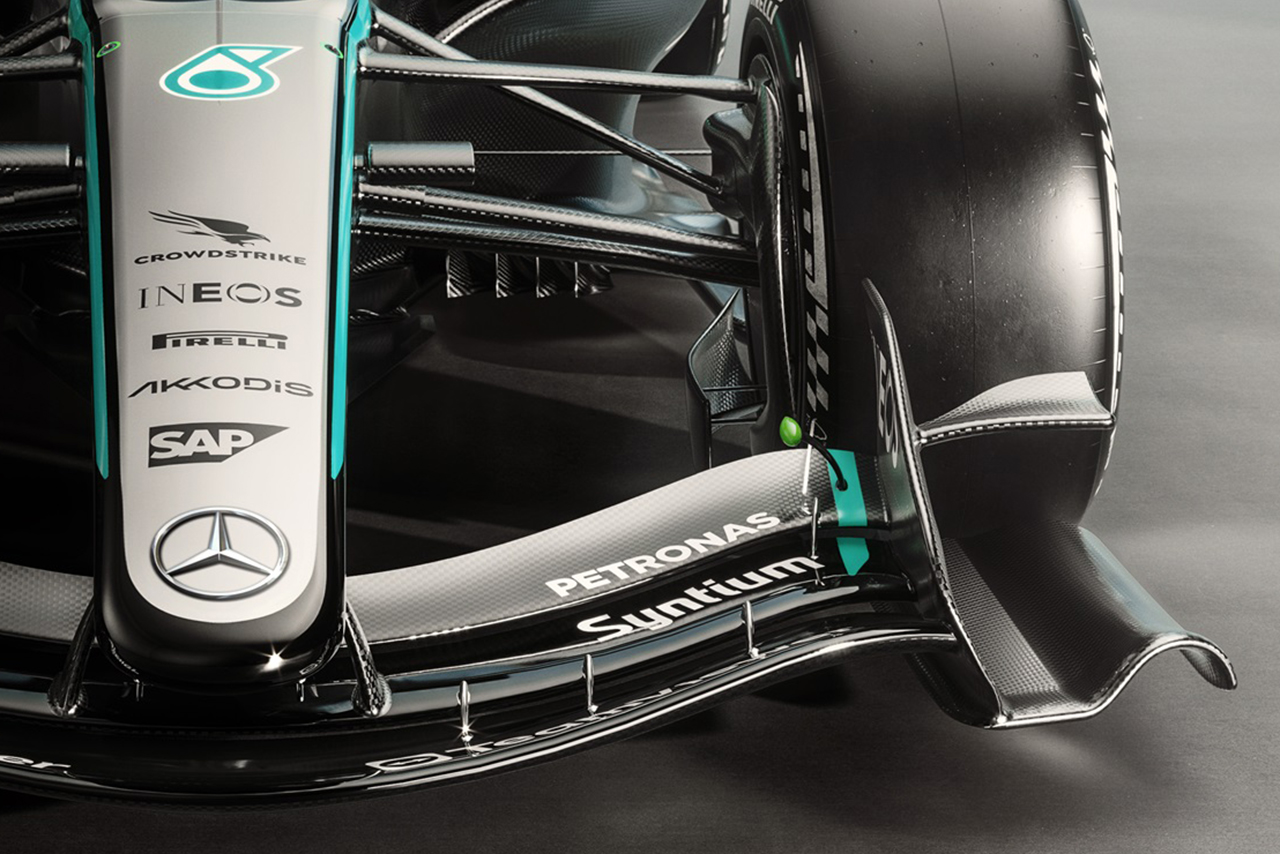
On paper, a successful aerodynamic upgrade sounds straightforward: the revised parts generate more load, the tyres hold the road better, and lap times fall. Real Formula 1 cars are less cooperative. A driver needs the downforce in the right places and at the right moments. Extra front-end grip, for example, can sharpen turn-in while simultaneously making the rear of the car feel nervous as speed, steering angle and tyre condition change.
That is the distinction Resta drew from Mercedes' work with the W17. The team can see the extra downforce in its measurements. What it cannot yet guarantee is that the gain appears with the same strength throughout the lap. Some operating conditions leave the car with a different balance from the one its drivers and engineers have spent most of the season learning. A nominally stronger package can therefore demand a fresh approach to ride height, mechanical setup and how the driver attacks a corner.
The technical issue is particularly important under the 2026 regulations, where teams are still learning how to make their aerodynamic platforms work across very different tracks. Malaysia's Sepang circuit asks different questions from the slow, bumpy and high-downforce streets of Singapore. The updated Mercedes package first appeared at Sepang, where the team struggled to turn its expected improvement into a clean race weekend. Moving directly to Marina Bay did not offer an easy laboratory test: different surfaces, heat and tyre demands changed several variables at once.
Mercedes believes the W17 may now have a stronger front axle than its engineers originally anticipated. That is not automatically a flaw. A more responsive nose can unlock lap time if the rear remains settled and the tyres stay in their ideal temperature range. But if the car becomes too eager to rotate, drivers lose confidence on corner entry and can overheat the rear tyres by correcting slides. The challenge is to find a setup that accesses the new peak without making the car harder to drive for the other 90 percent of the lap.

Russell's old car became the benchmark for Antonelli's new one
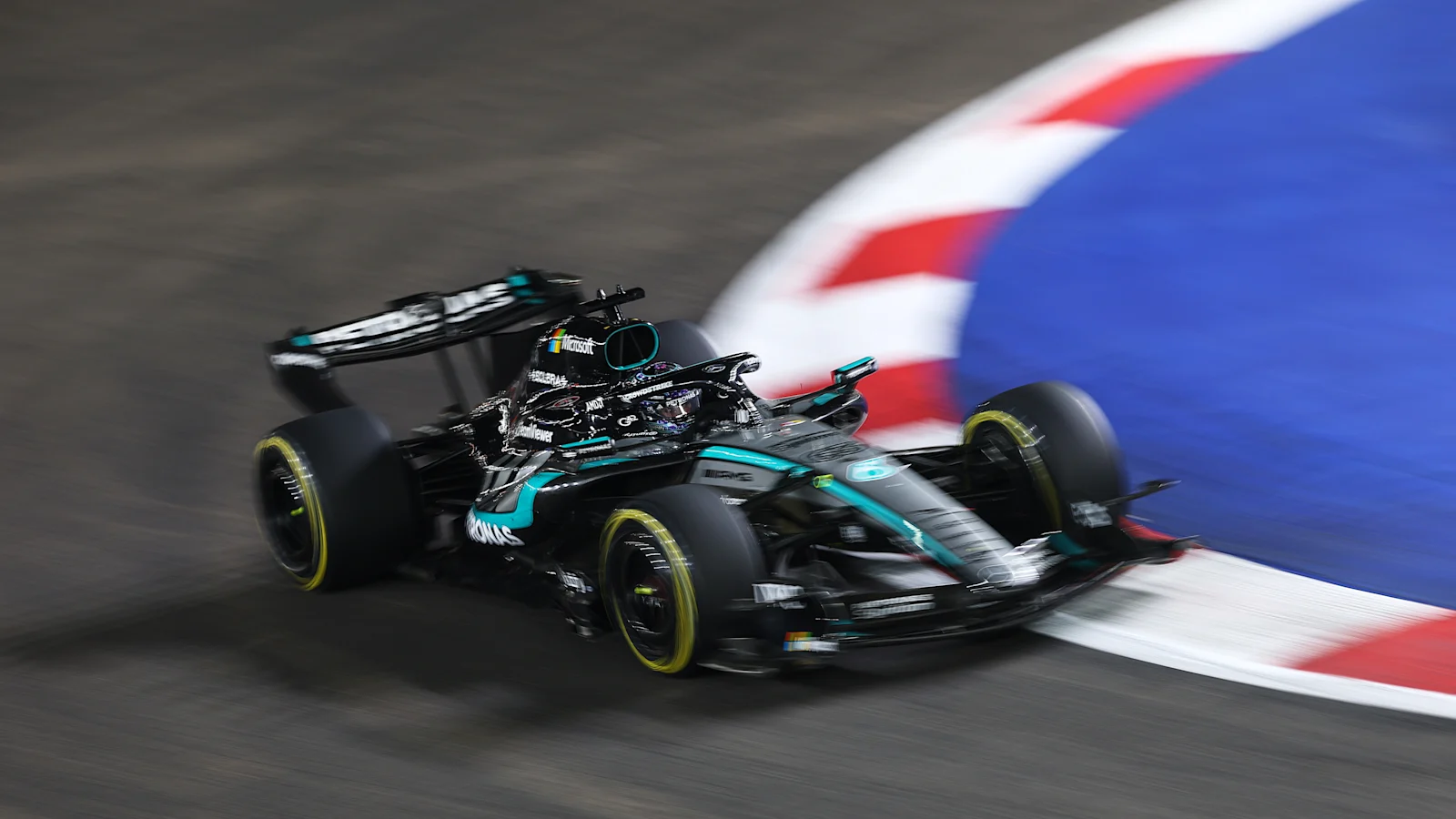
Mercedes chose an unusually direct way to study the problem in Singapore. Russell drove the older aerodynamic specification while Antonelli continued with the update. The contrast gave the engineers a reference point that simulation data alone could not provide. If one car behaved differently through the same circuit, the team could examine whether the new package was creating the promised grip, shifting the balance, or simply exposing a setup choice that needed revisiting.
There were limits to the comparison. Russell arrived with a grid penalty tied to an engine change, so his race result could never be treated as a clean old-versus-new contest. Singapore also staged a Sprint weekend, compressing the practice time available before competitive sessions. Teams can collect useful data quickly, but changing the car repeatedly after qualifying begins is not possible without consequences. Mercedes had to make decisions before it had completed the learning process it would have preferred.
Antonelli's weekend supplied the most revealing clues. The upgraded car initially appeared uncomfortable and oversteery, particularly in the wet Sprint conditions. As the front tyres wore and the balance shifted, however, its pace became more convincing. That gave the engineers a direction for subsequent setup work. By the time the main qualifying and race arrived, Antonelli was extracting far more from the package than his early running suggested was possible.
The result was third place behind Verstappen and Charles Leclerc. That podium does not prove every new component should remain on the car unchanged, just as Russell's ninth place does not condemn the older specification. It shows why Mercedes believes there is a higher performance ceiling to unlock. The key question is whether the team can reach that ceiling deliberately, rather than stumbling into a good balance after several sessions of experimentation. A faster car that only feels fast in a narrow window is a much harder weapon to use over a championship.
Austin is now a setup test as much as a title opportunity
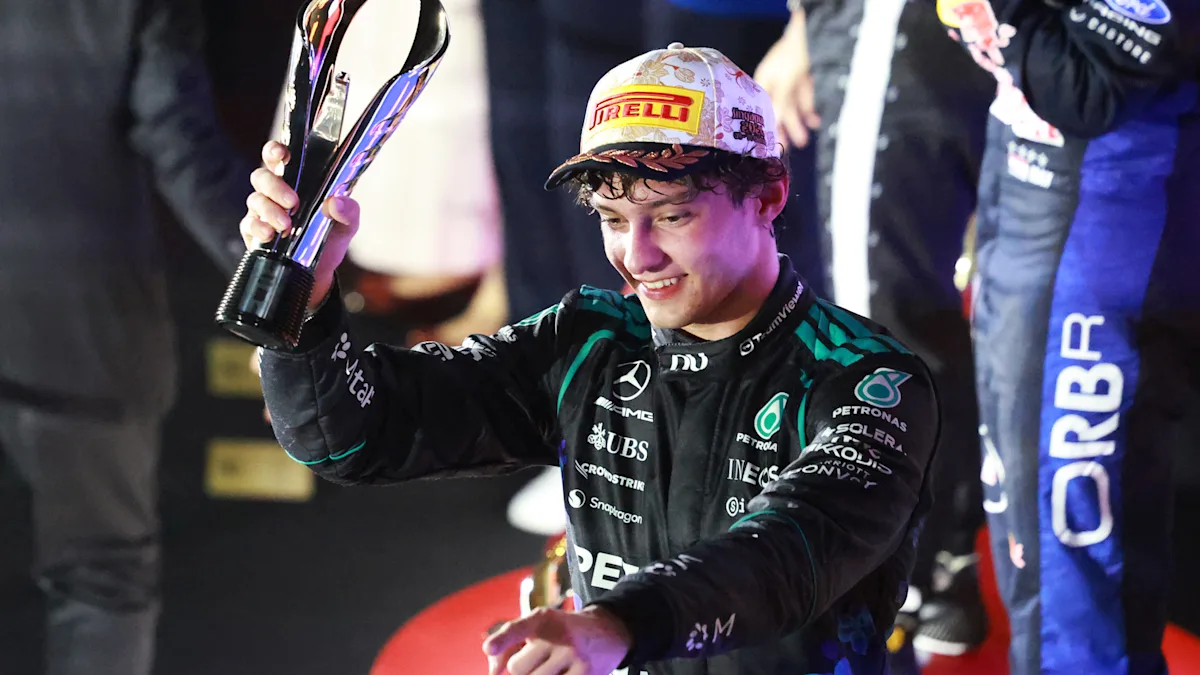
The timing makes the technical debate more than an engineering curiosity. Antonelli leaves Singapore with a 102-point championship advantage over Mercedes teammate Russell, while Lewis Hamilton is a further nine points behind in the standings. The Italian could potentially clinch the drivers' title at the United States Grand Prix in Austin on October 25. Mercedes therefore has an unusual luxury: it can pursue extra speed without needing to gamble everything on one weekend. But it also has an incentive not to make a nearly secure championship more difficult through an unpredictable car.
Verstappen's return to winning form gives the development work a sharper edge. The Red Bull driver won in Malaysia and then controlled the Singapore Grand Prix from pole. Mercedes still leads the constructors' fight, but the recent races show that having the strongest season-long points total does not guarantee the fastest car on the next circuit. Austin's mix of high-speed direction changes, heavy braking and long acceleration zones will test a different combination of aerodynamic stability and mechanical grip.
There is also a strategic question about which evidence Mercedes should trust. A single quick qualifying sector can flatter a setup that is difficult on tyres over a race stint. A stable long run can conceal a deficit when the driver needs one perfect lap. The team must decide whether to prioritize the updated W17's best-case pace, its consistency in traffic, or the easier handling of the previous specification. The answer may differ between Antonelli and Russell because each driver uses the front axle and manages the rear tyres differently.
The most promising reading is that Mercedes has not wasted its upgrade. It has identified a gain, recognized the side effect and used a real race weekend to learn how to manage it. The less comforting reading is that the learning is not finished. At Austin, the crucial evidence will not be a headline about more downforce. It will be whether both drivers can reach competitive lap times early in practice, keep the car balanced through a long stint and avoid needing an entire weekend to find the operating window.

Mercedes' Singapore experiment leaves the W17 in an intriguing place: more aerodynamic potential, but a narrower path to making it useful. Antonelli's podium showed the new package can work. Russell's comparison offered the engineers a baseline. Neither result removes the setup sensitivity Resta described.
With a championship potentially within reach in Austin, Mercedes does not need a dramatic reinvention. It needs to turn an inconsistent advantage into repeatable speed. If the upgraded W17 feels settled from the first practice runs, Singapore may be remembered as the weekend that helped the team understand its strongest car. If the balance remains elusive, Verstappen's resurgence will make every missed opportunity look considerably more expensive.
















