Pranavi Urs Lost a Three-Shot Lead — Then Made Indian Golf History
GOATIFYPranavi Urs did not win India’s first women’s individual Asian Games golf gold by protecting a comfortable lead. She won it after watching that lead disappear almost immediately.
The 23-year-old began the final round at Kasugai Country Club three shots clear, then made a triple bogey at the third hole. China’s Yin Ruoning was already applying pressure, and what had looked like a controlled closing assignment became a one-round test of recovery. Urs answered with birdies at six, 10 and 13, closed with five straight pars and signed for an even-par 70. Her 15-under 265 total was enough by one shot.
That sequence matters more than the simple label of historic champion. Urs became the first Indian woman to win individual golf gold at the Asian Games and helped India take team silver, but the way she did it offered a sharper picture of why the result could matter beyond one medal week.
The triple bogey changed the assignment — not the outcome
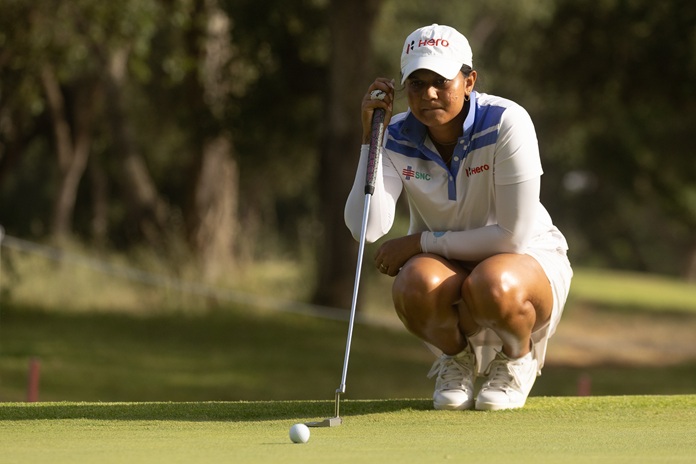
A three-shot overnight lead normally gives a player room to absorb one mistake. Urs used almost all of that room at once. The triple bogey at the third did more than erase her cushion: it changed the emotional geometry of the round. Instead of defending a lead, she suddenly had to chase stability while Yin Ruoning, a proven LPGA winner, was making birdies.
The important response was not immediate aggression. Urs did not try to recover three shots on the next tee. She steadied the round and waited for realistic scoring opportunities. The birdie at the sixth was the first proof that the early disaster had not infected the rest of her card. Another at the 10th pulled her level, and the birdie at 13 restored the advantage.
That is what makes the closing sequence impressive. A collapse after an early triple often comes from trying to force the golf course to give the shots back. Urs instead rebuilt the round in pieces. Once she returned to 15 under, five consecutive pars were enough. The winning skill was not spectacular shot-making on every hole; it was knowing when the emergency was over.

She did it with an elite player applying real pressure

The historical label can make this sound like a breakthrough created by circumstance. The leaderboard says otherwise. Urs had to finish ahead of Yin Ruoning, a major-caliber LPGA player, and Shannon Tan, one of Asia’s strongest emerging professionals. Both reached 14 under, one behind the winning total.
Yin’s final-round 67 was exactly the kind of chase that can expose an inexperienced leader. She made early birdies while Urs was absorbing the triple bogey, so the pressure was not theoretical. Urs knew a world-class opponent was actively reducing the margin. Tan also shot 68 and stayed close enough to punish any late mistake.
That context raises the value of the result. Urs did not need the field to retreat after her error. She had to recover while quality players were moving toward her. The final five pars look conservative on paper, but with the lead restored they were the correct form of aggression: hit the required shots, avoid giving the field another opening and make the chasers produce something better.
For a player trying to establish herself deeper in international golf, that experience is reusable. Contending against recognizable names changes how future leaderboards feel. The next time Urs sees a major champion or top-ranked player one shot away, she has evidence that the name beside her does not have to dictate her decisions.
India’s team silver makes the week bigger than one breakthrough

Urs’ individual gold was the headline, but her score also counted toward a second medal. India finished at 14-under 546 in the women’s team competition, taking silver behind China. Aditi Ashok supplied a final-round 67, while Diksha Dagar completed the three-player lineup.
The team result matters because it gives Indian women’s golf a broader signal than one exceptional individual week. Ashok has already shown that an Indian player can contend at the highest levels and had won individual silver at the previous Asian Games. Urs now adds gold, while the combined team result suggests more depth around the country’s leading players.
It also changes how the final round should be read. Urs was not playing in an isolated medal bubble. Every counting score affected the team board as well. Her recovery after the third hole therefore protected two outcomes at once. Even after China proved too strong for team gold, India’s silver became its best evidence that the women’s program can compete collectively against the continent’s deepest golf nations.
One tournament cannot guarantee a pipeline, but medals create visibility. They can influence funding, junior participation and the expectations attached to the next generation. Urs’ gold is historic because nobody had done it before. The silver beside it may be important because it hints she does not have to be an exception.
The real opportunity begins after the medal ceremony

Asian Games gold does not automatically change a professional ranking or guarantee success on the Ladies European Tour. What it can change is the internal reference point a player carries into those events. Urs now knows she can take a lead into the final day of a high-pressure international competition, lose that lead violently and still win.
That is a more useful lesson than simply learning she can play well when everything is smooth. Professional golf repeatedly creates bad bounces, double bogeys and stretches where a player’s swing feels less reliable than it did the day before. The ability to keep the tournament alive after one of those moments is often what separates a good week from a career-changing one.
Urs also leaves Japan with more public recognition. That can bring more scrutiny, but it can also create better opportunities around sponsorship, invitations and support. The challenge is to avoid treating the medal as a finish line. At 23, the most compelling interpretation is that the Asian Games showed a skill set that should be tested more often against the best fields she can reach.
The final-round card offers the clearest target. Urs does not need to become a different golfer because she won gold. She needs to keep the same capacity to reset after mistakes, take birdies when the course offers them and understand the scoreboard late. If that travels, Kasugai can become the beginning of a larger international résumé rather than the peak of it.

Urs leaves Aichi-Nagoya with an individual gold, a team silver and a closing round that should travel well beyond the Asian Games. She did not need to play flawless golf after the triple bogey. She needed to stop one mistake from becoming a collapse, create three new scoring chances and keep executing after she regained the lead.
That is a useful blueprint for the next stage of her career. Historic medals create attention; sustained success comes from repeating the decisions that produced them. Urs has already shown she can win against a field containing elite international players. The next challenge is turning the confidence of Kasugai into more contention on the global professional circuit.