Reaves Is Out. Luka’s 38.6 PPG Meets Phoenix’s Rebounding Problem.
GOATIFYLos Angeles has the best record in the NBA at 11–2 and has won seven straight. But the final stop of the Lakers' road trip poses a different question from the one the team has answered during most of its early-season surge. Austin Reaves will not play Sunday at Phoenix, leaving Luka Dončić to run the league's highest-scoring offense without his most productive backcourt partner.
The absence creates a rare contradiction: the Lakers have a 38.6-point-per-game scorer available, yet replacing the missing guard's 24.7 points is not simply a matter of giving Dončić another dozen shots. Phoenix has its own problems, especially on the defensive glass, but also a guard rotation capable of changing the pace of a game. The contest tips at 4 p.m. Eastern on November 15; this is a pregame examination, not a report of an outcome.
Reaves is out, but the bigger question is who creates the second advantage
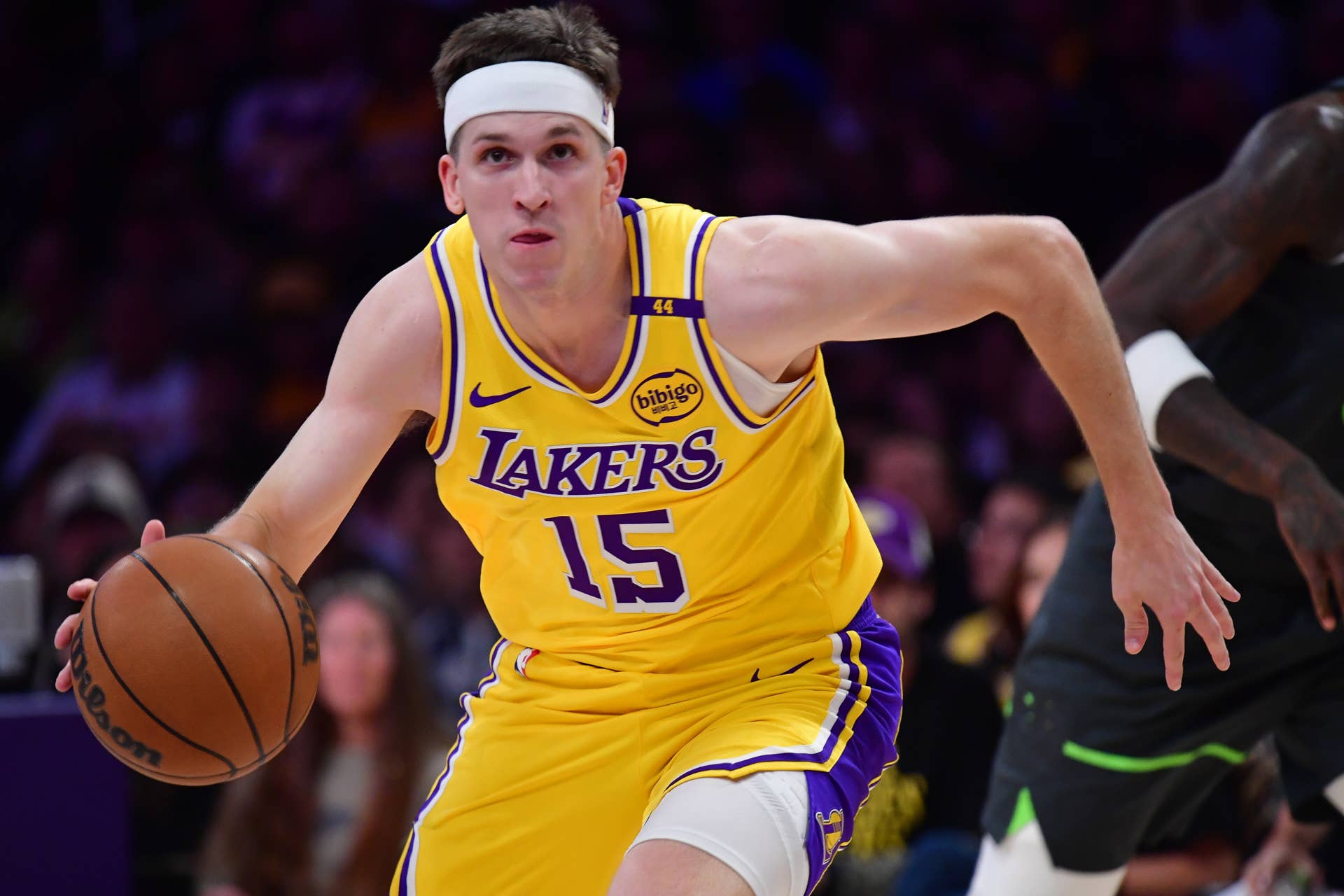
Reaves' left-heel contusion was sustained during Wednesday's 123–112 win at Milwaukee. He left that game in the third quarter, and the Lakers ruled him out of Sunday's trip to Phoenix. Dončić, who rolled his right ankle in the same Milwaukee game, does not appear on the injury report. That difference matters more than the generic phrase short-handed. The Lakers are missing a high-usage playmaker, not the player who has carried most of their scoring volume.
The immediate temptation is to divide Reaves' 24.7 points among the remaining starters. That calculation misses the possessions he normally organizes. Through the first dozen games, Reaves has also supplied 4.7 assists a night and has hit better than 40 percent of his three-point attempts. Those figures indicate why his absence is a structural change. A defense must normally decide whether it wants to trap Dončić, switch onto Reaves or play one-on-one against two players comfortable exploiting the weakest matchup.
On Sunday, that second creator is no longer guaranteed to be on the floor. Phoenix can load up at the elbows, send early help toward the paint and try to make the Lakers' lower-usage guards initiate half-court possessions. Los Angeles should counter by keeping the ball moving after the first Dončić pass rather than asking every replacement player to imitate Reaves' one-on-one game. A quick swing, a weak-side cut and another drive can put the Suns in rotation without placing a permanent creative burden on a substitute.
Dončić's scoring start has been extraordinary even by his standards: 38.6 points, 7.6 assists and 7.5 rebounds per game, with 40.8 percent three-point shooting. He has already made 60 threes on 147 attempts, a pace that threatens to distort how opponents guard the perimeter. His 9.4 made free throws per game are just as important. A defense cannot simply contest from too close without risking a succession of foul shots; it must also respect the step-back and the pass to a rolling big man.
That is why his ankle clearance matters beyond the fact that his name is absent from the injury report. The Lakers need his changes of speed, not just his outside shot. The offense is most difficult to guard when Dončić can threaten a downhill drive, stop abruptly and find the next pass. If he can manipulate a screen defender into taking one extra step, he will create more productive possessions than if he spends the entire night trying to reproduce Reaves' total by sheer shooting volume.
GOATIFY
GOATIFY Basketball
See GOATIFY basketball shirts and fan gifts as the Lakers adjust without Austin Reaves and rely on Doncic's playmaking.

Austin Reaves G.O.A.T. - Basketball - Greatest Sweatshirt
A basketball fan design for everyday wear.
Shop Now ↗
Kobe Bryant – Kobe GOAT Basketball Graphic Tee
A basketball fan design for everyday wear.
Shop Now ↗
Austin Reaves G.O.A.T. - Basketball - Greatest Hoodie
A basketball fan design for everyday wear.
Shop Now ↗

Austin Reaves G.O.A.T. - Basketball Decal Sticker
Add basketball personality to your favourite gear.
Shop Now ↗
Kevin Durant G.O.A.T. - Basketball Coffee Cup Mug
Add basketball personality to your coffee break.
Shop Now ↗The replacement mix still needs care. Collin Sexton's availability carried a questionable designation because of his facial injury, while Bronny James and Adou Thiero were also listed as questionable in the day's injury coverage. Quentin Grimes can help preserve perimeter pressure, and Sandro Mamukelashvili is fresh off a 23-point performance in Milwaukee. But none of those names should be treated as a one-for-one Reaves substitute. The realistic objective is to distribute decision-making, protect the ball and force Phoenix to defend more than Dončić's first move.
For Redick, the test is not whether Los Angeles can survive one night without its usual two-guard partnership. It is whether a team with a dominant scorer can avoid becoming a single-scorer offense. There is a meaningful difference. The Lakers can keep an elite attack while Reaves rests, but the supporting cast needs to generate credible second and third actions. Phoenix will be looking for every possession that ends after Dončić's first pass rather than one that begins a more dangerous chain of decisions.
Walker Kessler has the matchup Phoenix cannot disguise
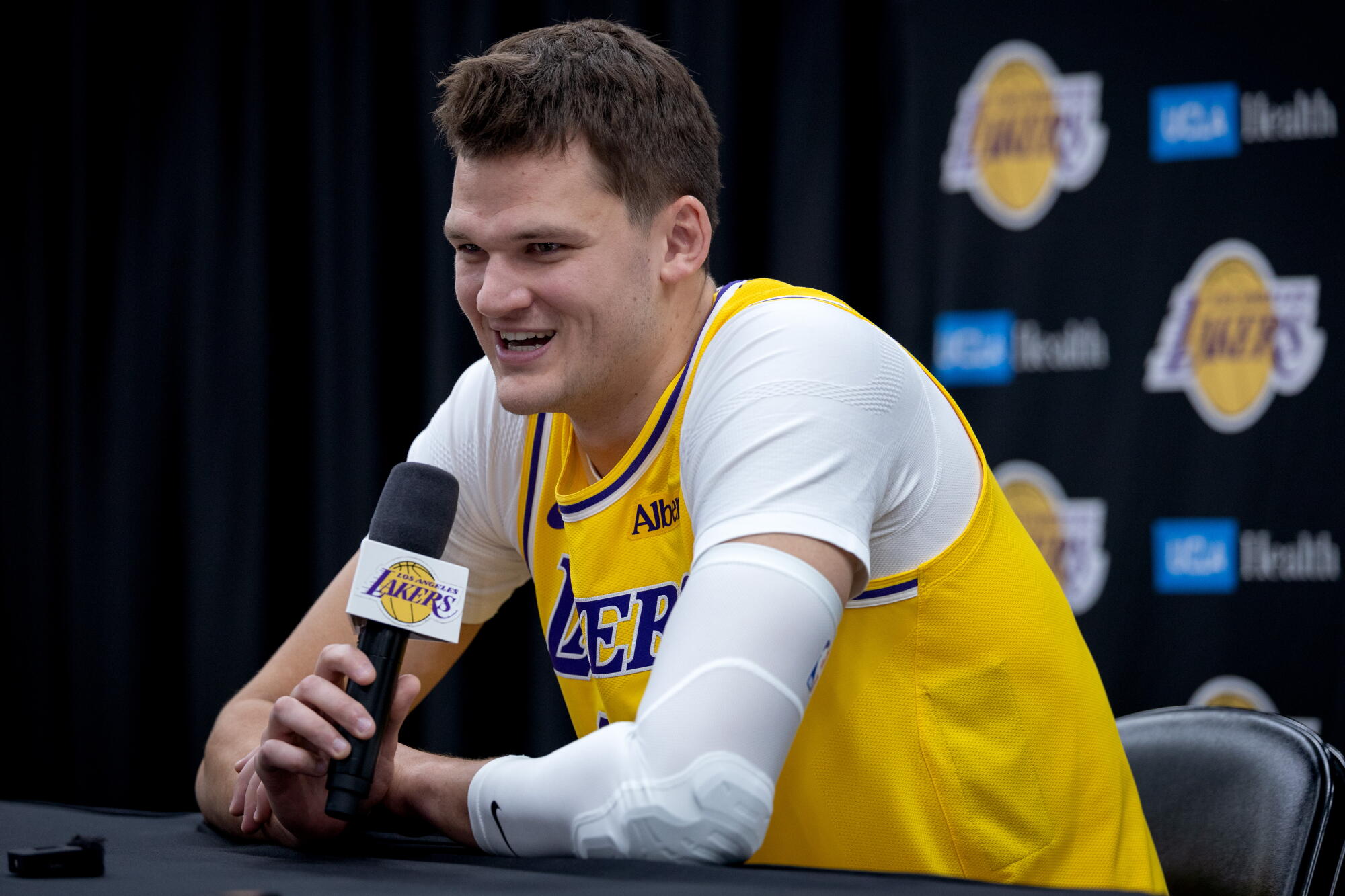
An absence at guard may turn a frontcourt matchup into the most important feature of this game. Walker Kessler is averaging 14.5 points and 10.8 rebounds for Los Angeles. Phoenix, by contrast, enters Sunday last in the NBA at 38.9 rebounds per game. Those are team-wide statistics rather than guarantees about a particular possession, but they establish why the Lakers should be eager to create shot opportunities near the rim.
Kessler's production also looks different once his role in Dončić's offense is considered. A big who can catch passes in tight spaces forces an opponent to protect two places at once: the ball handler above the arc and the restricted area behind the defense. A hard trap may briefly remove Dončić as a shooter, but it can leave the screener alone against a recovering help defender. A soft drop preserves the paint yet can give the league's hottest scorer a clean window from beyond the arc.
There is a third option for Phoenix, of course: switch early, keep the guard out of rotation and rely on quick gang rebounding. It will only work if the Suns finish the defensive possession with the ball. Kessler, who has brought an extra interior dimension to a previously perimeter-heavy team, does not need a 25-point performance to swing the evening. Tip-outs, deep seals, offensive boards and the attention he draws after a screen can all produce value that does not fit neatly into a scoring headline.
Jake LaRavia provides another piece of the same puzzle. The 6-foot-7 forward has started the last nine games and has recently posted individual rebounding totals of 10, eight and nine. Those numbers do not make him a center, but they give Redick another player who can attack the weak-side glass when Phoenix commits extra bodies to Dončić. If the Suns squeeze the lane with multiple defenders, LaRavia can look for the long rebound or an open corner instead of forcing a contested shot through three hands.
GOATIFY
GOATIFY Basketball
Explore GOATIFY basketball apparel and accessories while Kessler and the Lakers challenge Phoenix on the glass.

Steve Nash G.O.A.T. - Basketball Decal Sticker
Add basketball personality to your favourite gear.
Shop Now ↗
Devin Booker GOAT - Basketball - Phoenix Sweatshirt
A basketball fan design for everyday wear.
Shop Now ↗
Kevin Durant G.O.A.T. - Basketball Casual Top Tee
A basketball fan design for everyday wear.
Shop Now ↗
Steve Nash G.O.A.T. - Basketball - Greatest Hoodie
A basketball fan design for everyday wear.
Shop Now ↗
Kevin Durant G.O.A.T. - Basketball Muscle Tank
A basketball fan design for everyday wear.
Shop Now ↗
The contrast from Phoenix's previous game is striking. The Suns beat Charlotte 101–96 despite losing the rebounding battle 52–31. They survived by forcing 27 turnovers. A team that loses the glass by 21 and still wins has shown two things simultaneously: it can generate disruptive defensive pressure, and it can leave opponents with a substantial second-chance opportunity. Los Angeles must recognize both sides of that evidence. Crashing blindly could feed the Phoenix fast break. Ignoring the glass could waste the most obvious matchup advantage.
The Lakers' last outing gave an example of how the equation can tilt in their favor. In Milwaukee, Kessler finished with 10 points and 11 rebounds, and Los Angeles converted turnover opportunities into points while building a double-digit lead. The lesson is not that the Bucks and Suns have identical weaknesses. It is that the Lakers can win a sequence in several ways: a stopped possession becomes a steal, a missed shot becomes a second try, or a defense collapsing on the center concedes an open perimeter look.
The performance to watch is therefore not merely Kessler's rebound total. Track whether his screens force two defenders to commit, whether the Lakers retrieve misses without sacrificing transition coverage, and whether his presence affects the Suns' willingness to send help at Dončić. Those three details will say more about the matchup than a simple comparison of season averages. Reaves' missing offense is real, but strong rebounding can shrink the number of perfect half-court possessions Los Angeles needs to replace it.
Booker can punish a thin backcourt, and the Suns can win an ugly game

Phoenix is not a helpless opponent waiting for Dončić to collect another statistical masterpiece. The Suns have won four of their past five games and are closing a seven-game homestand. Their 5–6 overall record is ordinary, but recent results show a team capable of competing in a variety of rhythms. They hit 22 threes in a 133–110 victory against the Clippers, then produced a much more grinding 101–96 win over Charlotte by disrupting the opponent's offense.
Devin Booker remains the player who can make those rhythms work. He is scoring 25.5 points per game and supplied 30 against the Hornets, his fourth 30-point outing during this homestand. Against a Lakers team without Reaves, Booker can pressure the other end of the guard rotation, hunting screens and testing how much defensive responsibility the replacement lineup can absorb. If Los Angeles uses multiple perimeter players to protect Dončić from difficult matchups, Phoenix will be eager to force the next defender into a decision.
The problem for Phoenix is that its guard depth has not yet settled into one dependable rotation. In the win over Charlotte, coach Jordan Ott leaned on Collin Gillespie, Jordan Goodwin and Luke Kennard for a combined 27 points and five threes. Jalen Green played 21 minutes and did not appear in the fourth quarter. That distribution is a reminder that Phoenix can choose different combinations based on the flow of a game. It is also a sign that the coaching staff is still identifying which players can produce reliably together.
GOATIFY
GOATIFY Basketball
Shop GOATIFY basketball gifts and fan gear alongside the Phoenix Booker-versus-Lakers matchup analysis.

Devin Booker GOAT - Basketball - Phoenix Hoodie
A basketball fan design for everyday wear.
Shop Now ↗

Devin Booker GOAT - Basketball Decal Sticker
Add basketball personality to your favourite gear.
Shop Now ↗
Dwight Howard GOAT - Basketball - Greatest Sweatshirt
A basketball fan design for everyday wear.
Shop Now ↗

LeBron James G.O.A.T. - Greatest of All Mug
Add basketball personality to your coffee break.
Shop Now ↗For the Suns, the ideal formula begins with ball pressure and ends with clean defensive possessions. They were able to force 27 Charlotte turnovers, enough to overcome that severe rebound deficit. Phoenix will attempt to create similar mistakes from a Los Angeles team missing its usual secondary organizer. The Lakers have been excellent at turning their own steals into scoring chances, averaging 11.0 steals and 24.5 points off turnovers. So the team that controls the turnover margin may get to play the game on its preferred terms.
That turnover battle has a cost. Dončić's creative style necessarily involves difficult passes, and he has averaged five turnovers a game while orchestrating so much of the Lakers' offense. The Suns should be alert to predictable passing lanes when extra defenders converge. But overcommitting to a steal can be dangerous against a passer who thrives on reading the second line of defense. Phoenix has to decide where to gamble and where a conventional stop is preferable to a highlight-reel deflection.
Three-point variance is the other variable capable of breaking an obvious pregame script. Phoenix has shown it can make 22 threes in a night, while Los Angeles leads the league in field-goal accuracy and has a guard responsible for 60 made threes already. But shooting explosions do not follow a weekly schedule. If the Suns fall behind early and keep giving Kessler second chances, even a productive Booker night may not be enough. If the Lakers go cold while their replacement guards struggle under pressure, Phoenix has a path to make this much more competitive than the records suggest.
A useful fourth-quarter question is who gets a good shot when the first action fails. Booker can manufacture one from the midrange. Dončić can draw a switch and either attack or pass to the open man. The supporting guards will determine whether those choices create sustainable offense across an entire period. The Suns won their latest game after letting a 17-point advantage disappear and needing to respond late. That resilience is encouraging, but a repeat against the Lakers' top-ranked offense would be a dangerous habit.
Los Angeles enters with the stronger season profile and the clearer rebounding edge. Phoenix has home-court context, an elite shot creator and the ability to turn the game into a string of uncomfortable possessions. The sensible prediction is conditional rather than absolute: the Lakers should control the matchup if Dončić remains mobile, Kessler turns extra chances into value and the team avoids gifting Phoenix a turnover-fueled comeback. If the Suns break those links, the Reaves absence will feel far bigger than 24.7 missing points.
The headline matchup is Luka Dončić against Phoenix, but the more revealing contest is how each team responds to its own weakness. Los Angeles must create offense with one fewer high-level initiator; the Suns must defend without losing the glass and disrupt the Lakers without overcommitting. The stakes are tangible for the Lakers' seven-game winning streak, yet the score before tipoff is still zero–zero.
Watch the second-chance points, Phoenix's forced turnovers and how often a non-Dončić Laker starts a productive possession. Those will show whether Los Angeles has replaced Reaves' influence collectively, or simply asked its superstar to carry more than usual.
GOATIFY
GOATIFY Basketball
Shop GOATIFY basketball shirts, hoodies and stickers.
Devin Booker GOAT - Basketball - Phoenix Sweatshirt
A basketball fan design for everyday wear.
Shop Now ↗
Fat Luka Doncic Los Angeles Lakers NBA Sticker
Add basketball personality to your favourite gear.
Shop Now ↗

Luka Doncic G.O.A.T. - Basketball - Greatest Hoodie
A basketball fan design for everyday wear.
Shop Now ↗
Wilt Chamberlain G.O.A.T. - Basketball Muscle Tank
A basketball fan design for everyday wear.
Shop Now ↗
Kobe Bryant G.O.A.T. - Settle the Debate Mug
Add basketball personality to your coffee break.
Shop Now ↗