Do You Really Only Need Bench Press and Dips for a Bigger Chest?
UPLIFT IRON CLUBChest training has a strange habit of becoming complicated very quickly. Flat presses, incline presses, decline presses, flies, machines, cables, dumbbells and half a dozen grip variations can all end up in the same week. So the idea that you might build an impressive chest with only two exercises sounds almost too simple.
That is exactly why a recent minimalist routine built around bench press and dips is interesting. The lifter behind it performs roughly ten sets of bench press and ten sets of dips in one weekly chest session. He builds toward very heavy bench work, backs the load down, then gives dips the same serious treatment with bodyweight and weighted sets.
The concept gets one thing right immediately: you do not need novelty for novelty’s sake. But calling a 20-set session “minimalist” can also hide how demanding the program really is. Two exercises is minimal exercise selection. Twenty hard sets is not minimal workload.
Why Bench Press and Dips Can Cover a Lot of Chest Training

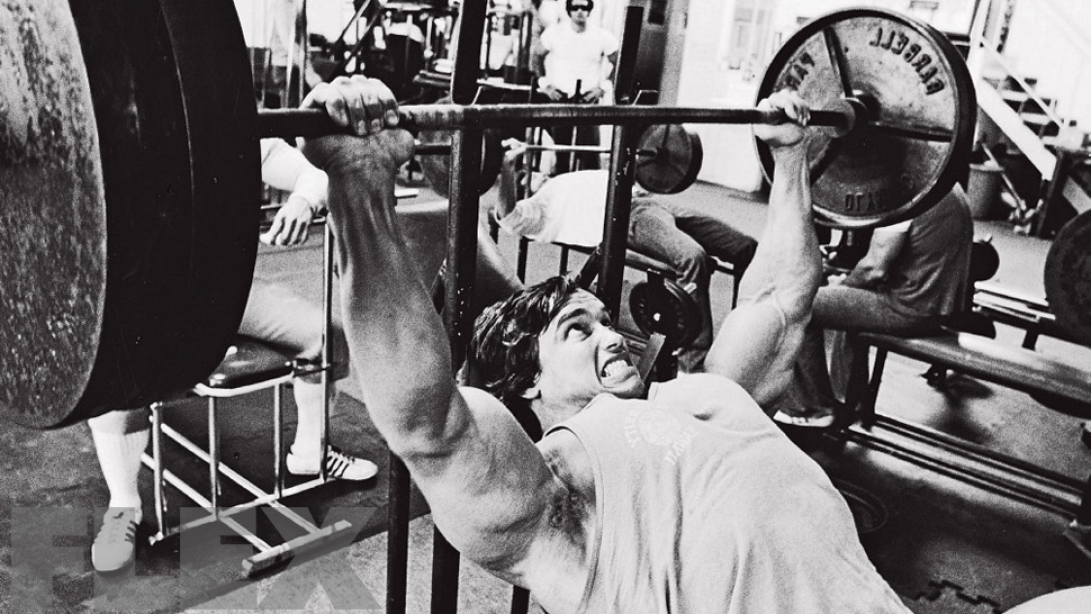
The bench press gives you a stable horizontal press that loads the pecs heavily while the triceps and front delts contribute. It is easy to standardize, easy to add weight to, and easy to track over months. Those qualities matter because muscle growth is much easier to manage when the main movement is repeatable enough that you can tell whether performance is improving.
Dips attack the same broad pushing musculature from a different angle. With a controlled forward torso lean, they can load the chest hard while also demanding substantial triceps and shoulder strength. They also provide a useful bodyweight-to-weighted progression: master clean reps first, then add external load only when the movement is stable.
Together, the pair gives you one press performed lying on a bench and another performed with the body moving through space. That is enough variety for many lifters to grow, especially if the alternative is constantly swapping exercises before becoming technically competent at any of them.
The stronger argument for fewer movements is not that other chest exercises are useless. It is that skill matters. Repeating the same lifts gives you more chances to refine setup, bar path, bracing and effort. A more technically consistent bench press lets the target muscles receive a more predictable stimulus instead of every week becoming a new coordination problem.

The Catch: Twenty Sets Is a Lot More Volume Than “Two Exercises” Suggests

The most important distinction is between exercise variety and training volume. Ten bench sets followed by ten dip sets is a large single-session dose, particularly if many of those sets are taken close to failure. A routine can be simple on paper and still be brutally fatiguing.
Some of those bench sets may function as ramp-up or back-off work rather than identical all-out sets, but the total still matters. The shoulders, elbows, pecs and triceps all have to recover from repeated pressing. As fatigue rises, later sets can become less productive because load, rep quality and control fall faster than the extra volume adds useful stimulus.
That does not make the routine wrong for the person using it. Training tolerance is individual, and an experienced lifter who has built up to a workload can handle much more than someone copying it tomorrow. The mistake would be treating 20 sets as the entry price for minimalist training.
For a normal lifter, starting with six to ten challenging chest sets in a session is far more sensible. If recovery, strength and soreness are all under control, volume can increase gradually. If performance falls for several sessions in a row, elbows ache and the chest is still sore when the next pressing day arrives, adding more sets is not progress.
Heavy Bench Work Can Build Strength, but You Do Not Need a 2RM Every Monday

The routine builds toward a two- or three-rep maximum around the middle of the bench sequence before reducing the load again. That makes the session partly a strength practice as well as a hypertrophy workout. Heavy work can be useful because it improves confidence under load and gives you a clear performance target.
But frequent near-max attempts are not required for chest growth. A lifter primarily interested in muscle can spend most bench work in moderate rep ranges where technique stays clean and enough hard repetitions accumulate without the fatigue of constant maximal loading. Heavy triples can be included, but they should earn their place rather than becoming a ritual.
A practical compromise is to use one heavier top set in the five-to-eight-rep range, then perform two or three back-off sets with slightly less weight. That keeps progression visible without making the entire session revolve around proving strength.
It also makes the program easier to recover from. The goal of chest training is not to win one Monday. It is to arrive next week capable of doing a little more work with the same quality.

Do You Need Incline Pressing for the Upper Chest?

This is where the minimalist claim becomes more debatable. You can absolutely build a large chest without turning your program into an anatomy scavenger hunt, but different pressing angles do shift the emphasis. An incline press can be useful when upper-chest development is a specific weak point.
That does not mean every lifter needs flat bench, incline barbell, incline dumbbell, three cable angles and two machines in the same week. It means exercise selection should follow the problem you are trying to solve.
If your chest is growing evenly and your bench and dips are progressing, there is no urgent reason to add movements. If the clavicular portion of the chest consistently lags, replacing a few flat-bench sets with incline pressing may be smarter than simply adding more total work on top.
The same logic applies to shoulder comfort. Some lifters love deep dips; others do not tolerate them well. A machine press, dumbbell press or cable movement may be a better second exercise for that person. Minimalism works best when it simplifies good choices, not when it turns two specific exercises into commandments.
When a Third Chest Exercise Actually Makes Sense

A third movement earns its place when it solves something the first two do not solve well. That might mean an incline press for upper-chest emphasis, a cable fly for adduction work with less triceps limitation, or a stable machine press when the shoulders and triceps are too fatigued to make another free-weight press productive.
This is different from adding exercises because the workout does not feel sophisticated enough. More movements are useful only when they improve stimulus, comfort or progression.
One simple chest session could therefore be four bench sets, three dip sets and two cable-fly sets. Another lifter might use three incline presses, three flat machine presses and three fly sets. Both are still simple. Neither requires 20 hard sets or constant exercise rotation.
The broader lesson from the two-exercise approach is worth keeping: become good at a small number of productive movements and track them long enough to improve. The part worth questioning is the idea that a very high volume session is automatically superior because the exercise list is short.

A Better Two-Exercise Chest Template for Most Lifters

If you like the minimalist idea, keep the simplicity and lower the unnecessary fatigue. Train chest twice per week rather than trying to fit an enormous workload into one day. On day one, perform three or four sets of bench press and three sets of dips. On day two, use an incline press for three sets and either dips or a stable chest press for another three.
Keep most sets one to three good repetitions from failure, then occasionally push a final set harder when technique is stable. Add reps within a target range before adding weight. For example, work from six to ten reps; once all sets reach the top of the range with good form, add a small amount of load and build back up.
If you insist on only bench press and dips, that can work too. The important part is not forcing ten sets of each simply because somebody else tolerates it. Start with enough work to progress, then add only when the evidence from your own training says you need more.
The UIC take: two chest exercises can be enough. Two exercises are not magical, and 20 sets are not automatically better. The best minimalist program is the one that keeps the movements repeatable, the stimulus high, the joints happy and next week’s performance moving in the right direction.

Gym T-Shirts & Workout Tees
Training designs for chest day, strength work and lifters who keep the program simple.
EXPLORE COLLECTION