

Blackhawks Turn 100. Bedard and McKenna Still Have to Rescue the Present.
GOATIFYThe Chicago Blackhawks reach the exact century mark on November 17, 2026, a date that should belong to memories, banners and the people who built an Original Six institution. Instead, the centennial game against Toronto doubles as a remarkably sharp examination of what that institution has become. Chicago is 5-13-2. The Maple Leafs arrive at 8-12-2, carrying a six-game losing streak and their own growing questions about leadership, development and urgency.
There is genuine romance in the matchup. Chicago's first NHL game, on November 17, 1926, was a 4-1 win over the Toronto St. Patricks. A century later, the visiting club wears a different name, the building is different and the expectations are incomparably larger. Yet neither team can borrow a goal from its trophy case.
The bigger story is not a prediction of who wins a Tuesday-night game. It is whether Connor Bedard's improving individual game, Chicago's returning veterans and Toronto's unusual blend of stars and young talent offer a credible way forward. The celebration is earned. A convincing answer about the next hundred years is not.
One hundred years after the first win, the celebration cannot hide the standings

A century is more than a marketing slogan for a franchise that has survived the league's transformations. The first Chicago NHL team beat the Toronto St. Patricks 4-1 on November 17, 1926. Its modern successor gets Toronto back on the identical calendar date. For an organization that has watched uniforms, arenas, rules and generations change, the symmetry is unusually clean. The clubs are not reenacting the original game. They are offering fans the rare chance to measure 100 years against one evening.
The Blackhawks planned a genuine anniversary occasion rather than treating the fixture as another promotional theme. The centennial programming includes ceremonies and recognitions linked to major figures in the organization's history, including former stars and broadcasters whose work kept the team relevant through very different eras. There is a reason those memories resonate. Chicago's greatest chapters combine famous players with a coherent identity and, at its best, a standard of play that opponents genuinely feared.
The immediate numbers tell a less flattering story. Entering the November 17 game, Chicago has won only five of its first twenty contests. A 5-13-2 record means that the gap between a good individual shift and a successful team performance has been immense. The record does not erase the future value of Bedard, Nazar or a developing prospect pool. It does establish the scale of work required before a ceremony can turn into sustained competitive success.
Toronto brings its own historical irony. The original opponent is still one of hockey's defining brands, but the present-day Maple Leafs have little room to look down on Chicago. The visitors' 8-12-2 start and six straight defeats underline how easily a roster with famous names can lose structure. The occasion, therefore, pits two familiar institutions against each other when both are trying to rediscover ordinary reliability rather than chasing a glamorous playoff milestone.
Chicago's local history against Toronto supplies an intriguing counterweight. The Blackhawks have recorded an 11-1-3 mark in their last fifteen home meetings with the Leafs, and the current preview notes that they have taken points in twenty-four of their last thirty-one meetings overall. Those numbers matter as evidence that this rivalry has not always followed the wider league standings. They are not a substitute for analyzing the teams on tonight's ice. Different players, systems and goalies made those records.
GOATIFY
GOATIFY Hockey
Celebrate a century of hockey with GOATIFY fan apparel and accessories.


A centennial night inevitably raises the temptation to compare every modern youngster with Hall of Fame veterans in the building. That is unfair to the youngster and unhelpful to the rebuild. A first-overall pick cannot personally solve defensive-zone exits, a penalty kill or the way teammates support possession. Bedard can drive the offense, and Kane can help provide context. Neither can turn a 100-year heritage event into proof that every front-office decision is working.
The most fitting tribute might actually be mundane: sensible line changes, a responsible breakout, a useful second period and a team that does not lose its identity after allowing a goal. Those are the small habits from which future anniversaries worth celebrating are made. The number on the patch is a reminder of accumulated history; the standards underneath that patch still have to be practiced in the present.
Bedard, Nazar and Kane make Chicago fascinating—but not yet dependable

The best counterargument to despair in Chicago wears number 98. Connor Bedard enters the centennial game with seventeen points from fourteen appearances, including six goals and eleven assists. At twenty-one, he is already the club's captain and its most dependable source of offensive imagination. He carries a three-game points streak into the Toronto matchup, while his home form includes a six-game points streak with two goals and five assists. None of those details requires pretending the standings are healthy.
There is a difference between being an exciting rebuilding centerpiece and being surrounded by a team ready to win. Bedard can create shooting angles from apparently dead possessions, force defenders to turn and draw attention that should create space elsewhere. A club only turns that into repeatable scoring if it can deliver a second option in the middle, move the puck behind the first defender and get the next unit on the ice without immediately defending for forty seconds.
Frank Nazar offers tangible reason to believe the supporting cast can improve. His eight goals place him second on the club entering the game, and five of those goals came across his last five outings. That is not proof that every hot streak will last. It is, however, different from relying on speculative prospect projections. Nazar is already converting opportunities in NHL games and giving opponents another forward to account for.
Roman Kantserov provides a separate thread. His nine goals place him atop the league's rookie goal chart at the time of the preview, an early return that suggests Chicago's rebuild cannot simply be described as one gifted superstar and a crowd of passengers. Each young scorer has different strengths and different weaknesses. They do not need identical usage or identical development calendars. Good coaching would let them complement one another rather than scramble to copy Bedard's role.
Then there is Patrick Kane, whose return to Chicago gives this specific anniversary an almost impossible narrative convenience. Kane is thirty-seven and playing again in the Blackhawks sweater in 2026-27. He has reached 901 career assists, a historical achievement that bridges the franchise's modern championship identity and its present rebuilding era. He is not being asked to reproduce his prime every night. He can still help a younger lineup understand timing, puck management and the value of buying an extra second on a possession.
The veteran's recent activation from injured reserve is also a reminder about workload. Chicago should be careful not to make returning names the entire plan. A club built on prospects and returning veterans needs predictable defensive habits more than another memorable reunion. When Kane makes an intelligent short pass and a younger linemate makes the right support movement, the benefit is instructional and competitive. If every attacking sequence depends on a highlight-reel play, the opponent can comfortably wait for the inevitable turnover.
GOATIFY
GOATIFY Hockey
Discover GOATIFY hockey gear for the next generation of fans.
The Jets game made that risk particularly visible. Chicago held a four-goal advantage on November 14, yet the night ended with a 5-4 shootout loss. Bedard supplied a goal and an assist, and Nazar found the net. The issue was not a lack of individual talent able to create a four-goal lead. The issue was an inability to protect the game state after earning it.
That pattern matters against Toronto because both clubs are capable of making a single defensive error look catastrophic. Chicago's power-play results offer one positive indicator: the club is 5-0-2 in games when it scores with the man advantage. That correlation can change, and seven games are not a complete identity, but it shows how special teams can make difficult nights competitive. It also raises a practical question: can Chicago manufacture enough five-on-five possession that it does not need a perfect power play or a spectacular night from its captain?
The centennial evening should be less a referendum on whether Bedard is a star and more an assessment of whether Chicago is learning to convert his talent into a reliable team structure. The first question already has plenty of affirmative evidence. The second is what the next stretch of the season must answer.
Toronto arrives with Matthews, McKenna and an uncomfortable mirror

Toronto's roster makes the standings especially uncomfortable. Auston Matthews arrives leading the Maple Leafs in goals, assists and points: twelve goals and seventeen helpers for twenty-nine points in the season to date. A star producing at that level should give his team a chance on most nights. Yet the Leafs entered this trip at 8-12-2 and winless in six consecutive outings, including an 0-6 stretch at home. The distance between individual production and collective results is not a problem exclusive to rebuilding Chicago.
Toronto management has publicly signaled patience. General manager John Chayka backed coach Jim Hiller amid the losing streak, which is not the same as promising there will never be consequences. Coaches can responsibly protect players during a run of poor results, but that support becomes meaningful only when the team improves the details it can control. Passive coverage in the middle of the ice and hurried puck movement under pressure will still count against a club regardless of what the general manager says after a loss.
There is another major reason a Chicago-Toronto game now attracts developmental interest: Gavin McKenna. The Maple Leafs selected him first overall in the 2026 draft, bringing a highly regarded young forward into an environment where the pressure to fix everything immediately is unusually intense. McKenna's thirteen points through twenty-two games are a respectable starting point, not a verdict on his ceiling. Comparing those numbers directly with Bedard's is tempting and misleading. They are at different stages and asked to do different jobs on different teams.
The contrast is worth examining carefully. Bedard already carries captaincy and primary offensive responsibility at twenty-one. McKenna is still building his professional habits under the spotlight of a Canadian market that has spent years expecting a breakthrough from every new headline player. Chicago's trajectory proves that having a young offensive leader is not a magic solution. Toronto's trajectory proves that having an established elite scorer is not one either. Both need the unglamorous support around them.
GOATIFY
GOATIFY Hockey
Get ready for the Leafs-Blackhawks matchup with hockey-inspired GOATIFY favorites.
McKenna should be assessed by how he creates entries, handles physical NHL defenses, works below the puck and contributes on shifts that do not produce a point. Those details take time to develop. They also tend to be precisely what gets lost when public conversation becomes a contest between two former first-overall picks. There is no need to invent a private rivalry to make the matchup interesting. One player is showing what a more established young star can do; the other is learning what he will need to sustain that responsibility.
Toronto's other variables matter more to Tuesday's result than any draft-year narrative. The status of defenseman Morgan Rielly, who has dealt with a lower-body issue, requires a confirmed lineup update before anyone confidently assigns his minutes. Kirill Marchenko has also been dealing with an injury and should not be treated as fully available merely because his name appears in broader season discussion. On the other side of the blue line, goaltending and defensive-zone organization have become conspicuous parts of the Leafs' crisis.
A team in that position can look very different depending on its first ten minutes. An early Matthews chance might calm the bench. A bad turnover or failed penalty kill could revive every concern from Toronto's losing streak. That is a psychological interpretation, not a statistical guarantee, but it explains why even an ordinary road fixture carries disproportionate weight when a team has spent weeks defending its form.
For Hiller and Chayka, the centennial trip is not about making Toronto part of somebody else's nostalgic celebration. It is an opportunity to demonstrate that their team can make a measured response to failure. If Toronto cannot do that against a five-win opponent, the questions waiting back home will only become harder. If it can, one win will still be only a first step, but at least the conversation can shift from reassurance to evidence.
Four battles that matter more than the anniversary scoreboard
The pregame storyline is irresistible, but four tactical tests should decide whether the centennial feels like an actual hockey success. First is the area directly in front of the two nets. Both clubs have conceded enough in the opening months that a talented shooter often gets an opportunity from a dangerous area without forcing an elaborate sequence. The question is not merely which goalkeeper produces the highlight save. It is which defensive group limits second chances and keeps attackers out of the slot.
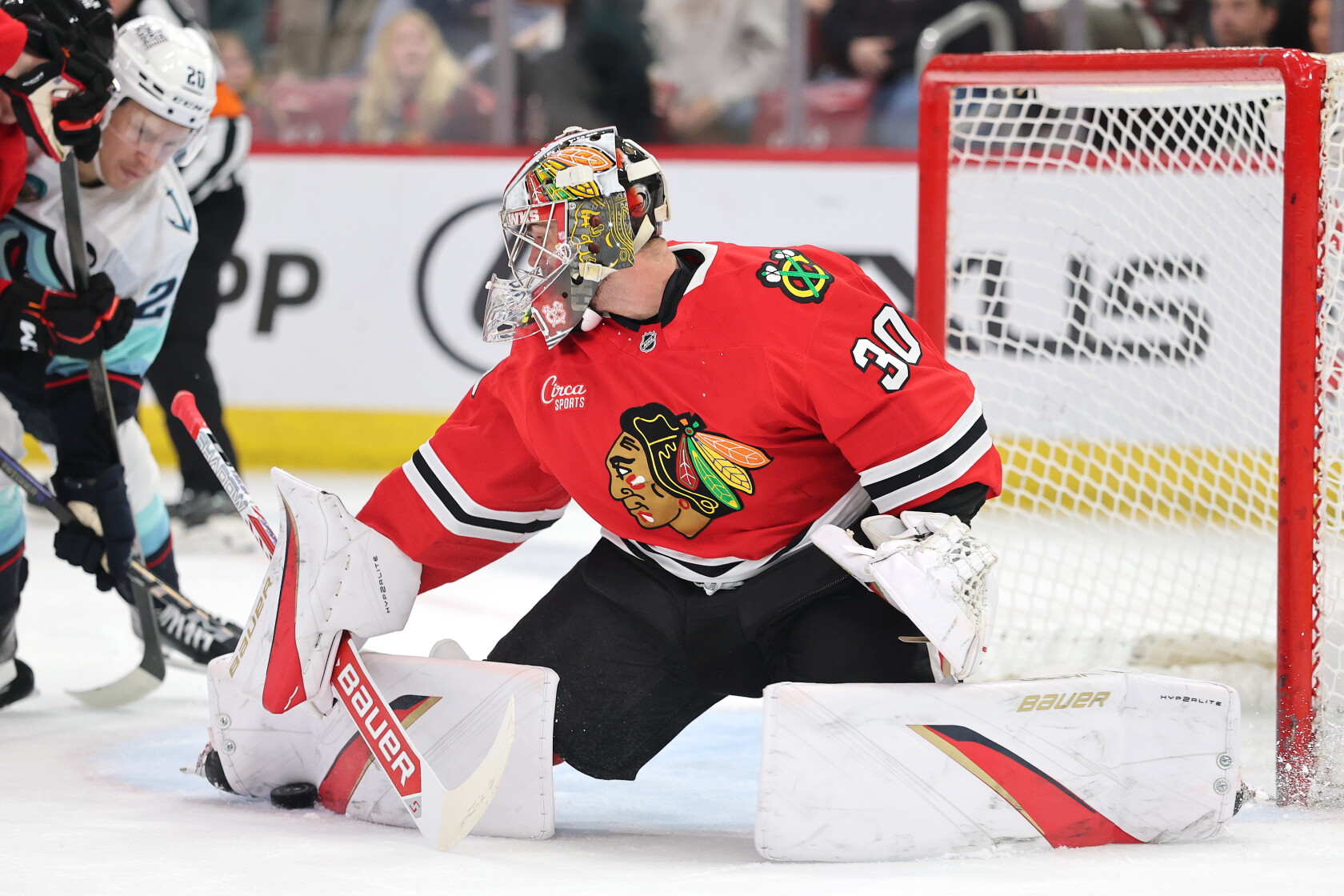
For Chicago, that starts with protecting Spencer Knight or whichever netminder receives the start once the lineup is confirmed. Knight's record has included strong individual performances and difficult nights, which means the team cannot assume the answer is simply asking him to be better. Clean exits lower the number of rush chances he sees. Better coverage on rebounds lowers the burden after the first save. Those are adjustments a young roster can execute without waiting for a trade or another draft.
The second battle is special teams. Chicago's 5-0-2 mark when scoring on the power play gives the coaching staff an obvious reason to emphasize disciplined entries and possession after offensive-zone faceoffs. Bedard's skill can manipulate the penalty kill; Kane's experience can make a passing lane visible. However, drawing penalties is useful only if the team can defend the other way and avoid turning an advantage into a short-handed crisis. Against Matthews, giving Toronto too many looks with an extra skater is an unnecessary risk.
GOATIFY
GOATIFY Hockey
Carry the game-night energy into your off-ice rotation with GOATIFY hockey styles.
Third is the pace through the neutral zone. Chicago wants enough controlled entries to let Bedard, Nazar and the other young forwards attack with options. Toronto wants its defense to deny easy middle-lane access and let Matthews' line operate with the puck rather than chase it for a full shift. A hurried chip and a disconnected chase line are often described as effort problems. They can also be structural problems when the defensemen are too deep or the forwards leave too early. Those are the details to watch before the game turns into a string of isolated scoring chances.
The fourth battle is more difficult to quantify: protecting a lead. Chicago's November 14 loss to Winnipeg showed how far the club still has to go in managing a favorable score. Once a team is leading, it does not need to stop attacking; it needs to choose better moments and avoid wasting possession in pursuit of one more spectacular goal. Supportive shifts from a fourth line, responsible changes and a simple first pass out of the zone can be more valuable than the play that dominates a highlight compilation.
Toronto's own losing streak adds a similar test from the opposite direction. The Leafs must resist treating an early concession as proof that their problems are permanent. A bad five-minute stretch can become a bad night when a club tries to solve everything on its next rush. Patience under pressure has nothing to do with a coach speaking calmly at the podium. It means staying in the planned coverage, completing the next shift and refusing to compound an ordinary mistake.
There is a meaningful rivalry angle, too. Chicago has historically done well against the Leafs at United Center, and the teams' next regular-season meeting is scheduled for January 14, 2027, in Toronto. But this is the first meeting of the new season. The players will not be awarded a win based on the result of a game from ten years ago or the first meeting one hundred years ago. Everything begins with a new faceoff.
The immediate verdict on Tuesday should be cautious. If Bedard drives offense and Chicago keeps the Leafs' chances manageable, that will be evidence of growth regardless of the celebratory production surrounding the game. If Toronto controls the neutral zone and shields its vulnerable defensive transitions, that will be evidence the visitors have absorbed at least some lessons from their rough start. One result cannot settle either franchise's future, and a centennial trophy case cannot settle the current standings.
That is what makes the fixture worth watching beyond the nostalgia. The Blackhawks deserve their century. The Maple Leafs have earned a place in its story by the coincidence of history. Neither club can ask history to skate the next shift. The meaningful gift to their fans would be a disciplined, competitive performance that points toward something better than the records they have brought into the building.
Chicago can bring back beloved names, reproduce the anniversary details and fill the building with reminders of extraordinary hockey. All of that belongs on a night exactly one hundred years after its first NHL victory. None of it changes the responsibility of a modern team to protect a lead, support its stars or develop a sustainable system.
Bedard and Nazar are supplying reasons to follow the rebuild. Kane is helping connect its eras. Matthews and McKenna give the visitors their own picture of elite talent and long-term ambition. Yet the truest comparison between these clubs is the gap between individual promise and collective performance. The outcome of the centennial game is still unknown before puck drop. The questions it asks are already clear: which team can turn a roster full of recognizable names into sixty minutes of recognizable structure?
GOATIFY
GOATIFY Hockey
Shop GOATIFY NHL and hockey shirts, hoodies and stickers.


















