

Pettine Gets the Headset. Dallas Still Has a 584-Yard Problem.
GOATIFYAn NFL defense cannot concede 584 yards and 46 points at home, watch its quarterback throw five touchdowns, and expect the conversation to stay limited to a few missed tackles. Dallas' 46–40 defeat against San Francisco exposed problems severe enough to force a change in who calls its defensive plays. But the Cowboys did not dismiss the man who had been doing that job. Instead, they handed the game-day decisions to veteran Mike Pettine while keeping Christian Parker as defensive coordinator.
The distinction is crucial. Brian Schottenheimer is trying to improve Sunday's tactical execution without blowing up the staff in November. Pettine has experience running defenses. Parker retains responsibility for the broader program and the relationships he has built with players. This is not a new defensive roster, a new scheme installed from scratch, or proof that the last ten games were one person's fault.
With the Cowboys at 4–6, the move is both an attempt to rescue a season and a test of whether a change in the decision-making process can fix repeatable mistakes. Tennessee is first up. The longer examination is whether Dallas can finally stop asking its offense to win shootouts every week.
The 584 yards told Dallas where the defense broke

The cleanest explanation for Dallas changing the voice in the defensive headset arrived before the coaching announcement. San Francisco scored 46 points and gained 584 yards in a 46–40 Cowboys defeat on November 15. Dallas had enough offense to score 40 and still lost. That is not a narrow statistical problem that can be explained away by one bad red-zone snap. It is an entire game in which the defense repeatedly failed to put its offense back on the field with the lead intact.
Those 584 yards were the most an opponent had generated at AT&T Stadium, according to the Cowboys' own account, and the fourth-highest total conceded in franchise history. Through ten games, Dallas stood last in the NFL in total yards allowed per game and 30th in points allowed per game. The distinction matters: these were not merely eye-catching mistakes from a single Sunday. The San Francisco outing exposed a season-long tendency to allow opponents to dictate spacing, tempo and the terms of engagement.
San Francisco's attack creates problems even for sound defenses because its motion and personnel groupings force second-level players to process run threats and pass threats simultaneously. A linebacker who steps toward the wrong gap can turn a modest gain into a chain-moving completion. A safety who rotates half a beat late can leave a receiver in open grass. A missed tackle at the end of any of those plays adds another ten or twenty yards. Those failures can be separate, but they compound quickly when an offense gets its preferred matchups repeatedly.
Some people will look at a yardage total this large and demand more blitzing. Others will argue for a conservative shell that protects the deep field. Neither is a complete answer by itself. Extra rushers can force earlier decisions, but if the rush does not arrive, fewer defenders are available behind it. A passive coverage structure may limit certain deep shots while yielding easy underneath completions and difficult tackle opportunities. The real question is whether the call matches the personnel, the down and distance, and what the opponent has already shown.
That is why the defensive play-calling change is more than a symbolic demotion but less than an automatic reset. Mike Pettine can alter the pressure menu, simplify the communication chain, and choose when to challenge protection rules. He cannot make a defender take a correct angle or erase a missed leverage assignment after the snap. Dallas needs fewer uncontested releases, more disciplined pursuit and better finishing of tackles. Those improvements might make any playbook look smarter.
GOATIFY
GOATIFY NFL
The most frustrating games send NFL fans looking for their team identity. Find GOATIFY American-football fan clothing and collectibles.


The uncomfortable context is the offense. A five-touchdown day from Dak Prescott, alongside an explosive receiving performance, should normally make a team competitive enough to win. When the other team also moves the ball at will, Dallas is asking its quarterback to function almost perfectly every week. That model is brittle: a dropped pass, a short punt or one turnover can become decisive because the defense offers so little margin. A new play caller must help restore that margin, not simply give Dallas a different explanation for the next high-scoring loss.
Pettine gets the headset; Parker keeps the coordinator title
Brian Schottenheimer did not fire Christian Parker. He removed the first-year coordinator's game-day play-calling duties and assigned them to senior defensive assistant Mike Pettine, while explicitly keeping Parker as defensive coordinator. That is a precise division of labor. Parker remains involved in preparation, practice, meetings and day-to-day direction of the unit. Pettine becomes the person making the immediate calls when the opponent's personnel enters the huddle and the play clock starts to run.
The split creates two tests at once. First, does a veteran voice improve the defense's tactical decisions under time pressure? Second, can Dallas maintain a coherent message when one coach retains the coordinator title and another makes the visible Sunday decisions? Teams can run a collaborative structure effectively, but only if position coaches and players understand who settles disagreements, who owns the weekly plan and how last-minute adjustments reach the field. Ambiguity becomes especially costly when motion forces a communication check seconds before the snap.
Pettine brings genuine experience, not just a famous name. He coordinated the New York Jets' defense from 2009 through 2012, spent 2013 in the same role with Buffalo and ran Green Bay's defense from 2018 through 2020. That is eight seasons in coordinator chairs. He also served as Cleveland's head coach. His most recent NFL jobs were more supporting than commanding: with Chicago in 2021 and Minnesota from 2022 to 2025. The Tennessee game will be his first regular-season call as a lead defensive play caller since the end of his Packers tenure in 2020.
The personal history is unusually intertwined. Schottenheimer worked on the Jets' offensive staff while Pettine led their defense, giving the head coach firsthand familiarity with the veteran's methods. Pettine hired Parker into his first NFL coaching post as a defensive quality-control assistant in Green Bay in 2019. When Parker, at 34 the youngest defensive coordinator in Cowboys history, needed additional help this season, he invited his former mentor to join Dallas. A working relationship that began with Pettine offering Parker an opportunity has now produced a reversal in which the mentor takes over the most public part of the job.
That history helps explain why the club has tried to describe this as support rather than abandonment. Schottenheimer has continued to call Parker an important part of the staff and has spoken positively about his future. But rhetoric cannot remove the professional sting. The first-year coordinator is still responsible for a unit that opponents have exploited, even though the authority to call live plays has moved. If the defense improves, credit must not become an excuse to erase the preparation Parker still handles. If it struggles, the new caller cannot be absolved solely because he joined midseason.
Pettine's own early description of the problems emphasized detail over a single revolutionary concept. He has discussed fitting the defense to the roster and addressing many small execution issues rather than imposing dozens of instant changes. That is the realistic route. A defense usually cannot install a completely new language in the middle of a week and expect eleven players to communicate it perfectly on Sunday. Dallas can change who makes the choice, how aggressively the staff uses packages, and what it practices most urgently. That is enough to matter, but not enough to call the season repaired before anyone has taken a snap under the new arrangement.
GOATIFY
GOATIFY NFL
Coaches change, but your passion for the game stays. Browse GOATIFY's NFL-inspired hats, shirts and sweatshirts.
The Cowboys' personnel cannot outrun missed assignments
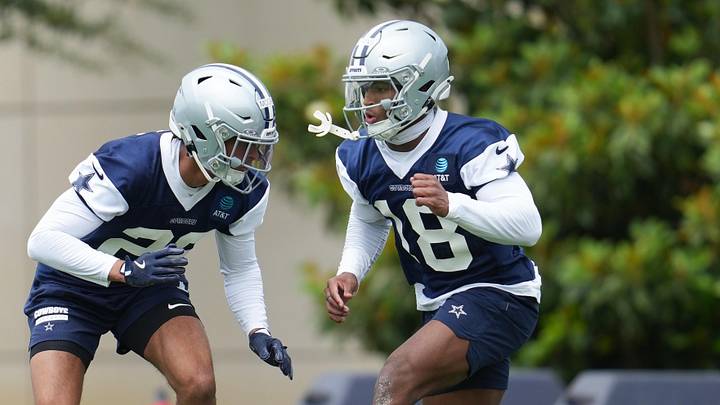
The players have not pretended that a different headset changes the basic obligation on the field. Defensive tackle Quinnen Williams was notably direct after the announcement: whoever delivers the call, the eleven players must execute it. That might sound like a standard locker-room answer, but it identifies the gap between the story that attracts the headlines and the behaviors that determine whether Dallas stops anybody. A perfectly selected stunt still fails if one rusher vacates the designed lane. A coverage disguise still breaks if its final rotation arrives late.
Kenny Clark and Rashan Gary are useful voices because they have already worked for Pettine in Green Bay. Clark pointed to the variety of fronts and third-down pressure structures Pettine has contributed since joining Dallas. Gary emphasized situational understanding and trust in players. Neither portrayed the coming change as a total replacement of Parker's defense. Their expectation was smaller adjustments within a recognizable system. That distinction matters for a team with just one week to prepare: a well-timed new pressure can be integrated into existing terminology much faster than an entirely new playbook.
Consider what Dallas must diagnose before it decides to rush five. Is the offensive protection sliding toward an obvious threat? Can a defender win a one-on-one without leaving the back end exposed? Is the opponent likely to throw hot because of down, distance or field position? The answers shape whether pressure should come from an edge, the interior or an unexpected coverage player. Pettine's experience should make those decisions better informed. Yet his track record is not a license for exotic calls at all costs. An aggressively disguised rush that the defenders cannot align or tackle out of is another route to the explosive plays Dallas is trying to eliminate.
On early downs, the challenge is different. Run-fit discipline, setting an edge and carrying an underneath route are less glamorous than a third-down sack, but they determine how often a coordinator gets to call an obvious passing situation at all. When an opponent continually reaches second-and-short, it can use play-action, movement and screens without exposing its quarterback to much risk. If Dallas improves at the point of attack and protects its underneath leverage, it can turn a few long scoring possessions into punts. The effect on the game can be larger than a single spectacular blitz.
Rookie safety Caleb Downs responded to the news with genuine affection for Parker, who helped recruit and develop him. That reaction demonstrates why communication across the transition matters. Players can respect an established coordinator and still respond to a new game-day caller. Forcing them to treat the two as rivals would be a management error. Otito Ogbonnia and Cobie Durant were more focused on the limited chances left and the fact that the same defenders must make the tackles. Both perspectives are compatible: loyalty to Parker does not exempt the locker room from immediate improvement.
The personnel debate should also avoid easy scapegoats. Williams, Clark, Gary and the young defensive backs each bring different strengths; a smart plan concentrates on those strengths while reducing their most difficult exposures. A front that disrupts the pocket but gives up clean escape lanes can undo its own rush. A corner who is left isolated for too long will lose some snaps even when aligned correctly. Down-to-down consistency, not one highlight play, must be the new standard. The defense has talent and experienced names, but until their assignments mesh, Dallas will remain vulnerable regardless of which coach speaks into the radio.
Tennessee is the first test, not the finish line
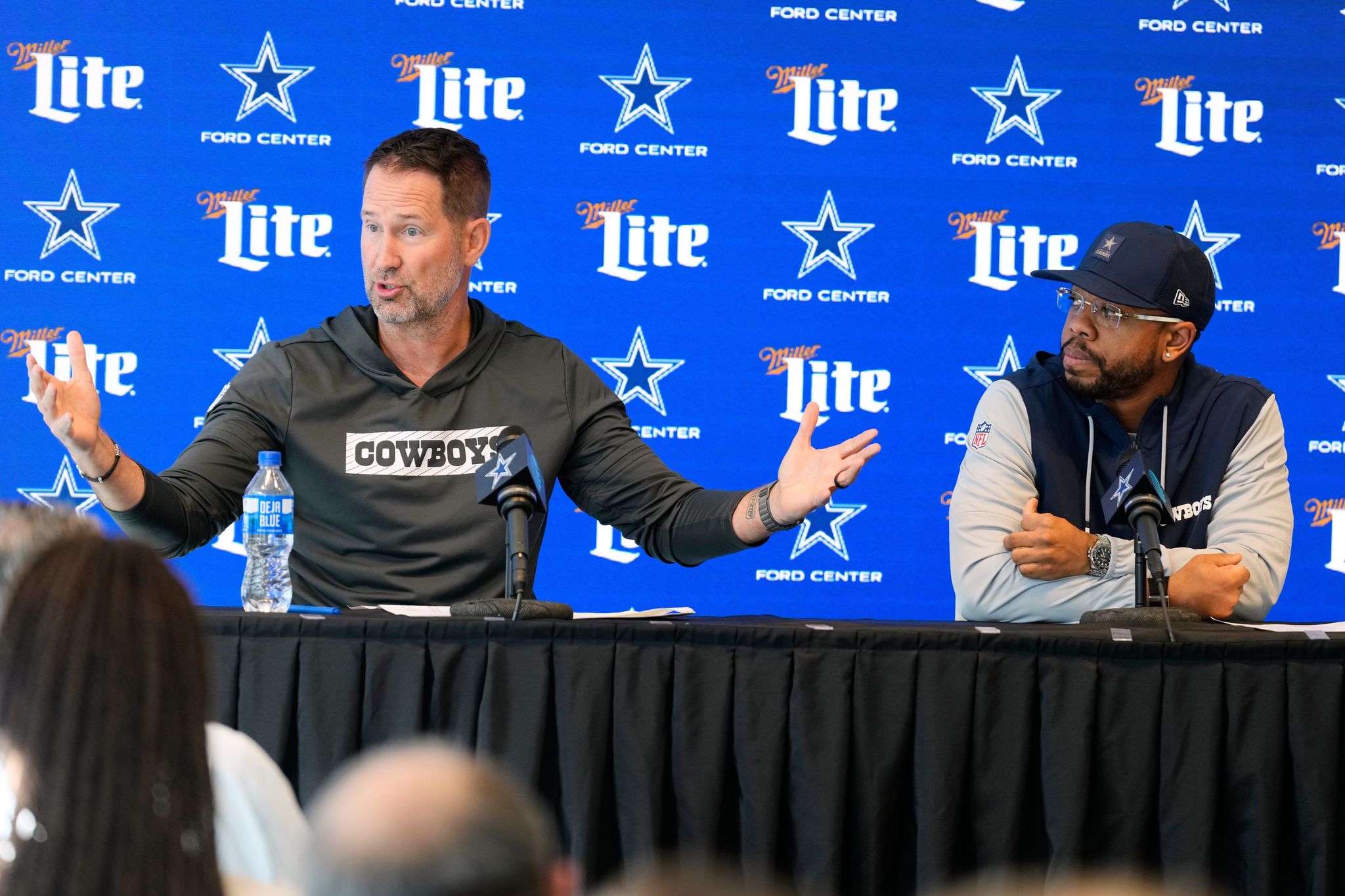
Sunday's home game against Tennessee will be the first practical demonstration of how the Cowboys intend to divide the defensive workload. The Titans enter at 1–8, while Dallas is 4–6 and trying to stay relevant in the NFC East. On paper, that looks like a favorable opponent for the team installing a new play caller. It can also be a misleading test. A defense can produce one quieter afternoon against a struggling offense without proving that the structural problems revealed by San Francisco have been solved.
GOATIFY
GOATIFY NFL
From defensive fronts to game-day debate, football is a team sport. Explore GOATIFY NFL fan tees and gear.
The first benchmark should be how often Dallas makes Tennessee earn each possession. Opponents should have to string together multiple accurate throws, successful runs and conversions rather than reaching the red zone on a handful of defensive errors. Explosive gains allowed, missed tackles, penalties that extend drives, and third-down conversions all reveal more than the final score in isolation. The Cowboys can win a game while still giving up exactly the kind of open-field mistakes that would be punished by a stronger opponent.
A second test concerns pre-snap clarity. Watch whether the defense gets lined up when the offense shifts, whether late motions force panicked gestures, and whether everyone reacts to the same coverage check. Those details are easy to overlook if a pass falls incomplete because of a bad throw. But repeatable communication is what lets a defense survive the next team that consistently executes its timing routes. Pettine can simplify calls if the existing menu is too demanding. The aim should be a defense whose assignments remain understandable as the opponent changes the picture.
Third, measure how the Cowboys use their defensive line. Clark and Gary have said Pettine is comfortable adjusting fronts and pressure packages, especially on passing downs. That is a reason to watch the timing and purpose of those looks, not simply count every blitz. A pressure that forces a quick completion short of the sticks can be successful. A four-man rush that compresses the pocket while seven defenders cover can be just as valuable. Conversely, a third-down sack does not cancel the damage from conceding multiple untouched runs on the next drive.
The final seven games are also a personnel and culture evaluation. Keeping Parker in the building may preserve continuity for young players while Pettine's calls offer a sharper short-term plan. But the longer the split continues, the more clearly the coaches must establish who develops the weekly scheme, who makes the decisive adjustments and how they evaluate mistakes after a game. If the two voices are aligned, Dallas can get the benefit of both. If the arrangement becomes competing authority, even a good initial result could conceal a larger problem.
Schottenheimer has framed postseason qualification as the standard, and with a 4–6 record the margin is genuinely narrow. The offense has shown it can create scoring opportunities, but demanding forty points every week is not sustainable. A more useful goal is for Dallas to win some games in which its offense is merely solid instead of extraordinary. That requires defensive stops when field position is poor, red-zone resistance and possessions that actually finish on the opponent's side of the scoreboard.
One win against Tennessee would not make Mike Pettine a miracle worker, and one mistake would not prove the change futile. The right question is whether the first week's improvements carry into different opponents, offensive structures and pressure situations. Dallas chose experience over continuity in the most visible job on defense while trying to preserve both. The only verdict that matters will come from a defense that starts making its own decisive plays instead of leaving the offense to save it.
Moving the play-calling headset from Parker to Pettine is a consequential coaching decision, not an instant cure. The veteran has more experience adjusting fronts and calling pressures under game-day conditions. Parker remains an important part of the staff and retains the respect of several defenders. A coordinated partnership could make Dallas harder to attack without requiring the team to relearn its defense in mid-November.
But the numbers will not improve because a different coach has a microphone. The Cowboys have to eliminate the free explosive gains, communicate cleanly before the snap, tackle with conviction and make opponents drive the long way. Their first chance to demonstrate those things comes against Tennessee. The true test arrives when the offense cannot score forty points and the defense finally has to win the game itself.
GOATIFY
GOATIFY NFL
Following the Cowboys defensive reset? Browse the GOATIFY NFL collection for shirts, hoodies, caps and stickers.


















