

Libaak and Alfonso Won Twice by One Game — Leal and Guerrero Need an Answer
GOATIFYTwo matches, six sets and almost no separation on the scoreboard. Tino Libaak and Gonza Alfonso have beaten Javi Leal and Fran Guerrero twice in consecutive October tournaments, yet the combined game count is only 33–32. That one-game difference makes their emerging rivalry more interesting than a simple 2–0 head-to-head suggests. The Argentinians have been better at the decisive moments without controlling the entire contest.
Rotterdam finished 7–5, 3–6, 6–4. Düsseldorf finished 3–6, 7–6(2), 7–5. Both demanded a third set, both featured substantial periods of Spanish control, and both ended with Alfonso and Libaak finding the last opening. The question now is not whether Leal and Guerrero can compete with them; the results show that they can. It is how the Spaniards can keep their most dangerous attacking weapons effective when the points become longer and the stakes become higher.
Rotterdam gave Libaak and Alfonso the first edge — but hardly any breathing room
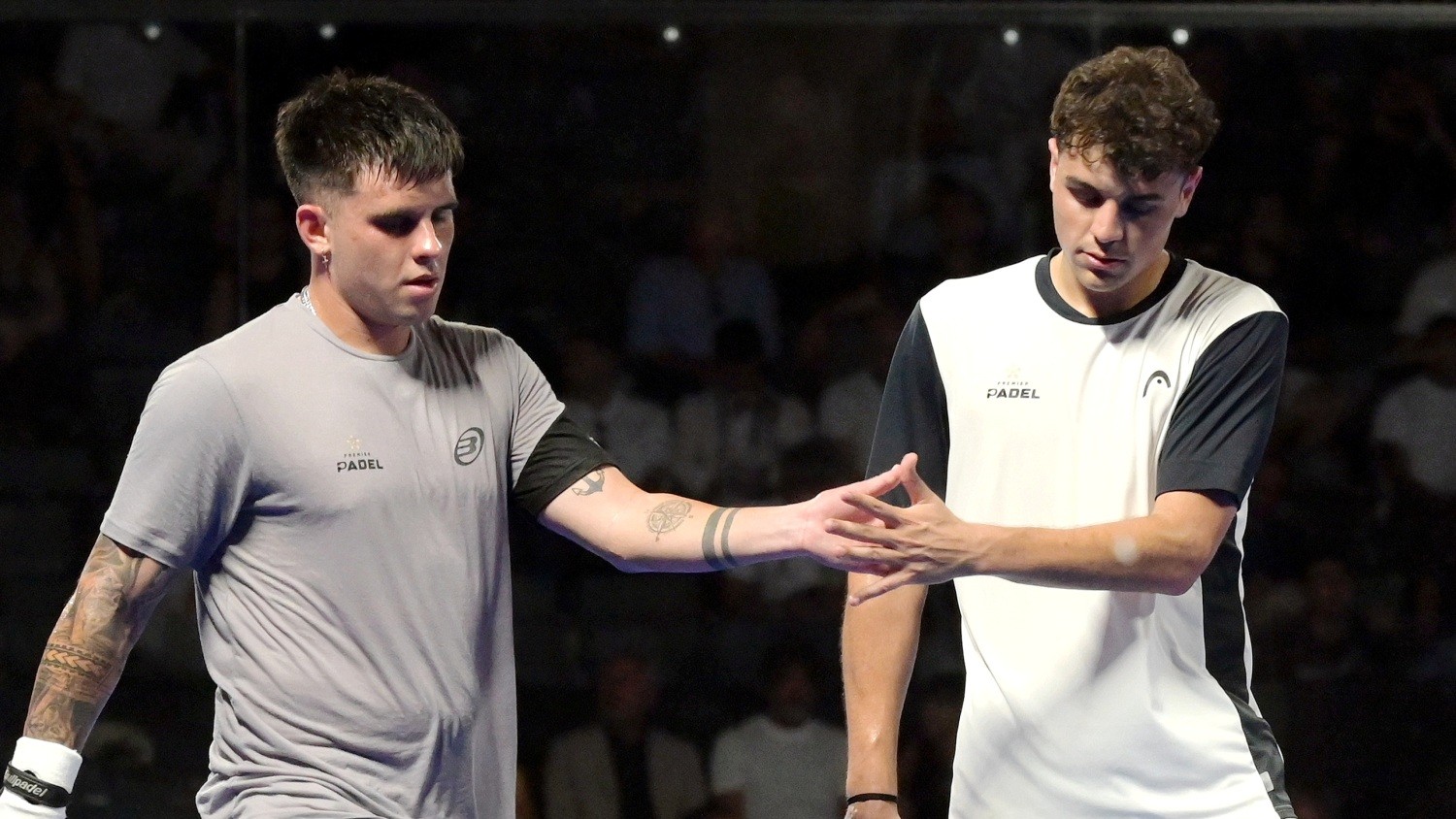
Rotterdam was supposed to reward the confidence that Javi Leal and Fran Guerrero carried from winning the FIP Platinum event in Lyon. Instead, their first October meeting with Tino Libaak and Gonza Alfonso produced a frustrating pattern: the Spaniards could dictate long stretches of play without finishing the match. The score, 7–5, 3–6, 6–4 to the Argentinians, shows how often control changed hands. It was not a straight-sets demonstration or a mismatch in firepower. It was a contest decided by a narrow margin after two hours and nineteen minutes.
The first set showed why Alfonso and Libaak are uncomfortable opponents for an attacking pair. They kept enough returns in play to extend rallies and create opportunities to take the initiative themselves. Leal's explosive finishing ability can make a point appear over as soon as he moves forward, but an opponent who varies pace and length can force him to build a better attacking position first. That is a possible tactical explanation for the pattern, not a claim that every rally followed the same script.
Leal and Guerrero then found a response. Taking the second set 6–3 was proof that the Spanish combination could hurt the Argentinians with its own rhythm. It also prevents an easy story about one pair having a permanent tactical solution. For a full set, the match belonged to the team that eventually lost. The problem came after the scoreboard was reset and every service game carried more weight.
In the decider, Alfonso and Libaak protected their chances long enough to claim the set 6–4. Winning a close third set is not automatically evidence of superior nerves; a single return game, a missed overhead or a couple of well-placed lobs can alter the result. Yet it gave the Argentinians a useful head-to-head reference before the same four players met again. They knew they could survive Leal's most dangerous passages without needing to overpower him point after point.
For Leal and Guerrero, the loss also contained encouraging information. They had taken a set from a fast-improving partnership and created real problems. What they had not done was turn those successful passages into a closing stretch. A week later, the chance to correct that omission arrived unusually quickly. That second encounter would make the Rotterdam result look less like an isolated bad afternoon and more like the beginning of a specific matchup puzzle.

Düsseldorf changed the order of the sets, not the winner

The rematch in Düsseldorf on October 7 seemed ready to tell a different story. Leal and Guerrero opened with a 6–3 set, placing the Argentinians under immediate pressure. Unlike Rotterdam, where Alfonso and Libaak had struck first, this time the Spanish pair needed only one more set to even the head-to-head. Their early lead made the result particularly painful because they were not chasing the match from the start.
Then came the clearest turning point of the two encounters. The second set stayed tight enough to reach a tiebreak, and Alfonso and Libaak won that shootout 7–2. A tiebreak compresses an entire set into a handful of points. One poor service sequence or two aggressive returns can be worth more than a long run of otherwise solid games. The Argentinians handled that short examination decisively, changing a one-set deficit into a contest that could be won by either team.
The third set returned to fine margins. Neither side ran away with the scoreboard. At 5–5, Alfonso and Libaak found the break that mattered, then completed a 3–6, 7–6(2), 7–5 comeback. The match lasted roughly two hours and twenty-two minutes according to the tournament match record. Across the two meetings, that meant more than four and a half hours of padel and six competitive sets, with both contests ultimately decided in a third set.
The combined games are even more revealing: Alfonso and Libaak won 33, Leal and Guerrero 32. A single game separated them across two full matches. That number is a warning against describing the Argentinians as overwhelmingly better. They were not. Their advantage was converting a small number of opportunities when the outcome was most sensitive. In Rotterdam, they finished the decider 6–4; in Düsseldorf, they claimed the 7–2 tiebreak and the late break at 5–5.
Leal and Guerrero can reasonably take two messages from the rematch. First, their aggressive game is strong enough to win opening sets and force the other pair into defensive work. Second, winning the first set does not remove the need for discipline when the rally becomes slower or more awkward. An attacking player who tries to finish too soon may hand an opponent the exact opening he has spent several shots trying to create. The available scorelines do not prove that impatience caused either defeat, but the tactical question is worth studying.
The temptation is to label a two-match losing streak a mental block. That goes further than the evidence allows. The Spaniards' Lyon title is recent proof that they can win difficult matches. What the Düsseldorf defeat actually establishes is narrower and more useful: against this particular Argentine pairing, they have twice been unable to protect a position from which victory was realistic.
Milan is the next test of whether the Argentine pair can keep climbing

These two victories matter for Alfonso and Libaak because their partnership is still relatively new. They began playing together in July and have already collected two FIP Silver titles and reached the Madrid P1 semifinals. The Rotterdam and Düsseldorf results added a different kind of evidence: they can win close, high-pressure matches against an established attacking pair, not just cruise through lower-tier draws. That distinction matters when a partnership wants to become a regular threat deeper into Premier Padel tournaments.
The Germany event also brought an important national-team milestone. Both Argentinians were selected for the FIP World Cup in Doha, scheduled for November 2–7. Alfonso's inclusion was particularly significant as his first World Cup call-up. It gives the October results a second layer of importance. The partnership's improvement is being noticed beyond the weekly tournament bracket, even if national-team selection is not a guarantee of a particular role or future result.
Perspective is still necessary. After eliminating Leal and Guerrero in Düsseldorf, Alfonso and Libaak beat José Solano Marmolejo and Ramiro Pereyra to reach the quarterfinals, but the run ended against world leaders Arturo Coello and Agustín Tapia, 6–2, 7–5 on October 9. That loss is a reminder of the next gap they must close. Outlasting one dangerous pair twice is an achievement; sustaining that level against the tour's dominant combination is a harder standard.
Leal and Guerrero have a different task. Their Lyon success showed what they can achieve when the first attack, net movement and finishing choices work together. They do not need to abandon an identity built around Leal's power and Guerrero's speed. They need more ways to win points when an opponent refuses to give them a clean ball to attack. A deeper lob, a patient reset or an extra defensive exchange may be more valuable than another spectacular but low-percentage smash.
The two pairs now approach the Milan P1, staged from October 10 to 18, with contrasting evidence in hand. Alfonso and Libaak have momentum, a growing body of close-match wins and the confidence of Argentina's World Cup selection. Leal and Guerrero have proof of their ceiling but also an unusually precise example of where their game has failed to close. Whether they meet again soon is uncertain; the lessons of these matches will matter even against different opponents.
For fans, this is why the matchup deserves attention beyond its ranking positions. A 2–0 head-to-head sounds decisive until the games are counted. A 33–32 aggregate sounds almost even until the match results are counted. Both descriptions are true. The next stage is finding out whether the Argentine pair can turn narrow wins into sustained progress and whether the Spaniards can convert their attacking advantages when the next match reaches its final games.

The useful conclusion from this two-match sequence is not that one pair has solved the other forever. It is that Alfonso and Libaak have twice been more effective in the closing stages of extraordinarily close contests. One game in the aggregate separated the teams, but both victories went to the Argentinians. That is enough to establish a meaningful early rivalry, not enough to predict every future meeting.
As Milan begins, the pressure is different on each side. Alfonso and Libaak must turn their ability to survive tight matches into consistent progress against the strongest seeds. Leal and Guerrero must protect their attacking identity while improving the choices that carry it through a third-set tiebreak or a late break point. If they meet for a third time, the first two encounters have already shown how little margin either side can expect.
Shop GOATIFY padel products from the Padel-filtered collection scope.
















