Dave Bautista's Kratos Transformation: How He's Building Muscle Again for God of War at 57
UPLIFT IRON CLUBDave Bautista spent the last few years deliberately moving away from the enormous physique that defined much of his wrestling career and his early run as an action star. Now the direction has changed again. At 57, Bautista is rebuilding muscle to play Kratos in Prime Video's live-action God of War series—and his own update suggests the transformation is moving quickly.
In early September 2026, Bautista said he was three weeks back into weight training and had roughly two more months to get where he wanted to be for the role. That makes this transformation more interesting than a standard Hollywood “bulk.” He is not starting from scratch. He is a former WWE champion who spent decades carrying far more muscle than he does today, then intentionally leaned down before being asked to look like one of gaming's most physically imposing characters.
So what does Bautista actually need to rebuild for Kratos, how much of his old size makes sense to bring back, and what can normal lifters learn from a 57-year-old former 290-pound wrestler trying to add muscle without simply recreating his biggest-ever bodyweight?
Dave Bautista Is Building Back Up After Years of Deliberate Downsizing

The important context is that Bautista's recent leaner look was intentional. In 2024, he explained that he had come down to roughly 240 pounds after years of being substantially heavier. He said he had spent much of his wrestling career around 290 pounds, reached about 315 pounds for Knock at the Cabin, and had been as heavy as 370 pounds earlier in his life.
That scale history matters because the Kratos project does not require Bautista to discover how to become muscular. He already knows what it feels like to train, eat and recover as a very large athlete. The harder problem is deciding how much size to regain without giving up the mobility, conditioning and comfort that motivated him to slim down in the first place.
His leaner phase also changed how he looked on camera. A narrower waist, less total mass and sharper definition made him appear more athletic and, by his own account in past interviews, more comfortable. For Kratos, the likely target sits somewhere between those worlds: visibly larger than the recently downsized Bautista, but not necessarily anywhere near his heaviest wrestling-era bodyweight.

Why “Like Riding a Bike” Is More Than Just a Good Caption

Bautista described returning to weight training as being “like riding a bike.” That is a useful way to think about the transformation, although it should not be interpreted as a guarantee that lost muscle instantly returns.
People who previously built substantial muscle often regain strength and size faster than they built it the first time. Part of that advantage is practical: experienced lifters already know how to brace, control reps, push hard without turning every set into chaos, select useful exercises and judge their own recovery. They are not spending the first months simply learning how to train.
There is also scientific interest in biological “muscle memory.” Human resistance-training research has found persistent molecular changes after training and detraining that may help explain why previously trained muscle can respond differently when training resumes. The evidence is still developing, and it does not let us predict exactly how many pounds of muscle any individual will regain in eight weeks. But the broader idea fits Bautista unusually well: decades of high-level training give him a very different starting point from a 57-year-old beginner.
That is why three weeks of visible progress should not be treated as proof of some magical celebrity routine. It is more plausibly the combination of a huge training history, renewed resistance work, favorable genetics, professional resources and a body that has been far more muscular before.
What a Convincing Kratos Physique Actually Needs

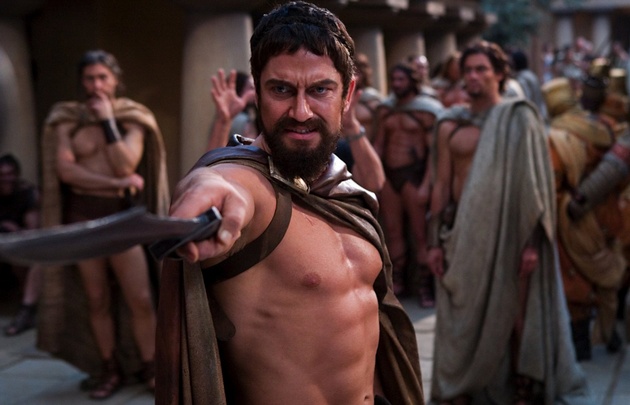
Kratos is not drawn like a stage bodybuilder. His silhouette is closer to a brutally strong warrior: wide shoulders, thick traps, a dense chest and back, big arms, powerful legs and enough leanness that all of that mass still looks athletic.
For Bautista, that means the most visually valuable muscle is likely to be around the upper torso. Delts and traps make the neck and shoulder line look imposing. Upper-back thickness creates the armored look even before costume pieces are added. Chest and arms matter because Kratos spends much of the franchise with those areas exposed. A relatively lean waist keeps the whole frame from becoming simply “big.”
Legs matter too, even if they receive less screen attention. A character who sprints, climbs, fights and swings enormous weapons cannot look like he skipped lower body training. But the goal is not necessarily bodybuilding-level quad separation. The visual brief is power and proportion.
The useful lesson for ordinary lifters is that a powerful-looking physique is usually a shape problem before it is a scale-weight problem. Ten pounds added everywhere does not necessarily improve the look as much as targeted growth in the delts, lats, traps, upper chest and arms while keeping the waist under control.

He Probably Does Not Need to Become 290-Pound WWE Bautista Again

The easiest mistake in discussing this transformation is to assume “Kratos” means “get as heavy as possible.” Bautista's own history argues against that.
He has already talked publicly about how uncomfortable the 315-pound Knock at the Cabin phase became and how difficult it was to take the weight back off. He also spent years learning that being enormous is not automatically useful for acting, athletic movement or long shooting days.
At 57, those tradeoffs matter even more. More body mass raises the recovery cost of almost everything: walking around set, repeated fight choreography, conditioning, heat management and simply getting through long workdays. A camera, costume design, lighting and makeup can amplify size. The actor still has to move.
So the most plausible target is not “old Batista at any cost.” It is a selective rebuild—enough shoulder, chest, back, arm and leg mass to sell Kratos, while preserving the leaner, more mobile version of himself he spent years creating.
That is also a smarter model for recreational lifters. If your goal is to look more muscular, the answer is rarely to chase the highest bodyweight you can force onto the scale. Add enough food to support training and growth, then judge progress by performance, measurements, photos and waist change instead of treating scale weight as the only scoreboard.
What His Kratos Training Is Likely to Prioritize

Bautista has confirmed that he is back into weight training, but he has not published a complete Kratos program. Anything more specific should be treated as analysis, not as his verified routine.
If the goal is to rebuild a Kratos-like frame efficiently, a sensible program would combine heavy compound patterns with higher-volume hypertrophy work. Presses and rows can restore broad upper-body strength. Pulldowns and pull-ups build the lats. Lateral-raise variations add shoulder width without requiring maximal joint stress. Shrugs, loaded carries and rows can thicken the traps and upper back. Curls and triceps work add arm size with a relatively low systemic recovery cost.
For the lower body, squat or leg-press patterns, hinges and unilateral work can rebuild size while maintaining athletic capability. The exact exercise is less important than choosing movements Bautista can load hard, repeat consistently and recover from.
That last point matters at 57. The best exercise is not automatically the movement that looks most hardcore on Instagram. A machine press that lets him hammer chest safely may be more useful than grinding a barbell bench through irritated shoulders. A supported row can train the back hard without turning every session into a lower-back recovery problem. Hypertrophy comes from productive tension and progression, not from proving that every lift must be old-school.

Conditioning Still Matters for a Character Who Has to Move

A pure bodybuilding bulk would solve only part of the Kratos problem. The character has to look powerful while moving through fight choreography, weapon work and repeated takes. Bautista's longstanding interest in boxing, grappling and jiu-jitsu is useful here because those activities demand a different kind of fitness than a pump-focused gym session.
Conditioning can also help him keep the new muscle functional. The trick is not to drown hypertrophy training in endless cardio, but to retain enough work capacity that added body mass does not make every action scene exhausting.
For normal lifters, the same principle applies. You do not have to choose between muscle and conditioning. Two or three short conditioning sessions, regular walking, cycling or combat-sport practice can coexist with hypertrophy work if total fatigue is managed. Being more muscular feels a lot better when stairs are not a max-effort event.
Recovery Is the Part of the Transformation You Cannot See
At 57, Bautista can still train extremely hard. What changes with age is the margin for sloppy programming. Joints, connective tissue, sleep quality, previous injuries and accumulated training mileage all influence how much high-intensity work can be repeated week after week.
That makes recovery management central to the transformation. A smart eight-to-ten-week build should prioritize consistent sessions over heroic individual workouts. The goal is to arrive at filming larger and healthy, not to win a one-day gym contest and lose two weeks to an irritated shoulder or back.
For an experienced lifter, that often means leaving a little more room between “hard” and “reckless.” Progress can come from more controlled reps, better exercise selection, an extra rep at the same load, a small load increase, or another productive set—not just maxing out.
Sleep and nutrition matter for the same reason. The body does not know that the deadline is a television shoot. It still needs energy, protein and recovery time to build tissue.
What Bautista Probably Needs to Eat—Without Inventing a Celebrity Diet
There is no verified public Kratos meal plan yet, so any precise calorie number would be made up. We do know that Bautista intentionally ate less while slimming down, and that regaining muscle now requires a different energy balance.
A reasonable muscle-building phase would provide enough calories to support progressive training, adequate protein across the day, carbohydrate around demanding sessions and enough dietary fat and micronutrient-rich food to support normal health. Because Bautista has already said he does not enjoy carrying extreme bodyweight, there is little reason to assume he needs an aggressive “see-food” bulk.
The useful takeaway is boring but effective: a modest surplus beats turning a muscle-building phase into a fat-gain competition. If strength is moving up, muscles are looking fuller and bodyweight is trending upward slowly, there is no prize for forcing the rate higher.

What Normal Lifters Can Actually Copy From the Kratos Transformation
You probably do not have Bautista's genetics, training age, production deadline or professional support. You also do not need them to borrow the useful parts of this story.
- Returning muscle is different from building your first muscle. If you used to be stronger and bigger, do not panic when you come back smaller. Your old numbers may return faster than the first time you earned them.
- Train for the silhouette you want. For a Kratos-style look, shoulder width, back thickness, traps, upper chest and arms create more visual impact than blindly chasing total scale weight.
- Use exercises you can repeat. The movement that lets you train a muscle hard for months is usually better than the lift that wrecks a joint just because it looks impressive.
- Keep some conditioning. Muscle looks and feels better when you can still move, work and recover between hard efforts.
- Do not copy celebrity bodyweights. Bautista's reported wrestling and film weights describe Bautista, not a target for everyone else.
- Give muscle gain enough food, not unlimited food. A controlled surplus is easier to manage than another extreme bulk followed by a long cut.
Bautista May Be Better Suited to Kratos Now Than at His Absolute Biggest

There is an obvious visual match between Bautista and Kratos: bald head, gray beard, extensive tattoos, broad frame and decades of muscle. But the more interesting part of the casting is timing.
Bautista has already lived through the “bigger is always better” phase. He knows what 290-plus pounds feels like, and he intentionally moved away from it. Now he can rebuild selectively rather than treating the role as an excuse to chase his old maximum size.
Three weeks into weight training is too early to know exactly where the transformation will finish. Two more months is also a short window for dramatic new muscle growth. But Bautista is not trying to manufacture a muscular base from nothing. He is trying to uncover and rebuild a physique his body has carried for decades.
That makes this less of a conventional Hollywood bulk and more of a controlled comeback. If the final result lands between lean modern Bautista and the enormous versions of his WWE and Drax years, it may be exactly what the role needs: enough mass to look like Kratos, enough conditioning to move like him, and enough restraint to avoid turning a character transformation into another extreme bodyweight experiment.