Boone Is Back for Year 10 — 790 Wins, No Ring and a 2027 Deadline
GOATIFYReports that Aaron Boone will return as manager of the New York Yankees in 2027 settle one of the franchise's immediate offseason questions without resolving its biggest one. Boone is heading toward his tenth season in the dugout, the final guaranteed year of his current contract, with a 790-565 regular-season record and no World Series championship as manager. That is an unusual combination: a record most clubs would celebrate, paired with an October résumé that keeps New York's expectations painfully unfulfilled.
The Yankees won 93 games in 2026 and made the postseason for the eighth time in Boone's nine seasons. They swept Boston in the Wild Card Series, then were swept themselves by Tampa Bay in the Division Series. The club has not won the World Series since 2009. The decision to retain Boone, reported October 19 but not yet formally announced by the team at the time of reporting, therefore amounts to more than continuity. It gives the same manager another season to demonstrate that regular-season stability can survive the game's highest-pressure moments.
The 790 wins are real — so is the October ceiling
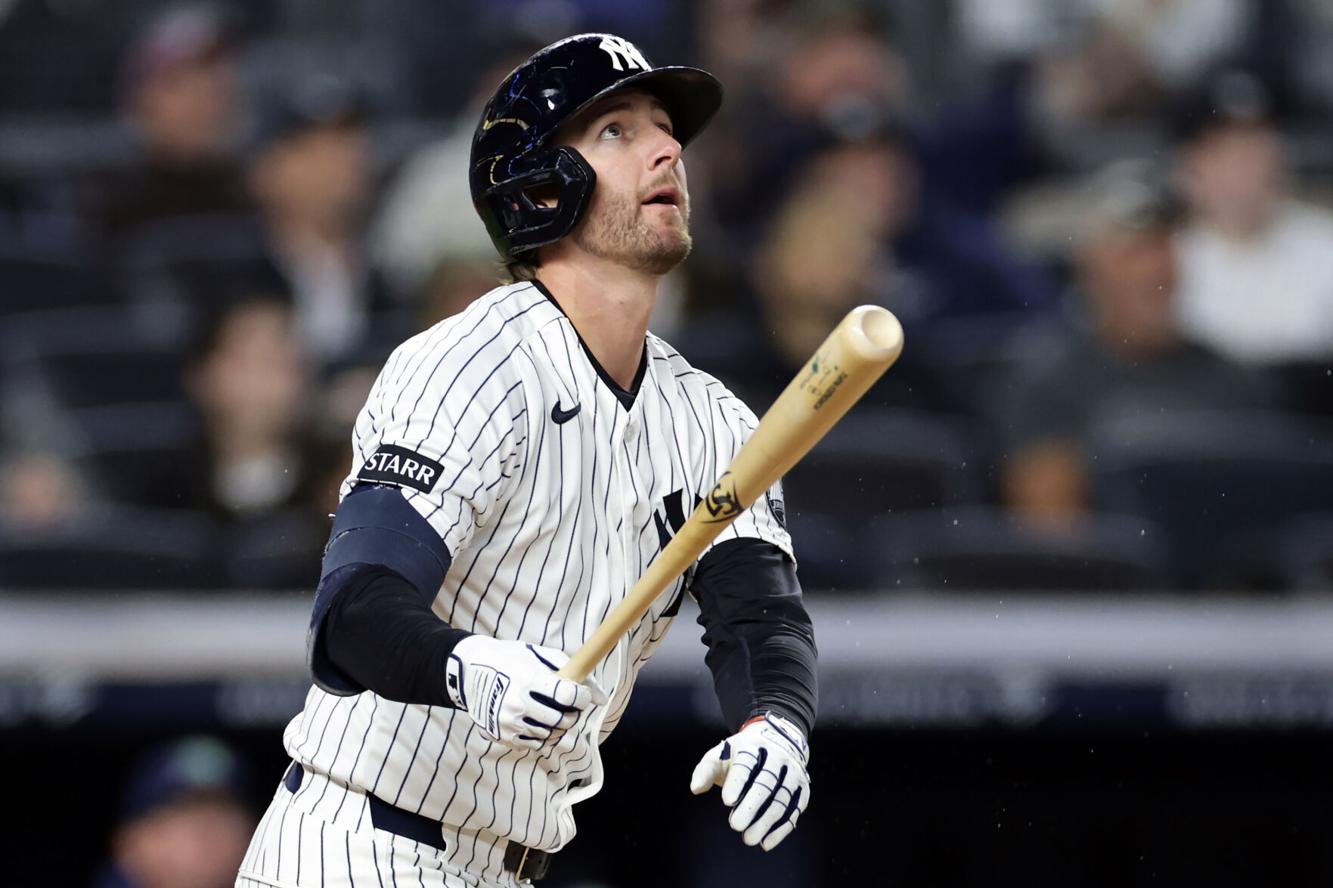
Boone's defenders have a substantial statistical case. His .583 winning percentage through nine seasons puts him among the strongest long-tenured managers in modern baseball, and New York's 790 victories over that span trail only the Dodgers. Three division titles, eight postseason appearances and the 2024 American League pennant are not accidents. A manager does not sustain that record without keeping a clubhouse functional across injuries, slumps, changing rosters and relentless attention.
But the Yankees do not evaluate a season by the same standard as a rebuilding team. Their 2024 World Series appearance ended in five games against Los Angeles, and the next two seasons both stopped in the Division Series. The 2026 loss to Tampa Bay was particularly hard to defend because it combined a weak offense with self-inflicted mistakes. Three first-inning errors in Game 2 handed the Rays opportunities before the Yankees had established any rhythm. Those errors were committed by players, yet a recurring failure to execute in October inevitably raises questions about preparation, positioning and accountability.
The contrast is sharper because the regular-season baseline has barely moved. The Yankees have now completed 34 consecutive winning seasons, and their 93-68 mark in 2026 was good enough for the top American League Wild Card position. That is organizational consistency on a historic scale. The problem is that a long string of good seasons has not become a championship season. The drought reached 17 years, matching one of the longest stretches without a title in club history.
Keeping Boone also reflects how the franchise is run. New York has not fired a manager with time remaining on his contract since 1991, and the present ownership group has generally favored continuity over dramatic mid-contract changes. That approach can preserve relationships and reduce chaos. It can also make a familiar playoff outcome feel predetermined. The fairest assessment is not that Boone's 790 wins mean nothing, or that his October record cancels every positive. It is that both records are real, and his tenth season has to answer why they remain so far apart.

Judge's 66 games exposed the cost of a one-star offense

The most important context for Boone's 2026 season is that Aaron Judge played only 66 games. A fractured rib and then a calf strain interrupted the captain's year, and he was unavailable for the postseason. Removing a player who changes how opponents pitch to everyone around him does not simply subtract his own home runs. It alters the lineup's balance, the quality of pitches other hitters see and the manager's ability to arrange the order around dependable on-base and power threats.
New York still found ways to win. The pitching staff kept games manageable, Ben Rice offered stretches of middle-order impact, and role players supplied enough offense to reach 93 victories. Yet the gap between scraping together runs in July and producing against playoff-caliber pitching in October is enormous. Tampa Bay exposed that difference. The Yankees could not consistently turn baserunners into pressure, and their margin for defensive errors became almost nonexistent.
That does not absolve Boone of lineup decisions. Managers are judged precisely when their preferred plan becomes unavailable. His late-season combinations and postseason choices were debated, including the use of Trent Grisham near the top of the order and the changing roles of Jazz Chisholm Jr. and Anthony Volpe. Some of those calls reflected poor alternatives rather than obvious mistakes. Others invited scrutiny because the same offense kept looking for a spark without finding one. Evaluating them fairly means separating decisions that were defensible before first pitch from decisions that merely looked bad afterward.
Judge's health will be one of the biggest variables in 2027, but simply waiting for his return is not a complete roster strategy. A championship contender needs enough independent offense that one injury does not force the entire lineup into survival mode. New York must decide how much of its 2026 supporting cast is worth retaining, whether the infield needs a different balance of contact and defense, and how to protect the captain's workload over a full season. Those are front-office questions as much as managerial ones. Boone can optimize a roster; he cannot single-handedly supply the depth it lacks.
The rotation can win in 2027 — the bullpen and roster must catch up
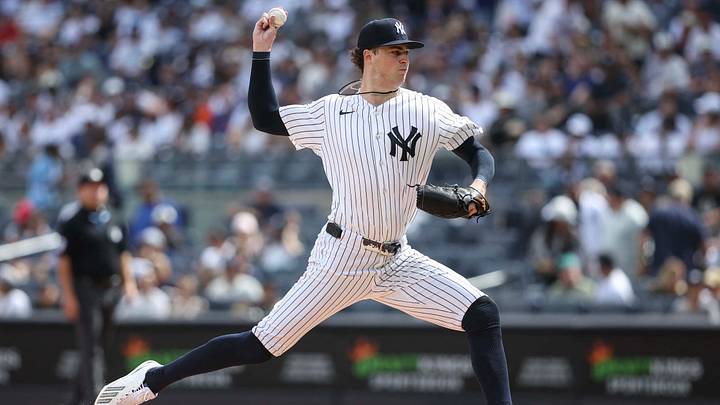
The clearest reason to believe New York can contend again is its starting pitching. Cam Schlittler's emergence gave the club another high-end arm, while Gerrit Cole, Max Fried and Carlos Rodón provide an established veteran foundation when healthy. A rotation with that range of options can win low-scoring games and reduce the pressure on an offense that may still be finding its shape. It also creates a different kind of managerial challenge: knowing when to trust a starter, when to attack a matchup and how to avoid burning relief options before the most important innings.
That is where the roster becomes less certain. Closer David Bednar faces an unsettled contract situation, and the Yankees must determine how much late-inning security they can afford to lose. Even a strong rotation will eventually hand close playoff games to the bullpen. New York's postseason exits have repeatedly illustrated how quickly a single bad inning can erase six or seven good ones. Reliable relief depth is not a luxury; it is part of the design of a team that expects to play deep into October.
The position-player questions are just as consequential. Jazz Chisholm Jr.'s future, potential changes at second and third base, and the mix of young and veteran bats could make next spring's Yankees look different from the club that lost to Tampa Bay. General manager Brian Cashman's own contractual future was still being discussed as Boone's return emerged. If ownership retains the current leadership structure, the responsibility for improvement has to be shared. A manager cannot be held solely accountable for roster construction, but he must show that the roster he receives is being used with discipline and flexibility.
There is also a calendar complication. Baseball's collective bargaining agreement is scheduled to expire on December 1, 2026, and a work stoppage remains a possibility rather than a certainty. A lockout would complicate player movement and communication across the sport. Continuity with Boone could help preserve established relationships if the offseason becomes fragmented, but it would not eliminate the need to strengthen the roster. The Yankees cannot plan as though labor uncertainty will solve a baseball problem for them.
Boone enters 2027 without the cushion of a newly extended deal. That does not mean every regular-season defeat becomes a referendum, nor does it guarantee that anything short of a championship will cost him his job. It does mean the organization has chosen a familiar leader at a moment when patience is thinning. For Boone, the most persuasive argument for an eleventh season would not be another excellent win percentage. It would be a team that plays cleaner, more adaptable baseball when the season is on the line.

The Yankees have made a defensible continuity decision, but not a risk-free one. Boone has won 790 regular-season games, guided eight playoff teams and managed through a season in which his most important hitter was absent for most of the schedule. Those achievements deserve weight. So do the two straight Division Series exits, the defensive breakdowns and a championship drought that grows more conspicuous with every passing October.
The next test is not whether New York can win 90 games again. It is whether a healthier Judge, a potentially formidable rotation and a better-built supporting cast can give Boone more than one route to winning a playoff series. The manager is reportedly returning; the standard he will be judged against has not changed.