

Allen Finished Duncan in Round Five — Now He Wants Dricus du Plessis
GOATIFYBrendan Allen needed almost the entire five-round distance to beat Christian Leroy Duncan. Then, with 2:46 gone in the final round at UFC Vegas 122 on October 10, the middleweight contender found the rear-naked choke that ended Duncan's five-fight winning streak. The finish gave Allen four consecutive UFC victories, but his strongest message came afterward: he does not want another assignment against a dangerous fighter ranked well below him.
Allen's latest demand is a matchup with former champion Dricus du Plessis, a rival he believes has been avoiding him. It is an understandable callout after a difficult win, yet the bigger question is whether Saturday's performance changed the UFC's incentive to book that fight. Allen defended a valuable ranking; he also exposed the frustrating gap between winning important bouts and securing a path toward the belt.
The fifth-round choke rescued a difficult night
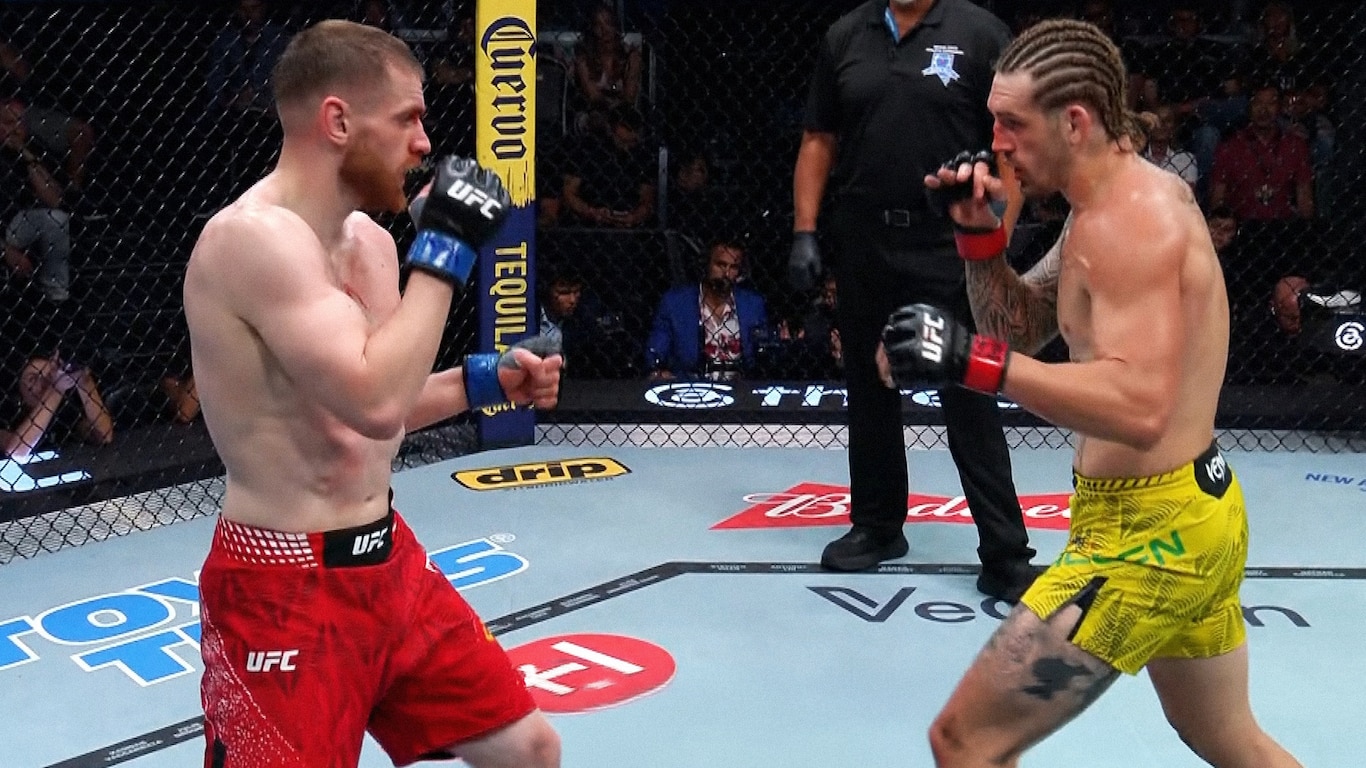
For much of the main event, Allen's experience looked more useful than spectacular. Duncan was aggressive early, landed sharp punches and resisted the kind of sustained grappling that can drain a striker's confidence. Allen answered by making the exchanges uncomfortable and repeatedly trying to convert pressure along the fence into takedowns. It was a contest in which the less dramatic actions mattered: where the fighters stood, who carried the other's weight, and how much energy Duncan spent returning to his feet.
The second round brought a major scoring complication. Referee Marc Goddard deducted a point from Duncan following an eye poke, after earlier warnings. The penalty mattered because this was not a one-sided fight. Allen spent valuable stretches controlling the mat and making Duncan defend, but the Englishman found enough success on his feet to prevent the contest from settling into a predictable pattern. Official scorecards reportedly had Allen ahead 38-37 entering the fifth; that is a precarious position for a fighter hoping to make an emphatic championship argument.
Duncan's best late response came in the fourth, when he increased his output and made Allen look less comfortable in open space. Allen did not respond by trying to win a flashy exchange. He returned to the weapon that had made him the favorite: pressure into the clinch, a takedown, and the sequence toward back control. Once Allen reached Duncan's back, the finish became a matter of securing position and completing the choke, not winning another striking trade. Duncan tapped at 2:46 of Round 5.
There are two truths in that sequence. Allen showed a high-level finisher's patience after a taxing contest, and Duncan proved he could make a top-ranked opponent work far harder than the betting narrative might have suggested. Allen's ability to close matters more than a neat-looking scorecard, but it does not erase the stretches when Duncan's pace and striking caused trouble. That tension is precisely why the performance is useful evidence for evaluating Allen against the division's established names.

Allen keeps defending a ranking against fighters chasing his place
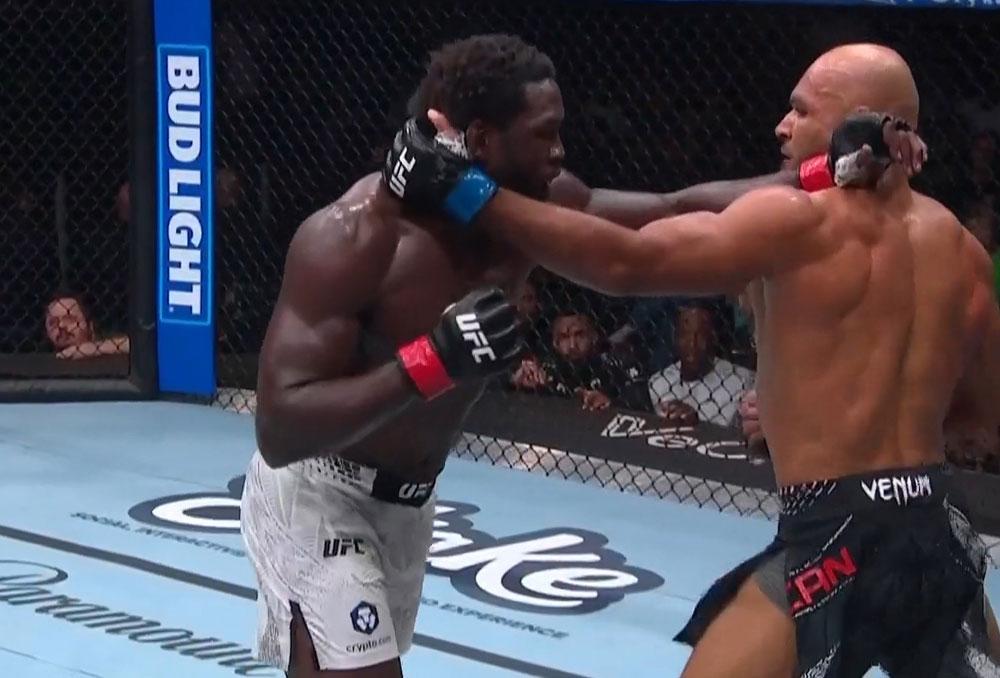
The complaint behind Allen's callout is not simply that he wants a famous opponent. He has already spent several fights proving he belongs in the upper tier while opponents with less to lose try to take his position. His current streak includes wins over Marvin Vettori, Reinier de Ridder, Edmen Shahbazyan and now Duncan. Those are different challenges: an established veteran, a skilled grappling threat, a renewed prospect and a rising striker. Beating that range of styles is a meaningful test of versatility.
Yet the ranking economics are awkward. When a top-five contender accepts a fight against someone outside the leading cluster, victory often preserves the status quo, while defeat can erase months of progress. Allen's June decision over Shahbazyan, for example, helped extend his winning run without automatically producing the kind of high-profile opportunity a contender expects. Against Duncan, Allen faced a fighter arriving with five straight wins and a significant July result over Jared Cannonier. The danger was real, even if Duncan's ranking was lower.
Duncan also deserves more than a footnote in the winner's argument. He arrived with momentum, a varied striking game and confidence built against experienced opposition. He pushed the bout into its final round and forced Allen to rely on his most dependable grappling skills. That does not mean Duncan was robbed of anything: the finish was decisive, and the second-round point deduction was part of the official contest. It does mean the losing fighter's ceiling cannot be reduced to one submission.
For Allen, the key distinction is between activity and advancement. Activity protects timing, sharpness and visibility; advancement requires matchups that alter the order of contenders. He has done the former repeatedly, but the latter depends on matchmaking decisions outside his control. A fourth straight win makes the case for a better-ranked opponent stronger. It does not guarantee one, especially in a division where championship timing, injuries, contracts and existing rivalries can reshape the queue without warning.
Why Dricus du Plessis is more than a convenient name
Allen has been calling for Dricus du Plessis for months, and the frustration has become increasingly public. After beating Duncan, Allen argued that a meeting between the two is logical because they are near one another in the middleweight picture and have unresolved personal differences. He also claimed du Plessis chose an easier matchup with former welterweight champion Kamaru Usman instead of accepting him. That is Allen's characterization of another fighter's choices, not an independently established account of why a contract was or was not signed.
From a competitive standpoint, the matchup has substance. Du Plessis is a former champion with experience in high-pressure five-round fights. Allen brings a deep submission game, an improving ability to manage difficult phases and a willingness to pursue opponents who can threaten his standing. Neither is likely to be satisfied with a slow positional stalemate. Du Plessis has built his reputation on making fights physically chaotic, while Allen's best moments often come when he turns disorder into a stable grappling position.
That stylistic collision would answer a more useful question than another prospect defense: can Allen impose his wrestling and back-taking sequences against an opponent accustomed to elite middleweight pressure? Saturday supplied evidence of his finishing instincts, but it also showed the moments when a capable striker can keep him guessing. Du Plessis would present a different blend of strength, movement and experience from Duncan. Predicting the outcome from a single fight would be premature; identifying the questions the matchup would settle is much easier.
The verbal rivalry makes the fight marketable, but it should not obscure the matchmaking calculation. A win over a former champion would be far more consequential for Allen's title hopes than simply protecting his current place. For du Plessis, beating an in-form contender would help reinforce his own claim to the front of the queue. Both have incentives, even if the promotional calendar or other commitments prevent an immediate booking. The strongest argument for the bout is not the insults: it is that both men have something significant to gain and lose.

The real reward is a fight that changes the title picture
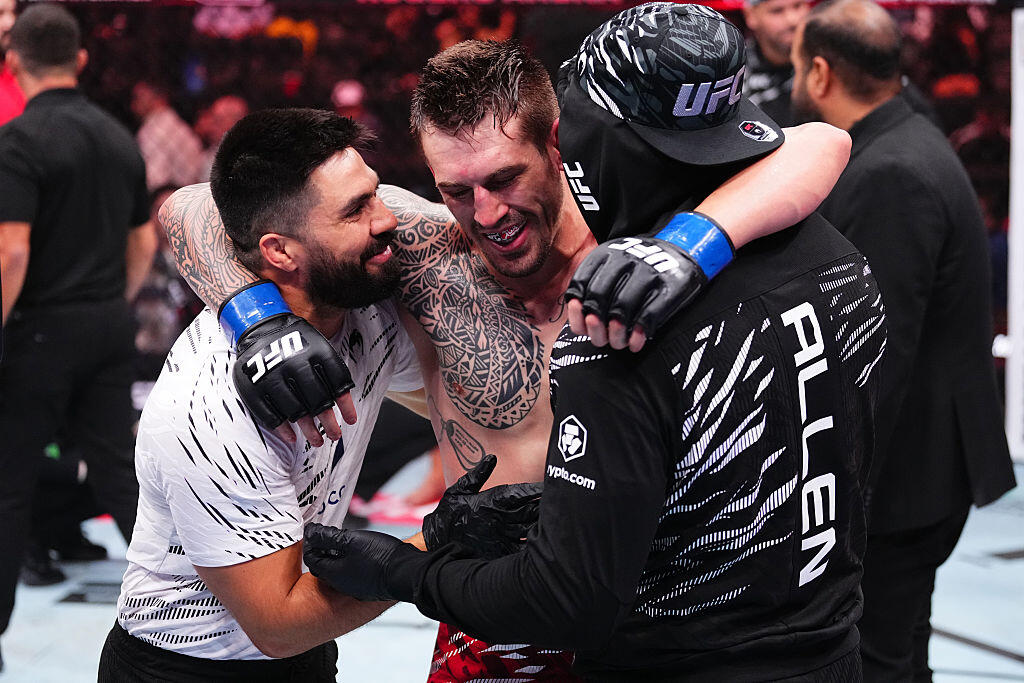
There is a difference between being a top contender and being next. Allen has made himself difficult to ignore, but the middleweight title situation remains fluid. Champion Sean Strickland's next defense and Nassourdine Imavov's position are part of the wider picture, and none of those possibilities should be treated as confirmed bookings until the UFC announces them. A contender's momentum can create pressure on matchmakers without creating a contractual entitlement to the next shot.
That is why du Plessis stands out as a practical next step. Allen would be moving forward in competitive stature rather than repeating the same risk against a hungry challenger. A five-round main event between two established names could provide a clear reference point for the next title-eliminator conversation. It would also test whether Allen's current four-fight streak represents a genuine leap in championship readiness or simply excellent execution against a series of differently ranked opponents.
Allen's own career explains why he wants the change. The run from Vettori through de Ridder, Shahbazyan and Duncan has required adjustments rather than one repeated winning formula. He has won decisions, survived difficult stretches and found a late finish when the scorecards were still relevant. That variety is an asset at the highest level. The remaining uncertainty is how consistently he can impose his strengths against opponents who are themselves experienced at controlling championship-paced fights.
Duncan, meanwhile, can rebuild without pretending Saturday never happened. His striking was effective in phases, and he showed the composure to compete deep into a five-round contest. He must now improve the defensive grappling decisions that allowed Allen to get to his back, while retaining the aggression that made him a contender. Both men leave with clearer information about their next steps. Only Allen leaves with the leverage of a fourth consecutive victory and a fresh, specific challenge to a former champion.
Allen did not produce a flawless showcase at UFC Vegas 122. He produced something more important for a contender who keeps accepting dangerous assignments: a finish under pressure, against a fighter who was still threatening him late. His challenge to du Plessis is a request for the reward to match the risk. The UFC has not booked that fight, and the title picture can still change. But after four consecutive wins, asking Allen to defend his place against yet another rising name would be harder to justify than giving him an opponent whose status he can actually take.
















