

Minshew Saves Arizona, Ryland Redeems Himself — Dallas Blows 33–30 OT Thriller
GOATIFYAt six seconds remaining, Arizona appeared to have completed one of the NFL season’s most unlikely comebacks. Gardner Minshew had come off the bench, driven the Cardinals 80 yards without a timeout and found Michael Wilson for the touchdown that tied Dallas 30–30. Then Chad Ryland missed the extra point. The moment that should have finished the Cowboys instead sent both teams into overtime.
The twist was that Arizona still won. Ryland returned to kick a 42-yard field goal, sealing a 33–30 road victory after a game in which the Cardinals trailed 17–3, lost several important offensive players to injuries and changed quarterbacks late in the third quarter. Dallas never trailed until the final kick. Both clubs are now 3–5, but the identical records conceal two very different emotional trajectories.
This was not merely a spectacular last-minute finish. It was a study in how a backup quarterback, one suddenly indispensable running back and a receiver who delivered under pressure transformed an offense—and how a home team allowed every opportunity to close the game to slip away.
Brissett Was Stuck; Minshew Changed the Game in 23 Passes
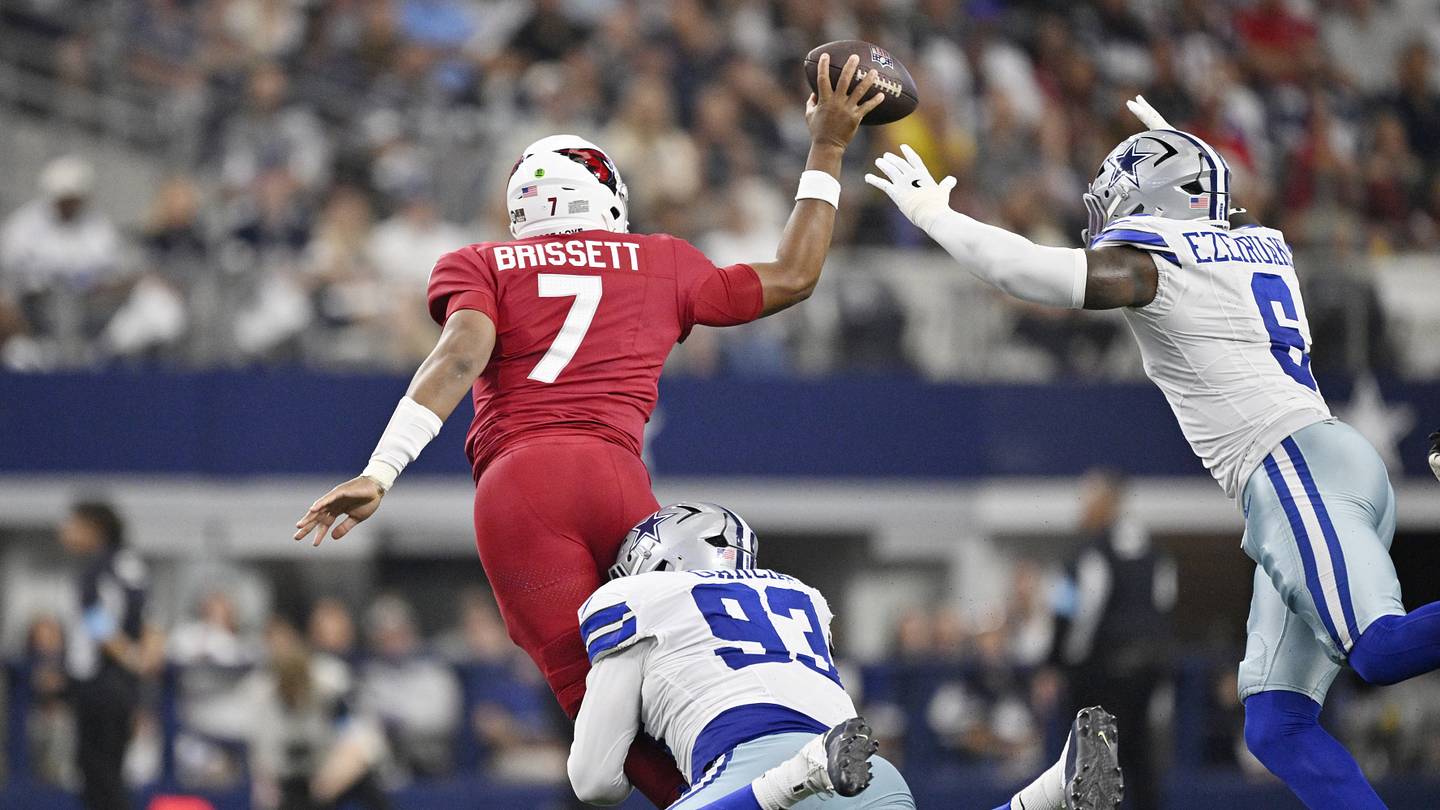
The scoreboard gave Dallas control for most of the afternoon, but the clearest sign of Arizona’s offensive trouble was the contrast between its two quarterbacks. Jacoby Brissett completed 10 of 23 attempts for 119 yards, threw an interception and absorbed four sacks. He was not producing enough clean drives to threaten a Cowboys defense that had been able to attack the pocket without paying a consistent price behind it. Arizona reached the late third quarter down 17–3 and looking short of solutions.
Mike LaFleur’s decision to turn to Gardner Minshew was therefore more than a substitution made for appearances. It changed the tempo of the game. Minshew completed 17 of 23 passes for 188 yards, three touchdowns and no interceptions, producing a 137.3 passer rating. The identical number of attempts makes the comparison especially stark: one quarterback generated 119 passing yards and no touchdowns, while the other produced 188 and three scores. The offense did not simply improve at the margins. It began finishing possessions.
The first signs were immediate. Minshew connected on an early completion, and Tyler Allgeier soon ripped off a 63-yard touchdown run that made the contest 17–10. A single explosive play does not prove the new quarterback caused the entire turnaround, but it forced Dallas to respect a different rhythm. With more decisive throws and less predictable possessions, Arizona was able to ask defenders to cover the whole field rather than crowding a stagnant passing attack.
Minshew subsequently led four consecutive touchdown possessions to finish regulation. That sequence matters more than the usual debate about a backup’s energy or personality. The Cardinals needed repeated execution, not one lucky drive. He distributed the ball, kept the offense moving as injuries accumulated and delivered a touchdown pass when the clock had almost expired. His performance created the conditions for the final kick; it did not depend on the kick to be impressive.
The next question is what LaFleur does with the quarterback position. Brissett entered the game as the starter, and a coach must consider preparation, opponent, protection and the health of the wider offense before making a lasting change. Yet a team sitting at 3–5 cannot ignore a relief performance this effective. Minshew has earned a serious conversation about the next start. Treating Sunday as nothing more than a brief spark would overlook the actual drives that changed the result.

Tyler Allgeier Became the Entire Backfield—and Dallas Still Could Not Stop Him
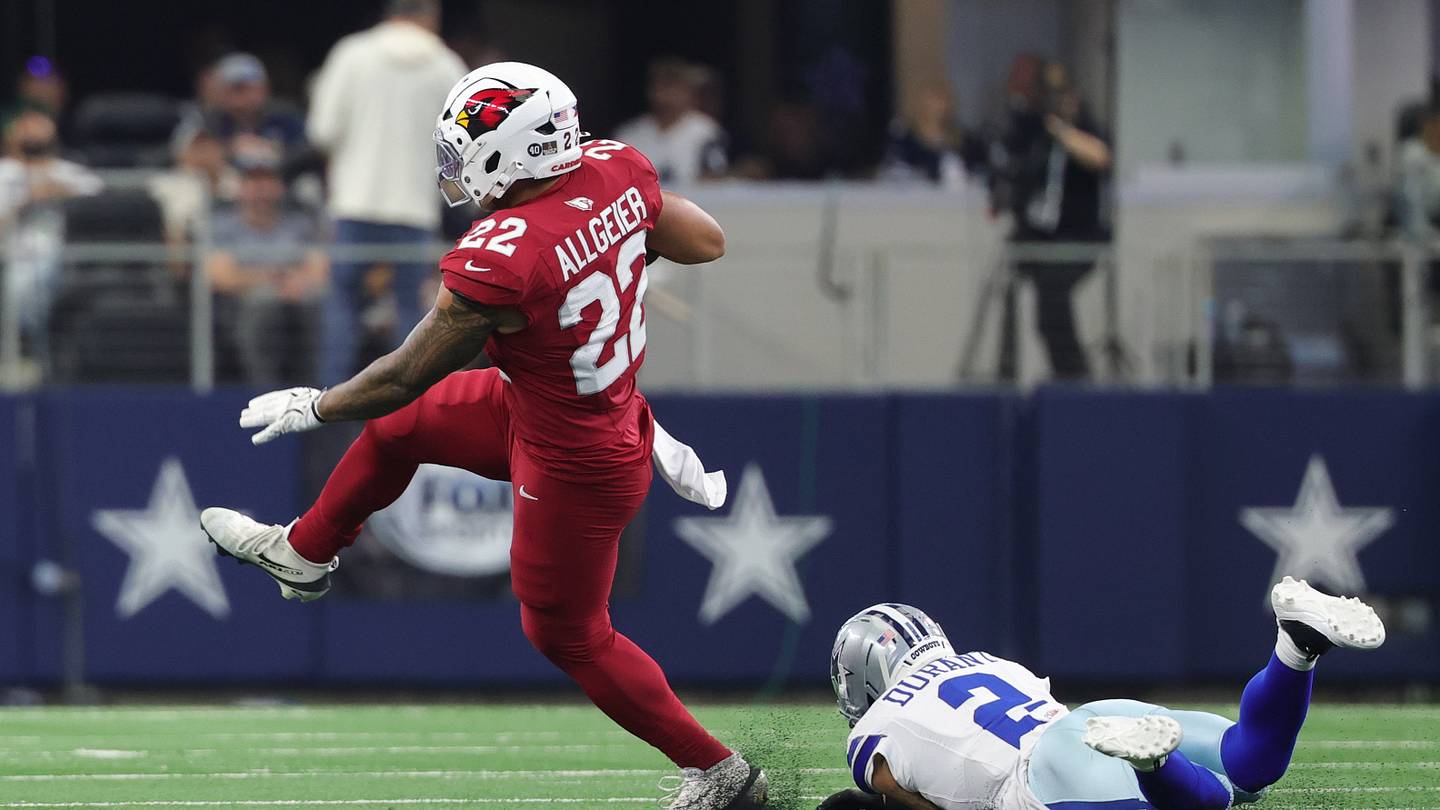
Arizona’s comeback did not belong to the quarterback alone. Tyler Allgeier produced 147 rushing yards on just 11 carries, an extraordinary average of more than 13 yards per attempt. He also caught five passes for 44 yards and a touchdown, finishing with 191 yards from scrimmage and two total scores. Nearly all of that production arrived after halftime, precisely when the Cardinals needed someone to create yards without asking an injury-hit offense to assemble perfect long drives.
The 63-yard touchdown run was the first major crack in Dallas’s apparent control. Arizona had spent much of the game trying to survive, and suddenly a single carry moved the scoreboard to 17–10. Another run of more than 50 yards helped set up a five-yard touchdown reception. Those plays changed the geometry of the contest. Dallas could no longer assume a routine run would keep the Cardinals behind schedule, and Arizona no longer had to ask Minshew to throw on every meaningful down.
Allgeier’s workload became more remarkable as the depth chart disappeared around him. Rookie Jeremiyah Love, returning from an ankle issue, left with another ankle problem. Bam Knight suffered a concussion after a hit and a lost fumble. Allgeier was left as the only available running back. The usual concern in that situation is that a defense can predict who will get the ball. Instead, the Cardinals kept finding space and used their remaining back both on the ground and as a receiving outlet.
That flexibility mattered on the final regulation drive. With no timeouts, a quarterback needs dependable short options who can get downfield quickly without trapping the offense in a slow developing play. Allgeier supplied a 14-yard reception as Arizona raced toward the end zone. The same player who had threatened Dallas with long runs could also help keep a hurry-up drive alive. His value was not just the headline rushing average; it was the way his skill set prevented the offense from becoming one-dimensional.
The performance also exposed a troubling contrast between the two running games. Arizona totaled 202 rushing yards, while Dallas gained 93 on 39 carries—only 2.4 per attempt. The Cowboys ran more often but produced far less. Some of Arizona’s rushing total came from a handful of huge plays, yet that is precisely the point: the visitors found game-changing gains while the hosts struggled to create even modest ones. If Dallas had been able to turn its late lead into sustained first downs, the comeback might never have reached its final act.

Eighty Yards, No Timeouts: Michael Wilson Turned the Final Minute Into Chaos
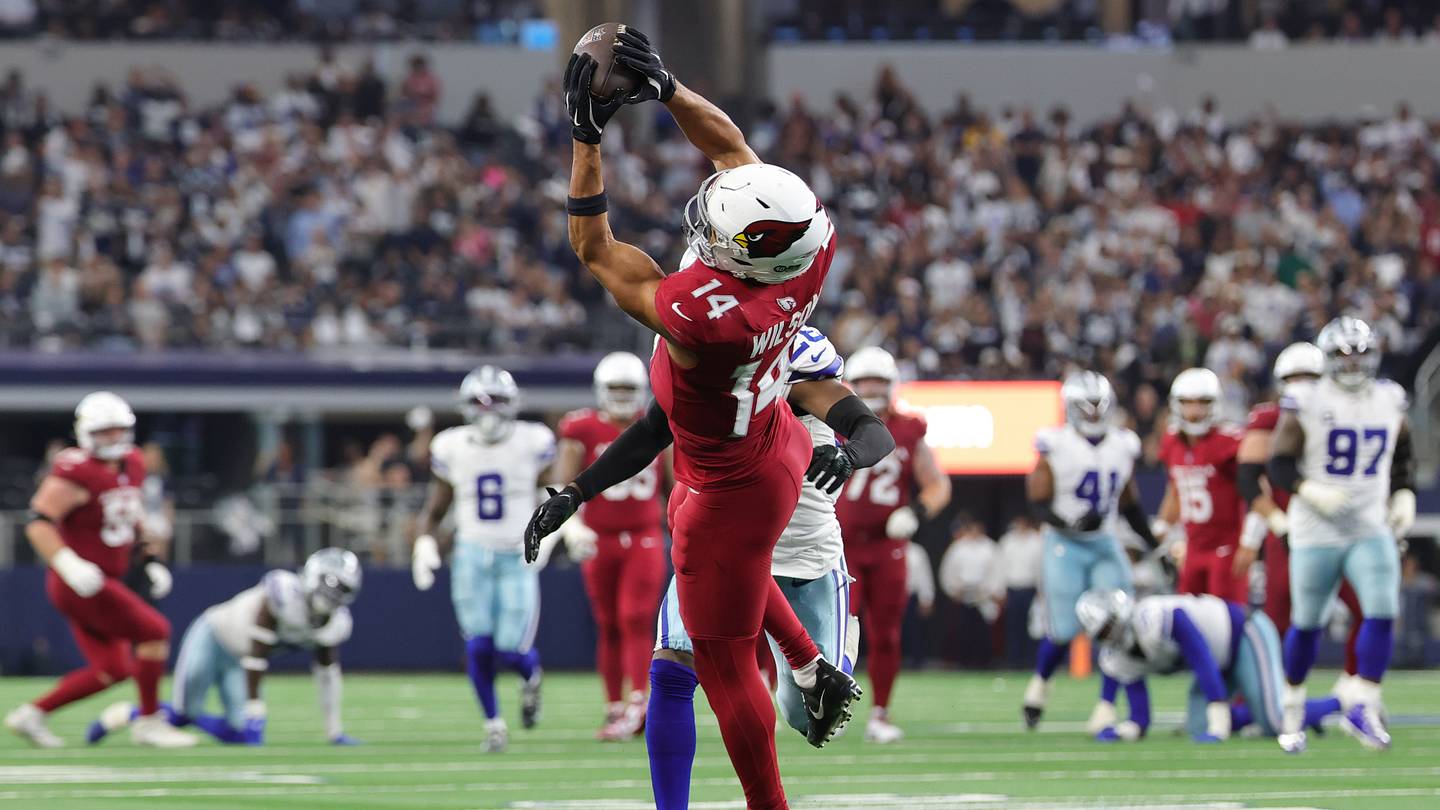
The most demanding part of Arizona’s comeback began with 1:05 left in regulation. Dallas led 30–24. The Cardinals had no timeouts and needed a touchdown simply to draw level. The distance was 80 yards, meaning the offense had to combine urgency with accuracy while the Cowboys knew a single mistake or tackle inbounds could consume precious seconds. Minshew and Michael Wilson nevertheless made the drive look remarkably organized.
Allgeier’s 14-yard catch gave Arizona its first push. Minshew then found Wilson for 21 yards, followed by another 27-yard gain that placed the ball at the Dallas 13. The sequence is important because it was not built on a desperation heave that happened to land. Arizona used successive completions to attack available space, moved the chains and arrived close enough for a designed scoring play. Wilson’s route work and ability to secure the ball under pressure became the difference between an improbable opportunity and a completed comeback.
With six seconds remaining, Minshew connected with Wilson for a 13-yard touchdown. Wilson finished with eight catches for 111 yards, including five receptions for 77 yards in the fourth quarter. He had to become a more central target as injuries reduced Arizona’s other receiving options. Kendrick Bourne and Reggie Virgil were among the players hurt, increasing the burden on the healthy pass catchers. Wilson answered by producing his most consequential catches when the entire stadium knew the Cardinals needed them.
Trey McBride supplied an important second threat. The tight end recorded seven receptions for 72 yards and extended his streak of games with at least seven catches to ten, an unusually long run of reliable production at his position. He also helped move Arizona into position during overtime. Dallas could not simply devote every defender to Wilson and assume the rest of the passing game would disappear. That distribution made the final-minute drive more credible than a one-receiver rescue mission.
Then came the miss. Ryland had made his previous 58 extra-point attempts, but the kick that would have put Arizona ahead sailed wide left. The scoreboard stayed tied at 30–30. In most comeback stories that would be the devastating final image: a near-perfect drive undone by a routine special-teams play. Instead, the miss became a test of whether the Cardinals could recover mentally and whether Dallas could exploit its second chance. Arizona had already shown it could rebuild its offense in the middle of a game. It now had to do the same emotionally between regulation and overtime.

Ryland’s Redemption Exposed the Cowboys’ Bigger Failure to Finish
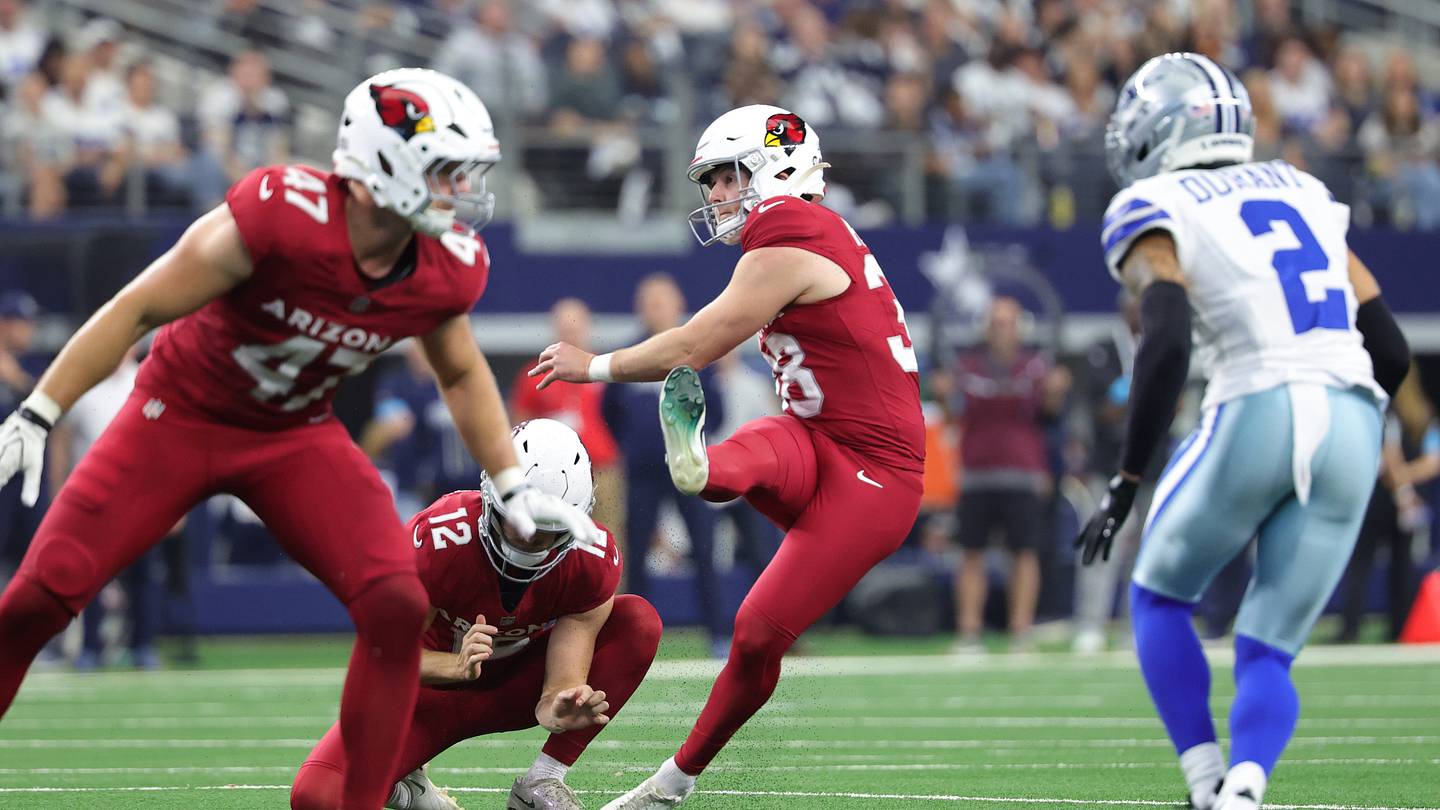
Overtime did not immediately deliver a Hollywood ending. Arizona went three-and-out on its first possession. Dallas then had the ball with an opportunity to erase the embarrassment of the final minute and win on its own terms. Instead, the Cowboys also went three-and-out. Josh Sweat’s sack of Dak Prescott helped destroy the possession, handing Minshew and the Cardinals another opening. This time the visitors did not need a touchdown; they needed a controlled march into field-goal range.
Wilson added a 17-yard reception, Allgeier contributed an 11-yard run, and Arizona covered 44 yards in eight plays. Ryland returned to the field for a 42-yard attempt with 2:53 remaining in overtime. The kick was good. The same player who had failed to deliver the potential winning extra point in regulation had the final touch in a 33–30 victory. That is a compelling individual recovery, but it should not obscure how many chances Dallas had to avoid requiring any late defensive miracle.
The Cowboys were outgained 467–261 despite holding the lead for almost the entire game. Their rushing attack generated only 93 yards from 39 attempts, and Prescott finished with 195 passing yards and one touchdown while absorbing four sacks. Dallas was able to score early, but it could not control the ball reliably enough late. When a team has a two-touchdown lead in the fourth quarter, a sequence of first downs can be as valuable as another spectacular scoring play. Dallas did not consistently find those first downs.
The defense also lost its grip at the worst possible moment. It had contained Arizona for long stretches, yet surrendered four consecutive touchdown drives after the quarterback switch. The decisive failure was the 80-yard drive with 65 seconds left and no Arizona timeouts. Dallas had a clear situational advantage: it could protect the sidelines, force difficult throws and make the clock an additional defender. The Cardinals still reached the end zone. The missed extra point merely offered Dallas a reprieve that its offense failed to use.
Brian Schottenheimer now faces a problem that is both tactical and psychological. Dallas is 3–5, has struggled to build consecutive victories and has just surrendered another game in which its early work should have created a winning platform. Arizona is also 3–5, but it leaves Arlington with evidence that its depth players can win under extreme pressure. The Cardinals have now won five straight against Dallas and remain unbeaten in five visits to AT&T Stadium. Those streaks will not fix Arizona’s injury list, but they sharpen the sense of a missed opportunity for the Cowboys.
The next games will test whether either lesson lasts. Arizona travels to Seattle with uncertainty at quarterback and several offensive injuries to manage. Dallas visits Indianapolis needing better late-game offense, more efficient rushing and a defense capable of protecting a lead after the opposing team adjusts. One extraordinary Sunday does not decide a season. It does, however, reveal which questions have become impossible to ignore.
The final score will be remembered for Minshew’s three touchdown passes and Ryland’s second chance. The more revealing detail is that Arizona had to solve a new problem every few minutes: a quarterback change, an emptied backfield, injured receivers, a missed extra point and an overtime possession that initially went nowhere. The Cardinals kept finding another response.
Dallas had the simpler assignment. Protect a lead, secure a few first downs and make a backup quarterback work against the clock. The Cowboys could not complete it. Arizona’s 33–30 win was spectacular because of how many obstacles the visitors overcame; it was devastating for Dallas because of how many opportunities the hosts had to prevent it.
Shop GOATIFY NFL and American football shirts, hoodies and stickers.

















