

Muchova vs Svitolina Is the WTA Finals' First Survival Test — and the Math Is Cruel
GOATIFYThe WTA Finals can make a season feel very small, very quickly. Karolina Muchova and Elina Svitolina arrived at Indian Wells with outstanding 2026 campaigns behind them, but after one round-robin match neither owns a win. On Wednesday, November 11, they meet with their Group 2 semifinal hopes under immediate pressure. A loss would not automatically eliminate either woman under every possible combination of results, yet it would leave almost no room for another mistake.
Their contest opens the day's singles program at noon Pacific time. Aryna Sabalenka and Mirra Andreeva, both 1-0, follow it on court. That order creates the day's defining tension: Muchova and Svitolina must play to survive before knowing exactly what the other match will do to their chances. The second result can confirm a group winner, send a player out, or leave the final round of matches to settle the places.
This is more than a meeting between two players trying to avoid a second loss. Svitolina brings the experience of a former WTA Finals champion and a strong hard-court record against Muchova. Muchova brings one of the tour's most inventive games and the evidence, from her opening defeat to Sabalenka, that she can trouble a favorite even when the scoreline eventually turns against her.
Svitolina has a champion's history, but her opening loss exposed the problem

Svitolina's 6-4, 6-0 defeat to Andreeva on Monday was the more lopsided of the two opening Group 2 results. She did not create a successful break, and Andreeva protected her serve from start to finish. The teenager saved six break points, four of them during the last game, before completing the win in just 70 minutes. Svitolina finished with little opportunity to disrupt the rhythm of points once Andreeva had established control.
The result was particularly jarring because Svitolina's year has repeatedly shown how difficult she is to put away. She began 2026 by winning Auckland, reached the Australian Open semifinals and claimed the title in Rome. Her Italian triumph included victories over Elena Rybakina and Iga Swiatek before a three-set final against Coco Gauff. Those are not the results of a player lacking the patience or defensive ability to handle the elite. They show she can take high-level opponents into uncomfortable territory.
The question now is whether she can make that style visible again in Indian Wells. Svitolina acknowledged after facing Andreeva that the conditions had felt difficult and that she needed to move better. Against a player as creative as Muchova, movement is not simply about retrieving one extra ball. It means arriving balanced enough to read a disguised slice, defending the open court after a drop shot and recovering before the next direction change. If her footwork becomes passive, Muchova can build an attack without needing to hit through her.
There is a genuine positive in the direct matchup. Svitolina leads Muchova 3-1 overall and has won both of their hard-court meetings, although Muchova took their 2026 encounter in Stuttgart in three sets. Past results cannot substitute for current form, but they offer Svitolina a tactical reference point: she has previously managed the Czech player's changes of pace and can draw confidence from that familiarity. The challenge is to put enough pressure on Muchova's second delivery and long rallies to make those patterns repeatable.
Svitolina won the WTA Finals title in 2018 and returned to this event after several seasons away. It is an unusual contrast with Muchova, who is making her long-delayed debut, and with Andreeva, still at the beginning of her own Finals story. Experience matters only if it informs decisions under stress. Wednesday will require Svitolina to make the adjustment quickly, rather than waiting to settle into a match that could decide whether her 2026 campaign continues beyond the group.
GOATIFY
GOATIFY Tennis
A confident return game and a survival mindset suit every tennis fan.


Tennis GOAT Golden Racket & Ball Crewneck Sweatshirt
A tennis fan design for everyday wear.
Shop Now ↗

Muchova took the fight to Sabalenka. The scoreboard still says 0-1
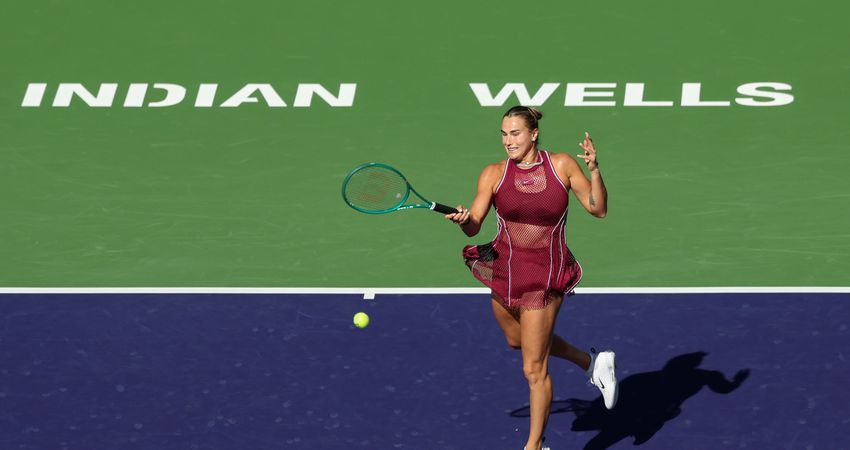
Muchova's 7-6(2), 7-5 loss to Sabalenka lasted one hour and 53 minutes and was close enough to offer both encouragement and frustration. In the first set the Czech player broke to lead 3-2 and again moved ahead at 5-4, only for Sabalenka to break straight back. At a tournament where every game and set can become important in a tie, failing to consolidate a lead is more damaging than the narrow margin alone suggests.
The decisive first-set tiebreak also ended a revealing streak. Muchova had not lost one all season, winning all twelve she had contested before meeting Sabalenka. On this occasion the World No. 2 dominated the breaker 7-2. The contrast captures the match neatly: Muchova generated enough variety to unsettle a formidable opponent, but Sabalenka was stronger at the moments that converted pressure into the set that mattered. Muchova then stayed competitive through the second set without producing a sustained finishing run.
There is no reason to treat the performance as proof that Muchova's form has disappeared. Her 2026 season brought a Doha WTA 1000 title, a grass-court championship in Bad Homburg and a Wimbledon final. Her run across different surfaces showed that touch and improvisation can coexist with serious consistency. She also reached the Stuttgart final, where her meeting with Svitolina ended in a three-set Muchova victory. Those achievements explain why she qualified for the season finale after injuries previously prevented an appearance.
The danger is that Muchova's most effective tools can become less useful when the opponent refuses to be moved. She thrives on changes of height, short angles and sudden approaches to the net. In 2026 she won about 72 percent of net points, the strongest figure among this Finals field. But those forward movements still need a foundation: well-placed first serves, controlled depth and enough patience to avoid offering a comfortable counterattack. Svitolina has the legs and court awareness to challenge each of those steps.
Muchova's opener also created a mental calculation. She knows she was a few holds away from taking the first set against Sabalenka and perhaps changing the match. She cannot let that thought encourage reckless shotmaking just to prove a point against Svitolina. The first task is simply to win the present match. The second is to win it in a way that preserves as many sets and games as possible, because the group may not be decided on win-loss records alone.
Sabalenka-Andreeva can turn a survival win into a semifinal route
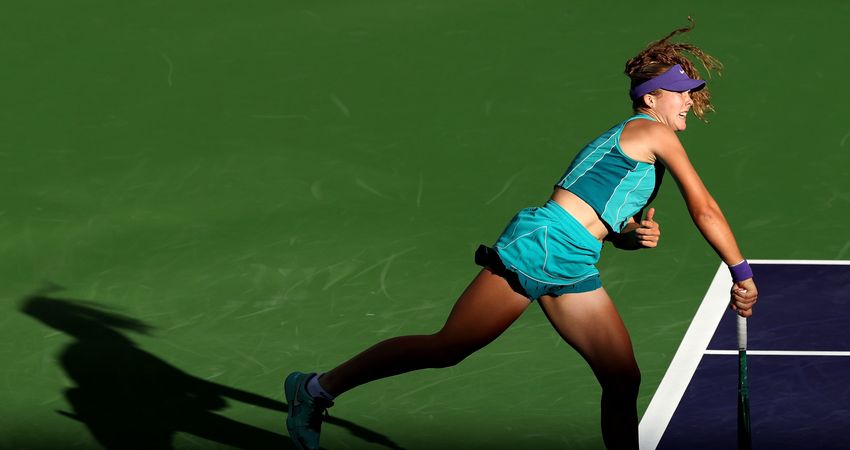
The group standings are straightforward after the first round: Sabalenka and Andreeva have one victory each; Muchova and Svitolina have none. The advancement rules are less straightforward because round-robin tennis uses set and game results to resolve certain multi-player ties. That is why Wednesday's schedule cannot be reduced to two independent contests. The first match supplies one result; the second can determine what that result means.
One official scenario is especially stark. If Muchova beats Svitolina and Sabalenka defeats Andreeva, Sabalenka advances as the Group 2 winner and Svitolina is eliminated. Muchova and Andreeva would then compete for the second qualifying place on Friday. It would be a dramatic reward for Muchova after losing her opener, but still only a route into the semifinal, not an automatic place. The precise combination of wins matters more than the headline standing.
Flip both matches and the same logic works in the opposite direction. If Svitolina beats Muchova while Andreeva defeats Sabalenka, Andreeva takes the group and Muchova is eliminated. Svitolina and Sabalenka would be left to contest the other semifinal position in the final round. In both versions the 0-1 player who survives Wednesday gets a defined chance, while the other is out. That is the clearest reason the afternoon meeting deserves knockout-match intensity.
Two additional combinations can also settle an early qualification without yet confirming the exact placing. If Sabalenka wins in straight sets and Svitolina beats Muchova in three, Sabalenka advances, with her final position still to be determined. If Andreeva wins in straight sets and Muchova defeats Svitolina in three, Andreeva advances with placing unresolved. Other score combinations may leave more permutations open, so an early victory alone is not a universal guarantee of a semifinal ticket.
The match between the two leaders is itself compelling. Sabalenka has won four of six meetings with Andreeva, but the teenager took their most recent clash in the 2025 Indian Wells final. Andreeva arrived on Wednesday's schedule after winning the last seven games against Svitolina and holding serve throughout. Sabalenka's opening win required repeated recoveries from breaks down against Muchova. One player has recent evidence that her service games can be extremely secure; the other has evidence that she can escape a difficult match without producing perfect tennis.
Muchova and Svitolina cannot control how that showdown unfolds. They can control their own scoreboard, whether they conserve energy in extended games and whether a nervous lead becomes an avoidable dropped set. The WTA Finals rewards players who balance the urgency of the next point with the cold arithmetic of a three-match group. Wednesday will test that balance before the field even reaches its final round on Friday.
GOATIFY
GOATIFY Tennis
From the baseline to the decisive tiebreak, celebrate the tennis season.


Tennis GOAT Golden Racket & Ball Decal Sticker
Add tennis personality to your favourite gear.
Shop Now ↗
Svitolina's 2018 championship tells us she knows how to navigate a Finals week. Muchova's exceptional 2026 says she belongs among this year's eight contenders. Neither claim earns a semifinal place on its own. Each has already lost once, and now both must solve an opponent with enough versatility to turn small lapses into a match-changing run.
There is a temptation to call their November 11 meeting a simple elimination match. The real picture is more interesting: the loser faces the severest danger, while the winner remains dependent on Sabalenka-Andreeva and potentially on sets and games in the last round. That makes Muchova against Svitolina the first high-pressure hinge of Group 2, where surviving is necessary but not always sufficient.
Shop GOATIFY tennis products from the Tennis-filtered collection scope.

















