

Puka Nacua's Ban Costs Three Paychecks. The Rams Still Face a Bigger Test.
GOATIFYTwo clocks are running on Puka Nacua, and only one is controlled by the NFL. On Thursday, November 19, the league suspended the Los Angeles Rams receiver for three games without pay under its personal conduct policy. Nacua was already on injured reserve, recovering from sprained knee ligaments and turf toe. The result is a rare overlap: the punishment can be served while he is unavailable because of an injury, rather than adding three games to the time he would otherwise have missed.
That overlap makes the headline appear deceptively simple. Nacua can be eligible for reinstatement on December 14, after the Rams' meeting with San Francisco, while the first game for which he is eligible to return from injured reserve is the December 20 visit by Dallas. Neither date constitutes medical clearance or guarantees a place in the lineup. The Rams still have to deal with a struggling receiver room, an uncertain recovery, a substantial loss of player salary and a decision about the future of one of football's most productive young targets.
The distinction between league discipline, a separate civil dispute, and Nacua's on-field value matters. Each comes with different evidence, consequences and decisions. With Los Angeles at 6-4 and riding four straight victories, this is simultaneously a conduct story, a roster-management test and a question about what the Rams can ask of Matthew Stafford before their most dangerous receiver returns.
The three-game ban and injured reserve run on different clocks

The arithmetic begins with the three games: Green Bay, Kansas City and San Francisco fall inside the announced suspension window. The league has stated that Nacua is eligible for reinstatement on December 14. The Rams' injured-reserve timetable points to December 20 against Dallas as his earliest possible game back. These dates sound like an elegant solution only if two separate conditions are mistakenly treated as one. A suspension ending is an administrative fact; a player being fit enough to practice, absorb contact and play meaningful snaps is a medical determination.
Nacua suffered his injuries during Los Angeles' November 8 win at Washington. After catching 14 passes for 150 yards and a touchdown, he hurt his knee and toe on the final offensive sequence, a play on which coach Sean McVay later expressed regret. Subsequent evaluation identified sprains to the medial and posterior cruciate ligaments and turf toe, an injury to the joint at the base of the big toe. Neither the combination nor the timing makes an exact recovery date safe to predict. Receivers rely on violent cuts, deceleration, acceleration and the ability to push off that toe. Playing through a calendar deadline without those functions would make a nominal return significantly less useful.
The Rams moved him to injured reserve on November 12, before the suspension was announced. That order is important. Injured reserve already requires a minimum absence under the applicable roster rules, independent of any league disciplinary measure. A ban does not magically erase the physical condition that produced the injured-reserve transaction. The appearance that Los Angeles is getting a free scheduling advantage is therefore only a narrow description of missed games, not a claim that the club faces no loss. It loses a starter and his production for the same stretch, and it enters the subsequent stretch unsure whether he will be the same player right away.
GOATIFY
GOATIFY NFL
The NFL suspension runs for three unpaid games even though injured reserve already prevented a return. Explore fan apparel for this unusual football calendar test.


The league explained that the conclusion of an investigation determines when discipline is announced; a player's injury status is not a scheduling factor in that decision. That explanation matters because it separates the decision to punish from the opportunistic-looking timing. Some observers will argue that suspensions should always produce additional games missed. Others will note that unpaid discipline still has real financial consequences and that the league applies its process irrespective of physical availability. The policy debate is legitimate; claiming the league coordinated the ruling with the Rams' injury list is not supported by the announced facts.
There are also two different definitions of 'back.' Nacua could be reinstated from suspension but still require a physical assessment and a staged practice progression. He could also be medically close to ready yet not become eligible to play until the disciplinary clock has run. The dates meet at the league level, not necessarily at the training table. Any prediction that he will definitely suit up for Dallas would be an inference about his body, not reporting. For McVay, the more useful question is what route the receiver can run at full speed, whether he can withstand contact and what workload is prudent when he becomes available.
The timing places four consecutive Rams wins in a different light. A 6-4 record and the upcoming schedule provide momentum, but the immediate fixtures will test whether Los Angeles can maintain its offensive ceiling without assuming that a December return will fix every weakness at once. A team can survive a month without its best target and still pay for the reduced efficiency in every third-down decision it makes along the way.
The Rams are winning without the receiving corps they built around
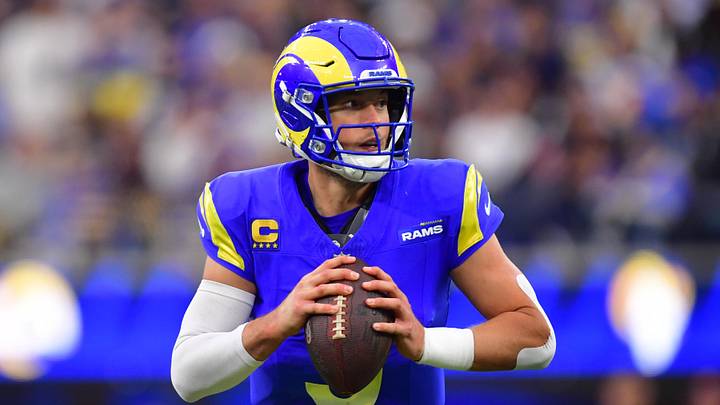
Nacua's value is not simply that he leads an injury report. Through seven appearances this season he has 70 receptions, 715 receiving yards and four touchdowns. The reception total is an especially useful measure because it reflects a recurring role, not a handful of isolated explosive plays. For a quarterback, a receiver who consistently separates or wins contested space changes the playbook on first-and-10, third-and-6 and in the red zone. Removing him removes options from the quarterback's decision tree even when the offense still has capable athletes on the field.
Los Angeles also has been without Davante Adams, another starting receiver on injured reserve. The absence of both principal targets is a different tactical problem from losing only the most famous name. When one high-volume receiver is out, coverage can be redistributed and another option may inherit favorable matchups. When two are unavailable, defenses can change the balance of their attention: fewer difficult one-on-one decisions on the perimeter, more freedom to shade toward the remaining threats and more pressure on unfamiliar combinations to sustain long drives.
The Rams' response has to begin with roles, not the fantasy that one substitute will reproduce Nacua's stat line. A route runner who can create on short in-breakers serves a different purpose from a speed receiver who stretches the back end of coverage, and both are different from a blocker trusted to execute the details of the run game. Sean McVay can work with these differences by changing spacing and sequencing. He cannot manufacture an All-Pro's chemistry with Stafford by attaching the same labels to different players on the depth chart.
GOATIFY
GOATIFY NFL
With the Rams' passing game stretched thin, the next three games will show how much dependable depth matters. Explore GOATIFY NFL styles.
That creates opportunities for complementary targets such as Tutu Atwell, Jordan Whittington and Xavier Smith, while roster depth and practice participation determine who can actually take snaps in the next matchup. Brennan Presley was among the names moved into the active mix as the club dealt with receiver availability. It is too soon to declare a new breakout star from roster arithmetic. The bar for these players is more practical: know the adjustment against pressure, win enough underneath routes to keep the chains moving, block reliably and avoid the mistakes that turn a drive into a punt.
Stafford's role becomes more demanding because the structure has to replace familiarity. Experienced quarterbacks can anticipate where a veteran will settle against zone coverage and how quickly a target will come out of a break. Less-rehearsed combinations require extra confirmation. That additional beat can be costly against a pass rush, especially on third down. McVay may lean on condensed formations, motion and quick options that create cleaner reads. Those would be plausible responses to the personnel situation, not evidence that a fixed playbook has already been announced.
Kyren Williams and the ground game offer another route to balance. Effective rushing can create easier second downs, credible play-action and less predictable passing situations. Yet it would be misleading to assume a running back can replace yards after the catch or the threat of an elite boundary receiver. The task is to rebuild a productive distribution of touches. If opponents can ignore a portion of the passing game, they can squeeze the run as well. The challenge is therefore collective: route accuracy, protection, timing, running efficiency and game management all need to compensate in small increments.
The four-game winning streak demonstrates resilience, not immunity. A stretch of victories can coexist with fragile underlying depth. The Packers, Chiefs and 49ers present different defensive problems before Dallas appears on the calendar. Los Angeles cannot postpone its passing-game decisions while waiting for a reinstatement date. Every week is a live examination of whether the temporary solutions are sufficient.
The conduct case has financial consequences beyond missed games
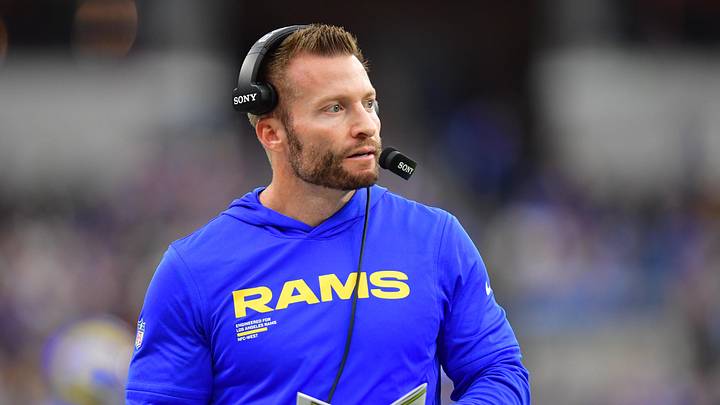
The conduct case cannot responsibly be reduced to a clever injured-reserve loophole. The NFL announced that Nacua violated its personal conduct policy and imposed a three-game suspension without pay. That is the league's disciplinary determination. It is not a substitute for the details of any civil claim, and it does not turn every allegation made publicly about the receiver into a proven fact. The distinction deserves to be maintained even when the broader controversy is uncomfortable.
The background includes a December 2025 livestream in which Nacua made a gesture associated with an antisemitic stereotype. He subsequently apologized and said he had not understood its meaning. In a separate matter, a woman filed a civil lawsuit in March alleging that Nacua bit her arm and made an antisemitic remark during a New Year's Eve gathering. Nacua's representatives have disputed those accusations. Those are allegations in a civil proceeding, and the account should not silently convert them into judicial findings or imply that a particular allegation was proven by the suspension announcement.
Public reporting has also described Nacua seeking help during the offseason and discussing previous misuse of alcohol. Seeking treatment is not itself proof of misconduct, nor should it become a punchline in an article about a player's availability. The relevant football question is how the league's decision affects his participation and compensation; the wider question is what responsible conduct, genuine accountability and follow-through look like beyond a short penalty. There is a reason the league's personal conduct process and the public's moral response need not reach identical conclusions at identical times.
GOATIFY
GOATIFY NFL
Suspension pay and leadership standards add stakes beyond the box score. Browse football-inspired GOATIFY NFL gear.
Money makes this suspension a real penalty even if it creates no additional missed game on the calendar. The three-game unpaid window has been estimated in reporting to cost Nacua roughly $960,000 in salary. That is not pocket change, particularly for a player still on the contract he signed as a fifth-round draft pick. The exact payroll accounting will depend on the governing suspension and contract provisions; it is better to distinguish an estimate from a verified itemized club payroll statement.
The contrast between earning power and actual pay is unusually sharp. Nacua set the rookie receiving-yardage record in 2023 and has built an extraordinary first four-season résumé. His résumé includes 383 receptions for 4,906 yards and 23 touchdowns across 51 regular-season games, plus 44 catches for 654 yards in six playoff appearances. This season's 70 receptions, 715 yards and four scores in seven games still reflect a central place in the Rams' offense. Those numbers help explain why an eventual extension could be lucrative; they do not erase questions over health, reliability or off-field behavior.
The Rams must therefore evaluate the current player on several dimensions at once. His talent is evident from the catches and yards. His availability is harder to forecast after multiple injury interruptions. His conduct and the league's decision affect commercial risk and organizational trust. Management can believe deeply in a player while asking for dependable behavior and a realistic medical outlook. Those demands are not contradictory, and neither is automatically settled by the completion of a three-game suspension.
For fans, the most useful discipline is avoiding conclusions the evidence cannot sustain. A league penalty is a fact. A filed civil allegation is a fact about a claim, not necessarily about what happened. A medical timetable is an estimate, not a promise. A large contract projection is a market possibility, not a signed deal. Treating these categories separately is more informative than either defending everything about the receiver or assuming every untested claim has been established.
A four-game winning streak will not guarantee a painless December return
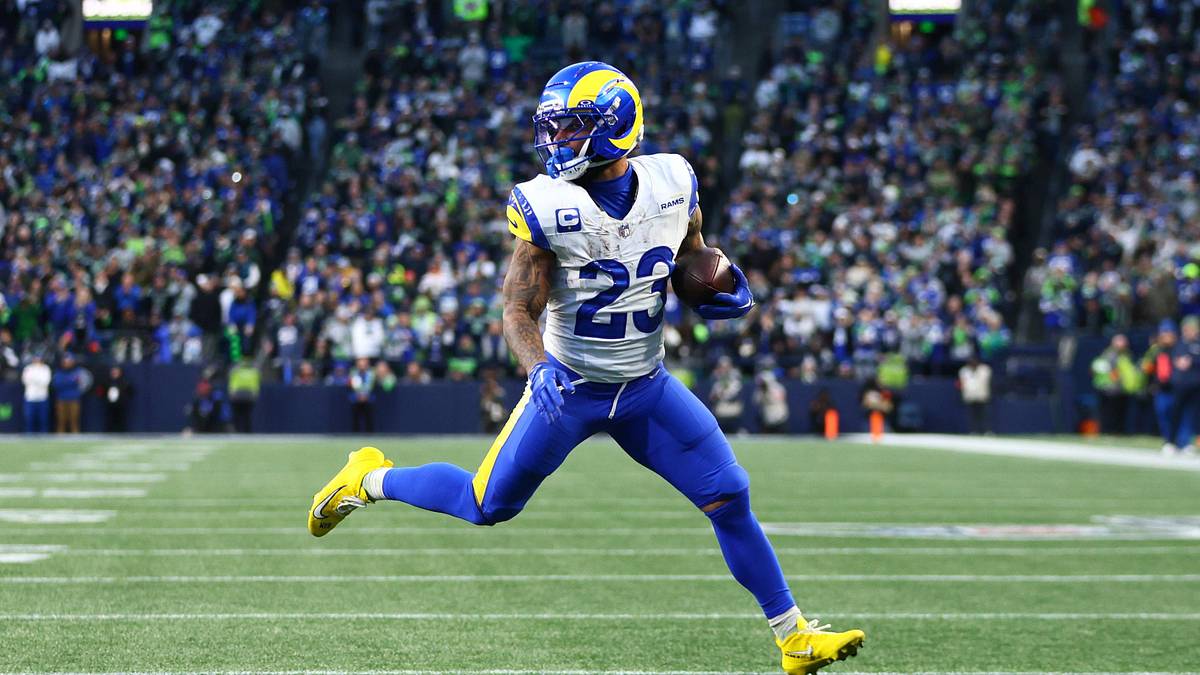
The approaching schedule is where the Rams' football questions become measurable. Green Bay, Kansas City and San Francisco occupy the suspension window, while Dallas on December 20 is the earliest game Nacua could play after satisfying both the discipline and injured-reserve requirements. The possibility of a return in time for a late-season push matters to a 6-4 club that has won four straight, but there is no guarantee he will be at full speed. Week-to-week decisions about practice, recovery and passing-game design will matter more than a headline date.
Each opponent poses a different tactical test. Against a defense that can limit explosive throws, Los Angeles must sustain enough first downs to avoid constant punting. Against a pressure-heavy unit, Stafford must have a hot answer when his initial read is taken away. Against a disciplined coverage group, depth receivers must execute routes to precise landmarks. Those are general football challenges rather than predictions about how any named opponent will deploy its personnel. The thread connecting them is the lack of a single receiver who can repeatedly make a difficult completion feel routine.
GOATIFY
GOATIFY NFL
The Rams' late-season push will test every part of their roster before Nacua can return. Explore football fan apparel.
The team can help itself with operational choices. A reliable running attack reduces the frequency of obvious passing downs, while quick throws can protect Stafford from unnecessary hits. Motion can identify some coverage tendencies before the snap and create advantageous releases for less-established receivers. Tight ends and backs can contribute in the intermediate and short passing game. But none of these responses comes without a cost: defensive coordinators notice when a team is reluctant to challenge them vertically or outside the numbers. Any scheme built to hide one personnel weakness risks displaying another.
Nacua's eventual reintegration also needs to be treated as a process. There is a difference between being able to run routes in a controlled environment and handling sixty offensive snaps against defenders who can press, tackle and redirect him at full speed. Turf toe can complicate push-off, and knee ligament sprains can make the cutting movements that separate an elite receiver from the field particularly demanding. The Rams can distribute his usage, change which routes they ask him to run, or limit snaps if the medical staff believes that is appropriate. No public source at this point provides a verified workload plan.
Likewise, the absence of Adams increases the temptation to treat the first returning star as a complete rescue. The Rams should resist planning as though one reinstatement will solve every passing-game problem. Stafford needs an offense that can still function if a player is limited, and the emerging contributors need enough trust and precision to support him when coverage tilts toward Nacua. A successful December return would expand possibilities. It would not eliminate the necessity of a resilient receiving rotation.
The long-term decision is more delicate. Nacua is approaching a point at which performance merits serious contract consideration, yet the front office has to decide what guarantees, protections and shared expectations fit the combination of elite production and recent interruptions. An extension could reward a historically productive receiver and secure an important part of the offense. Hesitation could reflect medical uncertainty or conduct-related risk. None of those possible considerations should be described as an announced team negotiating position without evidence.
The practical scorecard over the next month should be straightforward. Watch whether the Rams maintain drive efficiency without their top targets, whether their lesser-used receivers make contested or third-down plays, whether Stafford's protection holds, and whether Nacua returns to practice without fresh setbacks. The league's three games may run out on schedule. Los Angeles' questions about availability, trust and championship-level offensive performance are likely to take longer to answer.
Nacua's three-game suspension is not a three-game reset button. He will lose pay, the Rams will still play without him and the football questions remain separate from the league's conduct process. His first opportunity to return to a game is December 20 against Dallas, subject to completing the disciplinary process and being medically ready. Until then, Los Angeles has to show that the four-game winning streak is supported by more than an elite receiver who is temporarily unavailable.
The sharpest lesson is the separation of clocks. The NFL can say when the penalty ends; medical staff and the player must determine when he can perform; the Rams must decide what this episode means for his role and future contract. The team can get favorable calendar overlap without getting back the catches, chemistry or certainty it has lost.
GOATIFY
GOATIFY NFL
Explore six GOATIFY NFL fan styles, including shirts, hoodies and accessories, for the next big football matchup.


















