

Sengun Scored 43. Houston Still Needed VanVleet to Escape Utah.
GOATIFYAlperen Şengün gave Houston almost everything a team could ask of a center: 43 points, 12 rebounds, five assists and only one turnover, while making 17 of his 24 shots. Somehow, the Rockets still needed Fred VanVleet to put away a Utah Jazz team that had entered Friday night with one win. Houston survived 125–118 on November 13, moving to 10–3 and taking its third consecutive victory, but the seven-point margin only tells the comfortable version of what happened.
Utah wiped away a double-digit deficit with a startling 30–10 third-quarter surge. Rookie Darryn Peterson produced a career-high 28 points; Keyonte George delivered 27; Ace Bailey added 21. And with less than three minutes left, a team on an 11-game losing streak was within a single point of the Rockets. The evening became two stories at once: an extraordinary display of efficient scoring by Şengün, and a reminder that a contender cannot rely on one extraordinary performance to manage an NBA Cup game.
The tension matters because Cup group games are not judged only by whether the winner reaches the finish line. Houston improved to 1–1 in West Group A with two games remaining, where point differential can decide advancement. A narrow escape over a struggling opponent was useful in the standings but left harder questions about the team's consistency, perimeter defense and ability to control momentum.
Şengün joined Hakeem and Yao, but the record is only half the story
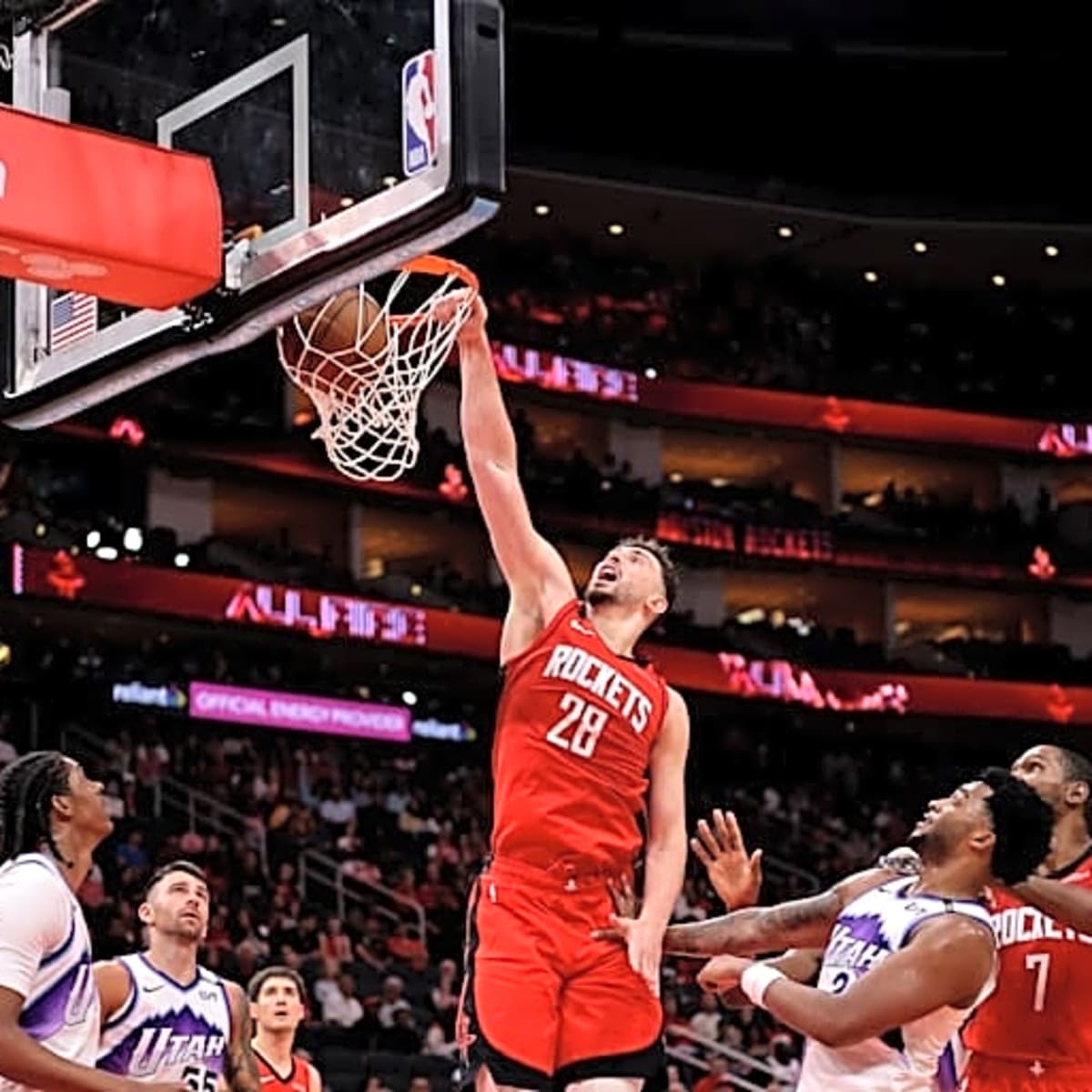
Forty-three points can be a very loud statistic, especially when it comes from someone who does not build his game around a steady stream of three-point attempts. Şengün scored his 43 on 17 made field goals from 24 tries, a conversion rate above 70 percent. Add 12 rebounds, five assists and a solitary turnover, and the value becomes broader than the scoring total. He created possessions with his passing, finished the opportunities he generated and avoided gifting the ball back when Houston badly needed reliable offense.
The historical comparison is unusually specific. By reaching at least 40 points, 10 rebounds and five assists while shooting 70 percent or better, Şengün joined Hakeem Olajuwon and Yao Ming as the only Rockets to hit that combination since the league began tracking field-goal percentage in 1956–57. Olajuwon achieved the feat in 1994; Yao followed in 2004. That is not an argument that Şengün has matched either man's career. It is evidence that this particular balance of production and efficiency is rare even in a franchise with an exceptional history of skilled centers.
He finished just two points below his career high of 45, set against San Antonio in 2024, and this was only his second 40-point NBA game. Those numbers are important context. This is not someone who routinely takes thirty or forty shots to assemble a big total. What distinguished Friday was his ability to keep working in crowded spaces, find finishes in the paint and stay involved as a passer while Utah changed the game's rhythm. The Jazz could not simply assume Houston would run out of ways to reach him.
GOATIFY
GOATIFY Basketball
Explore GOATIFY Basketball designs as Şengün's efficient 43-point night puts Houston's frontcourt excellence in focus.

Alperen Sengun G.O.A.T. - Houston Rockets Sweatshirt
A basketball fan design for everyday wear.
Shop Now ↗

Alperen Sengun G.O.A.T. - Houston Rockets Sticker
Add basketball personality to your favourite gear.
Shop Now ↗

Alperen Sengun GOAT - Basketball Casual Top Tee
A basketball fan design for everyday wear.
Shop Now ↗
Yao Ming GOAT - Basketball Decal Sticker
Add basketball personality to your favourite gear.
Shop Now ↗The other half of the story is Kevin Durant. The veteran finished with 22 points and six assists, but needed 14 field-goal attempts for five makes. His flawless 10-for-10 shooting at the foul line helped repair that efficiency problem. In a game where Houston's most famous scorer was not converting at his usual standard, Şengün operated as the dependable center of gravity. That does not diminish Durant: it illustrates the benefit of having a second star who can turn a difficult shooting night into a win rather than a crisis.
Houston's supporting cast also supplied very different kinds of production. Amen Thompson grabbed 10 rebounds to accompany 12 points; Tari Eason produced 14 points and 11 boards; Bogdan Bogdanović gave the Rockets 11 bench points, including three made three-pointers. These contributions do not have the headline value of 43, but they are part of why a high-usage center can dominate without demanding that teammates stand still and watch. Each creates a different answer for an opponent trying to shut down one area of the floor.
At the same time, Houston was missing some of its normal frontcourt depth, with Steven Adams and Clint Capela sidelined, while Marcus Smart began a three-game suspension. Less depth changes the burden on the players who are available, especially when a young opponent keeps attacking. Şengün's night was a genuine individual masterpiece. Its team-level significance will depend on whether Houston can pair nights like this with cleaner stretches of defense and more reliable control when its lead grows. Individual efficiency should be the foundation of that control, not the emergency exit from its absence.
Peterson, George and Bailey turned a mismatch into a genuine threat

For two quarters, the game had a familiar shape. Houston and Utah were tied at 27 after twelve minutes, then the Rockets scored 36 in the second and carried a 63–53 advantage into halftime. The margin was not enormous, but a 10–3 team at home against a 1–12 opponent usually expects to turn that platform into a controlled second half. Houston's problem was that Utah's young guards were neither intimidated by the score nor willing to play the final two quarters as a formality.
Early in the third, Houston led 67–57. Utah answered with a 30–10 burst that transformed the game. Darryn Peterson hit a pair of three-pointers only 41 seconds apart, and Ace Bailey and Keyonte George added their own perimeter scores. George's long jumper pulled the Jazz level; Peterson's step-back three nudged them ahead. By the time Bailey connected on a running jumper with 3:31 left in the period, Utah had reached 87–77. The exact sequence matters: it was not simply Houston missing shots. The Jazz repeatedly created or accepted the high-value looks that turn a ten-point game upside down.
Peterson's 28 points were a career high, built around four made threes, with seven rebounds and two steals. George contributed 27 points and seven assists, while Bailey scored 21. The three combined for 76 points, an enormous share of Utah's 118. Peterson, the No. 2 selection in the 2026 draft, showed the kind of shot-making that can pull a struggling team back into an otherwise unlikely contest. George contributed creation and experience; Bailey supplied another player who could attack a defense once it was off balance. These are individual developmental positives, even though the Jazz could not close the game.
GOATIFY
GOATIFY Basketball
Browse GOATIFY NBA collections while Utah's next-generation scorers show why this comeback was no accident.


LeBron James – LeGOAT Basketball Decal
Add basketball personality to your favourite gear.
Shop Now ↗
Lauri Markkanen GOAT - Basketball Casual Top Tee
A basketball fan design for everyday wear.
Shop Now ↗
Paul George G.O.A.T. - Basketball - Greatest Sweatshirt
A basketball fan design for everyday wear.
Shop Now ↗
Giannis Antetokounmpo G.O.A.T. - Basketball Tank
A basketball fan design for everyday wear.
Shop Now ↗
Ja Morant Gun Basketball NBA Memphis Grizzlies Mug
Add basketball personality to your coffee break.
Shop Now ↗Utah's record is a useful warning against making the wrong inference from the result. Eleven straight losses are real, and one energetic half does not erase the larger weaknesses that produced them. The roster was also short-handed, with Lauri Markkanen, Jaren Jackson Jr. and Jusuf Nurkić absent. Those missing pieces matter to Utah's size and shot creation. They also make Houston's defensive collapse more concerning. If three young scorers can almost overturn the game without several established teammates, the winning team needs to ask whether its own defensive urgency fell below the required level.
Houston did respond, and its response was almost as abrupt as Utah's surge. The Rockets scored 15 of the final 17 points in the third quarter to restore a 92–89 advantage. Fred VanVleet scored seven points in less than a minute with a three-pointer, a pull-up jumper and two free throws. Şengün supplied Houston's final six points of the period. The rally showed that the Rockets still had enough shot creation to change the direction of a game quickly. It also showed how much work had been created by a preventable lapse just minutes earlier.
There is a broader lesson for both teams in that back-and-forth stretch. Utah's best moments came when its guards made the defense move, hit quick decisions and attacked the space before Houston could reset. Its inexperience showed when it could not sustain that advantage through the quarter's end. Houston's best moments came when its primary decision-makers steadied the offense and stopped trading aimless possessions. In an NBA Cup setting, where every basket can eventually influence a tiebreaker, a third-quarter swing of this size carries consequences beyond the fleeting embarrassment of losing a lead.
VanVleet closed the escape, but Houston lost a Cup opportunity
The fourth quarter did not begin with the Jazz rolling over. Tari Eason scored Houston's first four points and Bogdan Bogdanović struck from deep to build a 102–94 lead with 9:48 remaining. The Rockets had regained an eight-point margin, a stage at which they could reasonably have looked for a calmer finish. Instead, Utah found another route back. George put up 13 points during the final period, including a four-point play, and Peterson's pull-up jumper reduced Houston's lead to 117–116 with 2:46 left.
What followed was not a cinematic barrage of spectacular shots. It was a sequence of responsible, high-leverage decisions. Durant found Amen Thompson for a layup, Şengün added another inside finish, and Houston stretched the lead to 121–116 with 1:25 remaining. Mo Bamba scored for Utah, meaning the Jazz were still close enough to make the next Houston possession matter. VanVleet then converted a nine-foot jumper with 11.9 seconds on the clock. Durant finished the job with two free throws. Seven points was the final difference, but the outcome had remained uncomfortable until the last handful of plays.
GOATIFY
GOATIFY Basketball
Shop GOATIFY Basketball favorites as VanVleet's late-game decisions keep Houston alive in the NBA Cup.

LaMelo Ball G.O.A.T. - Basketball Coffee Cup Mug
Add basketball personality to your coffee break.
Shop Now ↗
Alperen Sengun G.O.A.T. - Houston Rockets Hoodie
A basketball fan design for everyday wear.
Shop Now ↗
Nikola Jokic G.O.A.T. - Basketball Coffee Cup Mug
Add basketball personality to your coffee break.
Shop Now ↗

Kevin Durant G.O.A.T. - Basketball Coffee Cup Mug
Add basketball personality to your coffee break.
Shop Now ↗
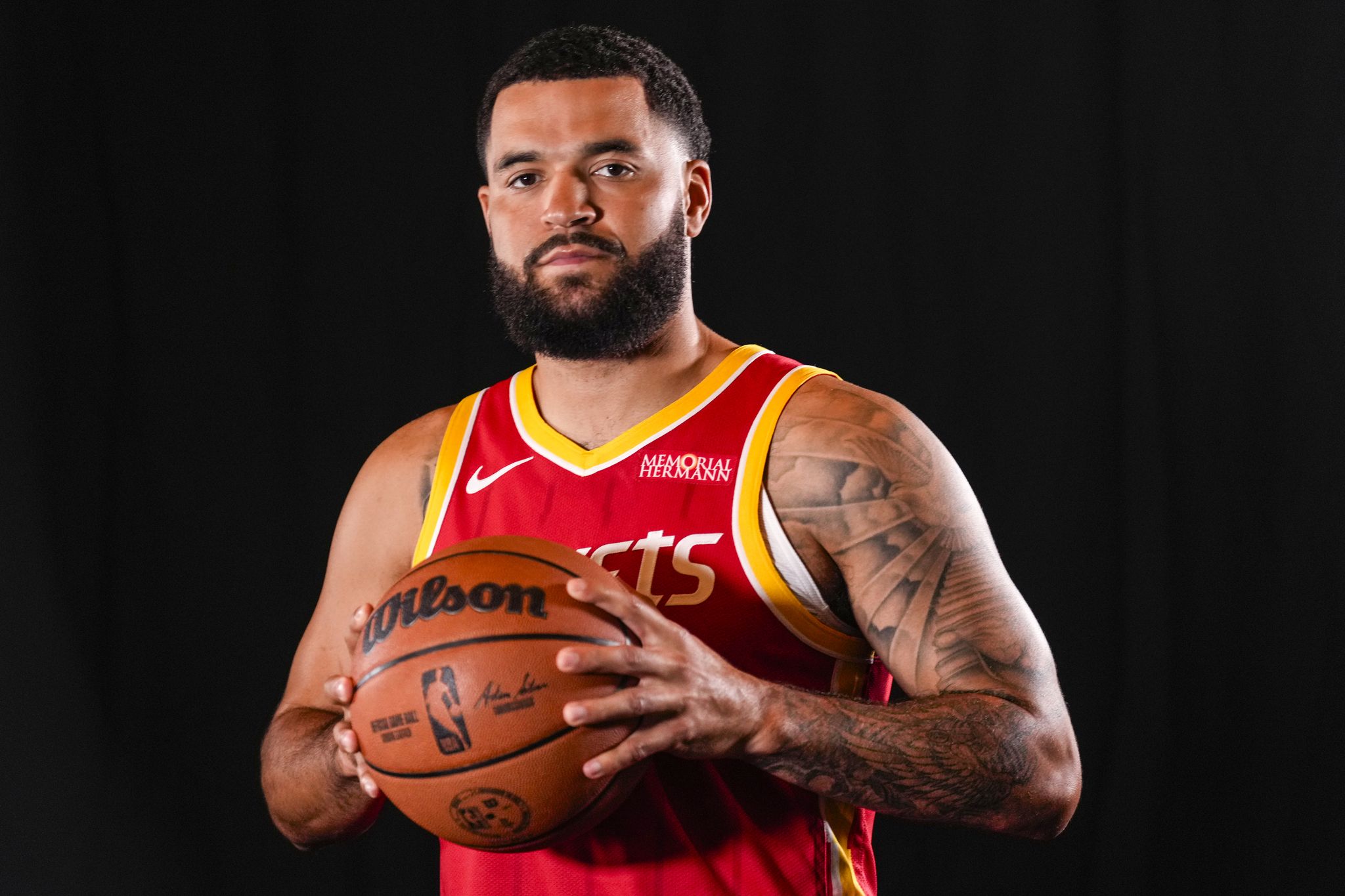
VanVleet's line—17 points without a turnover—captures an important distinction between making a highlight and managing the game. His burst in the third quarter had dragged Houston out of its worst stretch; his late jumper prevented another Utah possession from carrying the same threat. Those possessions demanded calm rather than speed. He was not Houston's highest scorer and did not need to be. His value was in reducing uncertainty for a team that had spent much of the second half creating its own problems.
That stabilizing role is especially meaningful during VanVleet's return to the Rockets' rotation following an ACL injury. The veteran appeared in the team's preseason and began the new campaign with the burden of organizing scorers who can all command touches. A decision-maker who can create shots without piling up giveaways is valuable beside Durant, Şengün and Thompson. Houston finished this game with just eight turnovers, a positive statistic that stands in sharp contrast to its uneven defense. The final stretch showed both sides of that identity: a group that can manage the ball well and still let an opponent dictate too many sequences.
And this was not an ordinary standings win. Houston's 125–118 victory came in NBA Cup group play, leaving the Rockets 1–1 in West Group A with two games remaining. Group-stage races can depend on point differential when teams finish level on record. Beating the 1–12 Jazz by seven is unquestionably better than losing, but it provides fewer cushion points than a decisive result would have delivered. Houston had led by ten at halftime, then trailed by ten in the third, and ultimately escaped by seven. That is a lot of volatility for a team that would have preferred a cleaner Cup resume.
There are reasons not to exaggerate the warning. This was still Houston's third straight win, Şengün delivered franchise-level production, Durant supplied reliable late foul shooting and several role players contributed meaningful work on the boards. A strong team sometimes wins ugly, and protecting an imperfect result is a skill of its own. But coach Ime Udoka's team now has a useful piece of film: the collapse that let Utah take over the third quarter, and the poised sequences that reversed it. Repeating the latter more often will matter against better opponents; eliminating the former is what makes a seven-point escape look more like a championship-standard performance.
Şengün's 43 points deserve the attention they will receive. Seventeen makes on 24 attempts, 12 rebounds, five assists and one turnover represent a level of center play few teams can manufacture, much less take for granted. The historical company of Olajuwon and Yao gives the performance a useful frame without pretending a single night settles questions about careers or legacies.
The more revealing image of this Rockets team may be the one that did not make the headline: VanVleet stopping Utah's final threat with a composed jumper after Houston had surrendered control and then fought to reclaim it. For Utah, Peterson, George and Bailey gave a glimpse of the talent beneath an ugly record. For Houston, the result was both a win and a reminder that NBA Cup margins punish inconsistency. The Rockets visit Washington on November 15 with a 10–3 record. They also carry a straightforward lesson: a brilliant star should make winning easier, not be required to rescue it.
GOATIFY
GOATIFY Basketball
Shop GOATIFY basketball shirts, hoodies and stickers.

Yao Ming GOAT - Basketball - Greatest Sweatshirt
A basketball fan design for everyday wear.
Shop Now ↗Alperen Sengun GOAT - Basketball Casual Top Tee
A basketball fan design for everyday wear.
Shop Now ↗
James Harden G.O.A.T. - Basketball - Greatest Hoodie
A basketball fan design for everyday wear.
Shop Now ↗
Fat Jokic Denver Nuggets - Basketball Decal Sticker
Add basketball personality to your favourite gear.
Shop Now ↗

Kobe Bryant G.O.A.T. - Settle the Debate Mug
Add basketball personality to your coffee break.
Shop Now ↗



















