Baker Mayfield's Buccaneers Contract Standoff: Why $50M Wasn't Enough
GOATIFYBaker Mayfield is entering the 2026 season with one of the most interesting contract situations in the NFL. Tampa Bay wants to keep its quarterback, Mayfield wants to stay, and both sides have publicly made it clear that the relationship itself is not the problem. The disagreement is about what a franchise quarterback should cost in a market that keeps moving upward.
Tampa Bay reportedly offered Mayfield a two-year extension worth a little more than $100 million, which would have placed the average annual value at roughly $50 million. That sounds enormous in isolation. In today's quarterback market, however, it would put him below several players Mayfield views as fair comparisons and could look even more modest by the time the next wave of young quarterbacks signs new deals.
Mayfield has already ended negotiations for the season. That turns 2026 into a high-stakes bet for both sides. If he has another strong year, his price rises and Tampa Bay may regret not closing the gap earlier. If his performance slips, the Buccaneers gain negotiating leverage. Either way, the current standoff is not really about whether Mayfield has earned a major contract. It is about how major that contract should be.
The Buccaneers' Offer Was Big — But Not Big Enough for Mayfield
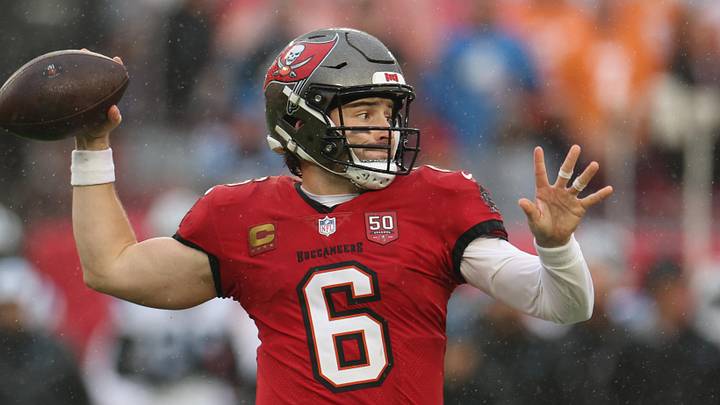
The basic disagreement is easy to understand. Tampa Bay's proposal reportedly came in at a little more than $100 million over two years. That would put Mayfield around the $50 million-per-year mark, which is still elite money by any normal standard.
The problem is that quarterback contracts are not negotiated against normal salaries. They are negotiated against the next group of starting quarterbacks. Mayfield is looking at what comparable players already earn and at the contracts that are likely to reset the market soon. From that perspective, accepting $50 million per year now could mean locking himself into a deal that looks discounted almost immediately.
Mayfield also reportedly disliked the structure of the offer, not only the headline average. Length and guaranteed money matter just as much as annual salary because they determine how much real security a player receives. A two-year extension can sound lucrative while still giving the team more flexibility than a longer agreement with stronger guarantees.
That distinction is especially important for a quarterback entering his age-31 season. Mayfield has rebuilt his career in Tampa Bay and established himself as the unquestioned starter, but this may be his best opportunity to secure one more major long-term contract. He has little incentive to accept a structure he believes understates his position in the league.
Tampa Bay's caution is understandable too. Quarterback contracts can consume a huge percentage of the salary cap, and the Buccaneers have other positions to fund. Paying Mayfield at the absolute top of the market would reduce flexibility elsewhere, especially if the team believes there is a meaningful difference between the truly elite tier and the very good tier.
That is the tension. The Buccaneers can believe Mayfield is their franchise quarterback while still believing that there is a ceiling on what they should pay. Mayfield can love Tampa Bay while still believing that accepting less than his market is bad business.
Jordan Love, Trevor Lawrence and Brock Purdy Explain Mayfield's Frustration

Mayfield's argument becomes clearer when the current quarterback market is placed beside Tampa Bay's offer. Jordan Love carries an average annual value of roughly $55 million. Trevor Lawrence is in the same range. Brock Purdy is slightly below that at about $53 million per year.
Mayfield does not need to claim that he is clearly better than all three players to make the comparison useful. He only needs to argue that his production, availability and importance to Tampa Bay belong in the same financial neighborhood.
Since joining the Buccaneers, Mayfield has completely changed the direction of his career. He has started every game over three seasons, gone 27-24, reached the playoffs twice and earned two Pro Bowl selections. Over that stretch he has completed 66.3 percent of his passes for 12,237 yards, 95 touchdowns and 37 interceptions.
Those are not bridge-quarterback numbers. Tampa Bay originally signed Mayfield as a relatively low-risk veteran option after his Cleveland tenure ended and his path through Carolina and Los Angeles left his long-term future uncertain. He has since become the face of the offense and one of the strongest examples in recent NFL history of a quarterback rebuilding his market.
That history also affects how Mayfield may view the negotiations emotionally. He already knows what it feels like for teams to move on from him. Once he proved that Tampa Bay was the right environment and produced at a high level, he understandably expected the next contract to reflect that status.
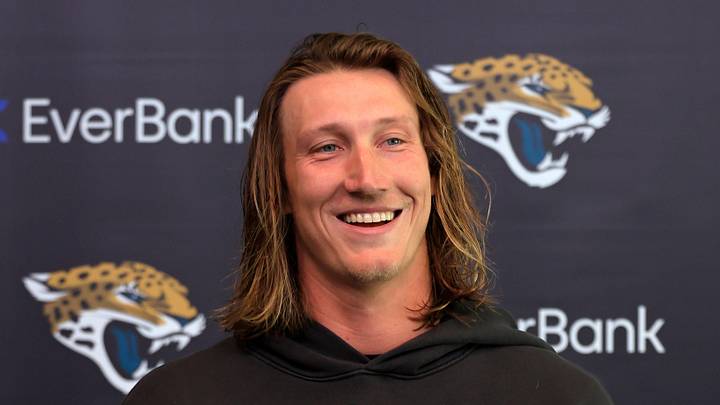
From Tampa Bay's side, the comparison is not perfectly clean. Love, Lawrence and Purdy signed their deals at different ages and different stages of their careers. Teams pay partly for future projection, not only past production. A younger quarterback can receive a premium because a franchise is buying more expected prime seasons.
But that does not erase Mayfield's point. Quarterback salary is heavily influenced by scarcity. If a team has a proven starter it trusts, replacing him is usually more expensive and more uncertain than paying him. Tampa Bay does not have an obvious successor on the roster who makes walking away easy.

The Quarterback Market Could Move Even Higher After 2026

The biggest reason Tampa Bay may eventually regret waiting is that the market rarely stands still. A $50 million annual salary can look enormous one offseason and ordinary the next. Several younger quarterbacks are approaching extension windows that could move the benchmark closer to $60 million per year.
Lamar Jackson is positioned for another major contract conversation. C.J. Stroud, Caleb Williams, Drake Maye, Bo Nix and Jayden Daniels are all on trajectories that could produce massive new deals if their development continues. Not all of them will necessarily reach the top of the market, but it only takes one or two contracts to change the reference point for everyone else.
That is why Mayfield had little reason to accept a number he already considered low. If he plays well in 2026 and the market rises at the same time, his representatives can return to negotiations with much stronger leverage. Tampa Bay may discover that the contract it could not finalize in the summer was actually the cheaper version.
The risk for Mayfield is that he is betting on himself in a sport where one season can change everything. Injuries, a decline in efficiency or a disappointing team result could all weaken his position. He is taking on that risk voluntarily because he believes his play will justify the gamble.
His confidence is not subtle. Mayfield has made it clear that he expects a big season. That matters because contract-year motivation is often discussed as a cliché, but the financial stakes here are real. The difference between a good year and a great year could be tens of millions of dollars in guarantees.
Tampa Bay is making a bet too. The Buccaneers are effectively saying they are comfortable allowing the season to provide more information before committing at the number Mayfield wants. If the offense takes a step forward and Mayfield again performs like a top-tier starter, the team will have to pay more or risk losing him.
What Happens If Baker Mayfield Has a Huge 2026 Season?
If Mayfield delivers another strong campaign, Tampa Bay's options narrow. The cleanest outcome would still be a long-term extension. Continuity at quarterback is enormously valuable, and the Buccaneers already know Mayfield can handle the market, the locker room and the expectations that come with being the starter.
The franchise tag is the obvious fallback. Tampa Bay could use it to prevent Mayfield from reaching unrestricted free agency, buying more time for negotiations. The downside is that quarterback tags are expensive and provide almost no long-term cap flexibility. A tag can protect the asset, but it does not solve the underlying relationship.
Free agency would be the most dangerous route for the Buccaneers. Proven starting quarterbacks almost never reach the open market without serious demand, and Mayfield's career story would make him especially attractive to teams that believe they are one competent veteran away from contending.
The Buccaneers would then have to compete with clubs that may have more cap space, more desperation or a willingness to offer guarantees Tampa Bay has resisted. Even if Mayfield prefers to stay, loyalty only goes so far when another team is willing to place a dramatically different value on the same player.
That is why this contract debate matters before a single regular-season snap. Tampa Bay is not merely negotiating an extension. It is deciding how much uncertainty it is willing to accept at the most important position on the roster.
Mayfield has already demonstrated that his fit with the Buccaneers is real. He has revived his career, won games, taken the team to the playoffs and become a leader in the locker room. The question is whether Tampa Bay sees that success as enough to justify paying him alongside the league's highest-paid quarterbacks.
For now, there will be no more negotiating. Mayfield has closed the door on in-season talks and shifted the entire conversation onto the field. If he plays the way he expects, the number Tampa Bay declined to meet in the summer may look like a bargain by January.