

Fernández and Calvo Turned Eight Saved Break Points Into a 6–0 Düsseldorf Statement
GOATIFYThe rematch lasted only 68 minutes, but it changed the mood around one of women's padel's fastest-rising partnerships. Claudia Fernández and Martina Calvo beat Ari Sánchez and Andrea Ustero 6–3, 6–0 in the Germany Premier Padel P2 final on October 11, turning the scoreline from their Paris Major defeat almost completely on its head. The fourth seeds did not merely edge the pair that had beaten them in September. They took away the opponents' preferred patterns, survived every break chance in the opening set and closed the match without conceding a game in the second.
That is a striking reversal for two pairs who had arrived in Düsseldorf with momentum. Sánchez and Ustero had won in Paris and Rotterdam; Fernández and Calvo had already made a breakthrough in London but were still chasing proof they could beat this particular partnership in a final. Germany supplied that proof. More revealing than the trophy was the way the match moved from an initially competitive first set to a finish in which the challengers looked increasingly short of answers.
Eight break points, zero conversions: the first set was decided under pressure
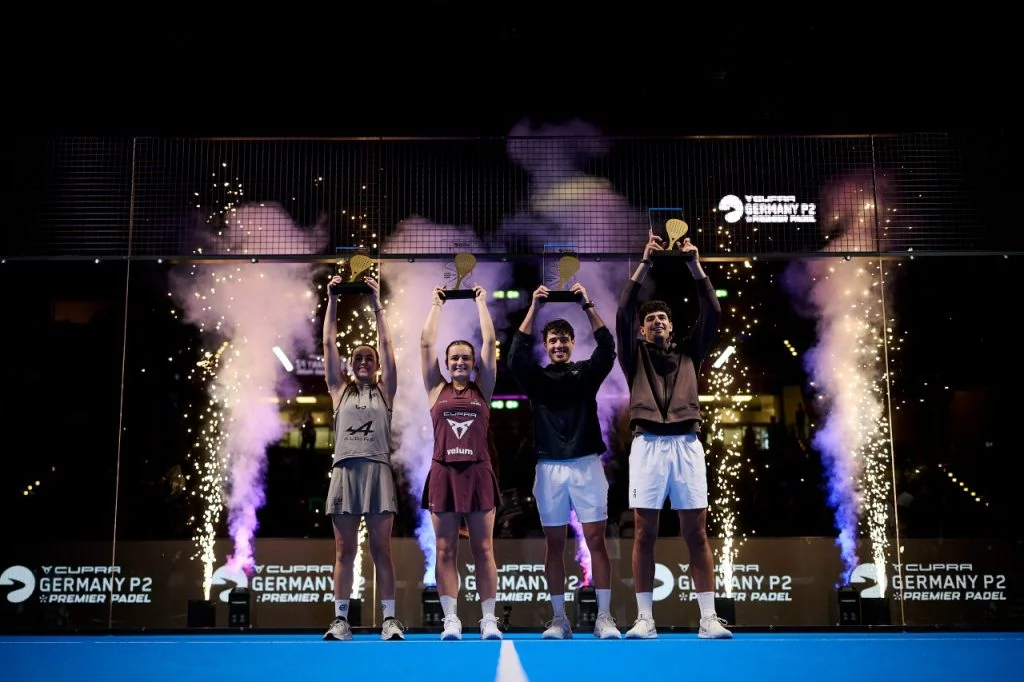
The first set was not as comfortable as 6–3 might suggest. Sánchez and Ustero earned eight break points and converted none. Every one represented a possible way back into a final that Fernández and Calvo were trying to play on their terms. Instead, the fourth seeds kept their service games intact and made the opening break count. Their breakthrough came in the fourth game, and that advantage survived every attempt to claw it back.
There is an important distinction between creating opportunities and actually changing a set. Eight chances show that Sánchez and Ustero were not simply being overwhelmed on every return game. They found moments when the server was vulnerable. But the inability to convert meant that the scoreboard never rewarded those moments, and the pressure moved in one direction. Fernández and Calvo could keep asking questions with their own aggressive positioning while the other pair had to play from behind.
Fernández was particularly influential when rallies reached a point where a player had to decide whether to accelerate or reset. Her controlled aggression and willingness to change pace helped the winners dictate the ball's next destination. Calvo complemented that with steadier shot selection than she had shown in the previous day's long semifinal. Her lob was especially useful: when it pushed Sánchez and Ustero back, Fernández could move toward the net and make the next ball harder to defend.
That combination matters because padel is rarely won through power alone. A lob that buys time can be as valuable as an attacking volley if it changes who controls the net. Fernández and Calvo did not need to produce a winner from every exchange. They needed to keep the pair opposite them defending uncomfortable positions, then recognize when a shorter ball offered the opening. The first set gave them repeated chances to do that without ever paying the price for a break-point lapse.
By the time the opening set ended, the numerical story was simple: Sánchez and Ustero had been close enough to threaten, but Fernández and Calvo had been more decisive when the points carried the greatest consequence. A 6–3 lead gave the younger pair the scoreboard cushion to keep applying the same tactical pressure. The eight missed chances also created a challenge for the team chasing the match: they had to believe that a new opening would come without allowing the previous ones to affect the next rally.

The 6–0 second set was built on controlling who could attack
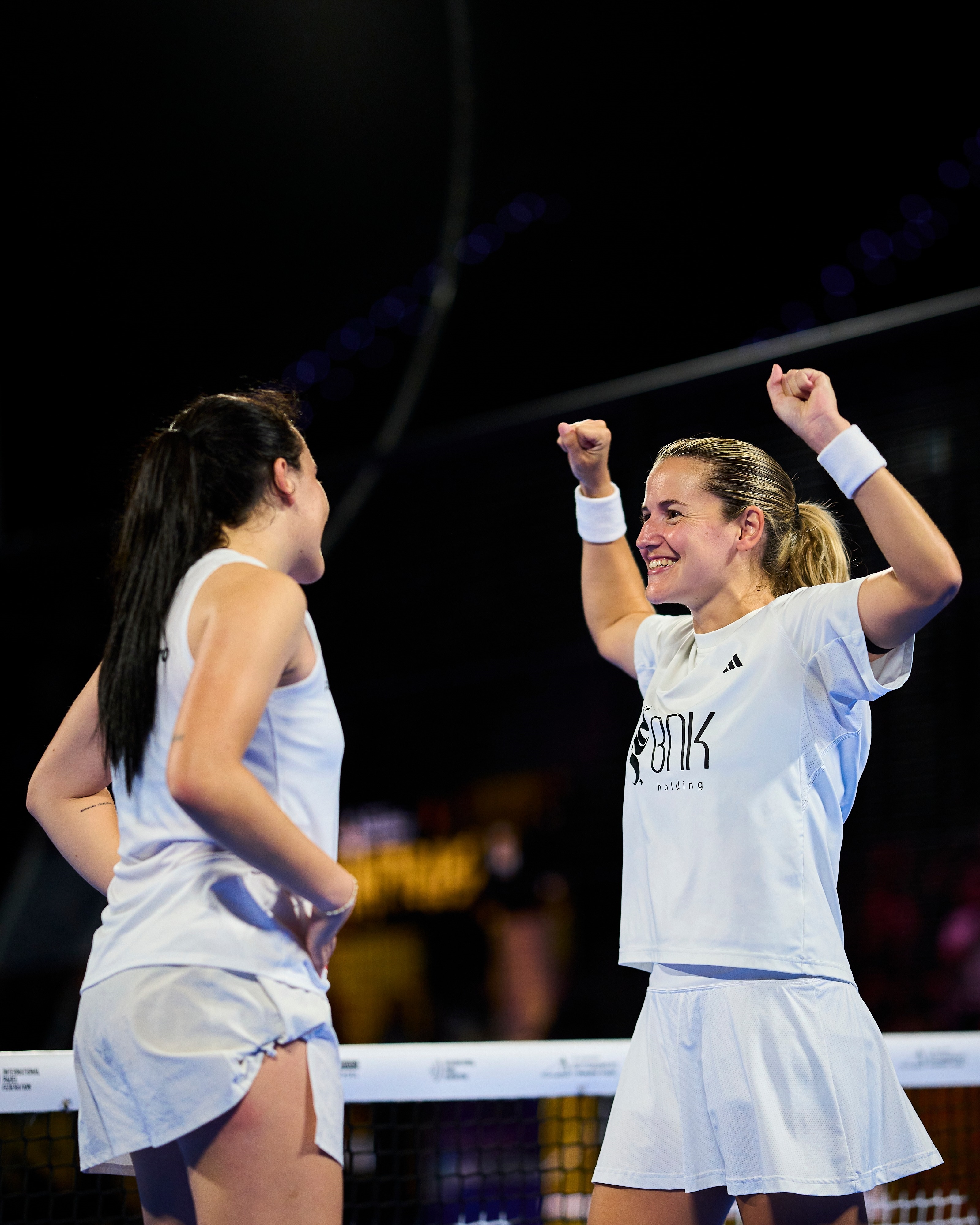
After the change of ends, the match stopped looking like a contest between two pairs with recent titles and began to look like one pair controlling almost every useful option. Fernández and Calvo won the second set 6–0. The bagel was not a separate, unexplained collapse; it followed the same pattern that had decided the first set, only with fewer escapes available to Sánchez and Ustero.
Ustero, whose ability to accelerate a rally can make her so difficult to contain, was drawn into fewer productive attacking situations. The winners limited the opportunities for her to take over with a quick exchange at the net. When one player in a doubles pair is effectively removed from the most dangerous phase of the rally, the other is forced to shoulder more of the problem. Sánchez was pushed into deeper court positions and struggled to restore the balance of initiative.
That does not mean Sánchez and Ustero suddenly lost the skills that had carried them through Paris and Rotterdam. It means the geometry of this particular match was working against them. A pair that likes to play with both partners connected and proactive can look far less fluent when one is regularly defending from the back and the other cannot get involved at the right moment. The longer that pattern persists, the harder it becomes to break without a clear tactical adjustment.
The pressure also accumulated emotionally. Missed break chances in the first set gave way to unforced mistakes and visible frustration as the second ran away. Fernández and Calvo, meanwhile, stayed patient. They did not chase a dramatic finish; they continued doing the things that had already worked. The result was a clean sweep of six games and a final completed in one hour and eight minutes.
That time is especially notable given what both teams had endured in the semifinals. Fernández and Calvo had needed three hours and seven minutes to survive Paula Josemaría and Bea González, saving two match points on their way to a deciding-set tiebreak. Sánchez and Ustero had taken two hours and 56 minutes to beat world No. 1 pair Gemma Triay and Delfi Brea. Both finalists came through demanding matches. The more useful conclusion is not that one team was tired, but that the winners found a clearer and more repeatable plan for the title match.
The losing pair's challenge in the next meeting will be to prevent one-sided court positions from becoming a permanent feature of the rally. A deeper lob, an earlier change of direction or a more aggressive return can each create a different problem for the opponent. In Düsseldorf, those alternatives never gained enough traction to interrupt Fernández and Calvo's rhythm. A 6–0 set is the most dramatic way for that tactical imbalance to appear on the scoreboard.
From Paris revenge to a second title — Milan is the next test
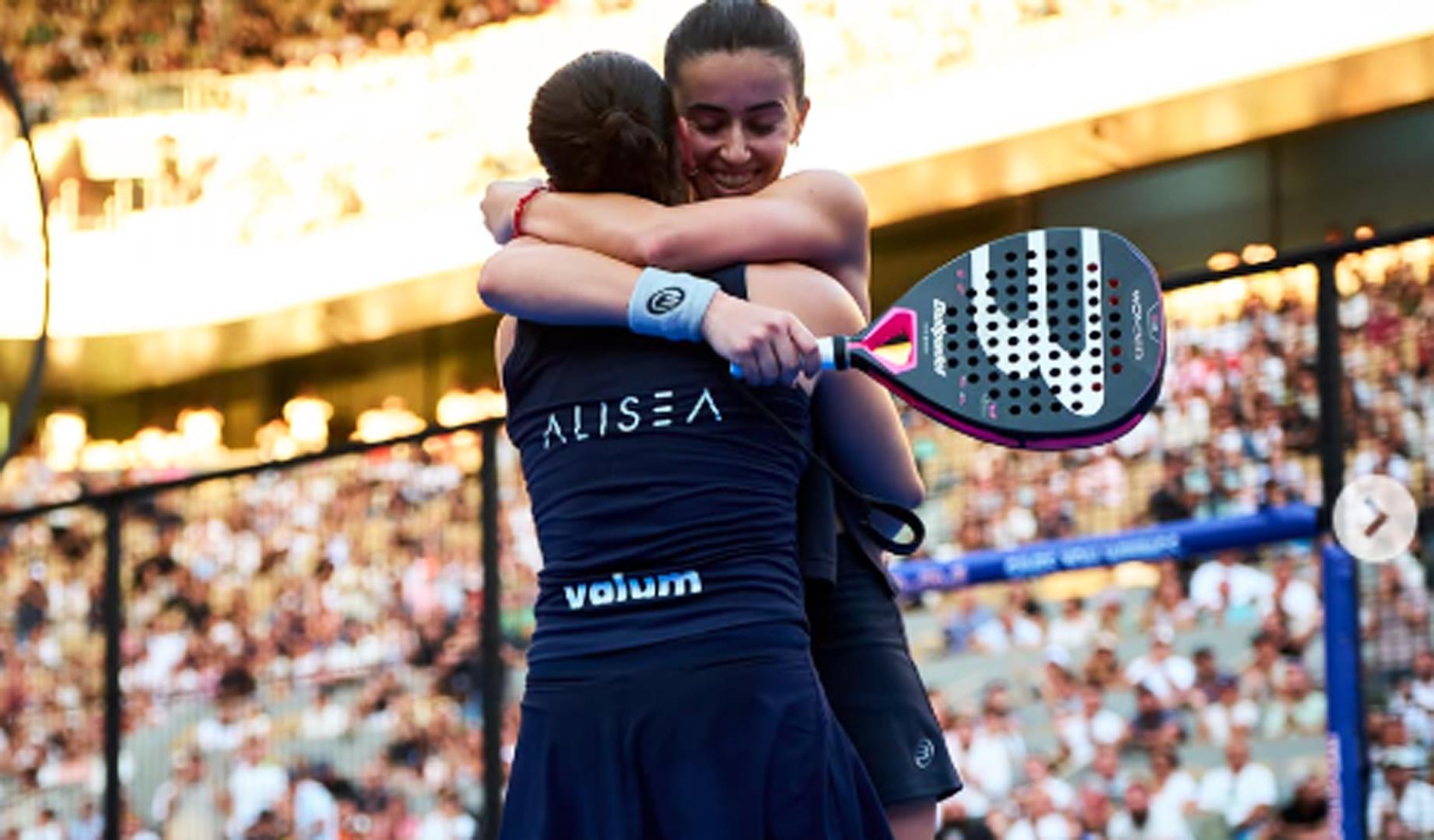
The immediate context makes Düsseldorf feel larger than an ordinary P2 trophy. At the Paris Major in September, Sánchez and Ustero had beaten Fernández and Calvo 6–2, 6–0 in the final. A few weeks later, the same four players were back across the net, and the pair that had been outplayed in Paris supplied an emphatic answer. There is no need to manufacture a rivalry from a single rematch: the scorelines themselves show how quickly the balance can change when two talented partnerships are still learning each other's strengths.
Fernández and Calvo have been playing together only since July, yet Düsseldorf is already their second title as a pair. Their first came at the London P1 in August. That progression matters because a new doubles partnership can enjoy a brief run of good form without developing the habits needed to win different types of matches. London demonstrated that the partnership could win a major tour event. Düsseldorf added a more specific piece of evidence: it could absorb a draining semifinal, then impose its preferred style against a pair that had recently beaten it convincingly.
There is also a developmental story here. Calvo, born in 2008, and Fernández, born in 2006, are unusually young to be setting the terms of a final against opponents with so much recent success. Their partnership already has enough tactical variety to move between defense and attack without losing its structure. Calvo's ability to lift the ball and buy court position complements Fernández's instinct to accelerate at the right moment. It is a combination that can keep improving, but the evidence from Germany is about what they can do now, not only what they might become.
For Sánchez and Ustero, the loss should be understood alongside their wins rather than in isolation. They had been on an excellent run, including trophies in Paris and Rotterdam, and reached this final by beating the top seeds. One lopsided afternoon does not erase those achievements. It does expose a problem they will need to solve if they meet Fernández and Calvo again: how to create enough simultaneous threats that neither player can be neutralized for long stretches.
The next test comes quickly. The tour moves to the Milano P1, beginning on Monday, October 12, after consecutive stops in Rotterdam and Düsseldorf. A P1 offers a different ranking-point opportunity and another chance to test whether the German final reflected a lasting shift or simply a matchup that one team solved better on the day. Fernández and Calvo travel there with their second title together and the confidence of having beaten a direct rival decisively. Sánchez and Ustero arrive with an equally clear reason to adjust.
The broader women's field has little reason to treat the result as a settled hierarchy. Triay and Brea remain a formidable pair despite their semifinal exit, while Josemaría and González pushed the eventual champions to the brink. What Düsseldorf establishes is that Fernández and Calvo belong in the conversation as immediate title contenders. Their age makes the story exciting; their ability to execute under pressure is what makes it credible.

Germany P2 produced a scoreline that would have looked improbable after Paris: 6–3, 6–0 to Fernández and Calvo. The first set turned on eight unconverted break points, the second on sustained control of court position and attacking opportunities. Together, they made this much more than a routine title.
The larger question is whether the young Spanish pair can keep repeating that formula as opponents respond. Düsseldorf showed they can change a matchup that had previously gone badly. Milan will show how well that solution travels.
Shop GOATIFY padel products from the Padel-filtered collection scope.
















