

Charlie Woods Drains 40-Footer to Win — Benjamin Romps by 15 Shots
GOATIFYCharlie Woods needed one last putt to turn a strong round into a winning one. At the Class 1A-District 14 championship in Stuart, Florida, the 17-year-old rolled in a 40-foot birdie on the 18th green, signed for a two-under-par 69 and edged Benjamin School teammate Brooks Colton by a single stroke. His finish helped cap a much larger statement: Benjamin posted 290 and defeated Oxbridge Academy by 15 shots.
For a player whose every score invites comparison with his father Tiger, the most interesting part of this result was how ordinary the winning formula looked. Charlie made four birdies, absorbed one bogey and stayed steady while the weather made the course difficult. It was not a national championship or a professional breakthrough. It was a district victory, but an important one in Benjamin's attempt to defend its Florida Class 1A state crown — and a useful glimpse of how Woods is learning to win on his own terms.
Forty feet on the 18th turned a 69 into a district title
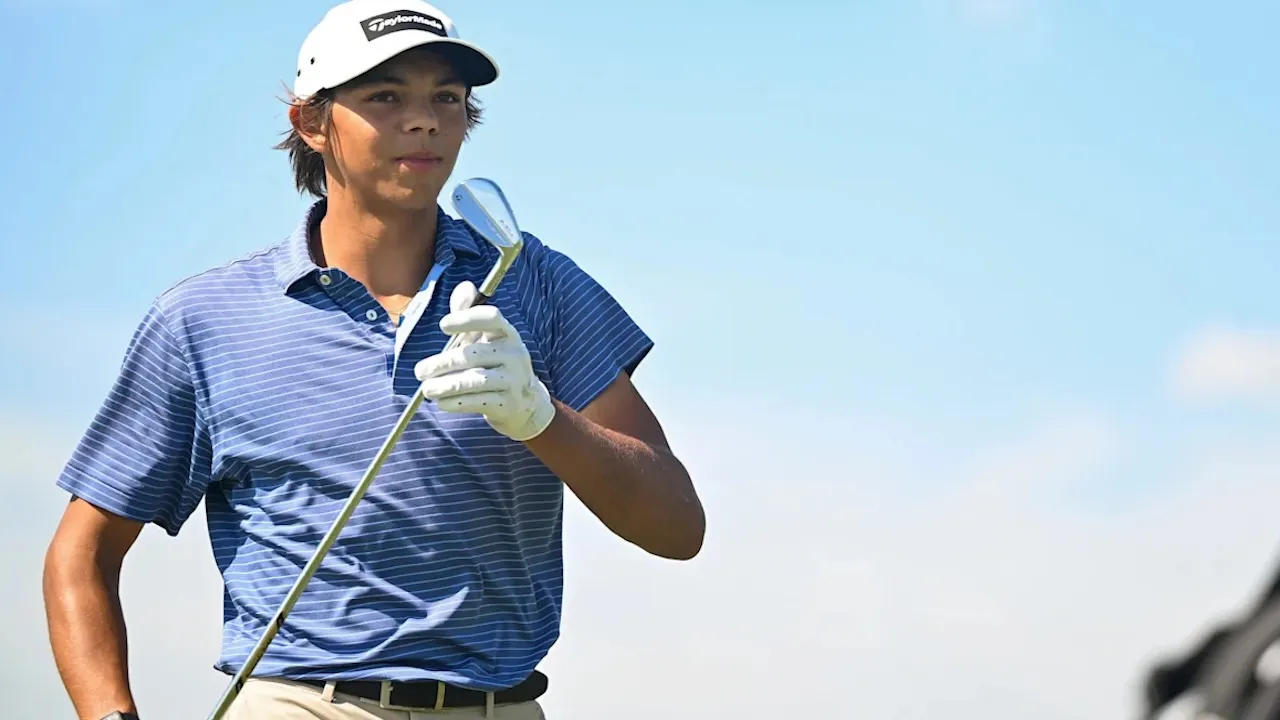
There is a difference between posting the low number and knowing that a single putt can decide the trophy. Charlie Woods arrived at the final green of the Class 1A-District 14 championship with a good round already in hand. What he needed was one more birdie. From approximately 40 feet, he found the cup, finished two under par with a 69 and took medalist honors by one stroke over Benjamin teammate Brooks Colton.
That finish made the scorecard more impressive than a simple headline suggests. Woods birdied the fourth, 10th, 13th and 18th holes. He made 13 pars and only one bogey, at the 15th. Four birdies against one dropped shot produce a round that is more about managing mistakes than making a desperate late charge. The long putt supplied the memorable image, but the 17 holes before it created the opportunity for that putt to matter.
The setting was not especially forgiving. The district tournament at Champions Club at Summerfield in Stuart was played through wind and rain, and Benjamin coach Toby Harbeck described a course that felt long and difficult. Conditions like those can make the temptation to attack every flag especially costly. A player who accepts pars and avoids turning a bogey into a double often gains ground without appearing to do anything spectacular.
Woods' round illustrated that balance. His birdies were spread across both nines rather than packed into one short burst. After the bogey at 15, he still had the composure to close with three holes that included the decisive birdie. It would be easy to make the final putt sound inevitable because his surname has been attached to pressure-filled golf since childhood. It was not inevitable. A 40-footer is a difficult putt even for elite professionals, and it arrived at the moment the individual result was still in doubt.
Colton made the finish more meaningful by refusing to give him an easy target. The teammate shot a one-under 70 and recorded an eagle on the fourth hole, producing a genuine competition inside Benjamin's team success. Woods did not need to defeat an anonymous field by a huge margin to prove something. He needed to beat a talented player he sees in practice, and he did so on the last green.
This was a district championship, not the Florida state final. That distinction matters because the postseason is only beginning. Still, it was a concrete win earned with a disciplined card and a high-pressure finish. The 40-footer will be the part replayed in conversation; the 13 pars are the part a coach will want repeated in the regional round.

Benjamin's 15-shot margin shows why this is more than the Charlie Woods show
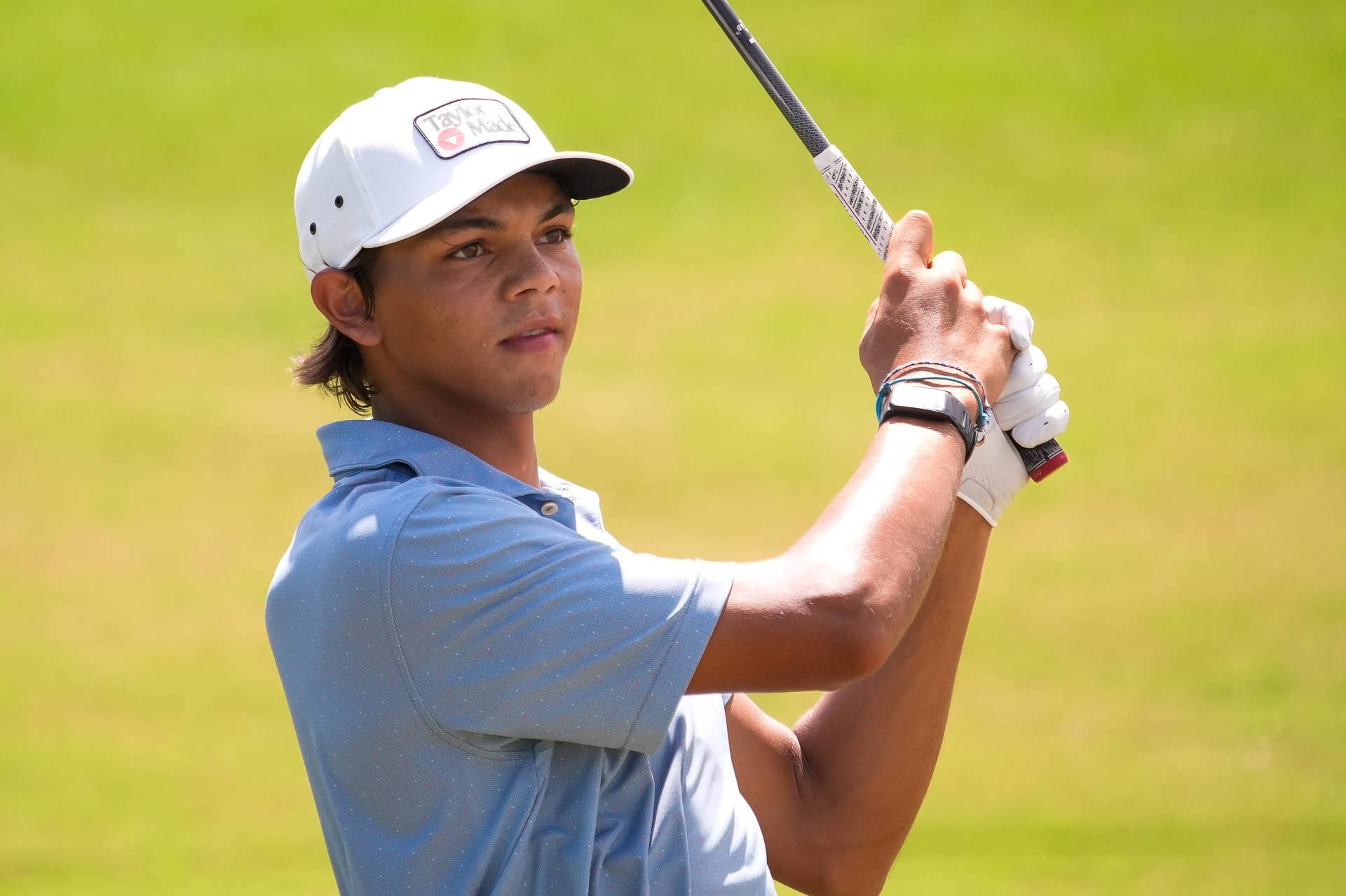
The individual finish delivered the drama, but the team leaderboard delivered the warning to everyone else in Florida's Class 1A postseason. Benjamin School finished at 290, two over par, and beat runner-up Oxbridge Academy by 15 strokes. Oxbridge posted 305, King's Academy 311 and Cardinal Newman 330. Those are not narrow margins created by one extraordinary closing putt. They show a team that separated itself across the round.
Benjamin had to earn that separation. Oxbridge and King's Academy applied early pressure, and the field did not simply surrender the title at the first turn. The Buccaneers did their strongest work on the back nine, when the combination of controlled scoring and rivals' mistakes turned a competitive tournament into a comfortable team result. Woods' closing birdie added a sharp individual ending to a broader collective performance.
Colton's 70 deserves almost as much attention as Woods' 69. His eagle at the fourth and ability to stay under par in difficult weather meant Benjamin had two players producing scores that could contend for the individual prize. A one-shot internal duel is not a problem for a school team; it is a luxury. The competition gives both players a meaningful standard while contributing to the same total.
The deeper context is that Benjamin has been built around more than a famous last name. Andrew Tsar has been another central figure in the program's recent success, and the senior class has accumulated meaningful tournament experience together. The Buccaneers entered the season as defending state champions with players accustomed to both leading and chasing. That matters when postseason golf compresses a season's work into a few rounds on unfamiliar greens.
One strong district result cannot guarantee a state title. A different course, different wind or one player having an off day can quickly change the arithmetic. What the 290 does establish is that Benjamin does not require Woods to shoot an extraordinary number merely to stay competitive. The team has enough depth to win in several ways, and it can absorb ordinary mistakes better than a roster dependent on a single medalist.
There is also a useful lesson in how this victory should be judged. For Charlie, a 69 and a trophy are personal milestones. For Harbeck, the more encouraging number may be the 15-shot margin. A coach wants players who can respond when rivals push early, avoid compounding errors and produce reliable totals under pressure. Benjamin did all three. Its next opponents will have to beat a full lineup, not just the player whose name dominates the headlines.

The 2025 state championship explains the stakes of this district win
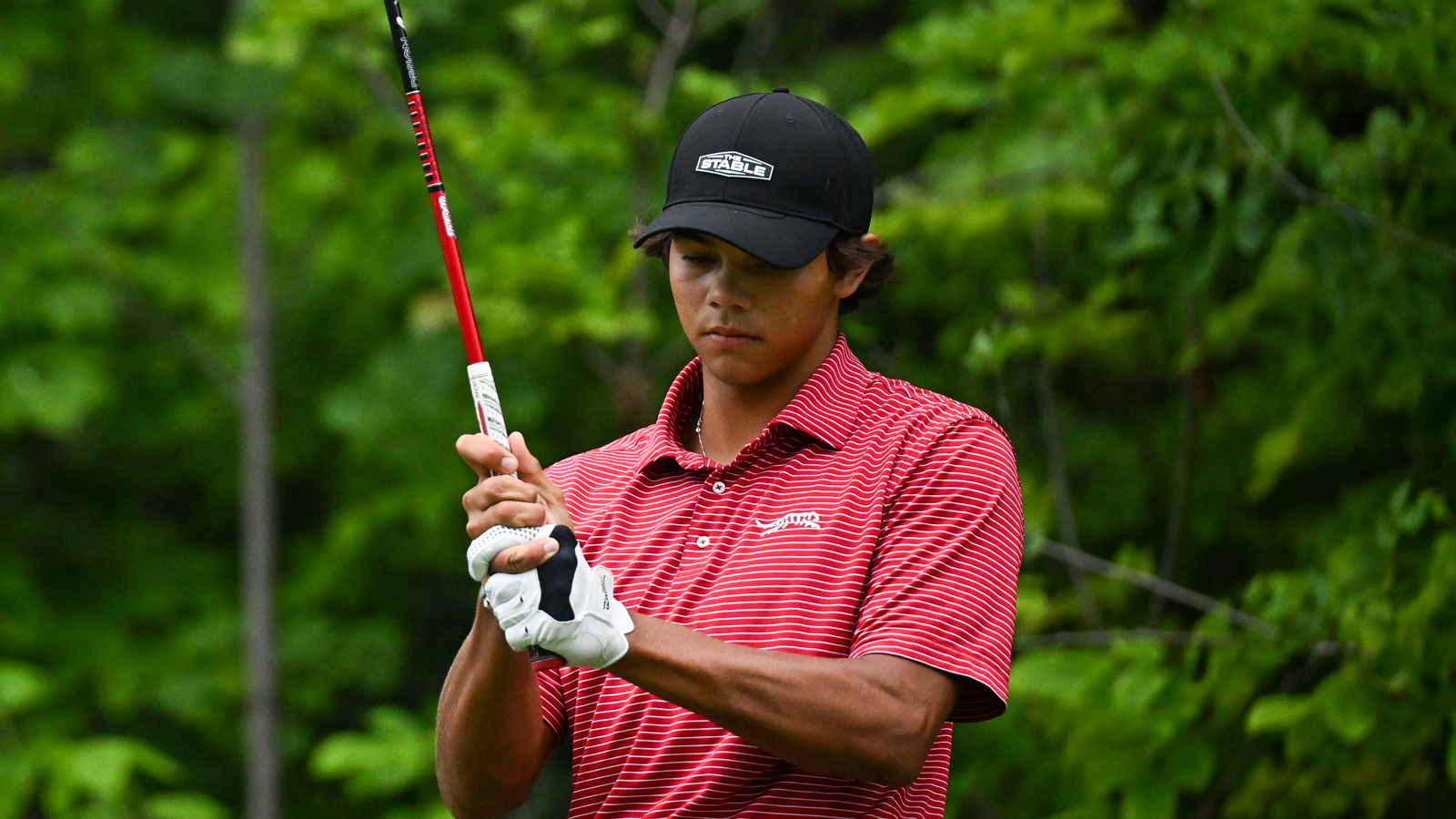
The district trophy is an early chapter in a much bigger title defense. Benjamin won Florida's Class 1A state championship in 2025, its second state crown in three years after also winning in 2023. Woods was part of both teams. In last year's final, he fired a four-under 68 on the second day as Benjamin rallied to win the team championship. That history changes the way this week's result feels: the Buccaneers are not trying to establish whether they belong among the best. They are trying to stay there.
The 2025 title was especially valuable because it required a response to adversity. Benjamin did not lead comfortably from the opening tee shot. The team had to recover from a difficult start, and Woods' 68 became one of the defining performances of the comeback. A player who has experienced that sort of pressure understands that the most important round is not always the prettiest one. Sometimes it is the round that prevents a bad stretch from becoming a lost championship.
That is why a steady 69 in wind and rain at the district stage is a promising sign. Woods did not need to produce an eight-birdie exhibition or an impossible recovery from a disastrous front nine. He took the opportunities that came, avoided the bigger numbers and made the last putt. The skills are transferable even though the setting is smaller than a state final: patience, scoring discipline and the ability to finish when the outcome remains live.
His 2026 season has also contained results that resist the easy narrative of constant domination. At September's Palm League Championship, Woods shot an even-par 71 and finished eighth individually, while Benjamin still secured the team title. He also tied for eighth at the Junior Players Championship at TPC Sawgrass. Neither result was a sweeping individual triumph, but both supplied competitive experience against quality opposition and showed why a season should not be reduced to a single weekend.
Woods' junior career has always been watched through a magnifying glass. His father won 15 major championships and changed what the sport expects from precocious talent. That background brings attention, but it does not lower a golf score. The 2025 state-title round and the October 2026 district win are useful because they are measurable achievements, not predictions about a professional future.
The next stage is regional competition, with a state championship opportunity later in November if Benjamin advances. The route is not automatic. Strong rivals will return with new plans, and a team can look dominant at districts before facing a much closer contest a week later. But Benjamin's recent history means it knows both how to defend a title and how quickly a tournament can turn. The current team now has to turn that experience into another finish.
Florida State, TaylorMade and the Tiger comparison are the next tests
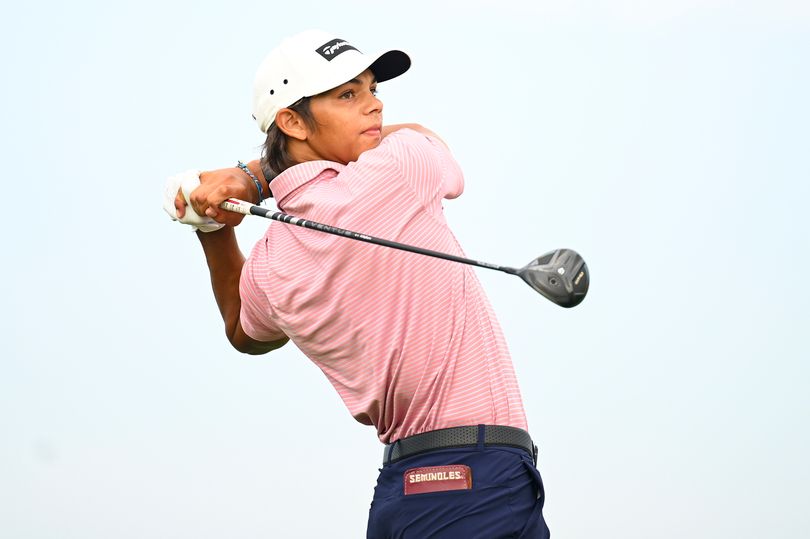
For Charlie Woods, this postseason is also a farewell tour of sorts. He is in his senior year at Benjamin School and has committed to play college golf at Florida State beginning in 2027. That gives the district result a clear place in his development: it is one of his last chances to contribute to the Buccaneers' title ambitions before the next level of competition changes both his schedule and the expectations around him.
Florida State is not a destination chosen in isolation from the wider junior golf scene. The Seminoles have recruited prominent young talent, including Miles Russell, and Woods will join an environment in which his surname will not automatically make him the best player on the range. He will need to earn lineup places, adapt to college travel and find consistency over longer competitive schedules. A high school district medal is encouraging evidence of composure, not a guarantee of collegiate dominance.
His profile has already grown commercially. In September 2026, Woods signed a name, image and likeness agreement with TaylorMade, joining a golf brand closely associated with his father. That partnership recognizes his visibility and his emerging record, but it also makes the balance between marketing and performance more complicated. The safest way for a young golfer to justify attention is to keep adding actual results. A two-under 69 in demanding conditions is more persuasive than any promotional photograph.
The PNC Championship is another reason Charlie's next few months will attract attention. Organizers have reportedly left open the possibility of Tiger and Charlie returning to the family scramble event in December, although Tiger's participation has not been confirmed and depends on his physical readiness. The pair have competed together several times and twice finished runners-up. Their appearances are compelling because they put father and son on the same team rather than forcing an artificial head-to-head comparison.
Yet Charlie's district performance deserves to stand apart from that possibility. Tiger did not hole the putt for him. A TaylorMade agreement did not remove the wind. And a commitment to Florida State did not guarantee that he would beat Colton. The 40-footer mattered precisely because it was a sporting problem he had to solve in the moment, in a competition where his teammates and opponents had equally real ambitions.
The sensible next question is not whether this proves Charlie will become another Tiger Woods. No single high school round can answer that, and very few golfers in history have approached Tiger's achievements. The question is whether Woods can carry the same discipline into regionals, another state-title attempt and eventually college golf. The October 27 result gives him momentum and a tangible piece of silverware. What he does with it will be more revealing than the surname on the scorecard.

The district trophy does not complete Benjamin's mission. Regional competition and a possible return to the state final still stand between the Buccaneers and another championship, and the same steadiness that produced 290 in Stuart will have to travel with them. But the margin over Oxbridge and the one-shot duel between Charlie Woods and Brooks Colton show why this team enters the next round with genuine depth.
For Charlie, the closing 40-footer is more valuable than another comparison to Tiger. It is a concrete result he earned under pressure, alongside teammates with their own ambitions, before a college career that will bring new scrutiny. The last putt won him the individual district title. The next challenge is making that performance the beginning of another postseason run, not its high point.

















