

Phillips Hit 96.9 MPH After Surgery. Atlanta Is Betting $35M It Stays.
GOATIFYAtlanta is paying for a familiar arm with an unfamiliar upside. Evan Phillips, drafted by the Braves in 2015 and traded away in 2018, is returning on a three-year, $35 million agreement after spending the most productive stretch of his career with the Dodgers. The contract has a practical purpose: add another trusted option to the late innings. Its larger wager is that a reliever who recently underwent Tommy John surgery can carry his recovered velocity and command into three seasons in Atlanta.
Phillips made the signing feel unusually personal at his November 13 introduction. Atlanta is already his offseason home, and the move lets his family stay close to an established routine while he begins a different chapter professionally. After two winters dominated by shoulder and elbow rehabilitation, he expects to prepare for baseball rather than simply work toward being healthy enough to pitch. That distinction may prove more consequential than an introductory press conference usually reveals.
The headline number is the fastball. His four-seamer averaged 96.9 mph in 2026, faster than in his best pre-injury seasons. But a speed reading cannot guarantee durable performance, and the Braves know they are buying both a recent comeback and the possibility of an even more effective version of a former high-leverage Dodgers reliever. The next test begins long before Opening Day.
Atlanta was home before it became his next clubhouse
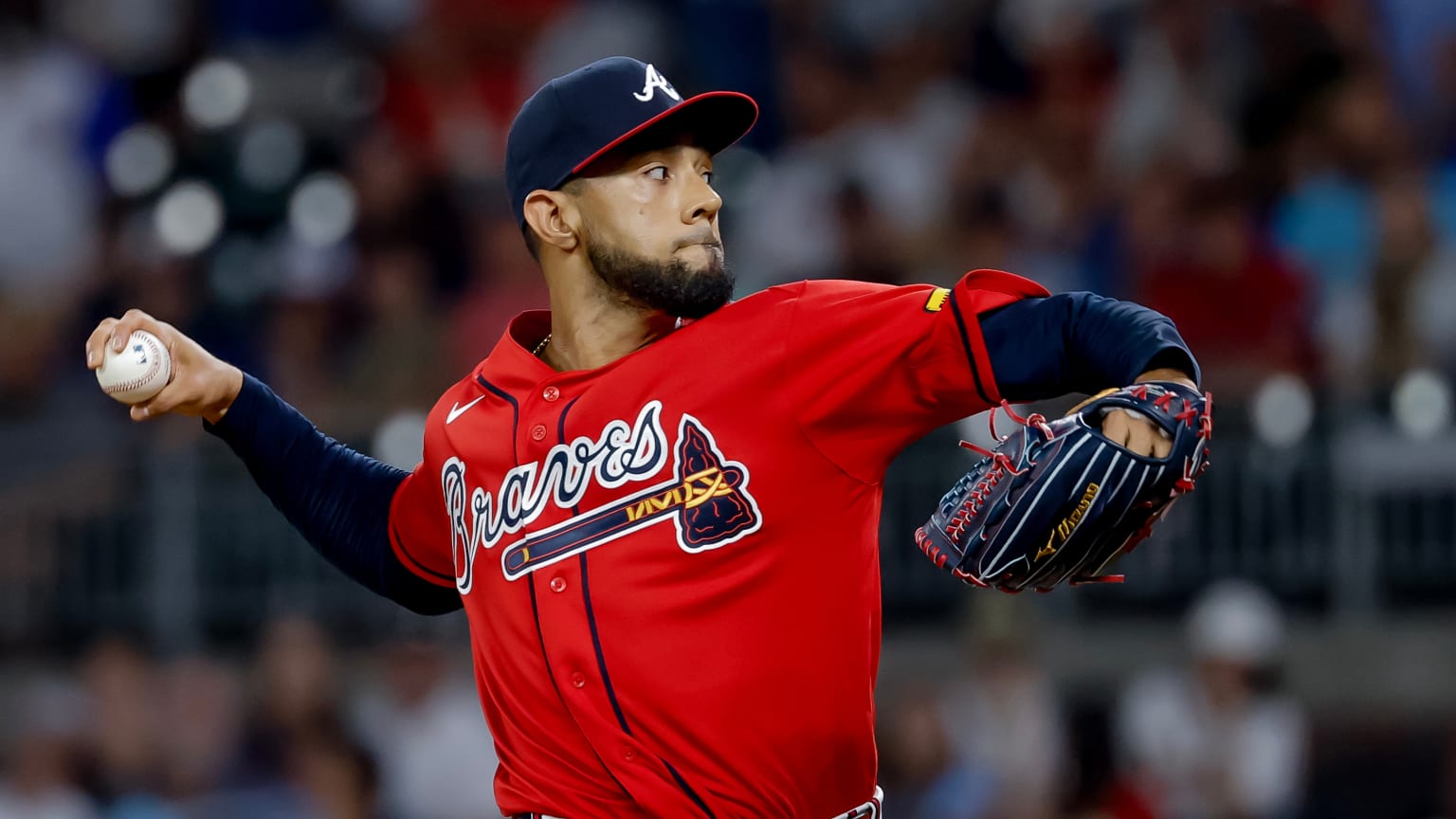
The Braves have been part of Phillips' story since before Los Angeles made him a familiar late-inning name. Atlanta selected him in the 2015 draft, gave him four major-league appearances in 2018 and then included him in the deadline package that brought Kevin Gausman from Baltimore. His early career was hardly a straight ascent: he struggled to find consistency with the Orioles, moved through Tampa Bay and was claimed by the Dodgers in August 2021. Five years later, he is coming back with a résumé that looks very different from the one he took away.
That history matters because it makes the reunion more than a transaction framed for nostalgia. Phillips has already lived through the kind of uncertainty that can unsettle relievers, whose value can swing with only a handful of poorly located pitches. In Los Angeles, he transformed his results and became a pitcher managers trusted when the margin for error was smallest. The Braves are not assuming the rookie they drafted has somehow remained the same player. They are paying for the pitcher he learned to become after leaving.
His personal circumstances make the return easier to understand. Phillips told reporters Friday that he lives in Atlanta during the offseason, and he and his wife viewed the Braves as a preferred destination when negotiations became realistic. A player joining a new club often has to establish a new training base, adjust family arrangements and build relationships while also learning a pitching program. Phillips can keep the first of those pieces settled. In a sport that depends on repeated daily work, reducing the disruption has value even if it never appears in a box score.
GOATIFY
GOATIFY Baseball
Looking at Atlanta's homecoming move? Browse GOATIFY baseball fan apparel and accessories.


White Baseball GOAT Sticker
A white baseball GOAT decal for your bottle, laptop or game-day gear.
Shop Now ↗
White Baseball GOAT Dad Hat
A white baseball GOAT design for ballpark days and everyday fan style.
Shop Now ↗


The financial commitment is substantial for a relief arm. Atlanta will pay $11 million in 2027, another $11 million in 2028 and $13 million in 2029. That structure places him well beyond the category of a short-term depth signing. It also makes the risk visible: a reliever entering his age-33 season in 2027, one who has recently returned from reconstructive elbow surgery, is not guaranteed three seasons of late-inning availability merely because his most recent velocity readings were encouraging.
Phillips' attraction to the city does not remove that risk. What it does is create a practical pathway for him to settle quickly with the coaching staff. He can begin detailed conversations about what worked with the Dodgers, which adjustments belong in his Atlanta routine and where his workload needs to be managed. As important as a fresh voice can be, Atlanta would be unwise to discard the habits that made Phillips successful elsewhere simply because the logo on his uniform has changed.
The homecoming will be judged on much less sentimental terms once the season starts. If Phillips is healthy enough to handle consecutive outings and trusted enough to face the middle of an opponent's order, the Braves will have bought something their bullpen needs. If the arm is inconsistent, the happy geography of this move will not matter. That tension—familiarity on one side, investment risk on the other—is what makes the signing compelling.
The real pitch is a healthy winter after two years of rehab

For two consecutive offseasons, Phillips' calendar was set by rehabilitation. A shoulder issue affected him around the end of 2024 and kept him out of the World Series. Then elbow trouble led to Tommy John surgery in May 2025. He appeared in only seven major-league games that season. When the Dodgers brought him back for 2026, the immediate question was not which ninth-inning matchup he could win. It was whether his body would permit him to pitch effectively again at all.
The recovery required a careful return through Triple-A Oklahoma City, where the emphasis progressed from physical readiness and pitch feel to execution against hitters. Before his July 2026 activation, he logged a 1.80 ERA with 13 strikeouts in 10 innings across 12 minor-league appearances. Those figures did not prove that he was fully restored, but they offered a useful indication that his stuff and strike-throwing were returning together. Facing major-league hitters was still a substantially harder examination.
His final major-league line for 2026 was more complicated than either a triumphant recovery narrative or a warning label would suggest: a 3.46 ERA in 31 appearances and 26 innings. That is not the sparkling season average that once made him an automatic choice for the Dodgers' toughest situations. Yet it is a meaningful workload for a pitcher who missed the first half while working back from major surgery. Recovery years often produce uneven numbers because building strength, refining mechanics and competing for outs are all happening at once.
GOATIFY
GOATIFY Baseball
From comeback velocity to postseason stakes, explore GOATIFY baseball shirts and fan gear.


White Baseball GOAT Sweatshirt
Rep baseball’s greatest with a white GOAT graphic sweatshirt.
Shop Now ↗
Gold Baseball GOAT Dad Hat
A gold baseball GOAT design for ballpark days and everyday fan style.
Shop Now ↗There were stronger signals beneath the ERA. Phillips' four-seam fastball averaged 96.9 mph, compared with 96.0 in 2022 and 96.3 in 2023. His strikeout rate reached 31.1 percent, close to the career-best 33 percent he posted in 2022. More velocity can open room for a breaking pitch to play, particularly when hitters must respect the fastball at the top of the zone. The figures do not prove that his elbow will stay healthy; they show why Atlanta believes it is acquiring more than a veteran clinging to earlier success.
Even the finish to 2026 suggests a pitcher who got sharper with competitive repetitions. Over his final 14 regular-season appearances he produced a 1.46 ERA with 19 strikeouts in 12 1/3 innings. He also delivered five scoreless postseason outings for Los Angeles. That combination matters because high-leverage relief work is less about piling up innings than about making a small number of decisive appearances count. The Braves can reasonably hope that the later version of Phillips is closer to what they will see in 2027, while still recognizing how limited a 14-game sample is.
His peak seasons establish the ceiling Atlanta is trying to recapture. Phillips had a 1.14 ERA across 64 games in 2022 and a 2.05 ERA in 62 outings in 2023. He worked effectively as a closer and in other high-pressure spots, adapting to different innings rather than depending on a single rigid job description. But those achievements are context, not an automatic projection. Players can recover velocity without recovering every element of command, and a few poorly located pitches can erase the advantage of excellent stuff.
That is why his biggest piece of November news might not be a radar-gun number at all. He expects his first winter in two years focused on improving rather than following a rehab calendar. A regular offseason should give him more room to experiment with pitch shapes and delivery details, improve strength without rushing and build a workload plan for the following year. The important word is should: the results will only become visible when the Braves can see how he performs with that preparation behind him.
December 1 puts a clock on Atlanta's bullpen rebuild
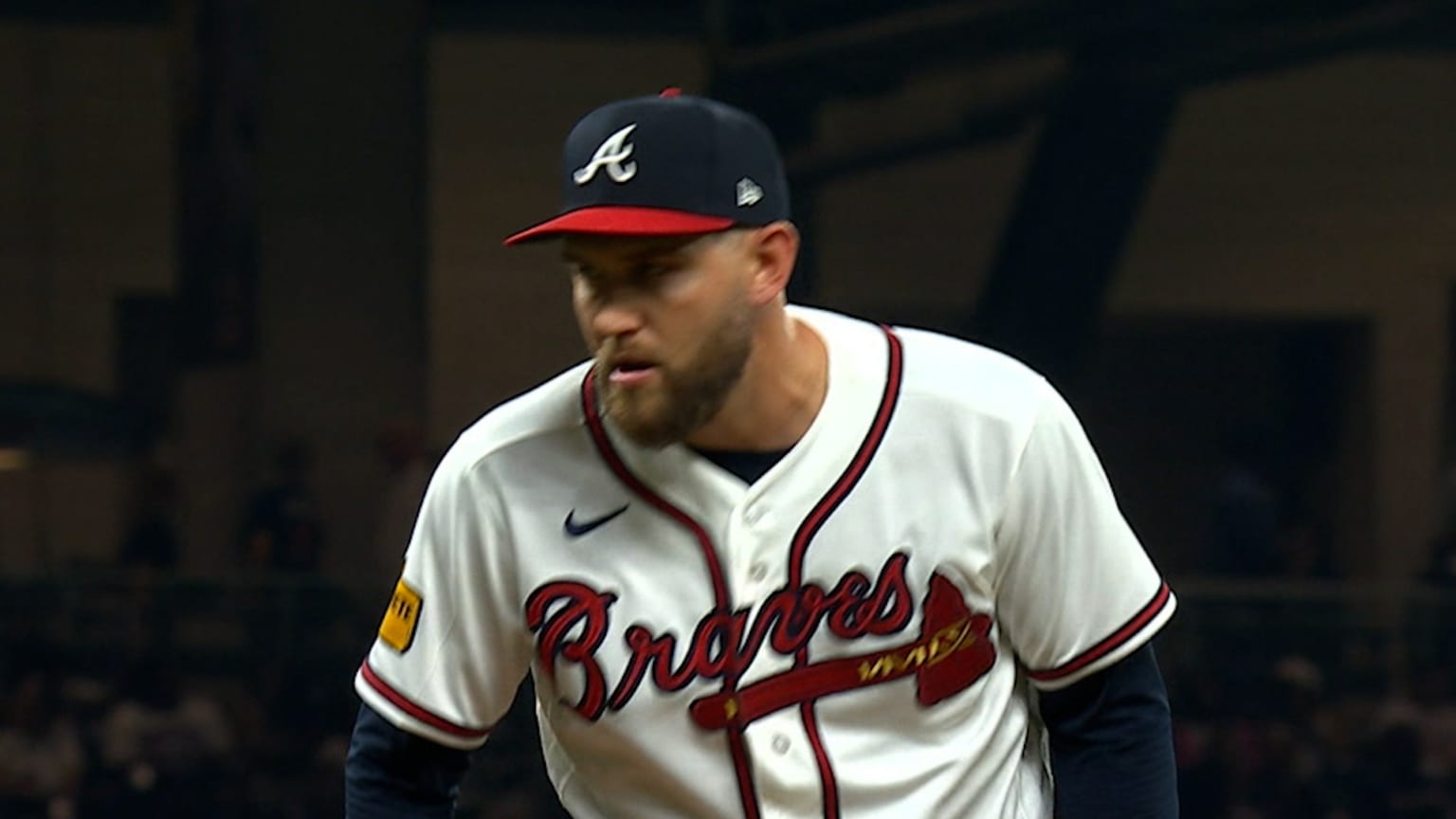
Atlanta is not planning to hand Phillips an empty bullpen and ask him to solve every problem. Robert Suarez, Dylan Lee and Ray Kerr give the Braves other late-inning possibilities, while Didier Fuentes could affect the mix depending on whether he is stretched out as a starter next spring. Raisel Iglesias remains a free agent. That collection of options is significant because a healthy Phillips is most valuable when he helps distribute difficult matchups rather than serving as the only reliable answer for them.
The distinction between a closer and a high-leverage reliever can be overstated. A tie game in the eighth against three dangerous hitters can be more demanding than a three-run ninth against the bottom of the order. Phillips' history in Los Angeles suggests Atlanta could use him flexibly: protect a narrow lead, enter with runners on base or bridge the gap to the final three outs. Suarez and Lee provide alternative looks. If Iglesias returns, the club may have several possible arrangements instead of a bullpen built around a single fixed hierarchy.
GOATIFY
GOATIFY Baseball
As the Braves rebuild their bullpen, check GOATIFY's collection of baseball styles.


Gold Baseball GOAT Sticker
A gold baseball GOAT decal for your bottle, laptop or game-day gear.
Shop Now ↗White Baseball GOAT Dad Hat
A white baseball GOAT design for ballpark days and everyday fan style.
Shop Now ↗

Gold Baseball GOAT Sweatshirt
Rep baseball’s greatest with a gold GOAT graphic sweatshirt.
Shop Now ↗Still, an expensive bullpen is not automatically an effective one. The manager must decide who is available after consecutive appearances, whose pitches match up best with a particular section of the opposing lineup and when a starter should be removed. Phillips' 2026 workload—26 innings after a long absence—makes those scheduling decisions especially relevant. The Braves should have more choices, but they will need to balance aggressiveness with the long view of a three-year contract.
A different clock is ticking before the team even gets to spring training. Phillips said the December 1 collective-bargaining deadline could accelerate conversations with pitching coach Jeremy Hefner and bullpen coach J.P. Martinez. A labor stoppage is a possibility, not a confirmed outcome, and its precise effects would depend on whatever happens in negotiations. For a new signing trying to align routines with a different staff, however, the uncertainty gives early meetings extra importance.
The sensible objective is to make those discussions specific. Atlanta needs to understand which cues helped Phillips restore his fastball, how his recovery affects throwing between outings and whether his pitches will benefit from targeted changes. The right approach need not be radical. Sometimes the useful adjustment is a small tweak to sequencing, a clearer plan against left-handed batters or a more consistent between-appearance routine. The club has time to learn, even if the calendar becomes complicated after December 1.
Phillips' eagerness to work with the new coaches comes with a useful counterweight: he has already learned what sustained success looks like. His best Dodgers seasons were built from strikeouts, controlled contact and a willingness to pitch wherever the matchup demanded. Atlanta would gain little by chasing novelty for its own sake. What it needs is to preserve the restored physical tools and translate them into trustworthy decisions in games the Braves cannot afford to lose.
There is also a strategic reason to keep expectations realistic. Relief pitching tends to be volatile even without a recent elbow operation. A 1.46 ERA over 12 1/3 late-season innings is encouraging; it cannot erase the variability involved in a full season against changing opponents. The more sustainable goal is a bullpen deep enough that no individual reliever must be perfect. Atlanta's investment in Phillips looks better if it improves the choices available to the whole staff instead of asking one arm to carry the ninth inning every night.
Phillips' return is a satisfying piece of baseball geography: the team that drafted him has signed a much more accomplished version of the pitcher it once traded, and he gets to work near the home he already shares with his family. It is also a significant medical and performance bet. The contract covers three seasons, not just the promising stretch that followed his 2026 comeback.
The first useful answers will come in spring training, when workload, command and how well he repeats his pitches matter more than any introductory quote. If his healthier offseason allows the velocity and sharp late-season form to hold, Atlanta gains another genuine late-inning weapon. If not, the $35 million investment becomes a reminder that great relief seasons and long-term certainty rarely travel together.
GOATIFY
GOATIFY Baseball
Shop GOATIFY baseball shirts, hoodies and stickers.

White Baseball GOAT Sticker
A white baseball GOAT decal for your bottle, laptop or game-day gear.
Shop Now ↗White Baseball GOAT Sweatshirt
Rep baseball’s greatest with a white GOAT graphic sweatshirt.
Shop Now ↗


















