

Kucherov Reaches Game 900. Tampa Still Hasn't Solved His Future.
GOATIFYOn Tuesday night, Nikita Kucherov is scheduled to play his 900th NHL regular-season game. For most stars, that would be a straightforward celebration of durability. For Tampa Bay, it arrives with a question nobody can solve by putting another tribute on the arena scoreboard: will one of the greatest players in Lightning history still belong to this franchise next season? The Washington Capitals are visiting, Alex Ovechkin is on his farewell tour, and Kucherov has entered the evening with 1,152 career points. Yet a club that says it will not trade him is still operating under the shadow of his publicly discussed request to leave.
That tension is more interesting than the round number itself. Kucherov is producing at a 1.40-point-per-game pace through his first 20 games of 2026–27, and Tampa Bay entered this matchup at 13-5-2. It is possible to be excellent on the ice and unsettled off it at the same time. The 900-game mark offers a useful way to measure what Tampa Bay has built around No. 86, why the relationship matters beyond nostalgia, and what this particular game can reveal without pretending that one result will decide a contract negotiation.
Nine hundred games, 1,152 points — and almost nobody ahead of him
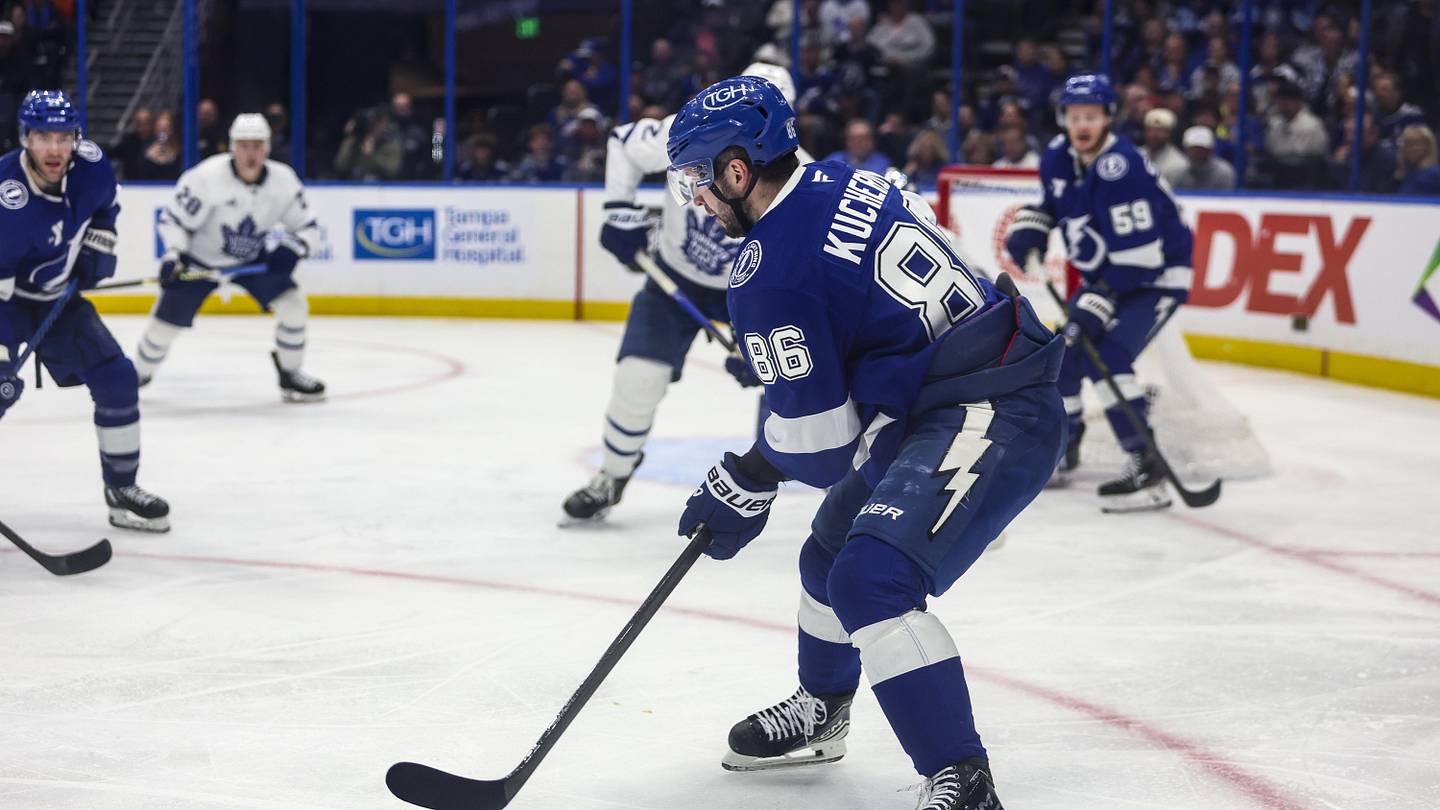
Nine hundred games are an endurance benchmark, but Kucherov's more remarkable number is what he has done with the first 899. He entered the Capitals game with 409 goals and 743 assists, good for 1,152 points. That is not simply sustained productivity across a long career. It works out to approximately 1.28 points every time he has suited up, a pace that many excellent scorers cannot sustain for a single full season. The 2026–27 version is somehow moving faster: eight goals and 20 assists through 20 appearances before this matchup.
The NHL's November 17 statistical comparison offers valuable context. Among players born outside North America, only Peter Stastny, Jari Kurri and Jaromir Jagr had collected more points before game No. 900. Those are three fundamentally different offensive careers: Stastny as an explosive playmaker, Kurri as a devastating finisher and Jagr as a puck-protection and possession machine. Kucherov's presence in their company matters because he has reached that territory in a more tightly structured, video-scouted league, while operating as both the primary creator and a dangerous scorer.
The tempting mistake is to turn that leaderboard into an automatic declaration that one player was better than another. Different eras bring different scoring environments, schedules, teammates and defensive demands. The useful conclusion is narrower and stronger: whatever adjustment someone prefers, Kucherov is not merely a memorable Tampa Bay star. His production belongs in a historically elite international NHL conversation. That remains true whether his final Lightning game turns out to be years away or uncomfortably close.
His standing inside the organization is even clearer. Earlier this season he passed Steven Stamkos as Tampa Bay's all-time points leader. That is a particularly weighty comparison because Stamkos was the face of the franchise for an entire generation. Kucherov did not erase those years; he became the player capable of surpassing their most recognizable individual scoring standard. The Lightning also won consecutive Stanley Cups in 2020 and 2021 with him as a central offensive weapon, giving the production a championship dimension.
GOATIFY
GOATIFY Hockey
Nine hundred games and extraordinary scoring numbers deserve proper fanfare. Browse GOATIFY hockey gear for fans who appreciate the great playmakers.


Milestone ceremonies tend to flatten careers into tidy video montages. Kucherov's has been anything but tidy: missed time, postseason scars, outrageous passing angles and long stretches in which defenders knew exactly who was supposed to receive the puck but still could not prevent it. The milestone deserves celebration on its own terms. It also sharpens the stakes of every unresolved conversation about what Tampa Bay does next.
The contract contradiction Tampa Bay cannot skate around
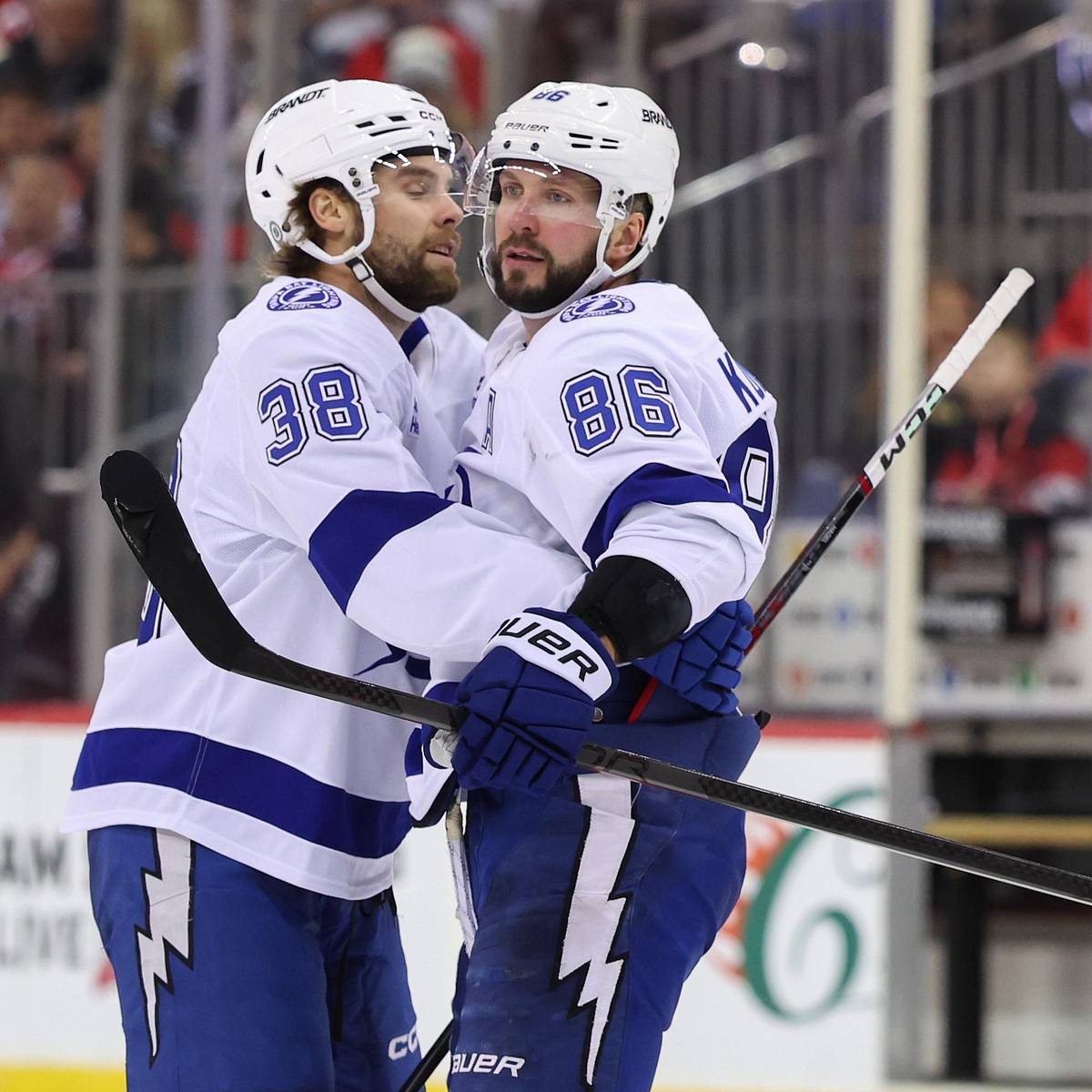
The awkward part of this anniversary began before puck drop. On October 31, Tampa Bay general manager Julien BriseBois publicly insisted the club had no intention of trading Kucherov after reports that the forward had requested a move and indicated he would not sign a new agreement. Those are two very different declarations. One expresses organizational preference; the other reveals a serious problem with the player's preferred future. Neither, by itself, is a completed transaction.
Kucherov is in the final season of the eight-year, $76 million contract signed in 2018, carrying a $9.5 million average annual value. His potential unrestricted free agency in July makes the calendar especially important. A team with a younger superstar under a long contract can often afford to wait for emotions to cool. A contender approaching the final months of an iconic player's deal has fewer comfortable options. Even if it is determined to retain him, it needs a realistic understanding of whether that outcome is achievable.
The forward explained in early November that his frustration concerned communication and respect rather than simply the size of a potential paycheck. He also emphasized his affection for the organization and his teammates. That distinction should not be treated as either proof of an inevitable departure or a guarantee of reconciliation. It means the problem is about trust as well as money, and trust is harder to solve through a spreadsheet of comparable contracts.
The front-office challenge is unusually sharp because the team has reason to believe its championship window remains open. Tampa Bay entered Tuesday at 13-5-2; Kucherov was leading its offense, and the Lightning retain experienced teammates who know what postseason pressure feels like. Trading a player with this level of creation would demand an enormous return and risk weakening a club that is trying to win now. Doing nothing without rebuilding the relationship could invite a different kind of loss later. The arithmetic does not offer a painless third choice.
It would also be unfair to reduce Kucherov's stance to disloyalty simply because he has spent his entire NHL career in Tampa. Players can value a city and a dressing room while disagreeing with management. Equally, the Lightning can consider him indispensable without having solved their communication failure. The 900th game makes that dual reality impossible to ignore: the franchise has spent years benefiting from his extraordinary loyalty to its crest, but the next chapter requires a fresh agreement rather than a tribute to the last one.
GOATIFY
GOATIFY Hockey
One of hockey's biggest contract stories is unfolding in Tampa Bay. Explore GOATIFY NHL-inspired shirts, hats and stickers while you follow the debate.
Ovechkin's farewell visit turns the milestone into a live test
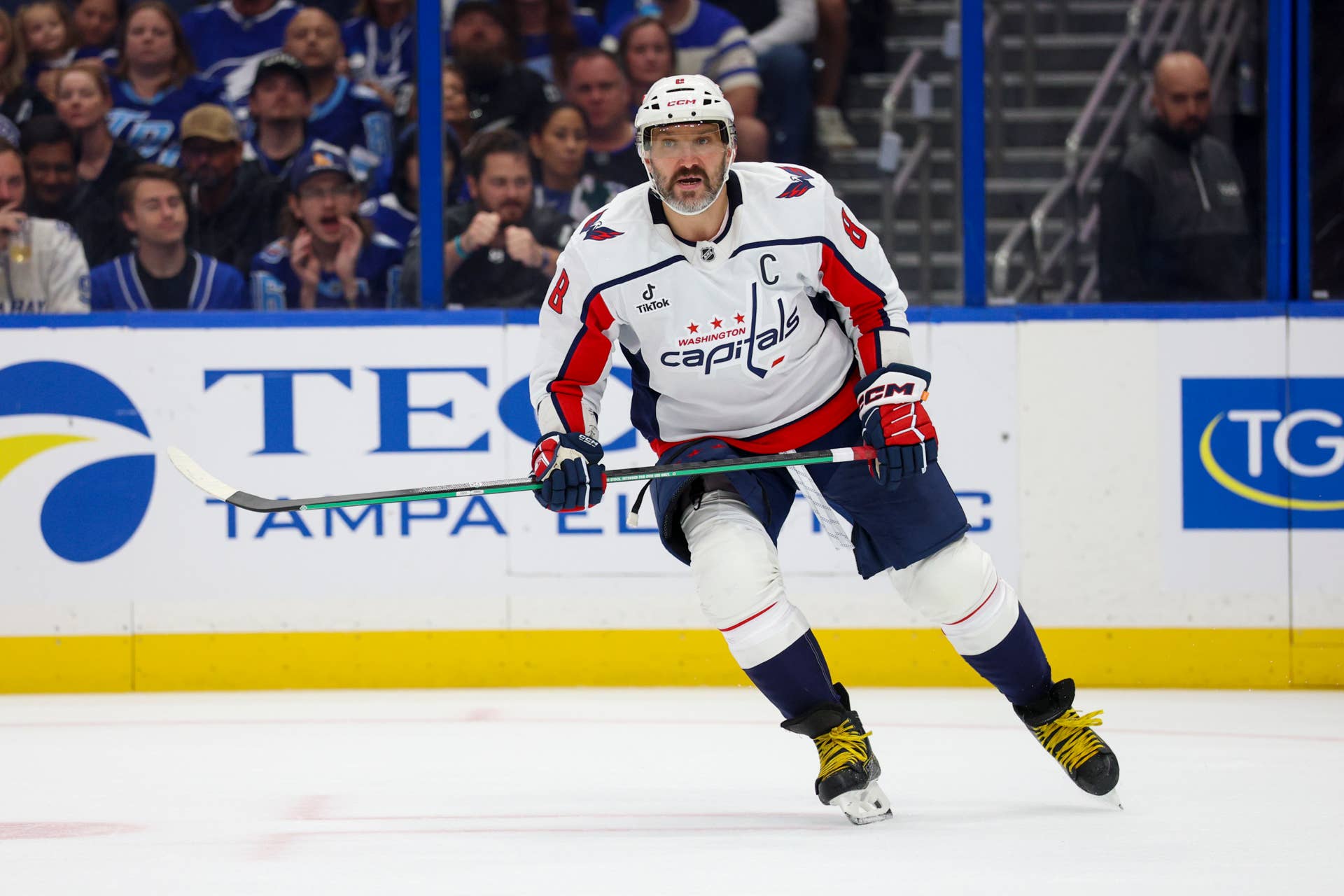
Washington is a convenient opponent for this milestone only if somebody is writing a movie. In reality, it makes the evening more difficult and more interesting. Alex Ovechkin is in the final season he announced in October, meaning this is expected to be his last regular-season visit to Tampa Bay. One Russian superstar is celebrating 900 games while wondering what the next NHL chapter looks like; another is deliberately preparing to close a record-breaking career with the only franchise he has ever represented.
The Capitals arrived with a 10-8-0 record and two consecutive defeats, including a seven-goal concession in a loss to New Jersey. They therefore have a real incentive to spoil the sentiment. Washington's players are not visiting to provide a respectful backdrop for Kucherov and Ovechkin. They need points, better defensive structure and a way to avoid letting the Lightning dictate long stretches of offensive-zone possession. Those practical stakes are what make the historical subplot more compelling rather than less.
The most useful contrast between the stars is how their teams create danger. Ovechkin's signature is a direct shooting threat that forces defenders and penalty killers to account for his preferred space even without the puck. Kucherov's signature is a different sort of control: he changes the geometry of the ice with a pause, a disguised pass or an angle that appears to be closed until the puck arrives. Their career totals are not an invitation to treat every offensive possession as an individual duel. They show two very different methods of making everyone else reorganize.
Tampa's own defensive details could decide how comfortable the night becomes. The Lightning's goalie and penalty killers must deny Washington the settled situations in which its captain can establish his shooting position. At the other end, Tampa Bay's forwards should aim to create movement rather than wait for Kucherov to solve a stationary defense. If Washington collapses toward the slot, the Lightning need support beneath the puck and quick second chances. If the Capitals chase the perimeter, Kucherov is capable of finding the open seam.
There is another reason to resist overdramatic forecasts. This game is scheduled for November 17, not a Stanley Cup elimination night. It will not settle Kucherov's contract status or determine how Ovechkin is remembered. It can, however, reveal whether Tampa Bay's strong early record survives a motivated opponent and whether Kucherov's playmaking remains the club's best practical argument for keeping him. That is a much more meaningful test than the number of times the camera finds either star during a stoppage.
What the Lightning must prove while the future stays unresolved
The contrast between Tampa Bay's previous two games explains why one statistical achievement cannot tell the whole story. On November 11, Kucherov produced a natural hat trick in the third period and finished with four points as the Lightning pulled away from Buffalo, 8-3. A night later in Columbus, he added two assists. Then Detroit shut out Tampa Bay 2-0 on November 14. That sequence is not evidence of a sudden collapse or a one-man team. It is evidence that a prolific offensive group can still run into nights when its preferred patterns produce little.
GOATIFY
GOATIFY Hockey
Kucherov and Ovechkin make this a special night for NHL followers. Discover GOATIFY hockey designs for the game's biggest moments.
One answer is depth, but depth is not simply a list of names printed beneath the first line. Brayden Point has missed recent games, while Anthony Cirelli and Erik Cernak have also dealt with absences ahead of Washington's visit, according to Tampa Bay's pregame coverage. Their availability matters for different reasons: Point connects dangerous offensive touches, Cirelli stabilizes matchups and defensive responsibilities, and Cernak helps the blue line manage difficult minutes. A healthy Kucherov cannot individually replace every aspect of that structure.
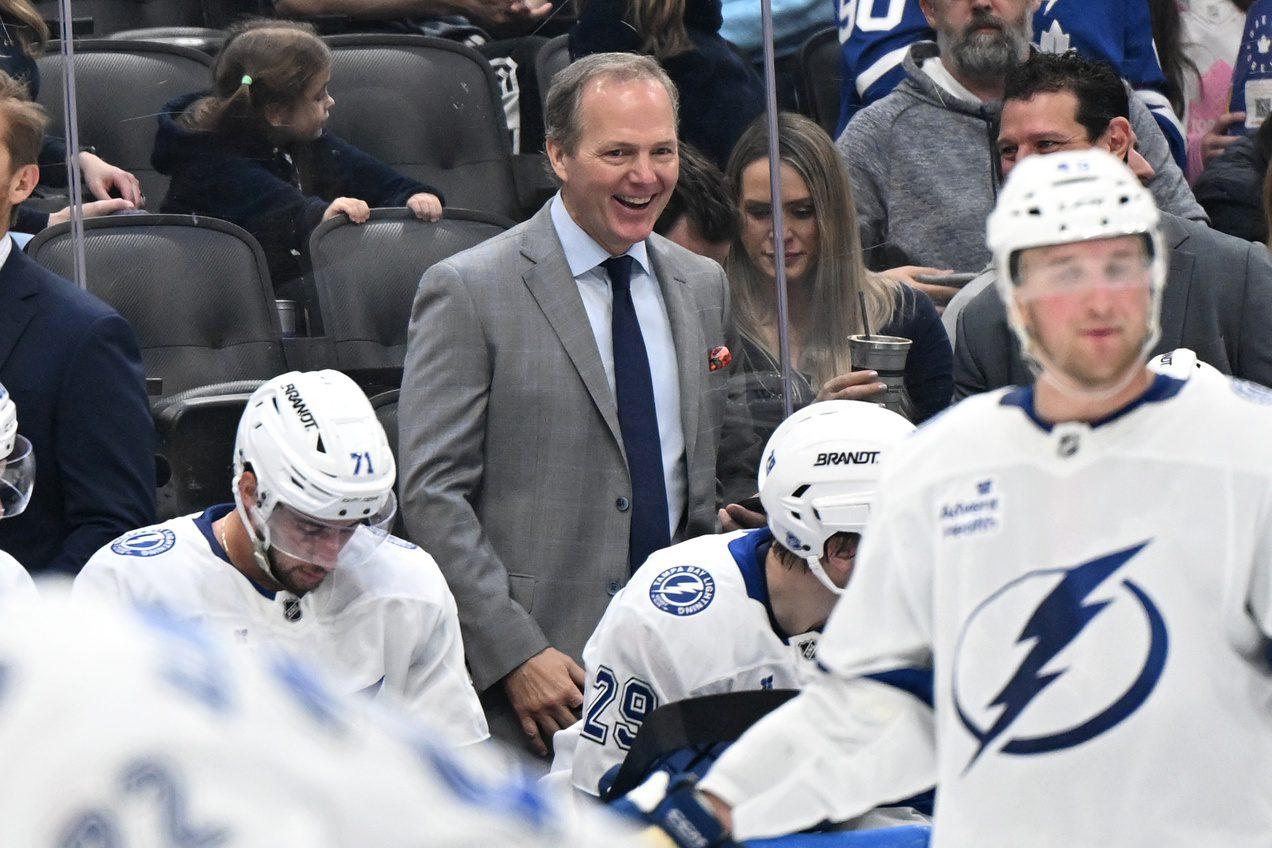
Jon Cooper's task is to give his best creator predictable support without making the offense predictable to the opponent. That means getting another forward into dangerous ice before the pass is made, not after; maintaining retrieval pressure when the initial chance fails; and avoiding the habit of treating every stalled entry as an invitation to reset at the blue line. Kucherov thrives when teammates move into the places his vision can exploit. The Lightning become easier to defend when everyone waits for his next extraordinary decision.
Special teams provide another measuring stick. Kucherov's distribution is especially punishing when Tampa Bay's power play has layered options rather than one static point of attack. But against an opponent with a veteran scorer like Ovechkin, the Lightning cannot hand away momentum through unnecessary penalties or failed clears. Their defensive structure, goaltending and pace of line changes matter just as much as the star's point total. The difference between a contender and an entertaining team is how consistently those details survive ordinary off-nights.
None of this requires pretending that performance guarantees a new contract. A dominant November would make it harder to imagine a Tampa Bay offense without Kucherov, yet it would not magically resolve the communication dispute. A quiet game would not erase 1,152 points or two championships. The realistic argument for keeping him is based on the total package: the extraordinary production, the current lineup's dependence on his decisions and the fact that this season's strong start offers a competitive reason for both sides to find a workable future.
The 900th game is worth honoring because Nikita Kucherov has spent nearly every one of his NHL nights redefining what the Lightning can expect from an elite playmaker. It also arrives at a moment when the franchise cannot rely on memories to guarantee his next 100 appearances.
Against Washington, the meaningful questions are immediate: can Tampa Bay control the game, protect its defense and make good use of a player who is still scoring like a superstar? Beyond Tuesday, the question is much bigger. The Lightning have said they want to keep their greatest scorer. They still have to give him a reason to believe the next chapter belongs in Tampa.
GOATIFY
GOATIFY Hockey
Shop GOATIFY NHL and hockey shirts, hoodies and stickers.


















