

Toronto Went 0–6 at Home. Chayka Backed Hiller—and McKenna Needs a Plan.
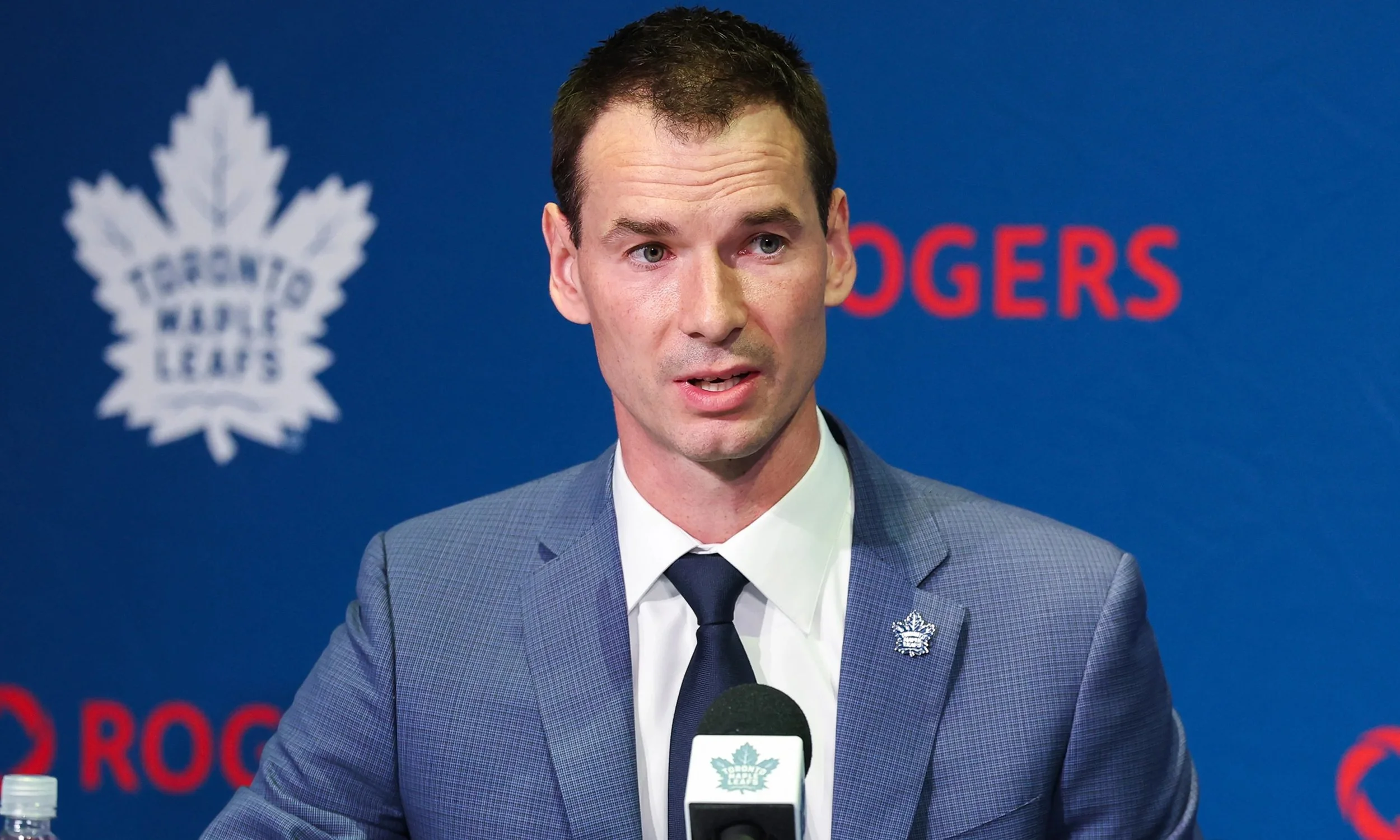
GOATIFYSix home games. Six losses. Not a single point to show for them. Toronto's new general manager, John Chayka, could have responded with a public ultimatum after the Maple Leafs' 0–6–0 homestand. Instead, on November 16, he reaffirmed his faith in first-year coach Jim Hiller and in rookie Gavin McKenna, arguing that the response to the streak will reveal more about this team than the streak itself.
That sounds reasonable in a rebuilding room. It becomes a much tougher argument in a market where losing six times in your own building is never treated as routine growing pain. The Leafs are 8–12–2, coming off their first playoff miss in a decade, and have an emerging No. 1 draft pick whose minutes fluctuate from game to game. The challenge is not simply to make a promise of patience. It is to explain what useful progress looks like while the standings insist that something must change.
The 0–6 homestand was brutal, even if the schedule was not kind

Toronto can offer one legitimate caveat about the six-game stretch: every opponent currently occupied a playoff spot. That matters. A developing club facing strong teams in succession is not getting the same evaluation as one dropping points against the bottom of the league. It also explains why Chayka sees some evidence of growth beneath a dreadful result. The final game, a 1–0 defeat against Edmonton, was tight and more structured than some of the nights that preceded it. The Oilers entered that contest averaging 3.91 goals per game; limiting that attack to one is not nothing.
But the schedule cannot absolve the result. A team that loses all six at home is losing opportunities to bank points, develop game-management habits and make supporters believe the new approach will translate into victories. Toronto's 8–12–2 record through 22 games is an unmistakable warning. A single encouraging defensive performance is not the same thing as a dependable defensive identity. Nor does a one-goal loss make earlier mistakes disappear. Those distinctions matter because rebuilding teams can become very good at praising isolated details while refusing to confront their overall trajectory.
The better question is whether the process behind the Edmonton game can be repeated. Did Toronto keep opposing rushes outside? Did the forwards consistently support defenders on exits? Did the penalty kill avoid gifting momentum back after otherwise strong five-on-five shifts? Did the club create enough dangerous possessions to win, rather than merely make the opponent work? These are the kinds of repeatable details that turn an encouraging defeat into something usable. If the same details collapse the next night, the claimed progress was probably temporary rather than structural.
Chayka is correct that a six-game segment cannot be a season's final verdict in November. It can still reveal a season's biggest vulnerability. The distinction should not protect the Leafs from criticism; it should direct that criticism to specific breakdowns. The standings say the team is underperforming. The film should tell Hiller and his staff what can actually be corrected. Anything less concrete than that is simply a softer way to describe six losses.
GOATIFY
GOATIFY Hockey
Six straight home losses have Leafs fans debating what comes next. Explore GOATIFY hockey designs while Toronto searches for answers.


Home ice should matter in Toronto for reasons beyond atmosphere. With last change, a coaching staff can pursue favorable matchups and protect an inexperienced player against opponents more likely to expose mistakes. Six defeats under those conditions raise fair questions about deployment and adjustments, even allowing for superior competition. Improvement away from home will be welcome, but it will not erase the need to make Scotiabank Arena an advantage again.
Chayka backed Hiller, but public confidence is not a blank check

The relationship between Chayka and Hiller is too new to ignore. Chayka was appointed in May; Hiller took over the bench in June after Craig Berube's departure. This was not a staff left over from some forgotten administration. It was a coaching choice made as part of the general manager's preferred direction. Removing Hiller at the first sustained losing streak would be an admission that the blueprint was wrong before the first quarter of the season had even settled.
That does not mean Hiller receives a lifetime pass. Chayka's explicit support gives the coach a chance to solve problems, not immunity from being evaluated. The difference is visible in daily decisions: Is the lineup's defensive structure becoming more reliable? Do lines and pairs have identifiable jobs? Can the club adjust after the first period without pulling apart every combination in frustration? Are errors being explained and corrected in a way that players can absorb? A staff can lose while teaching coherent habits, but it cannot hide behind teaching forever.
Hiller arrived with familiarity with Toronto from his earlier time as an assistant and significant head-coaching experience in Los Angeles. Those credentials can help him manage a difficult locker room; they cannot guarantee that a young Leafs roster will master a new system in weeks. The staff, which includes associate coach Daniel Alfredsson, also has a responsibility to identify which demands are essential and which adjustments merely create noise. Simplicity is useful when it helps players react quickly. It becomes harmful if it removes the initiative that makes skilled players special.
Chayka and senior adviser Mats Sundin have described trust and player development as important parts of the rebuild. The challenge is to keep those aims aligned with accountability. Players have to believe the same mistake draws a similar response regardless of whether it comes from an established scorer or a teenager. Coaches need management's backing when they enforce that standard. Management must also provide answers when the roster lacks a type of player required to run the system. Saying everyone is responsible is meaningful only if someone follows up with measurable changes.
One revealing test will be whether the next competitive stretch produces a clear team identity, even before the win total catches up. In a healthy version of this rebuild, supporters can describe what Toronto is trying to do: how it exits its zone, when it pressures and how its centers support possession. In an unhealthy version, each new game seems to introduce a different excuse. The general manager is staking his credibility on the first outcome.
McKenna's ice time is the test of whether patience has a plan

The most consequential part of Chayka's message concerns the player Toronto drafted first overall in June. Gavin McKenna has 13 points—six goals and seven assists—in 22 games. That places him among the league's most productive rookies despite a recent slowdown: two points in his last seven contests and none in his last two. He is only 18. A rough week is neither proof that the pick was wrong nor an excuse to stop asking how he is being developed.
GOATIFY
GOATIFY Hockey
Toronto's coaching decisions will be scrutinized every night. Find GOATIFY hockey fan apparel as the next matchup approaches.
The deployment is more revealing than the headline point total. McKenna played 17 minutes and 22 seconds against New Jersey early in the homestand, but only 10:38 against Minnesota several nights later. Ice time is not a promise that every shift must be earned in advance, and a teenager who repeatedly turns over the puck can hurt a team already struggling to contain mistakes. Yet large minute swings can also make it difficult to build rhythm, find chemistry and learn which risks the staff will tolerate. The ideal answer is neither automatic first-line entitlement nor reflexive benching.
McKenna has described conversations with Hiller about simplifying decisions and knowing when to force a play. That is reasonable advice for a high-skill junior star adjusting to NHL defenders. The crucial detail is what comes next. If he is being asked to choose safer options, he needs reps in which good reads are rewarded and the occasional failed creative play does not end his night. A development model built entirely around the absence of mistakes can create a cautious player, not the dynamic attacker Toronto invested a first overall pick to acquire.
The coaching staff should be able to give McKenna a specific set of objectives: cleaner touches exiting the defensive zone, better timing when joining attacks, sharper puck support beneath the faceoff dots and more assertive shooting when a lane is actually open. His minutes can rise as he meets those standards, while still being sheltered against overwhelming matchups. Neither his name nor the draft position should make his defensive responsibilities optional. But the standards ought to be transparent enough that short-term benchings serve a purpose rather than becoming an emotional response to a bad shift.
Chayka has said the organization's outlook stretches years beyond McKenna's rookie season. That is exactly right. Still, development happens through real possessions this season. McKenna's early three-point night in Seattle showed that he can produce against NHL opposition, and his existing 13 points are a meaningful foundation. Toronto has to preserve the confidence that allows him to attack while teaching the details that make those attacks sustainable. His progress may ultimately be a more important measure of 2026–27 than a marginal move in the standings.
The next seven games must produce evidence, not another explanation
The immediate schedule presents the Leafs with something more valuable than a softer talking point. Six of their next seven opponents were outside playoff positions when Chayka spoke, beginning with Chicago. That does not guarantee an easy win—standings in November can be deceptive, and a struggling team is in no position to call anyone a free two points. It does, however, remove much of the explanation that Toronto spent the homestand facing playoff-caliber opposition. The next sample should tell us whether its improvements survive a different set of matchups.
GOATIFY
GOATIFY Hockey
McKenna is finding his way through the NHL's toughest learning curve. Browse GOATIFY hockey fan gifts for the next generation of supporters.
Begin with the stars. Auston Matthews has 12 goals, 17 assists and 29 points in 22 games. He remains Toronto's most reliable offensive reference point, but the Leafs cannot build every possession around a captain creating something out of little support. They need cleaner entries, more second chances and more offensive-zone time from beyond the top line. If Matthews keeps scoring while the team stays stuck below even, the problem is not his individual production. It is how consistently the roster converts individual talent into useful five-man play.
Toronto also has genuine roster constraints rather than a fully healthy group failing in a vacuum. Defenseman Morgan Rielly returned to practice in a noncontact jersey on November 16 after missing time with a lower-body injury, with a return still subject to clearance. Kirill Marchenko, another important offensive contributor, was skating but remained week to week. Their availability matters for exits, transition and line balance, but the club cannot treat the injury list as a substitute for defending effectively. The standard should be a structure that remains recognizable when a regular is unavailable.
The goaltending picture needs a similar balance of accountability and context. Sergei Bobrovsky, brought in as a veteran option, had endured a difficult statistical start, including an .881 save percentage and a 3.47 goals-against average across 13 starts in the Canadian Press account. Those numbers are not where Toronto wants them. Yet goalie results are intertwined with odd-man rushes, slot chances, rebounds and late coverage failures. Chayka should evaluate both the netminder and the conditions in front of him instead of trying to solve a team-defense problem with a simplistic goalie referendum.
Fans should watch four practical indicators during the next stretch: points collected, goals allowed from dangerous central areas, whether McKenna receives a coherent role and whether Hiller's lineup becomes less reactive. Toronto could even win two games while repeating the same bad habits; that would be a fragile improvement. Conversely, one unlucky defeat with clearly better defensive execution should not trigger panic. The useful standard is not an arbitrary streak but a recognizable pattern that can produce points repeatedly.
This is where Chayka's confidence becomes an actionable management choice. If the Leafs defend more consistently and McKenna settles into a productive role, staying patient will look justified. If the same preventable breakdowns persist against less-established opponents, the general manager will need to explain which changes he can make without sacrificing the longer-term direction. A rebuilding timetable may be measured in years. A credible response to six home losses should be visible much sooner.
Toronto does not have to pretend that 0–6–0 at home was acceptable to remain committed to Hiller and McKenna. It has to be able to show how the lessons of the streak change practice, deployment and decisions on the ice. Chayka's public backing buys his coach room to work, and his support for the No. 1 pick offers an important promise about long-term development. Both commitments will be judged by what happens next.
The next seven games will not decide Toronto's entire rebuild. They can reveal whether the organization has moved beyond explaining losses and toward correcting them. For a team with Matthews still producing, an unusually promising teenager and a new leadership group, that is a fair expectation.
GOATIFY
GOATIFY Hockey
Shop GOATIFY NHL and hockey shirts, hoodies, stickers and fan gifts.


















