

Luka Took the Blame. Utah Exposed the Lakers' Bigger Weakness.
GOATIFYThe Los Angeles Lakers had survived close calls, injuries and a punishing stretch of games while extending their winning streak to nine. Then a Utah Jazz team that entered Wednesday with just two victories held them to 97 points. A 109-97 defeat on November 18 did more than end an impressive run: it interrupted the idea that Luka Dončić could simply create another escape whenever the offense stalled.
Dončić scored 29 points, but missed ten of twelve three-point attempts and turned the ball over nine times. Keyonte George answered with 30 points and ten assists for Utah. When a close game reached the fourth quarter, the Jazz found clear decisions and the Lakers found fewer good shots. Los Angeles still left at 13-3, an outstanding record, but this was a useful stress test precisely because a bad opponent on paper was able to dictate the final possessions.
Dončić accepted responsibility afterward. That is admirable leadership, but a useful diagnosis has to go further. Austin Reaves was out for a third straight game with a bruised heel, the schedule had been relentless, and the Lakers' dependence on their star had become unusually extreme. A nine-game streak can hide those weaknesses because late-game talent usually wins. Utah made them visible. The task now is to separate a routine November shooting clunker from a structural problem that could reappear when the games matter more.
Utah's 15-0 run was the ending, not the whole explanation

The final score made the upset look sudden. It was not. Utah had already been testing Los Angeles' half-court offense for three quarters, giving up extra possessions while making the Lakers work to convert them. The visitors led 56-54 at halftime and 78-76 after three. The Lakers were never allowed to build the kind of comfortable margin their record suggested they should have been able to create against a two-win opponent.
At 83-83 with 8:19 to play, the contest was there for either team. Then Utah scored fifteen unanswered points. Keyonte George's shot-making and decision-making supplied the engine, Ace Bailey punished defensive hesitation and Mo Bamba's work around the rim helped complete the separation. By the time the scoreboard read 98-83, the Lakers had been forced to chase a game in which every clean possession was becoming harder to find.
George finished with thirty points on nine-of-seventeen shooting, including five threes, while distributing ten assists. That combination is more instructive than the headline scoring total. A defense can survive a hot isolation scorer if it keeps the surrounding players disconnected; George repeatedly made the next pass available and kept the offense moving when Los Angeles adjusted. Bailey contributed nineteen and eight rebounds, including ten points in the last quarter. Josh Green's role deserves attention as well: his work against Dončić at the point of attack gave Utah a chance to start each defensive possession with a credible contest rather than an immediate emergency rotation.
The Jazz were not clean in every category. They committed twenty-three turnovers and allowed fourteen offensive boards. Los Angeles took eighty-nine field-goal attempts to Utah's seventy-seven. In an ordinary shooting night, that difference in opportunities could have decided the game in the Lakers' favor. Instead, the quality of the attempts and the late-game control swung matters the other way. The Lakers hit thirty-four of eighty-nine shots; Utah went thirty-seven of seventy-seven. Los Angeles made nine threes to Utah's fourteen. Those figures help explain why winning the possession battle was not enough.
That creates an uncomfortable takeaway for a favorite. Extra shots have little value if too many are contested, hurried or taken after the defense has already pushed an offense away from its preferred spots. Utah had to overcome its own mistakes, but its defense was connected enough to keep receiving another chance. Los Angeles' best stretches were too short to make the visitors pay consistently.
GOATIFY
GOATIFY Basketball
Utah's fourth-quarter surge exposed LA's weak spots. Shop GOATIFY basketball fan gear.

Lauri Markkanen GOAT - Basketball Decal Sticker
Add basketball personality to your favourite gear.
Shop Now ↗

Lauri Markkanen GOAT - Basketball - Greatest Sweatshirt
A basketball fan design for everyday wear.
Shop Now ↗
LeBron James – The Silencer GOAT Pullover Hoodie
A basketball fan design for everyday wear.
Shop Now ↗
Lauri Markkanen GOAT - Basketball Casual Top Tee
A basketball fan design for everyday wear.
Shop Now ↗
The Jazz's previous-night victory over the Clippers had ended a long losing streak. Two wins in two nights do not prove a turnaround by themselves, yet the Lakers should not minimize a young team that suddenly executed with purpose. The upset was earned, not simply donated. Most important, Utah exposed a late-game question that better Western Conference opponents will ask again: what is Los Angeles' next move when its first creator sees bodies in every driving lane?
Dončić's nine turnovers matter. His 40.6% usage tells the larger story.

Nine turnovers are the kind of number that will dominate a star player's postgame conversation. They should. Dončić handled the ball constantly, finished ten-for-twenty-eight overall and two-for-twelve from beyond the arc, and had his run of eleven consecutive thirty-point performances halted at twenty-nine. The missed threes were costly. The giveaways were particularly damaging because a defense that is already confident becomes more aggressive when it expects the offense to press for an answer.
Yet his usage rate entering the discussion was 40.6 percent, the league's highest and the largest of his own career. Usage is not a direct count of every touch or an automatic measure of selfishness; it estimates the share of team possessions a player finishes through shooting, free throws or turnovers while on the floor. It is therefore a useful warning about how much final-decision responsibility can become concentrated. With Reaves unavailable, a possession that should feature several credible initiators can narrow to Dončić and a collection of receivers waiting for the correct pass.
That is where fatigue can affect the geometry of a game before anyone looks visibly exhausted. A small delay on the first step allows the defender to stay attached. A slightly slower pass gives the help defender time to recover. An extra dribble turns a decent early shot into a late-clock contest. None of those changes requires an excuse, and neither can they be identified from one box score alone. They are basketball reasons to pay attention to the workload that precedes the shot chart.
The Lakers had reached this game after an overtime comeback against Charlotte on Tuesday. Dončić had already worked through thirty-four field-goal attempts and contributed thirty-six points in that victory. A night later, he took another twenty-eight shots. When a high-usage playmaker has to hunt both his own offense and a teammate's good look on nearly every possession, opponents know where the decision-making burden lives. Sending a second body early can be attractive even if it momentarily exposes a shooter, especially when the offense is not finding a confident immediate release.
JJ Redick recognized the weight of that shot-creation assignment in his postgame comments, while resisting the idea that one difficult result proves his approach unsustainable. Both positions can be true. Dončić has produced elite offense for years with heavy responsibility, and Los Angeles would be foolish to remove the ball from its best creator as a symbolic gesture. The real goal is to prevent the offense from losing its other options when opponents successfully pressure him.
The best response is practical rather than rhetorical: have a secondary handler initiate earlier, let Dončić start some possessions off the ball, use purposeful screening to alter his first matchup, and move the ball before the defense finishes its rotation. None of these mechanisms guarantees a score. Together they make Utah's defensive plan less comfortable to repeat. A star accepting blame may tell you about the locker room; a team adjusting the workload tells you something about its playoff readiness.
GOATIFY
GOATIFY Basketball
Basketball's biggest stars carry big expectations. Explore GOATIFY Basketball.

Luka Doncic G.O.A.T. - Basketball - Greatest Sweatshirt
A basketball fan design for everyday wear.
Shop Now ↗

Michael Jordan - Crying Jordan GOAT Graphic Tee
A basketball fan design for everyday wear.
Shop Now ↗
Wemby G.O.A.T. - Victor Wembanyama Basketball Sticker
Add basketball personality to your favourite gear.
Shop Now ↗

LaMelo Ball G.O.A.T. - Basketball Coffee Cup Mug
Add basketball personality to your coffee break.
Shop Now ↗Without Reaves, Grimes' hero night became an impossible standard
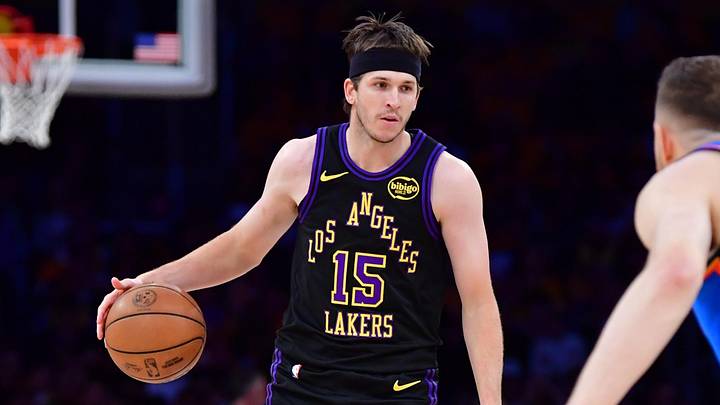
Austin Reaves' absence is more than an injury note at the bottom of a recap. His bruised heel kept him out for a third consecutive game, taking an established scorer and decision-maker out of the Lakers' normal rhythm. A second high-level creator does not merely replace a few points. He changes what the defense can safely do while the first player handles the ball. A defender who would otherwise help toward Dončić must consider the cost of leaving Reaves a clean catch, a driving seam or his own pick-and-roll.
There is an important difference between having teammates who can score and having another teammate who can organize the possession. Los Angeles has both types of player on its roster, but they are not interchangeable on demand. With Reaves unavailable, Dončić was responsible for such a large share of the offense that Utah could repeatedly bring pressure to the same point of attack. Players such as Grimes, Collin Sexton and Jake LaRavia can make the defense pay when the ball arrives on time. That is harder if the first action is stalled and the pass only comes with the clock expiring.
Consider the whiplash of Quentin Grimes' previous twenty-four hours. On Tuesday against Charlotte, the guard exploded for forty-seven points and ten three-pointers, supplying the unexpected scoring burst that helped the Lakers recover from a large deficit and win in overtime. Against Utah he contributed twenty, seven rebounds and four assists. That is not an indictment; twenty points is legitimate secondary production. The issue is asking a player who had one extraordinary career night to become a dependable replacement for the team's missing second creator immediately, on consecutive nights, while the defensive attention changes again.
Grimes made four threes against the Jazz, almost half the Lakers' entire team total of nine. No one else established a consistent enough shooting threat to dissuade Utah from compressing the court. Sandro Mamukelashvili's one-for-ten night illustrated how ugly the support scoring could become. Reaves' absence also narrowed the menu of late-clock actions. With the game tied deep into the fourth quarter, the Lakers needed an uncomplicated possession that could begin somewhere besides their overworked leading scorer. Instead, Utah was able to turn defensive disruption into a decisive run.
Reaves returning should improve the spacing and release valves, but simply waiting for him would be a shallow lesson. The NBA season forces good teams to play without important players. Sometimes a star is injured, sometimes he is in foul trouble, and sometimes a defense has a specific plan to remove his preferred reads. The strongest offenses can still generate a useful possession with an alternate handler, a cut to the middle, a quick post touch or an early reversal that moves the help before the primary creator attacks.
The Lakers do not need every rotation player to invent offense. They need teammates empowered to make the next decision quickly and clearly. That makes Reaves' health an obvious priority while also making the team's offensive habits more important than ever. A forty-seven-point rescue act is thrilling. Treating it as a repeatable contingency plan is not.
Redick should change the options, not panic over one loss

The temptation after a loss to a struggling team is to announce an emergency. Los Angeles should resist it. At 13-3 the Lakers still own one of the league's strongest starts, and their nine straight victories were not imaginary because Utah happened to stop the streak. Redick does not need to replace the entire approach, and Dončić does not need to prove his competitiveness by forcing the next thirty shots.
GOATIFY
GOATIFY Basketball
With scorers stepping up, find hoops apparel and stickers for the whole crew.

Pau Gasol G.O.A.T. - Basketball Casual Top Tee
A basketball fan design for everyday wear.
Shop Now ↗
Crying LeBron – NBA Basketball Muscle Shirt Tank
A basketball fan design for everyday wear.
Shop Now ↗
Austin Reaves G.O.A.T. - Basketball Decal Sticker
Add basketball personality to your favourite gear.
Shop Now ↗
Kyrie Irving G.O.A.T. - Uncle Drew Basketball Hoodie
A basketball fan design for everyday wear.
Shop Now ↗
Donovan Mitchell G.O.A.T. - Cleveland Sweatshirt
A basketball fan design for everyday wear.
Shop Now ↗
Kobe Bryant G.O.A.T. - Settle the Debate Mug
Add basketball personality to your coffee break.
Shop Now ↗What would make for a serious response is a review of where the possessions stalled. The fourth-quarter sequence after an 83-83 tie is a natural starting point. Were the Lakers creating advantageous matchups before the help arrived? When Dončić drew a second defender, was the next player stationed where a simple pass would create a shot or where the defense could recover? Could the team have used a ball reversal or early screen to bring a different defender into the play? Those questions describe the offense's decision tree, not a demand for more inspirational speeches.
Shot quality also deserves attention beyond the outside percentages. The Lakers finished thirty-four-for-eighty-nine from the field, and the team was especially ineffective at completing opportunities near the basket according to Redick's postgame assessment. Missing open shots happens. However, repeated late possessions with unclear driving lanes, predictable passes or poor finishing position are different issues. Those problems can often be improved with spacing and timing even when the personnel is unchanged.
Utah offers a useful opposing model. The Jazz had twenty-three turnovers and surrendered extra shots, yet managed to stay connected defensively and execute an effective closing burst. George paired scoring with playmaking. Bailey continued attacking rather than waiting for the Lakers to miss again. The team's ability to survive mistakes should not be mistaken for a flawless performance, but its response under pressure was precisely what the Lakers failed to produce. Good teams sometimes lose because an opponent makes high-level plays, not solely because the favorite has played badly.
Redick's rotation choices now matter in a different way. He can use a few possessions to test whether Grimes or Sexton can initiate before Dončić takes over; he can create off-ball opportunities for the star rather than leave every defender facing him at the top; and he can ask the wings to cut decisively instead of freezing when the defense switches. The correct balance will depend on who is healthy, and none of it should be described as a confirmed tactical decision before the next game. These are the options worth testing based on the difficulty Utah created.
Sacramento's visit to Los Angeles on Friday offers a quick chance to check the response. A good Lakers performance need not feature an inflated Dončić scoring line. More useful signs would be fewer risky late-clock decisions, an offense able to score through several actions, and fewer stretches where an opponent dictates every read. If Reaves remains unavailable, those signs become more important. The Lakers can learn from a defeat without turning it into a crisis; they cannot learn much by treating the entire night as an unavoidable string of misses.
One loss cannot erase a 13-3 start, and a team that had won nine straight has earned some benefit of the doubt. Dončić will shoot better than two-for-twelve from outside on plenty of nights. Reaves' eventual return should ease the workload. Redick is right not to dismantle a productive offense simply because Utah beat it once.
But neither should the Lakers describe this as bad luck and move on. The Jazz showed how quickly an opponent can turn one creator's difficult night into a full-team scoring drought. Utah deserves credit for disciplined pressure, George's command and the fourth-quarter execution that converted defensive stops into separation. The Lakers need more answers when the first action is denied, more reliable ball movement late in possessions and a way to keep everyone engaged before Dončić has to rescue the possession.
Sacramento visits next on Friday. The result will matter less than how the Lakers build clean shots, share decision-making and respond when the defense loads up on their leading scorer. Dončić volunteered to carry the blame. The most valuable response would be an offense designed so he does not have to carry quite so much.
GOATIFY
GOATIFY Basketball
More basketball stories ahead? Find GOATIFY hoops T-shirts, hoodies and gifts.

Paul George G.O.A.T. - Basketball Casual Top Tee
A basketball fan design for everyday wear.
Shop Now ↗
Kobe Bryant Mamba G.O.A.T. - Basketball Decal Sticker
Add basketball personality to your favourite gear.
Shop Now ↗
Domantas Sabonis GOAT - Basketball - Greatest Sweatshirt
A basketball fan design for everyday wear.
Shop Now ↗
Basketball Alien Wemby UFO Abduction Graphic Hoodie
A basketball fan design for everyday wear.
Shop Now ↗
Steve Nash G.O.A.T. - Basketball Muscle Shirt Tank
A basketball fan design for everyday wear.
Shop Now ↗















