Hall of Fame Voting Overhaul After Bill Belichick Snub: What Changes in 2027
GOATIFYThe Pro Football Hall of Fame is changing the way it chooses its next class, and the timing guarantees that Bill Belichick will be at the center of the conversation.
Belichick's failure to make the Class of 2026 in his first year of eligibility became one of the most controversial Hall of Fame decisions in recent memory. Now the selection process itself is being overhauled for 2027: the voting body is getting smaller, the separate seniors lane is disappearing, finalist presentations are changing and the annual debate is returning to an in-person room.
The reforms were not created overnight, and the Hall has described them as part of a broader review of the process. But after a year in which a six-time Super Bowl-winning head coach was left out while voters, fans and former players questioned how the ballot worked, the changes will inevitably be judged by one standard: does the new system produce a clearer, more defensible class?
Belichick's 2026 Snub Is the Context Nobody Can Ignore

Belichick's résumé is not the kind that normally requires much explanation. He won six Super Bowls as head coach of the New England Patriots and two more as a New York Giants defensive coordinator. His Patriots teams defined an era, and his postseason record places him among the most accomplished coaches the sport has ever seen.
That is why his omission became bigger than a normal Hall of Fame disagreement. It raised questions about whether the structure of the ballot was forcing voters to make choices between candidates who should not have been competing against each other in the first place.
The previous format separated modern-era players from senior candidates, while coaches and contributors were also handled through special categories. In practice, voters could be placed in awkward situations where support for one historically deserving candidate reduced the room available for another. Several voters later explained their ballots in ways that made it clear they did not necessarily believe Belichick was unworthy; they believed the structure created competing priorities.
That distinction matters. A Hall of Fame process is supposed to answer a simple question—who belongs in Canton?—but the mechanics can turn it into a much more complicated exercise about categories, quotas and strategic voting.

What Exactly Changes for the 2027 Hall of Fame Class?

The biggest change is the size of the selection committee. The old 50-person voting body is being replaced by a 28-person group made up of 25 voting members and three non-voting members.
The geographic structure is changing too. The old committee included selectors tied to individual NFL markets. The new model moves toward at-large selectors plus a Pro Football Writers of America representative, reducing the direct one-market-one-seat structure that had been part of the process.
The finalist pool is also being simplified. Instead of keeping a separate seniors category, the Hall will consider 13 player finalists in one pool, alongside one coach and one contributor. That creates a 15-person final group.
There are procedural changes as well. Candidate presentations will be made by people outside the selection committee rather than by the voters themselves, an attempt to reduce the advantage that could come from one presenter being more persuasive or polished than another. The annual meeting will also return to an in-person format after six years of virtual meetings.
None of those changes guarantees better results. But they are designed to make the discussion more consistent and make the final vote less dependent on quirks in how candidates are categorized or presented.
A Smaller Voting Committee Could Make the Process More Consistent—and More Intense
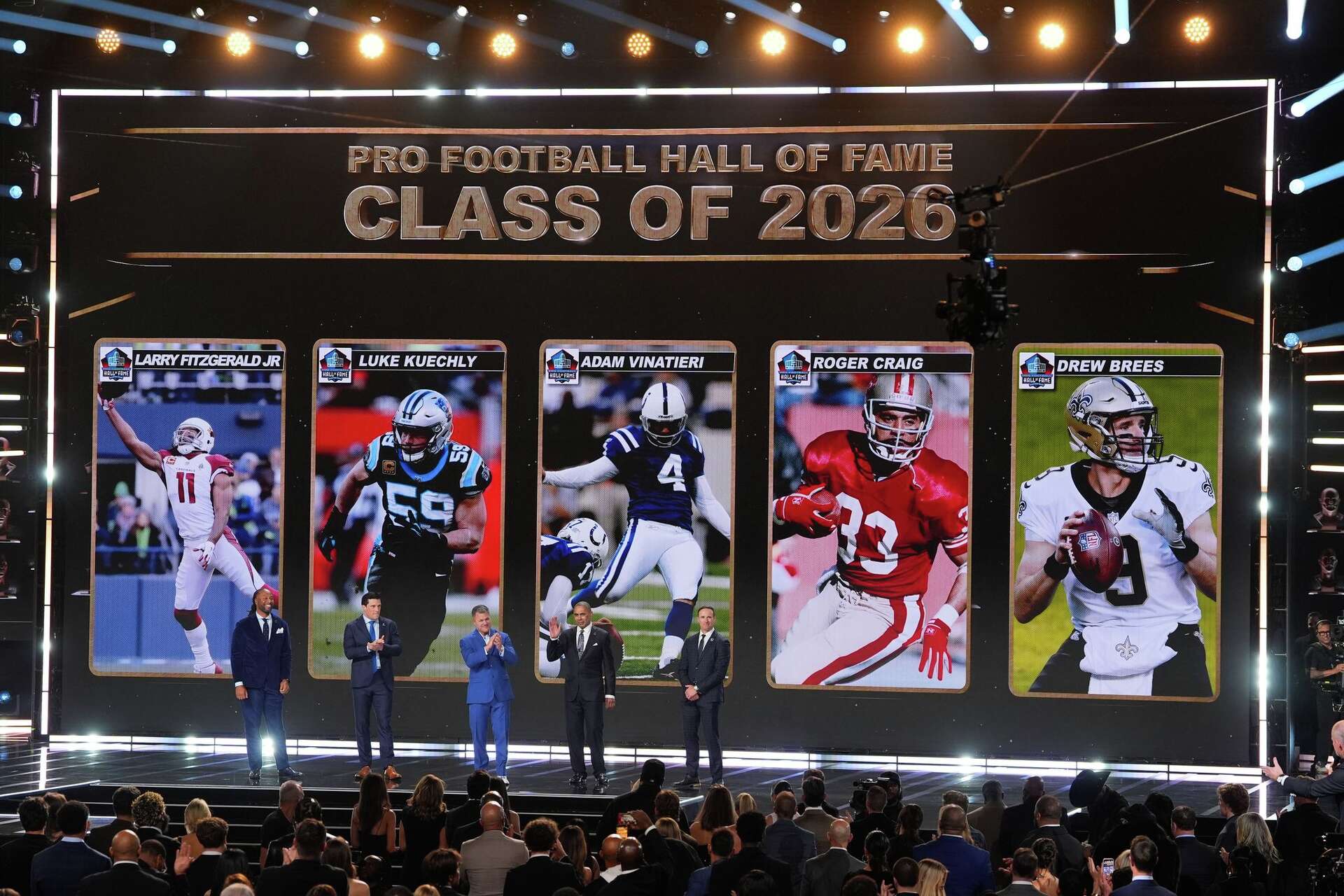
Cutting the committee nearly in half is the most consequential structural decision because every vote now carries more weight.
With 50 voters, an individual selector represents only a small piece of the total. With 25 voting members, each ballot matters twice as much proportionally. That can make consensus easier to see, but it also increases the importance of who is chosen to sit in the room.
The move back to an in-person meeting may matter just as much. Hall of Fame voting is not simply a statistical exercise. Candidates come from different eras, positions and roles, and their cases often depend on context that cannot be captured by a list of awards. A live discussion gives voters more opportunity to challenge assumptions, ask follow-up questions and compare candidates directly.
That could help prevent a situation where a candidate with an obviously historic résumé falls through because voters are solving different ballot problems. It could also make the process more demanding because there is less room for a voter to quietly support a compromise choice without defending it to the rest of the room.
The risk is concentration. A smaller committee can be more coherent, but it can also become more vulnerable to groupthink if the membership lacks enough diversity of perspective. The success of the overhaul will depend as much on the quality of the selectors as the number of selectors.
Ending the Separate Seniors Category Changes Who Competes With Whom
The elimination of the separate seniors category is the change most likely to reshape the actual list of candidates fans see every year.
Previously, players who had been retired long enough to qualify as seniors could be advanced through a separate route. That gave overlooked players from older eras a path that did not require them to fight directly through the modern-era finalist pool.
Beginning with the 2027 class, all player candidates will be considered together. That creates a cleaner system, but it also creates a harder one. A great player who has already waited decades may now be compared directly with recently eligible stars whose careers are fresher in the minds of voters and fans.
The trade-off is philosophical. A separate seniors lane protects historical candidates from being crowded out by the newest famous names. A unified pool makes the ballot easier to understand and avoids artificial boundaries between generations.
The Hall is also ending automatic finalist carryover for players who reach the final seven. Willie Anderson, Marshal Yanda and Terrell Suggs reached that stage in the 2026 process, but their position will not automatically be preserved for the following year. Every class will begin with more of a reset.
That should make the ballot more dynamic. It also means there will be fewer safe spots. A candidate who gets close one year cannot assume the same momentum exists twelve months later.
The 2027 First-Year Class Is Already Loaded
The timing of the new rules is especially interesting because the 2027 class does not look easy.
Rob Gronkowski, Ben Roethlisberger and Adrian Peterson are among the most prominent first-time eligible players. All three have careers that will command immediate attention, and each represents a different kind of Hall of Fame case.
Gronkowski was the defining tight end of his era at his peak, a dominant receiver and blocker who became one of Tom Brady's most important postseason weapons in New England and later won another Super Bowl in Tampa Bay. Roethlisberger quarterbacked Pittsburgh to two championships and finished with one of the strongest statistical résumés of his generation. Peterson won an MVP award as a running back and produced one of the most extraordinary rushing seasons the league has seen.
Under the new unified player pool, those names will be considered alongside holdover candidates and older players who previously might have moved through the seniors process.
That makes 2027 an immediate stress test. If the new system can produce a class that feels coherent from a ballot containing obvious modern stars, long-waiting veterans and a returning Belichick case, confidence in the overhaul will rise quickly.
If the result produces another wave of confusion about categories and priorities, changing the mechanics will have solved very little.
Does the New System Make Belichick a Lock for 2027?

"Lock" is a dangerous word when the previous vote already demonstrated that an overwhelming résumé does not guarantee immediate induction.
But the new structure should remove some of the pressure points that complicated the 2026 ballot. There will be a dedicated coach finalist in the 15-person final group, a smaller committee, outside presenters and a full in-person discussion.
That does not erase whatever individual voters may think about the controversies attached to Belichick's career. Hall of Fame voting has always included judgment about more than raw wins and championships. But the new rules make it harder for the process itself to become the main explanation for leaving him out.
If Belichick is not elected in 2027, the decision will be viewed much more directly as a judgment on Belichick rather than as an accident of ballot design. That is probably healthy. Whether voters say yes or no, the result should reflect a clear football argument.
The Hall of Fame is trying to create a process that produces fewer unintended outcomes. Belichick's case is the perfect first test because there may be no candidate with a wider gap between the obvious strength of the résumé and the controversy created by the previous vote.
For fans, the important part is that the rules are now easier to follow. Thirteen players, one coach and one contributor make the final pool. A smaller group debates them in person. Presentations come from outside the voting committee. No separate seniors lane protects or isolates one era from another.
That will not end arguments about who belongs in Canton. Nothing should. Hall of Fame debates are part of the fun of sports history. The goal is simply to make sure the argument is about the candidates—not about a voting structure nobody can explain.