Dylan Larkin’s Absence Makes Detroit’s Opening Week a Test of Its New Identity
GOATIFYDetroit did not need long for its new season to produce a stress test. Dylan Larkin will miss the Red Wings’ first two games with an upper-body injury, taking the club’s No. 1 center out of the lineup for the opener against the New York Rangers and Sunday’s game against Winnipeg. Coach Todd McLellan has said he hopes Larkin can return for Game 3 against Ottawa.
On its own, a two-game absence is manageable. In Detroit’s current context, it carries more weight. Larkin requested a trade after last season and entered camp without the captaincy he had held for years, yet he remains the team’s most established center and one of its most important offensive drivers. The Red Wings now have to begin a season built around change without the player who has anchored so much of their identity.
Replacing Larkin Is About More Than Filling a Lineup Slot
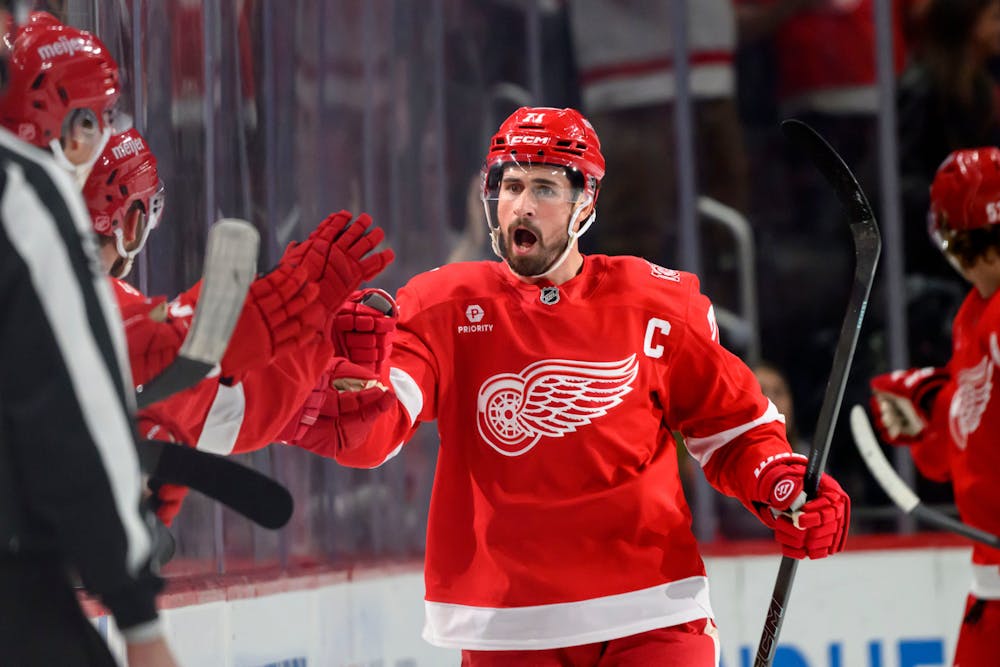
Larkin’s absence starts with the most obvious problem: Detroit loses its No. 1 center. He scored 34 goals and 67 points in 74 games last season, but his value is not confined to the scoring column. He takes difficult matchups, transports the puck through the middle, gives Detroit a trusted option on important faceoffs and connects the team’s best wingers to its transition game. Removing him changes several jobs at once.
That is why the Red Wings should resist treating the first two games as a simple plug-and-play exercise. Moving another center up the lineup can replace a name on the line sheet, but it also weakens the next line. McLellan has to decide where he wants to absorb the loss: concentrate his best remaining offensive players together, or spread them across the lineup so Detroit still has multiple units capable of advancing the puck and creating controlled entries.
The opponents make that decision meaningful. The Rangers can punish loose neutral-zone play, while Winnipeg forces teams to earn offense through structure. Without Larkin, Detroit’s centers have less margin for error on exits and defensive-zone possessions. The goal does not need to be recreating Larkin’s game. It should be simplifying responsibilities: support the puck underneath, avoid low-percentage turnovers and make sure Detroit’s wingers receive possession with speed rather than being asked to manufacture every rush from a standstill.
Raymond and DeBrincat Have to Become the Offensive Engine

The cleanest way to survive a short Larkin absence is for Detroit’s best remaining forwards to drive more of the offense themselves. Lucas Raymond is the obvious place to start. He finished last season with 76 points, including 51 assists, and has become the winger most capable of carrying possession, creating off entries and finding teammates through layers of coverage. Without Larkin, the Red Wings need him to be less of a passenger on a productive line and more of the player who dictates where the puck goes next.
Alex DeBrincat offers the complementary threat. His shot changes how defenders position themselves, particularly on the power play, and Detroit should look for ways to get him touches before the defense is set. That can mean quicker weak-side movement, more one-touch puck circulation and a willingness to attack off the rush rather than defaulting to extended perimeter possession. The absence of a top center can tempt a team to slow down and over-organize. Detroit may be better served by doing the opposite when its skilled wingers have space.
There is also a useful long-term test here. If the Red Wings want to become less dependent on Larkin, Raymond and DeBrincat must be capable of driving stretches of games regardless of who centers them. Two October games will not settle that question, but they can reveal whether Detroit’s offense has enough independent engines. If Raymond can create entries and DeBrincat can turn those possessions into dangerous shots, the Wings can lose some playmaking down the middle without losing their entire attacking identity.

The Power Play Cannot Spend Two Games Searching for Larkin
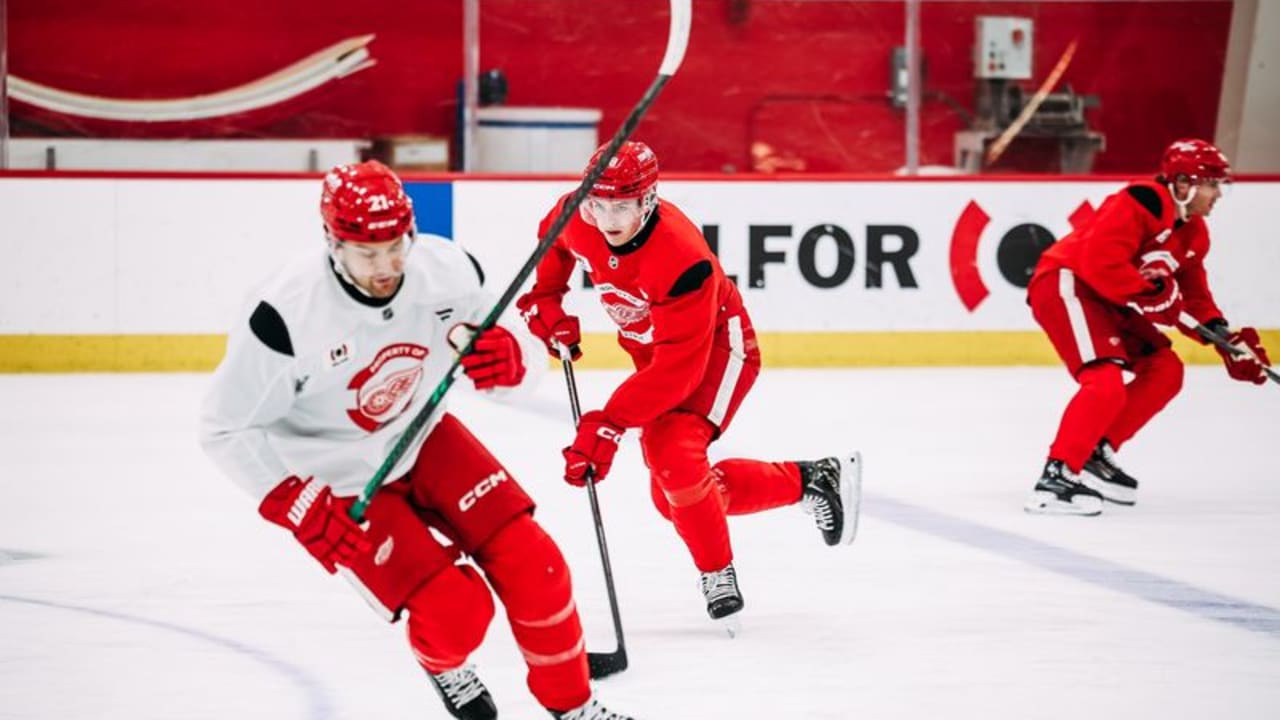
Special teams are where a short-term injury can become disproportionately expensive. Larkin is a familiar puck carrier and shooting threat on Detroit’s power play, and his absence removes both a decision-maker and a player opponents respect as a scorer. The worst response would be to keep the same geometry and simply ask someone else to imitate his reads. Detroit should use the personnel it actually has available.
That means leaning into DeBrincat’s shot, giving Patrick Kane touches in areas where he can manipulate penalty killers and using movement to create the seam that Larkin normally helps open. The power play does not need one replacement quarterback. It needs several players to make faster decisions. A half-second of hesitation matters more with Larkin out because opponents have one fewer established threat to track. Quick puck movement can restore that uncertainty.
The same principle applies at five-on-five. Detroit should not spend the opening weekend trying to prove it can run Larkin’s offense without Larkin. McLellan can shorten the playbook, emphasize repeatable entries and let his most skilled players create after the first advantage is established. There will be ugly possessions; that is normal when a top center is missing. What matters is avoiding the sequence where one failed entry becomes three failed entries because everyone starts forcing the same unavailable solution.
If Detroit’s power play stays functional, it can buy breathing room for a lineup that may be less dangerous at even strength. In a two-game window, one extra special-teams goal can be the difference between an acceptable start and immediate pressure.

Detroit Leadership Gets an Immediate Test
Larkin’s injury arrives while Detroit is already changing how leadership is distributed. He is no longer captain, but removing the letter does not remove his influence or his importance as the team’s most established center. Opening week therefore becomes a practical test of shared responsibility.
Raymond, DeBrincat and the veteran core have to own difficult moments on the ice: a bad period, a failed power play or a goal against after a turnover. Shared leadership cannot only mean more voices in the room; it has to show up in how quickly the group settles itself when its usual reference point is unavailable.
There is a positive side to the timing. Detroit only needs to prove that its structure is broader than one player. Organized hockey, disciplined puck management and a balanced offensive burden would reinforce the idea that the Red Wings are becoming more resilient. Larkin’s expected return would then strengthen an already functional group rather than rescue one that spent two games waiting for him.
If Larkin returns against Ottawa, Detroit may look back on this as a brief opening-week inconvenience. But the first two games still matter because they force the Red Wings to confront questions they would eventually have faced anyway. Who drives play when Larkin is unavailable? Who sets the emotional tone? Can the offense create enough without leaning on one familiar center?
Detroit has spent years trying to build a roster deep enough that one absence does not change everything. The Rangers and Jets games offer an immediate chance to prove it. Larkin’s return will make the team better, but the most encouraging outcome would be a Red Wings group that shows it can function before he gets back.