

Foster Drops Navarrete Twice — Three Belts Won, One Left to Chase
GOATIFYO'Shaquie Foster left San Antonio with three of the four major world titles at 130 pounds, but the image that defined his night came before anyone raised his hand. In the final round against Emanuel Navarrete, the Texan put the Mexican champion on the canvas twice. It was a startling finish to a fight he had already controlled with timing, footwork and the kind of composure that makes an aggressive opponent look a step behind.
Foster won a unanimous decision at Frost Bank Center on Saturday, October 24, with scorecards of 118–108, 118–108 and 115–111. He retained the WBC super featherweight championship and took Navarrete's IBF and WBO belts, adding another landmark to a career built through setbacks and reinvention. The immediate question is no longer whether Foster belongs among the division's best. It is whether the route to undisputed status can stay clear long enough for him to complete it.
Foster Beat Navarrete's Pressure Before He Beat Him to the Canvas
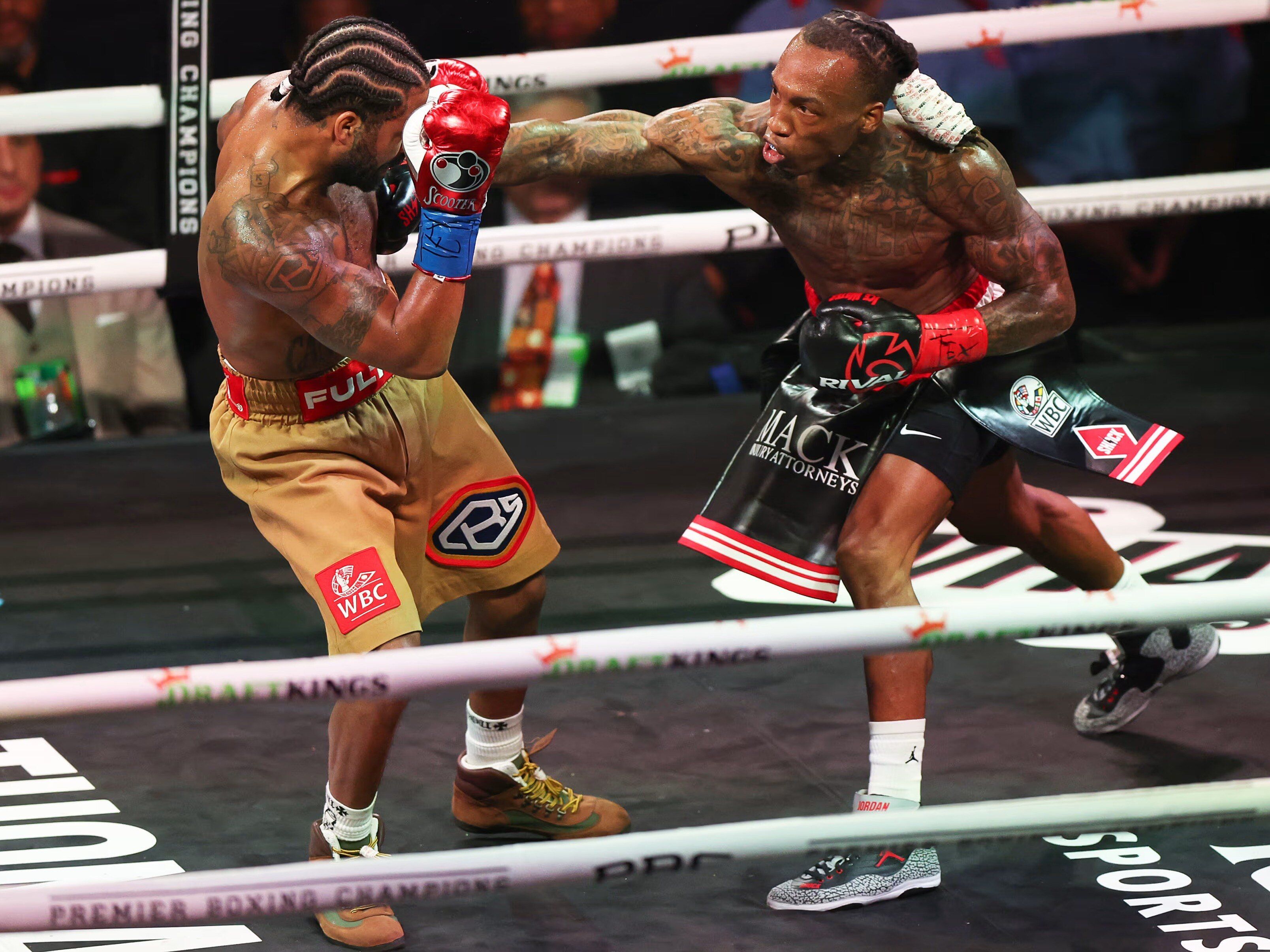
Navarrete's route to victory looked obvious on paper: crowd Foster, throw from uncomfortable angles, make the exchanges untidy and force the sharper technician to defend more often than he wanted. The three-division champion had built his reputation on pressure and an unusually high tolerance for chaos. He entered with 33 stoppage wins, while Foster had only 12 knockouts. That contrast encouraged the idea that the Mexican's volume and power might eventually overwhelm the American's precision.
Instead, Foster kept changing the terms of engagement. He moved off the line after punching, made Navarrete reset his feet and used straight shots to interrupt attacks before they gathered momentum. When the challenger tried to close the gap, Foster could meet him inside rather than simply retreat. That versatility mattered: a boxer who only runs from pressure can eventually be trapped, but a boxer who can counter and hold his ground makes the aggressor question every step forward.
Navarrete had stretches of success, especially when he got Foster near the ropes and committed to the body. Yet those moments rarely became sustained sequences. The more often Navarrete reached for a big shot, the more opportunities Foster found to answer cleanly. The result was not a cautious survival exercise. It was an assertive performance in which defense created offense.
The accompanying photograph shows Foster against Stephen Fulton in December 2025, not Saturday's bout. It illustrates a technical habit that carried into this unification: staying balanced enough to fire a meaningful counter rather than merely avoiding the first punch. Against Navarrete, that habit gradually became the fight's defining pattern.
The stakes become clearer when set against Navarrete's recent form. He had stopped Oscar Valdez in their December 2024 rematch and added the IBF belt by breaking down Eduardo Nuñez in February 2026. This was not a faded veteran arriving without momentum. It was a proven champion coming off another high-level success, with enough power and awkward rhythm to unsettle almost anyone at 130 pounds. Foster's ability to deny him long combinations was therefore more revealing than the final score alone: it neutralized the exact qualities that had made Navarrete a champion in three weight classes.

Two Twelfth-Round Knockdowns Turned Control Into a Statement
There was a brief opening for a different ending. Navarrete landed a hard uppercut late in the eleventh, a reminder that his power could change a contest even after long stretches of frustration. A fighter protecting a comfortable lead might have responded by spending the last three minutes moving and tying up exchanges. Foster did the opposite. He pressed the advantage and looked for a conclusive finish.
In round twelve, a right hand sent Navarrete down. He beat the count and continued, but another right soon put him on the floor again. The Mexican survived to hear the final bell, and the bout went to the cards. The two knockdowns did not turn a losing performance into a winning one for Foster; they underlined the control he had already established and removed much of the suspense from the official announcement.
The scorecards — two at 118–108 and one at 115–111 — tell the same broad story despite the difference in margins. All three judges had Foster ahead, and none saw the fight as a last-minute escape. Navarrete's persistence deserved respect, particularly after the damage of the final round, but his trademark willingness to keep advancing repeatedly ran into a cleaner and better-timed answer.
There is an important distinction between scoring knockdowns and chasing a knockout at any cost. Foster did not abandon the plan that had worked for eleven rounds. He recognized that Navarrete's forward movement was becoming more predictable, then exploited the same opening twice. The finishing sequence showed why a technically sophisticated fighter can also be dangerous when an opponent is forced to take risks.
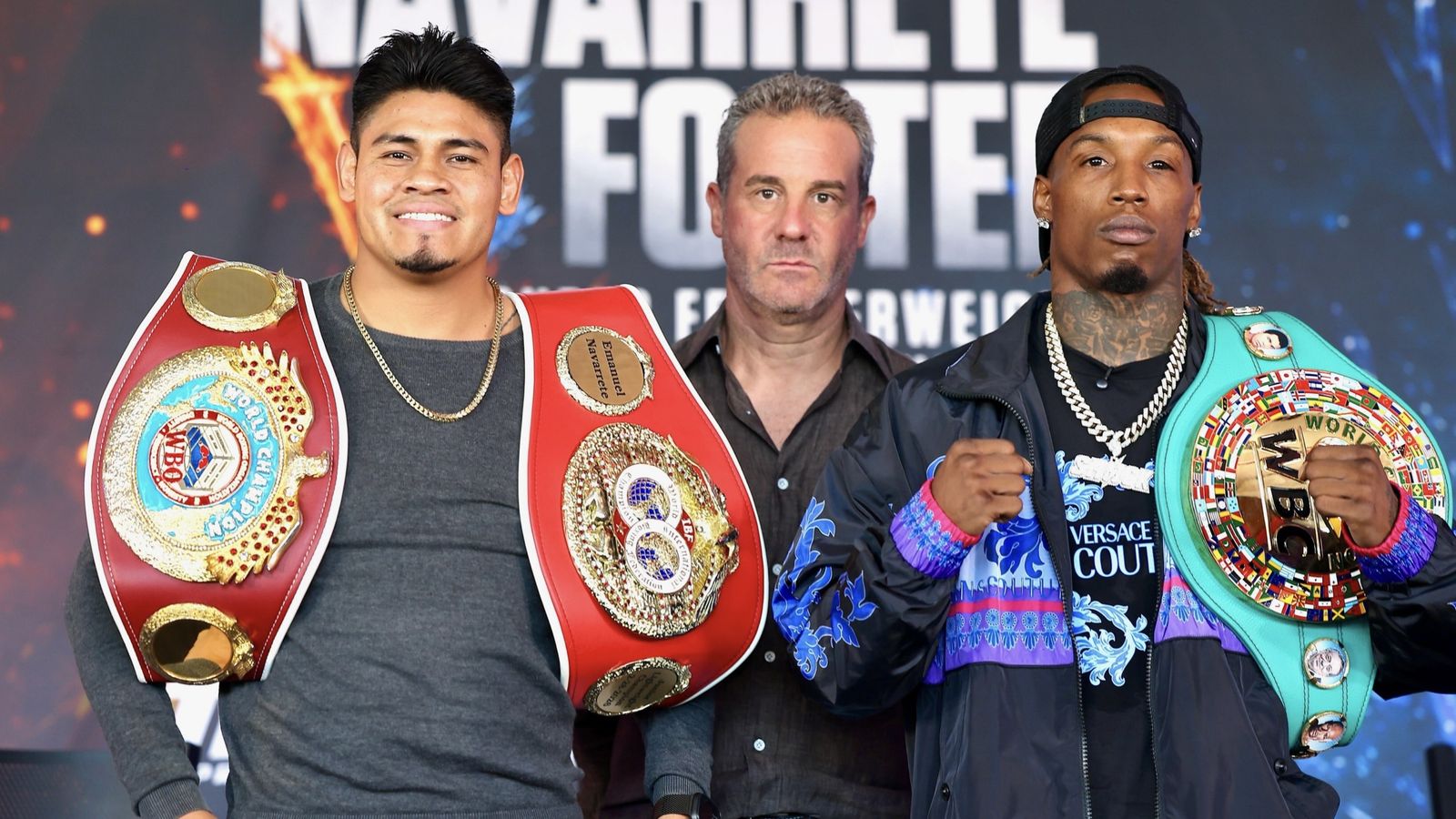
Before the fight, Navarrete carried the WBO and IBF championships into the ring; the accompanying 2026 media photograph shows those belts in his possession. By the end of the night, both had changed hands. That transfer, not just the two knockdowns, makes the result one of the year's most consequential bouts at junior lightweight.
Navarrete's late uppercut also prevents the result from being flattened into a story of effortless dominance. Foster had to absorb a dangerous moment at the end of the eleventh and still make sound decisions under pressure. The final-round knockdowns were not evidence that Navarrete had never been competitive; they showed that Foster retained enough awareness and physical sharpness to seize an opening after eleven taxing rounds. The difference between surviving a champion's best punch and immediately imposing your own threat is often what separates a convincing unification win from a narrow decision.

A Long Climb Made This Three-Belt Night More Than an Upset
Foster's current position is easier to appreciate when the earlier chapters are kept in view. He turned professional in 2012 and endured losses that could have left him outside the elite championship picture. Working with trainer Bobby Benton helped him build a more consistent identity. Rather than rely on a single spectacular weapon, he developed the control of distance, adaptability and patience that later defined his best performances.
The breakthrough arrived in February 2023 when Foster outpointed Rey Vargas to win the vacant WBC super featherweight title. His first defense against Eduardo Hernandez ended dramatically, with a stoppage in the final minute of the twelfth round. That finish showed he could respond under extreme pressure, even if the wider audience still tended to see him primarily as a defensive specialist.
Then came a setback against Robson Conceicao in July 2024. Foster lost the championship on a disputed split decision, but reclaimed it in the rematch that November. The episode mattered because it demanded the sort of psychological reset champions often discuss but rarely demonstrate so clearly: accept an unfavorable result, adjust and return without losing the technical foundation.
His subsequent victories over Stephen Fulton in December 2025 and Raymond Ford in May 2026 were important evidence that the improvement was sustainable. Fulton tested his ability to control another accomplished boxer. Ford offered a different combination of speed and ambition. By the time Navarrete arrived, Foster was no longer a champion relying on the narrowest of margins against difficult opponents; he had a sequence of high-level wins that explained why he believed he could dictate a unification fight.
That is why the three belts feel like a career milestone rather than a single surprising result. Foster did not suddenly discover a new style in San Antonio. He put several years of refinement on display against the opponent best equipped to challenge it. The 2026 photograph alongside this section comes from the Ford fight and illustrates the form he carried into Saturday.
The win also changes how Foster's record should be read. Twelve knockouts in twenty-six victories can suggest a fighter who wins almost exclusively through finesse. Yet stoppage totals do not capture the damage caused by repeated clean counters, nor the pressure a boxer creates when opponents cannot attack safely. His late finish against Hernandez and the two knockdowns of Navarrete are reminders that Foster can increase the stakes without turning reckless. The evolution is particularly significant because his championship defenses have often been decided on cards close enough to invite controversy.
The Fourth Belt Is Close — but Cacace, Ball and Suarez Complicate the Route
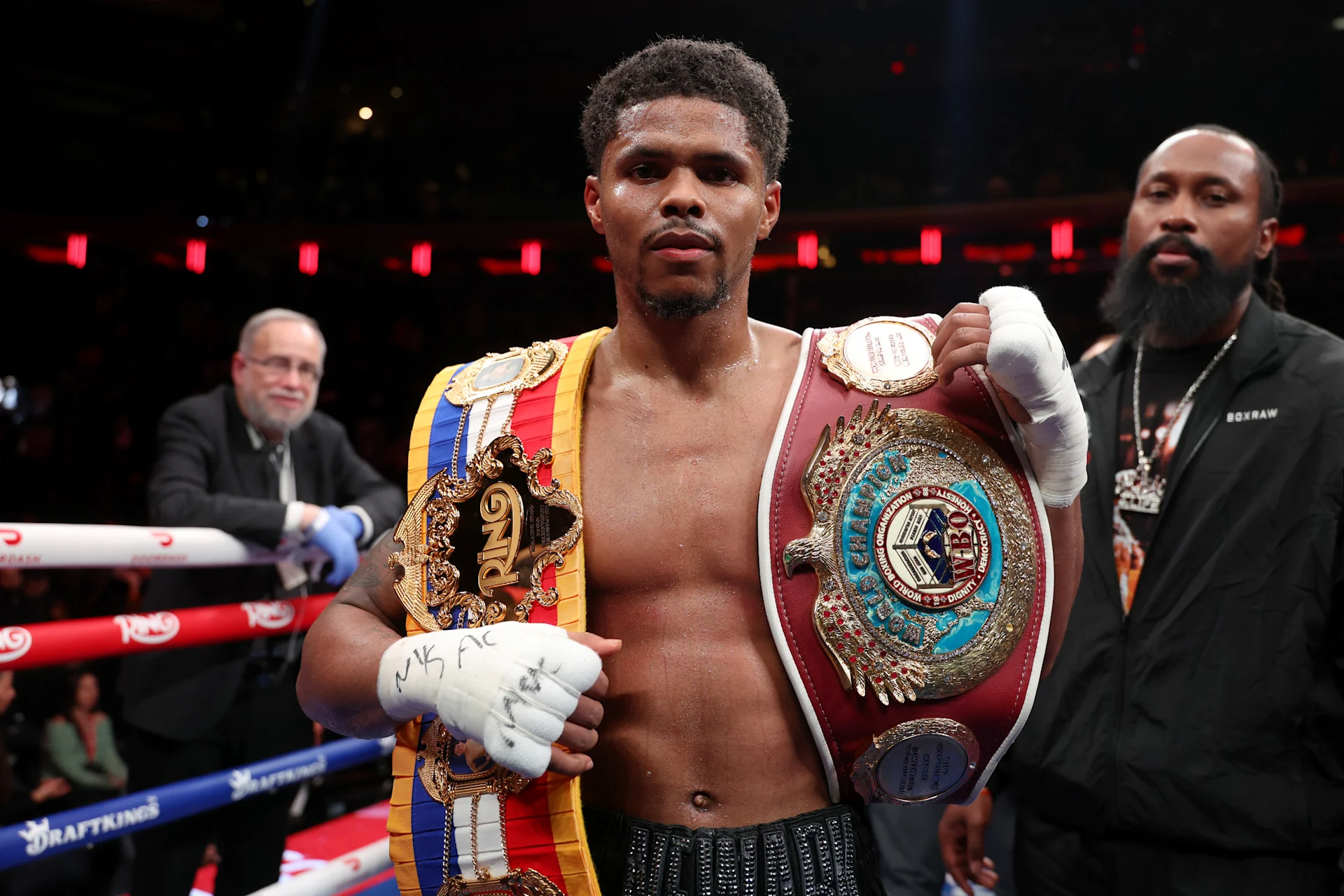
Foster now holds the WBC, WBO and IBF belts at 130 pounds. The missing piece is the WBA championship, currently held by Anthony Cacace, who is scheduled to defend against Nick Ball in December. A victory over that fight's winner would offer Foster the chance to become the division's first undisputed champion of the four-belt era. It is an unusually clear sporting objective, and he made it his priority immediately after beating Navarrete.
Clear does not mean simple. Championship organizations can impose mandatory defenses even when a unification fight is the bout most fans want. Charly Suarez is a potential obligation in the WBO picture, and the timing of that requirement could complicate negotiations. A titleholder with three belts has considerable bargaining power, but also three separate sets of rules and contenders to satisfy. Foster's next move may depend as much on calendars and sanctioning decisions as on the opponent he prefers.
Cacace and Ball also have their own fight to win. It would be premature to treat either as a guaranteed opponent, or to assume a four-belt contest can be arranged immediately after December. Foster's best case is a clean winner, compatible schedules and an agreement among the relevant parties. A mandatory defense or injury could push the undisputed opportunity further into 2027.
Shakur Stevenson remains the more glamorous longer-term possibility. The unbeaten American has moved to 140 pounds, where he has added another championship to his résumé. A Foster–Stevenson meeting would therefore involve questions about weight, timing and which belts each man would bring, not merely a verbal challenge. Stevenson praised Foster's performance and indicated that he would welcome the contest after Foster's undisputed pursuit.
There is a sensible order to the ambition. Secure the last belt if the route is available, then evaluate a move or major crossover bout with Stevenson. Jumping immediately to the bigger name could create a lucrative event, but it might also leave the rare opportunity for undisputed supremacy unfinished. Foster has spent too long building toward this position to ignore that trade-off.
For Navarrete, the defeat leaves a different set of questions. He remains an accomplished three-division champion, but another immediate title opportunity would require a convincing argument after such a wide result. He could regroup at 130 pounds, reassess his tactical approach or consider whether a different matchup better suits his strengths. Foster, meanwhile, cannot control the sanctioning calendar, the December result or Stevenson's plans. He can control his preparation and the clarity of his next demand: the final belt, if the opportunity can be made without unnecessary delay.

Saturday's verdict settled one argument and opened another. Foster was the more accurate, adaptable fighter against Navarrete, and two late knockdowns gave a commanding points victory a memorable final act. His record now stands at 26–3 with 12 knockouts; Navarrete moves to 40–3–1 with 33 stoppage wins. The numbers matter, but the tactical gulf in San Antonio mattered more.
Three belts are already his. The fourth depends on the Cacace–Ball outcome, possible mandatory obligations and the willingness of boxing's decision-makers to make the right fight. Foster has done his part in the ring. The next test is whether the division can deliver a path worthy of his performance.

















