

Osaka Led 2–0. Then an 18-Year-Old Wild Card Stunned Tokyo.
GOATIFYNaomi Osaka returned to Tokyo with the home crowd behind her and a first-round win over Jasmine Paolini in her pocket. Two games into Thursday's second-round match, the script still looked familiar. Osaka led 2-0 against 18-year-old wild card Mia Pohankova, a Slovakian teenager ranked No. 144 in the world. Ninety-five minutes after the first ball, it was Pohankova celebrating a 6-3, 7-5 upset and a place in the Pan Pacific Open quarterfinals.
The result was not simply a famous name losing to an outsider. Pohankova recovered from an early break, handled the tightest passages of the second set and struck at the precise moment Osaka could least afford a lapse. For the former world No. 1, the defeat ended another tournament before the last eight. For the teenager, it was her first victory over a Top 20 opponent and the clearest sign yet that her junior success is becoming a senior-level threat.
Osaka's Tokyo Homecoming Turned Into a 95-Minute Shock
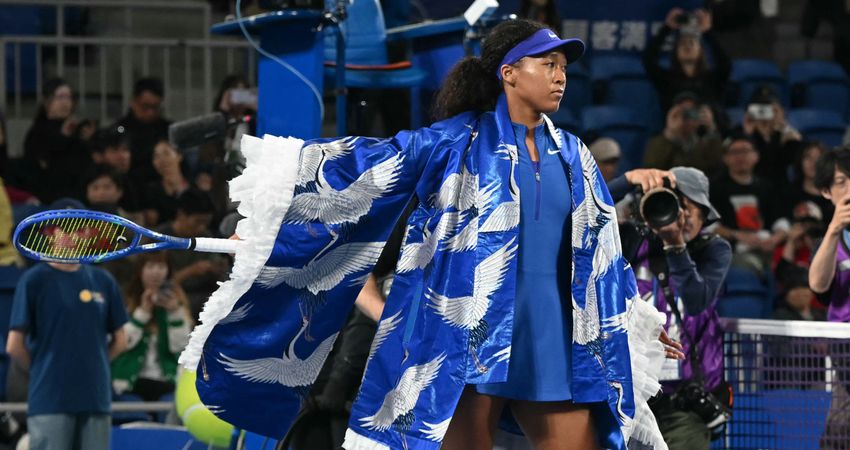
The first two games suggested Osaka had brought her sharp opening-round form into the next match. She held serve and broke Pohankova immediately, moving 2-0 ahead in front of an audience that had come to see one of Japan's biggest sporting stars extend her run. The teenager had never beaten a player ranked inside the Top 20. An early deficit against a four-time Grand Slam champion could easily have turned a promising wild-card appearance into a lesson in damage limitation.
Instead, Pohankova reversed the pressure. She recovered the break, began to find more reliable depth in the exchanges and took six of the next seven games to claim the opening set 6-3. That swing matters more than the ranking gap alone. Osaka did not lose a single isolated tiebreak or fall victim to a handful of spectacular shots; her opponent changed the direction of a set that had appeared to be moving away from her.
The second set became a different examination. Neither player could afford to hand over an easy service game. Pohankova faced break points in two separate games and survived both situations. Saving those chances was especially important because a single break would have given Osaka a route back into the contest and potentially forced a deciding set. The teenager stayed composed enough to keep the score level deep into the set rather than chasing an early, reckless winner.
At 5-5, the tension was no longer theoretical. Osaka was still one good stretch from extending the match, while Pohankova had to maintain her nerve with a career-defining win in sight. The Slovak held, then broke Osaka in the 12th game to close it out 7-5. The match lasted one hour and 35 minutes. The decisive point came when Osaka's forehand missed, turning a difficult final service game into the biggest victory of Pohankova's career.
The upset illustrates how quickly a match can change when the supposedly less experienced player refuses to behave like an underdog. Pohankova did not need to dominate every rally. She needed to recover from the first setback, defend her serve under pressure and take the opening that appeared at the finish. Osaka had the reputation, the crowd and the early lead; Pohankova delivered the more complete response when the score became uncomfortable.

From Wimbledon Junior Champion to Osaka's Biggest Problem
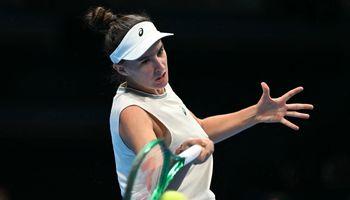
The name Mia Pohankova will be unfamiliar to many casual tennis viewers, but the Tokyo result did not come out of nowhere. She won the Wimbledon girls' singles championship in 2025, an achievement that announced her potential without guaranteeing the much harder transition to the senior tour. Junior champions can possess excellent technique and still need years to adapt to the pace, physical demands and week-to-week consistency of professional competition.
Pohankova's rise over the past twelve months is unusually steep. She was ranked No. 659 around this point in 2025 and arrived at this week's Tokyo event at a career-high No. 144. That is a gain of more than 500 ranking positions, achieved through repeated results rather than one lucky draw. Early in 2026 she captured an ITF W75 title, reached an ITF W100 final in April and later made consecutive WTA 125 semifinals in September. Those lower-tier events matter because they require a player to win several matches in succession against adults with different styles and experience levels.
October then provided a higher-profile test. At the Wuhan WTA 1000, Pohankova beat Anna Bondar and Wang Xiyu before losing to Maria Sakkari in the last 16. The results showed she could compete above the developmental circuit and win against established Top 100 opposition. Her ranking jump into the mid-140s followed that run. Tokyo was therefore not a sudden leap from junior tennis straight into a match with Osaka; it was the next rung on a ladder she had been climbing throughout the season.
She opened her Tokyo campaign with a 6-1, 6-4 victory over fellow teenager Tereza Valentova. The contrast with Thursday's assignment was considerable. Against Osaka she faced a former world No. 1, a home crowd and a player whose attacking baseline game can overwhelm an inexperienced opponent in minutes. Pohankova's ability to absorb an early 2-0 deficit and continue playing her patterns suggested she understood the occasion without becoming trapped by it.
There is still a long distance between a first Top 20 win and the sustained results required to join the sport's elite. Young players can experience sharp fluctuations in form, and opponents will study their tendencies more closely after a breakthrough. But this victory changes the questions around Pohankova. She is no longer merely a former junior champion collecting experience. She has beaten a four-time major winner on that player's home turf, in straight sets, and with a late-set finish that demanded real competitive nerve.
The Osaka Warning: A Brilliant Opener, Then Another Early Exit
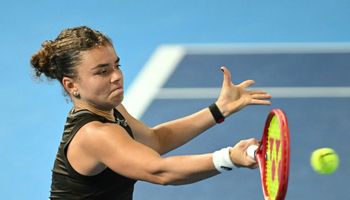
Osaka's defeat stings because the first round had offered genuine reasons for optimism. Against Jasmine Paolini on Tuesday, she won 6-3, 7-6(4), surviving three set points in the second set and finding enough clean attacking tennis to escape without playing a decider. That was a demanding opening assignment against a proven major finalist, and Osaka responded with the power and shot-making that have made her one of the sport's most recognizable champions.
Her Tokyo return also carried a personal dimension. She had not contested a full Pan Pacific Open campaign in the Japanese capital since 2018, when she reached the final. She won the tournament in 2019 when it was staged in Osaka, her birthplace. In 2022, her appearance ended almost immediately: an opponent retired after one game and Osaka subsequently withdrew before her next match because of illness. This year's trip was therefore an opportunity to compete properly in front of home fans, rather than simply make a ceremonial return.
Osaka leaned into the occasion. She entered the court for her opening match in a blue-and-white cape embroidered with cranes, created with Tokyo designer Hana Yagi. The presentation was unmistakably Japanese, but the tennis beneath it mattered more. Against Paolini, Osaka produced a result that suggested she could make the week about performance rather than spectacle. The second-round loss changed that story almost overnight.
There is a wider pattern worth acknowledging without exaggerating it. The Tokyo defeat marked Osaka's third consecutive tournament without reaching the quarterfinals. A player of her experience is judged by more than the ability to produce one outstanding match. She has to repeat that level against opponents with different strengths, manage changes of momentum and finish tight sets when a lower-ranked challenger refuses to go away. The Pohankova match exposed the gap between a good opening performance and a sustained run.
That does not mean Osaka has forgotten how to win or that one result can define her future. She remains a four-time Grand Slam champion, and her victory over Paolini was real evidence of her level. The sharper criticism is about consistency. She began Thursday in command, then lost control of the first set and could not force the second into a tiebreak. Those are precisely the moments an experienced favorite wants to own. Osaka's homecoming offered both a reminder of her talent and another warning that her week-to-week results are not yet matching the scale of her reputation.

Parks Is Next — and Pohankova's Breakthrough Gets a New Test
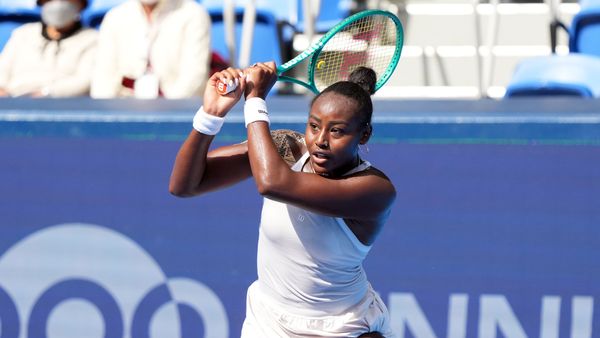
The reward for beating Osaka is not a day off or a trophy presentation. Pohankova moves into the Tokyo quarterfinals against American Alycia Parks, who defeated Kimberly Birrell 6-3, 6-1 to book her own place in the last eight. As of Thursday's result, that quarterfinal had not been played. The next challenge is to back up an emotional upset with another disciplined performance against an opponent who will not be distracted by the same home-crowd storyline.
Parks offers a different problem from Osaka. Her attacking instincts and willingness to shorten points can make a match swing quickly, especially when she serves well. Pohankova will need to keep her returns deep enough to prevent immediate first-strike opportunities and be selective about when to change direction in rallies. She cannot assume the pattern that worked against Osaka will automatically carry over. An upset is an achievement; building a tournament run requires adapting to the next matchup.
The teenager has already shown she can handle consecutive challenges. Her first-round victory over Valentova was comfortable on the scoreboard, but the second-round match demanded recovery from an early deficit and composure under break-point pressure. The quarterfinal will ask whether she can reset mentally after beating a household name. The excitement surrounding the result is understandable, yet the most useful response is to treat it as one completed match rather than a promise about what comes next.
Tokyo's wider draw has also changed rapidly. World No. 1 Elena Rybakina beat Yulia Putintseva 6-2, 6-3 to secure the year-end top ranking, while Leylah Fernandez advanced past Elise Mertens 6-2, 7-6. Those results underline the range of established talent still competing for the WTA 500 title. Pohankova has not suddenly become the favorite simply because she eliminated Osaka. Her route remains difficult, and the field contains players with far more experience in the later rounds of big tournaments.
What the victory has done is make the quarterfinal a meaningful test rather than an anonymous appearance. Pohankova arrived in Tokyo with a wild card and a ranking outside the Top 100. She now owns a straight-sets win over a former world No. 1 and a chance to reach her first WTA semifinal. Parks stands between her and that milestone. Whether the run ends there or continues, Thursday has already established that the 18-year-old belongs in conversations about the tour's emerging players.

Tokyo was supposed to be another chapter in Naomi Osaka's homecoming. Instead, it became Mia Pohankova's introduction to a much larger audience. The teenager overturned an early break, survived second-set pressure and closed out a 6-3, 7-5 victory without needing a deciding set. That is an upset built on decisions and nerve, not just a surprising name on the scoreboard.
Osaka leaves with a strong win over Paolini but another missed quarterfinal. Pohankova moves on to face Alycia Parks, carrying the confidence of a first Top 20 victory and the responsibility of proving it can be followed by another. Her ranking will change over time; the significance of this result is immediate.
Shop GOATIFY tennis products from the Tennis-filtered collection scope.

















