

Quinn Ended Buffalo's Slide. Washington's Goalie Problem Got Worse.
GOATIFYOne lousy stretch can turn an ordinary November hockey game into a referendum on an entire team. Buffalo arrived in Washington having gone five games without a victory. The Capitals entered with their own problems, and on Thursday, November 19, the Sabres exposed them almost immediately. Jack Quinn opened the scoring, Rasmus Dahlin supplied a spectacular individual effort, and the visitors had four goals before the first intermission. By the final horn Buffalo had won 6-3, while Washington had reached four consecutive defeats.
The score makes it look like the Sabres simply found their scoring touch. The more interesting story is how quickly they forced Washington to abandon its plan. Logan Thompson conceded three goals on five shots and was replaced after 10 minutes and 11 seconds. That is an alarming line for any starting goaltender, but merely blaming Thompson would overlook the rush opportunities, broken coverage and mistakes that put him under pressure. Washington was chasing the puck and the score before the game had settled into its normal rhythms.
There was an awkward contrast as the Capitals tried to recover: Alex Ovechkin passed Nicklas Backstrom for the franchise assists record with his 763rd, yet the night belonged to Buffalo's response after a difficult week. The result was not a complete cure for the Sabres, nor was it proof that Washington cannot recover. It did, however, provide an unusually clear snapshot of two teams responding differently to the same kind of early-season pressure.
Quinn and Dahlin struck before Washington could settle

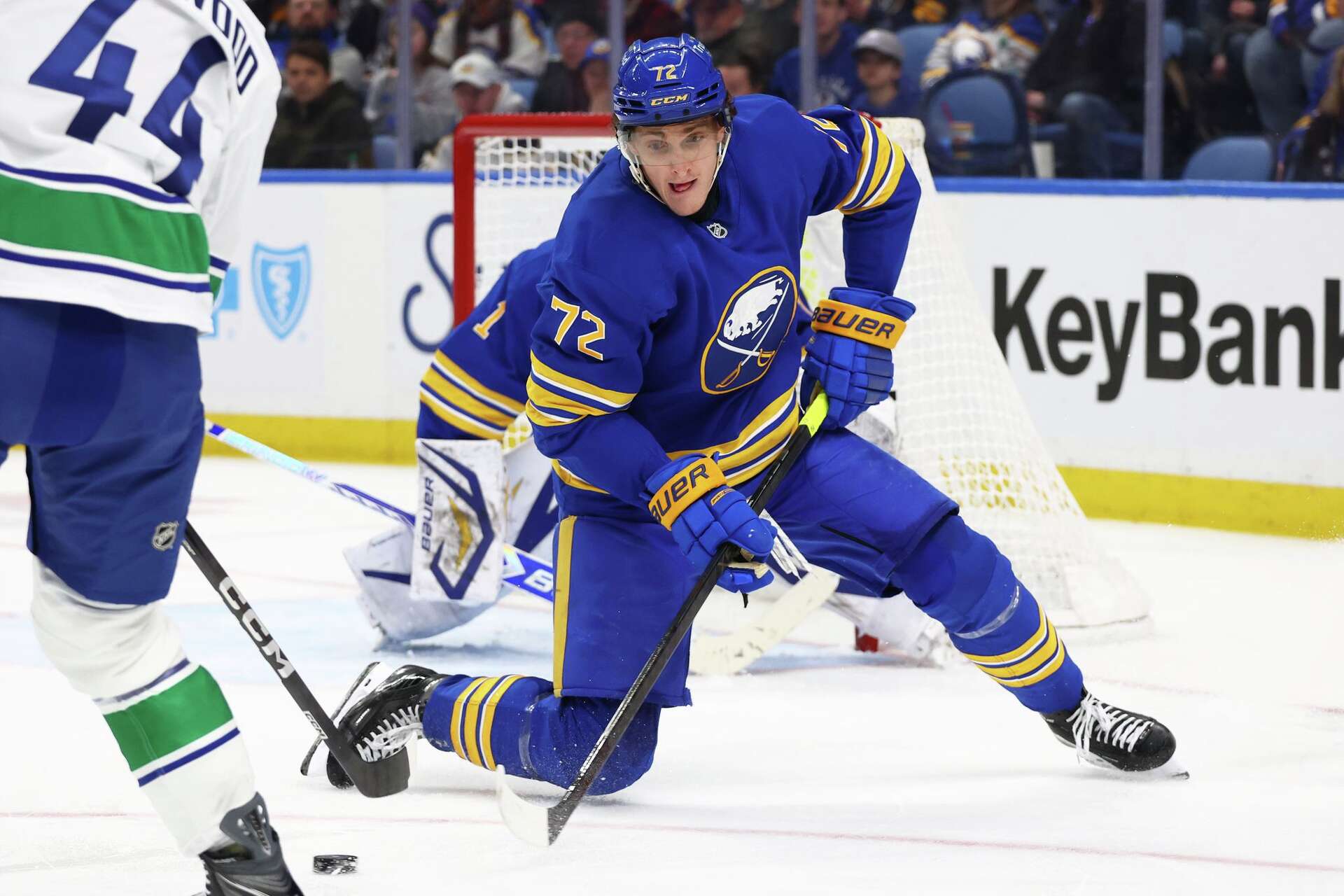
Buffalo's opening goal was not a fluke bounce or an isolated power-play rebound. At 5:25, Noah Ostlund advanced the puck to Jack Quinn on the rush. Quinn shifted around a defender and fired from the right circle to beat Logan Thompson. That sequence is important because it established a problem Washington would keep encountering: Buffalo did not need prolonged possession to move from an entry to a dangerous chance. A little space was enough.
Quinn was only getting started. His two goals and an assist would make him the evening's most productive Buffalo forward, but the first goal carried disproportionate weight. Teams struggling to win can begin protecting an early lead too soon. Instead, the Sabres treated it as permission to keep attacking. Their defensive captain made that approach unmistakable less than five minutes later.
At 9:46, Rasmus Dahlin carried the puck end to end, cut through Washington's defensive shape, went around the net and completed a wraparound. It was the kind of goal that looks like a highlight in isolation but also contains a tactical warning. The Capitals failed to steer an elite puck carrier away from the middle of the ice, then lost track of his movement behind the goal line. Whether the rush is remembered as individual brilliance or a collective defensive lapse depends on which bench was watching.
The crucial follow-up came just 25 seconds later. Sam Carrick worked from behind the net, the puck deflected off Dylan Strome and Beck Malenstyn lifted the loose chance home. That made it 3-0 at 10:11 and ended Logan Thompson's appearance after five shots against. The Sabres had scored in three different ways: a controlled rush finish, a defenseman creating his own lane, and a forward reacting first to a broken play around the crease. Washington had no single adjustment that would solve all three.
Alex Tuch answered quickly for the Capitals, converting after an interception, but his goal at 10:54 did not halt Buffalo's momentum. Zach Benson found a loose puck in front and made it 4-1 at 15:55. It was the Sabres' highest-scoring opening period of the season, a statistic that matters more than the novelty of the number. Buffalo had recently struggled to add on after scoring first. This time it gave itself enough of a cushion to withstand an inevitable push.
GOATIFY
GOATIFY Hockey
Quinn and Dahlin gave Buffalo a fresh start. Explore hockey gear for fans who love the sport's fearless moments.


That cushion also changed the demands on both coaches. Buffalo could make choices with a three-goal margin rather than protect a fragile one-goal lead. Washington was forced to search for offense without exposing itself further to counterattacks. Four first-period goals do not guarantee a clean performance over 60 minutes, but they altered the structure of the remaining game. The Sabres were finally the team setting the terms, not reacting to them.
Some of Buffalo's finishing will not repeat every night. Three goals on the first five shots against a starter is exceptional conversion, not a sustainable strategy. What the Sabres can try to reproduce is the quality of their decisions before the shots: attacking with speed, joining the rush from defense and pursuing second chances around the goal. Their first-period dominance was built on a variety of threats, which is more encouraging than a lucky shooting percentage alone.
Tage Thompson made the lead feel permanent — and exposed Washington's spacing
After an opening period like that, there are two kinds of response. The trailing side can simplify, establish clean breakouts and force the opponent to defend longer shifts. Or it can become impatient, trying to erase three goals with one ambitious pass. Washington needed a patient version of itself. The early evidence suggested the Capitals were still searching for control, even after Charlie Lindgren took over in goal.
Buffalo made the gap larger with only nine seconds left in the second period. Tage Thompson converted a power-play chance from the left circle at 19:51, with Jack Quinn providing the feed and Josh Doan also credited on the play. The scoreboard moved to 5-1, and the timing was especially cruel for the Capitals. A goal just before an intermission can erase whatever progress a team believes it made after a disastrous first period.
The play also demonstrated why Washington's problem could not be solved by a goalie substitution. Swapping Logan Thompson for Lindgren was understandable after three quick goals, but the skaters in front of them still had to limit access to dangerous spaces. A power-play shooter with Tage Thompson's release should not be granted time to set his feet and pick a target. The Sabres were able to move the puck to the finish they wanted instead of settling for a hopeful point shot.
Washington's wider defensive trend makes the result more worrying. The Capitals had allowed at least five goals in four consecutive games and in six of their previous eight. Those numbers describe more than one bad ten-minute spell. They suggest recurring difficulty protecting the most vulnerable parts of the ice, managing transitions and recovering after one mistake becomes two. A starter can be brilliant and still be overwhelmed by repeated breakdowns; he can also have a poor night of his own. Washington must evaluate both possibilities without confusing them.
Thompson's three goals against on five shots were undeniably damaging, and it was the second time in six starts that he had been removed early. Yet the sequence leading to those goals demands equal attention. A defenseman going coast to coast and wrapping the puck around the net does not happen solely because the goaltender is guessing. A loose puck arriving to Malenstyn in the slot is a coverage and reaction test for everyone on the ice. Those mistakes will punish Lindgren too if they remain uncorrected.
Another uncomfortable detail is that the Capitals were not entirely lifeless. Alex Tuch's goal was a reminder that they had the talent to capitalize on a turnover, while Ryan Leonard's later power-play finish showed that dangerous chances were available. But scoring one goal here and another later is not the same thing as sustaining pressure for long enough to change an opponent's decision-making. Buffalo could absorb those moments without completely abandoning its approach.
GOATIFY
GOATIFY Hockey
From fast puck movement to power-play finishing, celebrate the game in GOATIFY Hockey apparel.
Washington's correction cannot be simply to start another goalie on Saturday. Better defensive layers through the neutral zone, earlier communication on switches and a clearer response to sustained pressure would all give whoever starts a fairer game. For Buffalo, the lesson is nearly the opposite: a quick start is valuable, but the second-period goal proved that finding the next high-quality chance matters more than protecting the first lead. The Sabres had five before Washington found a second.
Ovechkin's 763rd assist deserved a better backdrop

The loudest statistic from Washington's evening was not necessarily on the scoreboard. With an assist on Boone Jenner's third-period goal, Alex Ovechkin reached 763 for his Capitals career, moving past longtime teammate Nicklas Backstrom for the franchise lead. He already occupied the leading positions in Washington's goals and points records. Now he stands alone in all three primary scoring categories for the organization.
The assist itself was not a theatrical cross-ice pass for an empty net. Ovechkin moved the puck to Jenner before the forward entered the attacking zone, sent it toward goal and followed in when Ukko-Pekka Luukkonen failed to secure the rebound. The play counted because it was part of the scoring chain, even if the highlight will never rival the biggest moments in Ovechkin's long shooting career. Hockey records count useful involvement, not cinematic beauty.
There is an appealing symmetry in the player being passed. Backstrom spent years making Washington's attacks work by seeing passing lanes that other players missed. Ovechkin became the franchise's defining finisher, but the assists total is a reminder that he has also generated scoring opportunities for teammates across different eras of the Capitals. That is a fuller picture of his contribution than a goal compilation or a single historic shot.
Still, Washington could not turn the milestone into a meaningful comeback. Ryan Leonard scored during a third-period power play to bring the Capitals within three. Jenner then scored to make it 5-3, and for a brief moment the margin looked uncomfortable for Buffalo. The Capitals had created a plausible comeback narrative after their earlier collapse. That narrative never became a sustained siege capable of forcing the Sabres to make another costly mistake.
Quinn put the game beyond reach with an empty-net goal at 19:17. That finish exposed the difference between late scoring and an actual turnaround. Washington had chipped away at the deficit but never made Buffalo play as though the lead was genuinely out of its hands. The Capitals finished 10-10-0, an even record that hides the volatility of their recent results more than it explains it.
Ovechkin's 763 assists should be celebrated independently of the loss. His longevity and versatility are extraordinary, and passing Backstrom adds a meaningful new chapter to a record book the two helped shape together. But the rest of the organization needs to resist the temptation to let a historic individual moment provide cover for everyday structural problems. A team can honor its greatest player while admitting that its current habits are not good enough.
The distinction matters for fans who may wake up remembering the record rather than the defensive breakdown. Buffalo won because it was better at turning entries and loose pucks into goals, then protected enough of the lead to survive late pressure. Washington's best individual accomplishment did not change any of those facts. The job now is to make the next Ovechkin milestone arrive in a game where the Capitals are imposing their hockey rather than rescuing their pride.
Luukkonen held the line, but Buffalo's next two tests are tougher
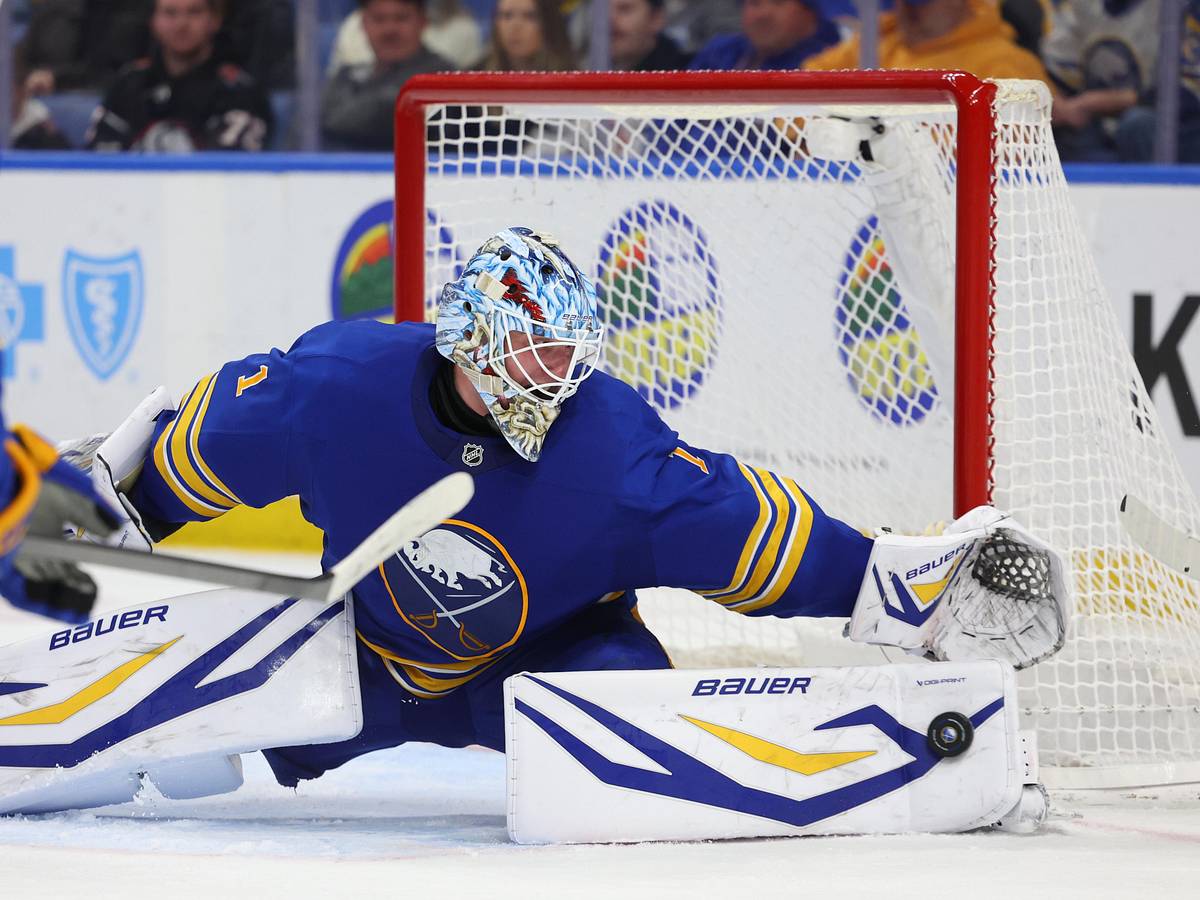
Buffalo's offense deserves most of the headlines, but the final score would look very different if Ukko-Pekka Luukkonen had failed to manage Washington's attempt to recover. The Sabres goaltender made 33 saves in his first appearance since November 11. His night was not spotless: the Capitals scored three times, and Jenner's third-period goal came after Luukkonen did not fully secure a puck near the crease. But a goalie does not need perfection to be decisive in a victory.
GOATIFY
GOATIFY Hockey
Ovechkin's milestone is a reminder that hockey history keeps getting written. See fan-ready GOATIFY Hockey styles.
The 33-save total reflects the fact that Washington kept generating looks even after falling far behind. One way a fast-scoring team can lose control is to mistake a comfortable cushion for permission to stop playing its systems. The Capitals' push in the third period posed that exact threat. A 5-1 lead had become 5-3 before Quinn finally scored into the empty net. Luukkonen and the skaters around him had to manage a game that was no longer as uncomplicated as it looked after twenty minutes.
That is the key difference between Buffalo's first-period story and its full-game story. The Sabres were explosive early, but they did not reduce Washington to harmless possession for the rest of the evening. Leonard found a power-play goal, Jenner created a scrappy finish and the Capitals registered plenty of shots. A coaching staff reviewing this win should be pleased with the start while also identifying the defensive decisions that allowed the third-period margin to shrink.
Buffalo's lineup also provided useful reminders about the value of supporting contributors. Sam Carrick returned after three games as a scratch and was part of the play that produced Malenstyn's goal. Noah Ostlund's pass helped spring Quinn's first goal. Owen Power recorded two assists, and Benson converted a contested loose puck. This was not a one-player rescue mission, even though Quinn's three-point line deserves attention.
The Sabres improved to 9-9-4, returning to the business of accumulating points after a winless five-game run. That record does not suddenly make them a finished playoff contender, but ending a skid changes the tone of the next practice and road trip. It also gives the coaching staff a useful example of what its attack can look like when players trust quick decisions and multiple lines contribute instead of waiting for one star to solve everything.
The schedule will provide a more rigorous measurement. Buffalo is due to visit Florida on Saturday, November 21, and Tampa Bay on Sunday, November 22, completing a difficult road back-to-back against Atlantic Division opponents. The team will not be able to count on four goals in the first period of both games. It will have to win more ordinary stretches: neutral-zone coverage, special-teams entries, defensive-zone exits and the battle to recover from an opponent's first major push.
Washington, meanwhile, is scheduled to travel to Boston on Saturday with the challenge of turning an alarming goals-against trend into something manageable. That matchup is not a referendum on one goalkeeper any more than this Buffalo game was. If Washington continues to give away space before its goalie has time to settle, the same pattern will return regardless of the starter. The Capitals need a collective reset, not a cosmetic change to the crease.
Thursday proved that Buffalo can play with imagination when it moves quickly and refuses to settle for one early goal. It also proved that Washington cannot coast on reputation, star power or even a newly set franchise record. The real value of a November game is not that it decides the season. It shows which habits are helping and which problems are becoming impossible to ignore.
Buffalo will remember November 19 as the night its five-game drought ended, but the sustainable part of the performance was its willingness to attack in several different ways. Quinn supplied the headline, Dahlin opened the ice, Tage Thompson added insurance and Luukkonen protected enough of the advantage. Four first-period goals helped; a roster capable of producing from different positions helped more.
Washington's response must be broader than a conversation about Logan Thompson's rough ten minutes. Defensive support, breakouts and recovery after the first mistake all need attention. Ovechkin's 763rd assist remains a remarkable franchise moment, yet it arrived during a fourth straight loss and another five-plus-goal night against. A record belongs in the history books. Fixing the Capitals' current problems belongs on the practice ice.
For Buffalo, Florida and Tampa Bay are next. For Washington, Boston awaits. Those games will tell us whether this was merely a spectacular scoreline or the first real change in direction.
GOATIFY
GOATIFY Hockey
Explore GOATIFY Hockey shirts, hoodies, sweatshirts, caps, stickers and accessories for NHL fans.


















