

Wawrinka Hits 16 Aces at 41 — His Lyon Farewell Now Runs Into Cobolli
GOATIFYStan Wawrinka is not letting his farewell season become a ceremonial procession. At 41, the three-time Grand Slam champion survived a bruising opening-round match in Lyon against 20-year-old Martín Landaluce, winning 6-3, 6-7(2), 7-6(5) after two hours and 46 minutes. The scoreboard alone suggests a narrow escape. The serving numbers reveal why the Swiss veteran was still standing when the deciding tie-break ended.
Wawrinka struck 16 aces, won 84 percent of points behind his first serve and saved every one of the four break points he faced. He had chances to finish the contest before the final tie-break, watched Landaluce resist, and then recovered from an early deficit in the deciding breaker. The reward is another night on an ATP court, and a far more demanding assignment against Lyon's top seed, Flavio Cobolli.
The match mattered beyond a single result. Wawrinka has announced that 2026 will be his last season, with his competitive farewell planned for the Swiss Indoors in Basel. Lyon is one of his final opportunities to compete rather than simply be celebrated. Against a rising Spaniard less than half his age, he found a way to make the difference with the tools that have sustained his career: a heavy serve, committed backhand striking and a willingness to play the important points without retreating.
Sixteen aces and a 0-40 escape kept Wawrinka in the match
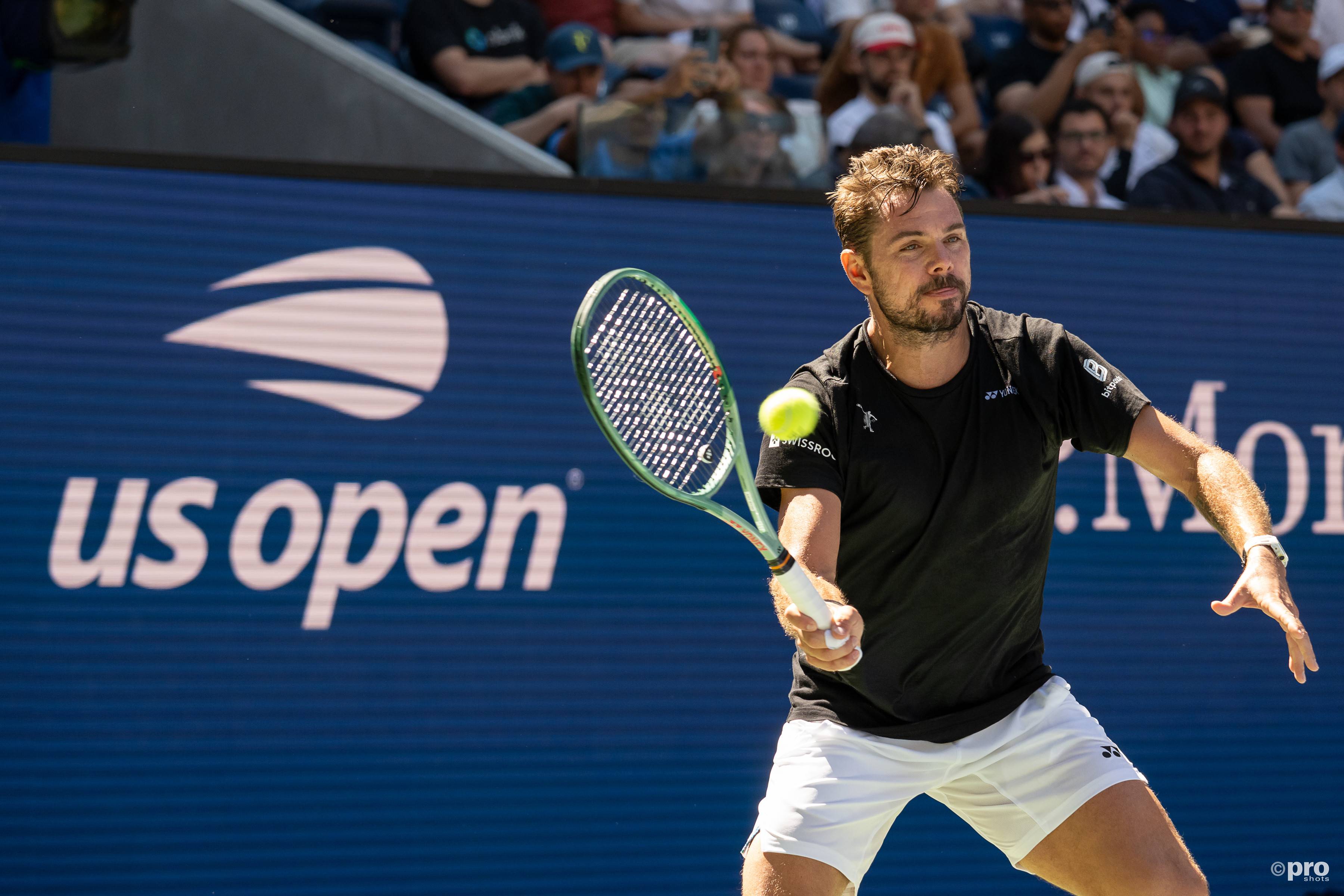
The first set established the pattern. Wawrinka broke Landaluce in the second game and protected that advantage for a 6-3 lead. He did not need to dominate every rally because his service games kept giving him a clean starting position. That is particularly valuable on indoor hard courts, where a first serve that finds its target can prevent a younger, faster opponent from dictating the exchange.
Landaluce changed the rhythm in the second set. The Spaniard escaped repeated pressure on his own delivery, stayed level through twelve games and played the stronger tie-break to take it 7-2. Wawrinka had created opportunities but had not converted them. For a player in the final weeks of a long career, that is the sort of swing that can turn a promising afternoon into another narrow loss. Instead, he kept the contest on his racket.
The most important hold may have come before the deciding set had really begun. Serving at 0-0, Wawrinka fell behind 0-40 and faced three break points in succession. He erased them and ultimately saved four break chances in the match. Landaluce never broke him. That escape protected the one advantage the Swiss could reliably reproduce: he could keep holding, force a tie-break and make the younger man win the match under maximum pressure.
The numbers help explain the result without pretending it was one-sided. Wawrinka won 52 of 62 first-serve points, a rate of 84 percent, and 25 of 43 points on his second delivery. His 16 aces nearly doubled Landaluce's seven. Yet he converted only one of ten break-point opportunities, and the total points were close, 113 to 108. The match was balanced enough that a single lapse could have reversed it.
At 6-5 in the final set, Wawrinka pressed hard for the finish but Landaluce saved multiple match points and held to force the tie-break. The Spaniard then jumped ahead 3-0. Wawrinka answered with four straight points and eventually completed the comeback 7-5 in the breaker. The victory arrived on his fifth match point. It was less a display of effortless vintage form than proof that his competitive instincts can still survive a long, messy contest.
Landaluce deserves credit for the resistance. He arrived from a Challenger final in Jinan and had shown throughout 2026 that he can challenge established ATP names, including a Masters 1000 quarterfinal run in Miami. He did not disappear after losing the opener and kept finding ways out of difficult service games. But the final set exposed the cost of not turning early break chances into a lead against a veteran who still serves with authority.
There is an important distinction between a powerful first serve and a consistently available one. Wawrinka landed 62 of 105 first deliveries, about 59 percent, so he still had to survive 43 points behind his second serve. He won 25 of those, enough to prevent Landaluce from turning the lower first-serve percentage into a stream of breaks. One double fault across such a tense three-set match was another small but useful margin. Landaluce landed a higher percentage of first serves, yet Wawrinka's stronger point-winning rate when the first ball landed proved decisive. Those details show why the match stayed on serve even when the Swiss veteran was not serving at his absolute peak.

Cobolli brings the toughest possible test before Basel
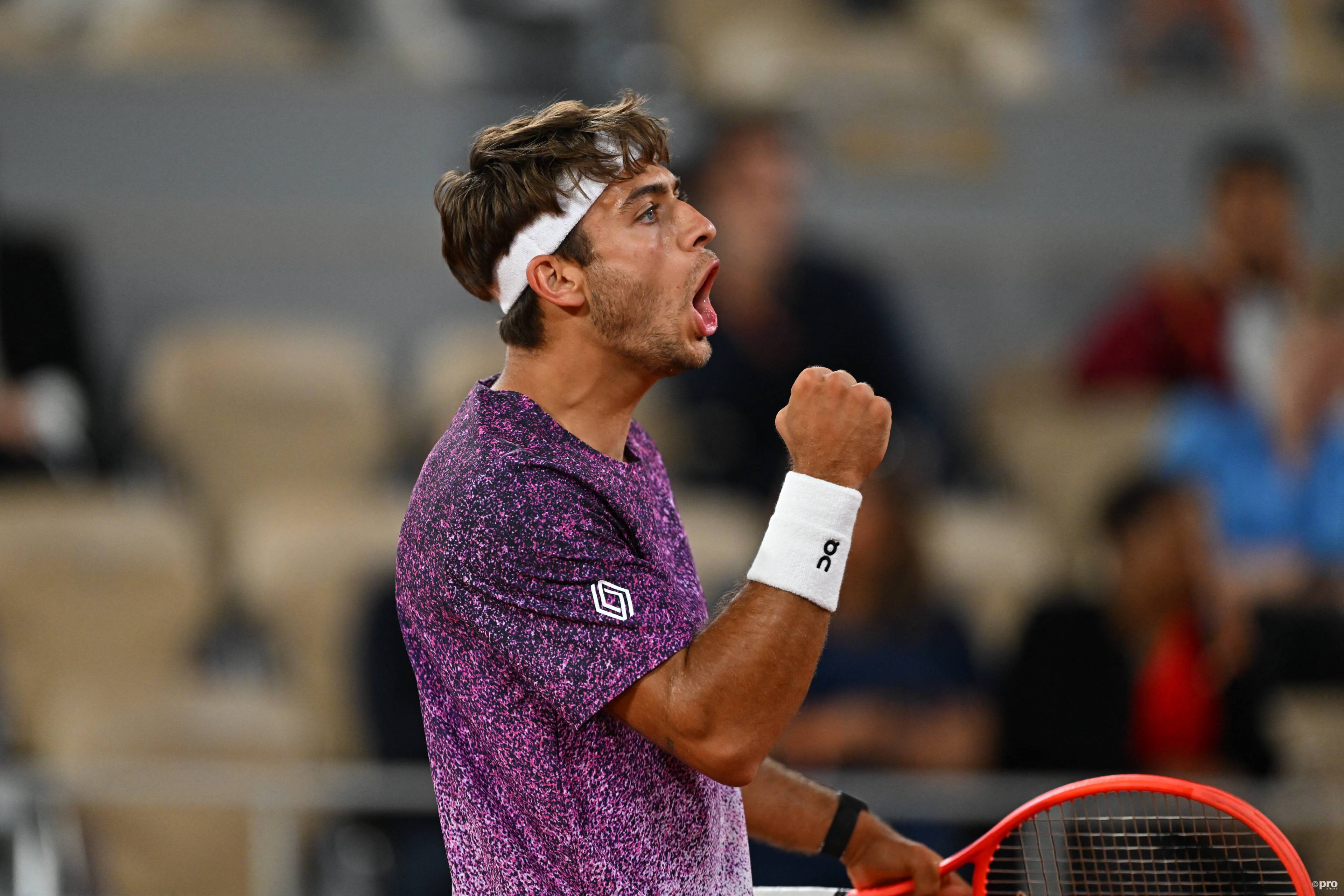
Next comes a different kind of problem. Cobolli is the No. 1 seed in Lyon and, at the time of this preview, ranked sixth in the world. The Italian has enjoyed a breakthrough 2026 season that included a run to the French Open final. He is 24, attacks from the baseline and has the physical capacity to make a long match feel even longer for a 41-year-old opponent.
That contrast makes the second-round match more than a sentimental pairing. Wawrinka will need first-serve accuracy again, but he cannot expect to win on aces alone. Cobolli can absorb pace, extend exchanges and test the Swiss player's recovery after Wednesday's two-hour-and-46-minute battle. The question is whether Wawrinka can shorten enough points with his first strike and backhand to avoid spending the evening defending.
There is history between them. Cobolli won their previous meetings in Shanghai in 2024 and at the United Cup in January 2026, both in three sets. That does not settle a new match on indoor hard courts, but it does give the Italian experience of the Swiss player's patterns. Wawrinka, meanwhile, knows that even a top seed can become vulnerable when a crowd rallies behind an underdog who is playing without the burden of a long future schedule.
The match is also a test of how much Wawrinka has left in the tank. His season has included frustrating losses and long spells without a tour-level victory. Wednesday's win broke that pattern and delivered a reminder of his peak-level skills, but one close result does not erase the physical demands of playing elite tennis at 41. A quick turnaround against a younger top-ten opponent will reveal more than the Landaluce match alone could.
For Cobolli, the assignment carries its own pressure. He is expected to advance and has the ranking, seeding and recent big-match experience to justify that expectation. Yet a farewell-season opponent with 16 aces in his previous match is not a comfortable first outing. Cobolli must make Wawrinka move without donating cheap points, protect his own second serve and avoid allowing the contest to become a series of high-variance tie-breaks.
The result will not change the basic story of Wawrinka's career. His Australian Open, French Open and US Open titles are secure, and his eventual Basel goodbye will attract attention regardless of what happens in Lyon. What this week can change is the tone of the final chapter. Instead of merely taking applause for what he did a decade ago, he has earned the chance to make a current top seed solve a very real tennis problem.
The matchup has an intriguing form wrinkle. Cobolli lost to Adrian Mannarino in Shanghai earlier this month, a reminder that experience, left-handed variation and a disruptive rhythm can trouble him. Wawrinka is a different type of player, relying more on a heavy first strike and one-handed backhand than on Mannarino's flat changes of pace. He cannot simply copy that result. He can, however, use it as evidence that Cobolli is not immune to an opponent who controls the tempo instead of trading long neutral rallies. The more frequently Wawrinka starts points from an advantageous position, the less his age has to dictate the outcome.

Wawrinka's Lyon opener was not perfect tennis. He missed chances on return, needed a deciding tie-break and came within a handful of points of defeat. But the combination of 16 aces, four saved break points and a comeback from 0-3 in the final breaker gave him something more valuable than a comfortable scoreline: another competitive match in the closing stretch of his career.
Cobolli will be favored, and the matchup is considerably tougher than Wednesday's. Still, Wawrinka has already shown why the farewell tour cannot be reduced to nostalgia. At 41, he can still make opponents earn every game — and Lyon gets one more opportunity to watch him try.
Shop GOATIFY tennis products from the Tennis-filtered collection scope.

















