

Derek Lunsford’s 2026 Olympia Leg Workout: Why His Prep Is All Hamstrings and Glutes
UPLIFT IRON CLUBFour weeks from the 2026 Mr. Olympia, Derek Lunsford is not trying to reinvent leg day. His latest prep session is much more specific: curls, Romanian deadlifts, hip thrusts and glute kickbacks, with the work concentrated on the hamstrings and glutes rather than turning the day into another quad-dominant marathon.
That makes sense for a reigning champion trying to arrive in Las Vegas with maximum detail while preserving the muscle he already built. Olympia prep is not the time to collect random PRs. It is the time to keep the target muscles under tension, control fatigue and make sure the physique that reaches the stage still looks full.
Lunsford is scheduled to defend the Mr. Olympia title during Olympia weekend, September 24–27, 2026. The field includes major threats such as Samson Dauda, Andrew Jacked and Nick Walker, so the final weeks are less about adding brand-new mass and more about presenting the best version of what is already there.
Why Lunsford’s Late-Prep Leg Day Looks Different
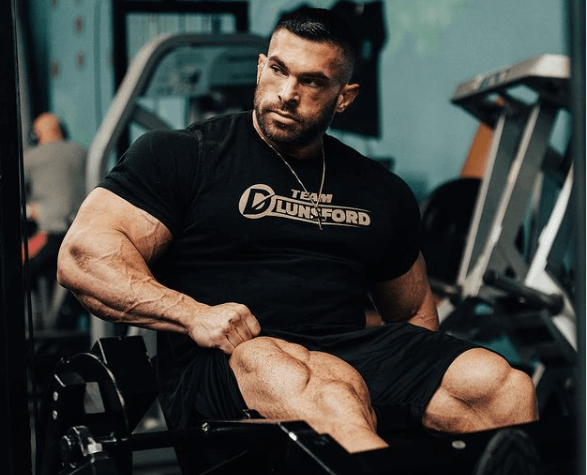
Lunsford’s recent workout is notable for what is missing. There is no need to force a maximal squat simply because it is leg day. The session instead attacks the posterior chain with stable exercises that are easy to control under fatigue.
That is a useful distinction for recreational lifters too. The best exercise is not always the movement that uses the most plates. If a machine or supported movement lets you train the target muscle harder while keeping technique predictable, it may be the better hypertrophy choice—especially when calories are low or recovery is limited.
For an elite bodybuilder in the final month of prep, the cost of a sloppy rep is higher than the benefit of proving strength. Muscle retention, joint comfort and repeatable sessions matter more.

Hamstring Curls First: Pre-Fatigue With Low Skill Cost
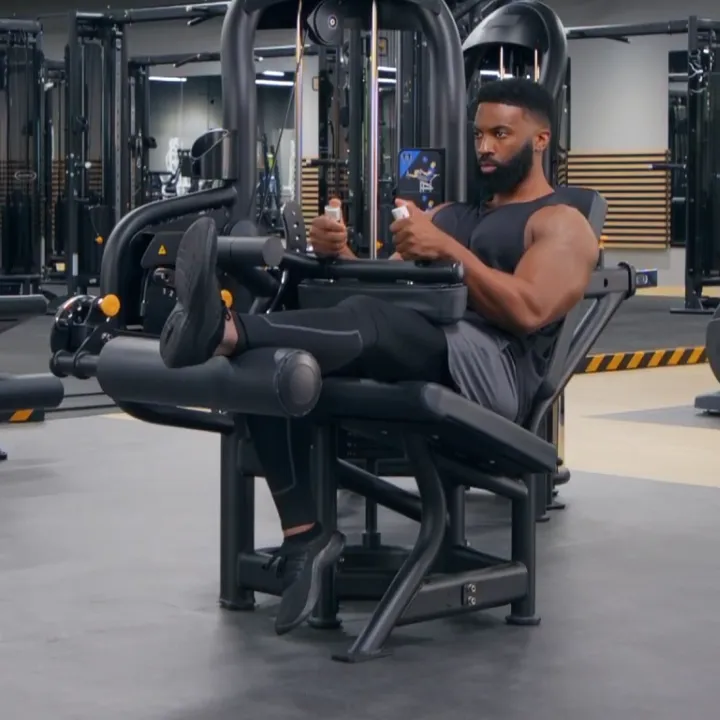
Lunsford used both lying and seated leg curls. Starting with knee-flexion work gives the hamstrings a direct stimulus before the heavier hip-extension movements arrive.
There is a practical reason this works well late in prep. A curl machine has a low skill requirement. The torso is supported, the path is fixed and the athlete can take the muscle close to failure without asking the lower back to stabilize a heavy load.
For normal lifters, the same sequence can be useful when hamstrings are a weak point. Start with two or three hard curl sets, then move into a hinge. You do not need ten warm-up exercises or a heroic loading strategy. The goal is to make the hamstrings the limiting factor.
Romanian Deadlifts: The Heavy Stretch Movement

After curls, the Romanian deadlift changes the hamstring challenge. Instead of flexing the knee against resistance, the athlete pushes the hips back and loads the posterior chain in a lengthened position.
The key is not touching the floor. It is keeping tension where it belongs. Push the hips back, keep the load close, maintain a stable spine and stop the range when the pelvis can no longer travel backward cleanly.
Late in prep, this is also where restraint matters. A bodybuilder can train an RDL brutally hard without turning every set into a deadlift test. The stimulus comes from controlled eccentric loading and force through the hamstrings, not from grinding a sloppy final rep.

Hip Thrusts: Glute Loading Without Another Squat Pattern

The plate-loaded hip thrust gives Lunsford a high-output glute movement after the hamstrings have already worked hard. Because the torso is supported and the load is concentrated around hip extension, it creates a large local stimulus without the same balance demands as a free-weight squat.
That does not make hip thrusts mandatory. It makes them useful when glute development is the goal. A normal lifter can use a barbell, Smith machine or dedicated glute drive, provided the setup allows a strong lockout without turning the movement into excessive lower-back extension.
Think ribs down, pelvis controlled and glutes finishing the rep. More load only matters if that position survives.
Glute Kickbacks: Detail Work When Fatigue Is Already High

Finishing with glute kickbacks is classic bodybuilding logic. Once the heavy work is complete, an isolation movement lets the athlete keep loading the target tissue without asking the entire body to solve another compound lift.
This is the stage of the workout where chasing load becomes particularly pointless. The best reps are controlled, repeatable and clearly felt in the glute. If the torso is swinging and the working leg is barely moving independently, the machine has become an ego lift.
For most people, two or three sets in a moderate-to-high rep range are enough. The exercise earns its place by adding targeted volume cheaply.

What the Exercise Order Tells Us About Contest Prep
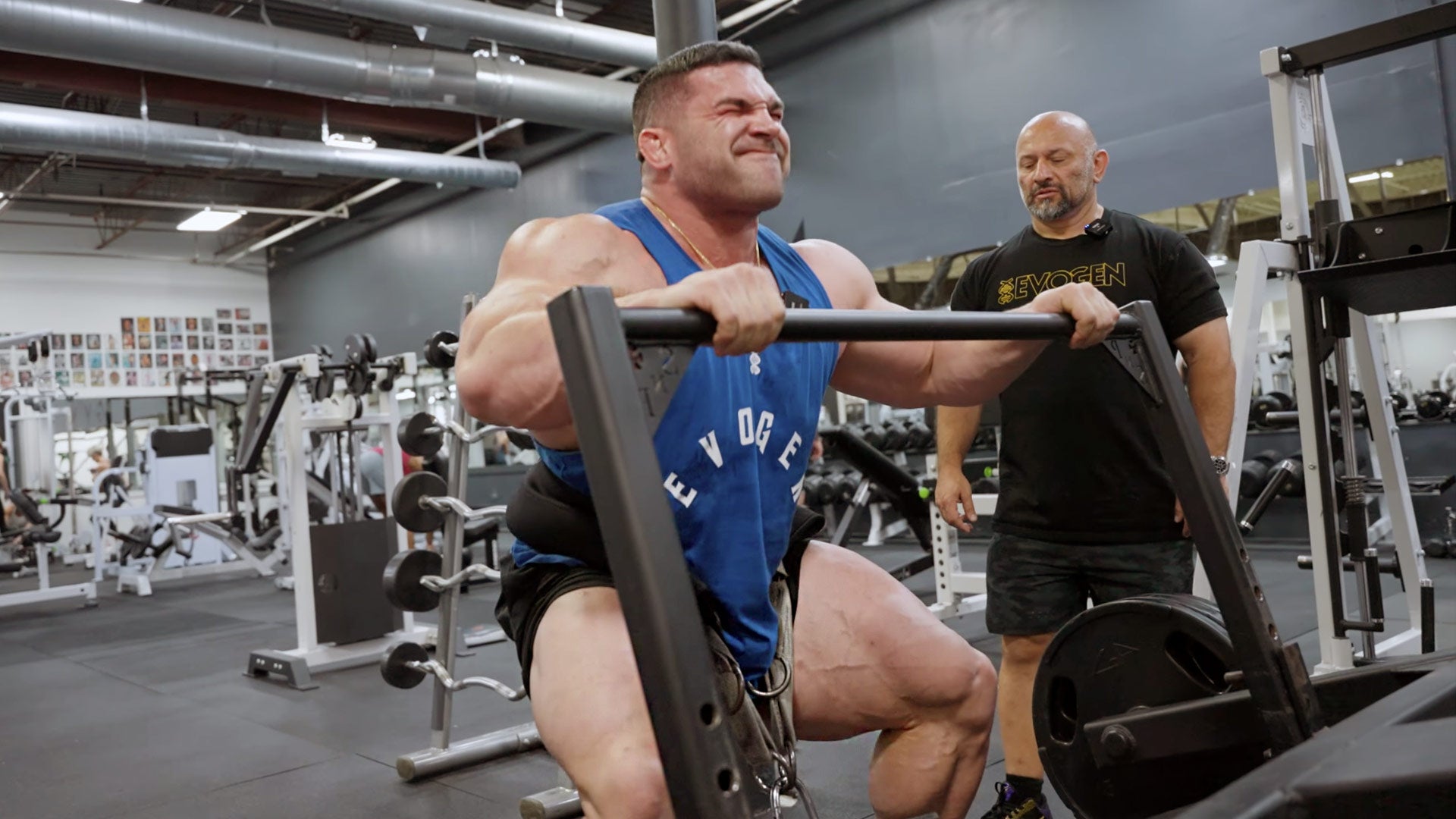
The sequence is more instructive than any individual exercise: isolate the hamstrings, load them in a hinge, move to a glute-dominant compound and finish with isolation.
That structure lets each movement solve a different problem. It also avoids redundancy. Adding a squat, leg press, hack squat and lunge simply because they are all good exercises would increase fatigue without necessarily improving the purpose of this particular session.
Advanced training gets more specific as the goal gets clearer. Lunsford does not need every leg exercise in one day. He needs the exercises that help the physique he is trying to present.
What Normal Lifters Should Copy From Lunsford’s Olympia Prep

The one thing not to copy is the professional-bodybuilding context. Lunsford is an elite enhanced athlete preparing for the biggest show in the sport. His recoverable workload, muscle mass and contest constraints are not normal.
What you can copy is the logic. Put the weak point first. Use a mixture of knee flexion and hip extension for hamstrings. Choose stable movements when fatigue is high. Stop treating every session like a strength test. And let exercise order reflect the physique you are actually trying to build.
A practical posterior-chain day could be seated leg curl for 3 sets, Romanian deadlift for 3 sets, hip thrust for 3 sets and a glute kickback or back extension for 2–3 sets. Progress those movements for months before assuming you need more complexity.
Keep one or two reps in reserve on the early sets, then push the final set of a stable exercise harder when technique is reliable. That gives you room to progress without turning every week into a recovery problem. If the same loads and reps are becoming cleaner over time, the program is working—even if the session does not look dramatic on social media.
Most recreational lifters will also recover better by spreading posterior-chain work across the week instead of cramming everything into one huge leg day. One session might emphasize an RDL and curl, while another uses a hip thrust and unilateral leg movement. The principle is the same: enough hard work to drive adaptation, not so much that the next session is compromised.







