Elvis Presley Diet: Favorite Foods, Peanut Butter-Banana Sandwiches & Nutrition Lessons
UPLIFT IRON CLUBElvis Presley’s food mythology has become almost as famous as his music. The stories are built around peanut butter and banana sandwiches, Southern comfort food, late-night cravings and the enormous Fool’s Gold Loaf that became part of rock-and-roll folklore.
The useful fitness question is not whether Elvis ate one notorious sandwich. It is what his food preferences teach us about calorie density, protein, portion size and the difference between an occasional indulgence and an everyday eating pattern.
What Elvis Actually Liked to Eat

Graceland’s own dining pages still lean into the foods associated with Elvis: Memphis barbecue, meatloaf, catfish, grilled sandwiches and, most famously, peanut butter and banana. That matters because it separates the real pattern from the internet caricature that reduces his entire diet to one absurd meal.
These were rich, familiar foods with strong Southern roots. None is automatically incompatible with a healthy diet. The problem comes from frequency, preparation method, portion size and how much room those foods leave for lean protein, fruit, vegetables and other nutrient-dense staples.
For a lifter, the first lesson is simple: food names are not enough. A sandwich can be a modest snack or an enormous calorie bomb depending on bread, spreads, bacon, butter and portion size.

The Peanut Butter-Banana Sandwich: What’s Actually in It?

The version most strongly associated with Elvis combines bread, peanut butter and banana, often grilled or fried; bacon appears in many well-known variations. Graceland itself continues to serve grilled peanut butter and banana sandwiches, which confirms that this is more than an internet meme.
There is nothing uniquely disastrous about the core ingredients. Banana provides carbohydrate and potassium. Peanut butter provides fat, some protein and micronutrients. Bread supplies carbohydrate. But peanut butter is extremely calorie-dense, bacon adds more fat, and frying the sandwich in butter or bacon grease increases energy intake without making the meal much larger.
For someone deliberately gaining weight, that density can even be useful. For someone trying to stay lean, the same sandwich is easy to underestimate because it goes down quickly while carrying a lot of calories.
Why Calorie Density Changes the Story

The extreme example is the Fool’s Gold Loaf, the Denver sandwich linked to one of the most famous Elvis food stories. Accounts describe a hollowed loaf filled with peanut butter, jelly and a large amount of bacon. It was not a normal sandwich scaled slightly upward; it was an intentionally extravagant meal.
This is where nutrition becomes arithmetic rather than morality. Foods high in fat and refined carbohydrate pack a lot of energy into a relatively small volume. If total daily intake repeatedly exceeds what the body uses, weight tends to rise over time. One legendary meal does not explain a person’s health or body composition; repeated patterns do.
For lifters, “cheat meal” language can be misleading. You do not need to label foods clean or dirty. You do need to understand how easily a very energy-dense meal can erase a planned calorie deficit or turn a modest surplus into a very large one.

Southern Comfort Food, Portions and Protein

Elvis’s broader food reputation includes classic Southern dishes, not just sweets. Meatloaf, barbecue, fried foods and rich home cooking can all deliver protein, but the overall meal may also contain large amounts of added fat and refined carbohydrate.
That distinction matters for physique-focused eating. Protein helps support muscle repair and growth, but “contains protein” does not automatically mean a meal is well matched to your calorie target. Fried chicken, for example, may provide plenty of protein while also carrying much more energy than a grilled version.
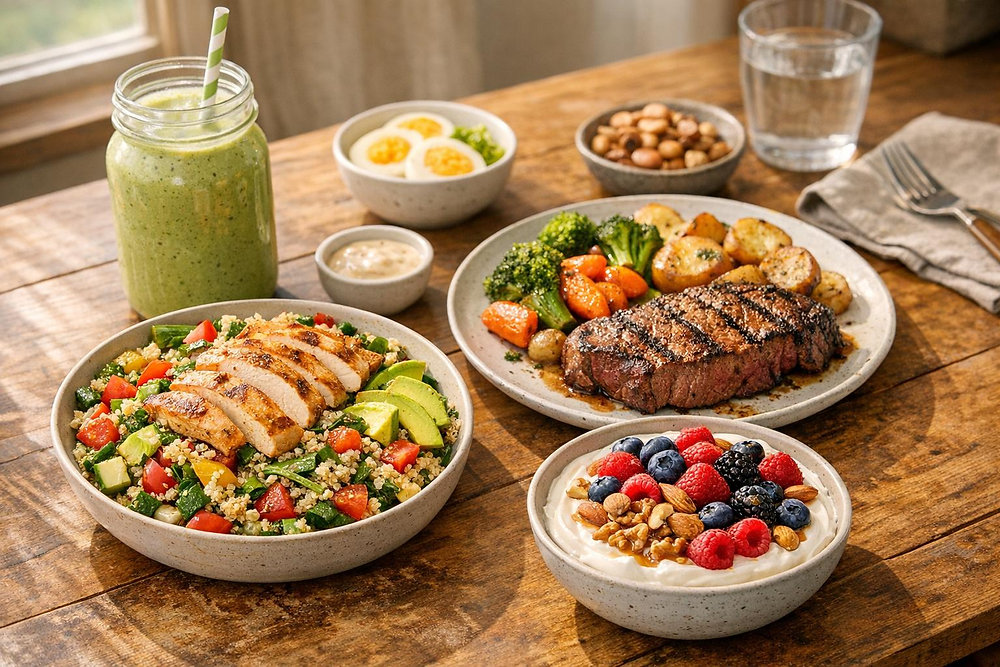
A modern lifter can keep the flavor profile while adjusting the structure: prioritize a clear protein source, choose portions intentionally, add vegetables or fruit, and decide where the calorie-dense extras are worth it. You do not need to turn every favorite meal into plain chicken and rice, but you do need some control over the variables.

What Lifters Can Learn Without Copying Elvis’s Diet

The useful takeaway is not to imitate a celebrity menu. It is to understand why memorable foods become problematic only when they dominate the pattern. You can eat peanut butter and banana. You can eat barbecue. You can have a fried sandwich. The question is whether the rest of your week supports your goal.
For muscle gain, get enough total calories and protein, then use more energy-dense foods when appetite becomes a limiting factor. For fat loss, choose portions that fit the deficit and keep enough high-volume foods in the diet to control hunger. In either phase, fruits, vegetables and varied protein sources make the plan more nutritionally complete.
The Elvis food legend is a useful reminder that appetite can outrun energy needs very easily when meals combine fat, sugar and highly palatable textures. That is not a reason to fear those foods. It is a reason to treat portions as part of the program.

UIC Take: Keep the Favorite Foods, Control the Pattern

Elvis’s famous foods are culturally interesting because they are vivid and specific. Nutritionally, though, the lesson is ordinary: energy-dense foods are easy to overeat, and repeated excess matters much more than a single indulgence.
Build most meals around a clear protein source and foods that make your calorie target manageable. Then leave room for the foods you actually enjoy. A peanut butter-banana sandwich does not need to disappear from a lifter’s diet. It just needs to fit inside the bigger plan.