

Alonso Is Staying at 45. Button Says Aston Martin Must Give Him a Reason.
GOATIFYFernando Alonso has already made the decision that many Formula 1 drivers never have to confront: he will return for another season at 45, despite driving for the team at the bottom of the constructors' standings. The more uncomfortable decision belongs to Aston Martin. What can it actually put on the track to justify another year of one of the sport's most relentless competitors?
Jenson Button, the 2009 world champion who shared a McLaren garage with Alonso and now serves as an Aston Martin ambassador, thinks the answer is neither a guaranteed victory nor another ambitious presentation about the future. He believes Alonso needs to see the gap shrinking. That distinction matters as the Silverstone operation prepares to retain Alonso and Lance Stroll for 2027 after a 2026 season defined by power-unit troubles, a substantial midseason upgrade and too many weekends when competitive speed was visible only in flashes.
Alonso's commitment, confirmed in September, will take him into a 24th F1 season. The number is extraordinary, but it is also a distraction from the question that should define the next twelve months: can Aston Martin turn the lessons of its difficult Honda partnership into repeatable pace, reliability and points, rather than making the oldest driver on the grid settle for occasional consolation drives?
At 45, Alonso's 2027 signature is a demand for a competitive project
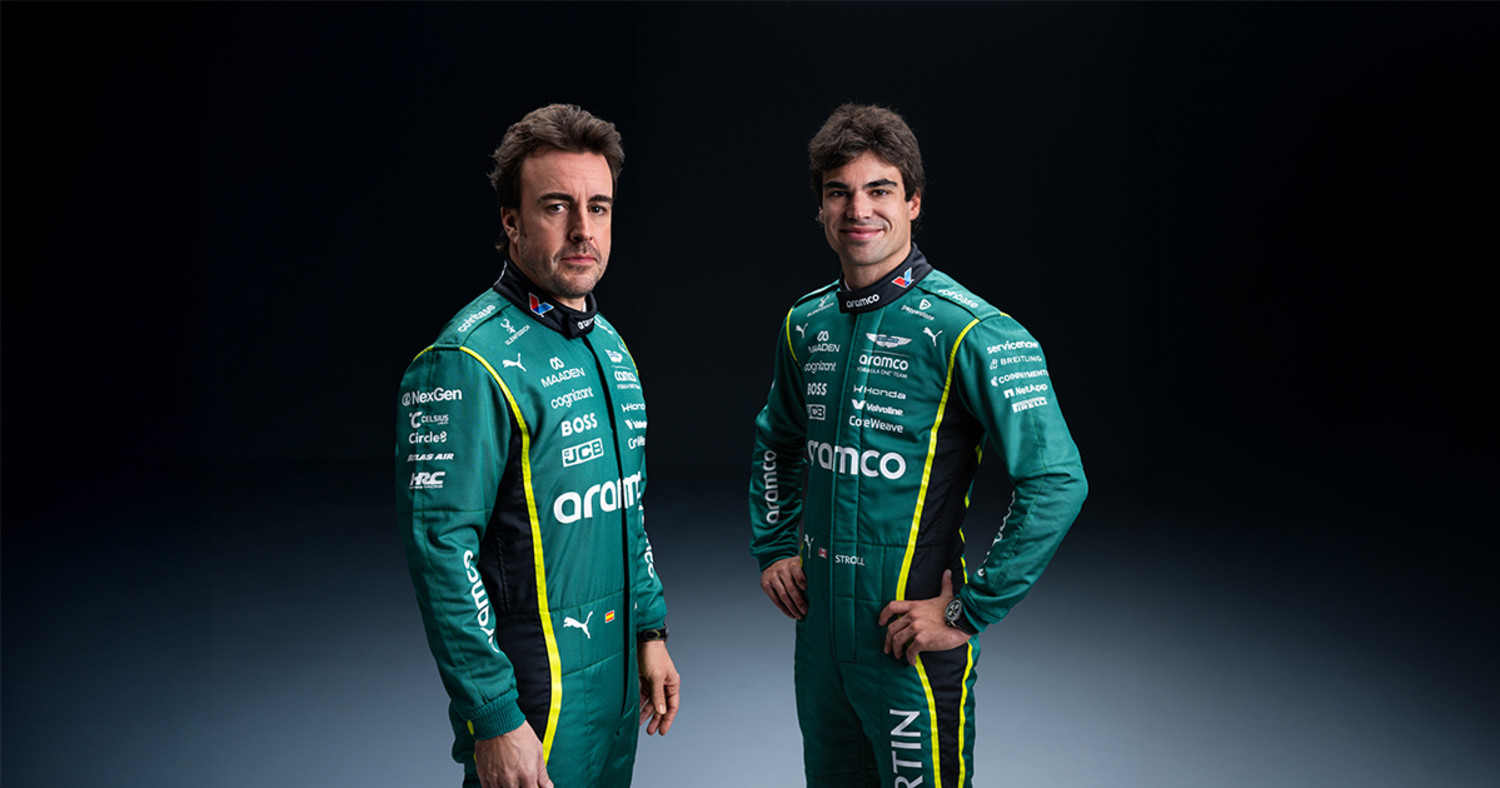
There is a temptation to treat Alonso's 2027 deal as an exercise in nostalgia. He is a two-time world champion whose Renault titles came in 2005 and 2006, and his first Formula 1 season was back in 2001. He will turn 46 during the next campaign. Those are remarkable numbers, but they are not why Aston Martin needs him. The team is keeping a driver who can still identify precisely what a car is doing and extract performance even when the results sheet is unflattering.
Button's assessment cuts through the sentimental interpretation. He expressed amazement at Alonso's appetite for competition, from karting to other kinds of racing, but he also drew a hard line between enjoying motorsport and accepting a stagnant F1 project. A driver can love racing without loving another year of fighting outside the points. Progress is the currency that keeps that arrangement worthwhile.
The timing of Alonso's renewal is significant. Aston Martin confirmed at the end of September that its 2027 lineup would remain unchanged, pairing Alonso with Lance Stroll for a fifth campaign together. That preserves familiarity in the garage and keeps a two-driver feedback loop in place through a technical rebuilding period. It does not mean the car is good enough. Continuity is a tool for development, not proof that development has succeeded.
For a useful benchmark, return to 2023. Alonso scored eight podiums in his first Aston Martin season and finished fourth in the drivers' standings. The team was not winning a championship, but its early pace put him regularly in meaningful fights near the front. That is the kind of competitive evidence that can sustain belief. By contrast, in November 2026 Aston Martin sits tenth in the constructors' championship. Alonso has scored seven points. Calling those numbers disappointing barely captures the reversal from the early excitement of the partnership.
GOATIFY
GOATIFY Formula 1
Explore GOATIFY Formula 1 designs as Alonso prepares for another Aston Martin season.


The gap between those two versions of Aston Martin also explains why another contract alone does not settle the question of how long Alonso will stay. He has agreed to race in 2027, not promised to race forever, and Button did not provide a retirement date. The useful reading of Button's comments is conditional: if Alonso sees the operation solving problems and taking steps closer to the leaders, the motivation has something concrete to attach to. If every weekend repeats the same mechanical failures or outright speed deficit, the argument becomes much harder to make.
That should shape expectations for next season. Alonso does not need to be portrayed as a championship favorite on the strength of his name, nor should the team pretend a few inspired laps have erased its competitive gap. It needs credible markers: a car that finishes races, qualifies consistently ahead of the slowest teams, converts promising practice and qualifying sessions into points and gives engineers a clearer picture of which upgrades work. The story is less about whether a 45-year-old can still drive than whether the people around him can finally give that ability somewhere productive to go.
There is also a wider consequence for Aston Martin. Retaining an established champion prevents an uncertain driver-market transition from distracting an already stretched engineering group. Yet the cost of that stability is a higher standard of scrutiny. A newcomer might be asked to learn patiently. Alonso has already spent decades learning, and he is entitled to expect the operation to learn just as quickly.
Hungary's upgrade and Brazil's glimpse cannot hide Aston Martin's Honda problem
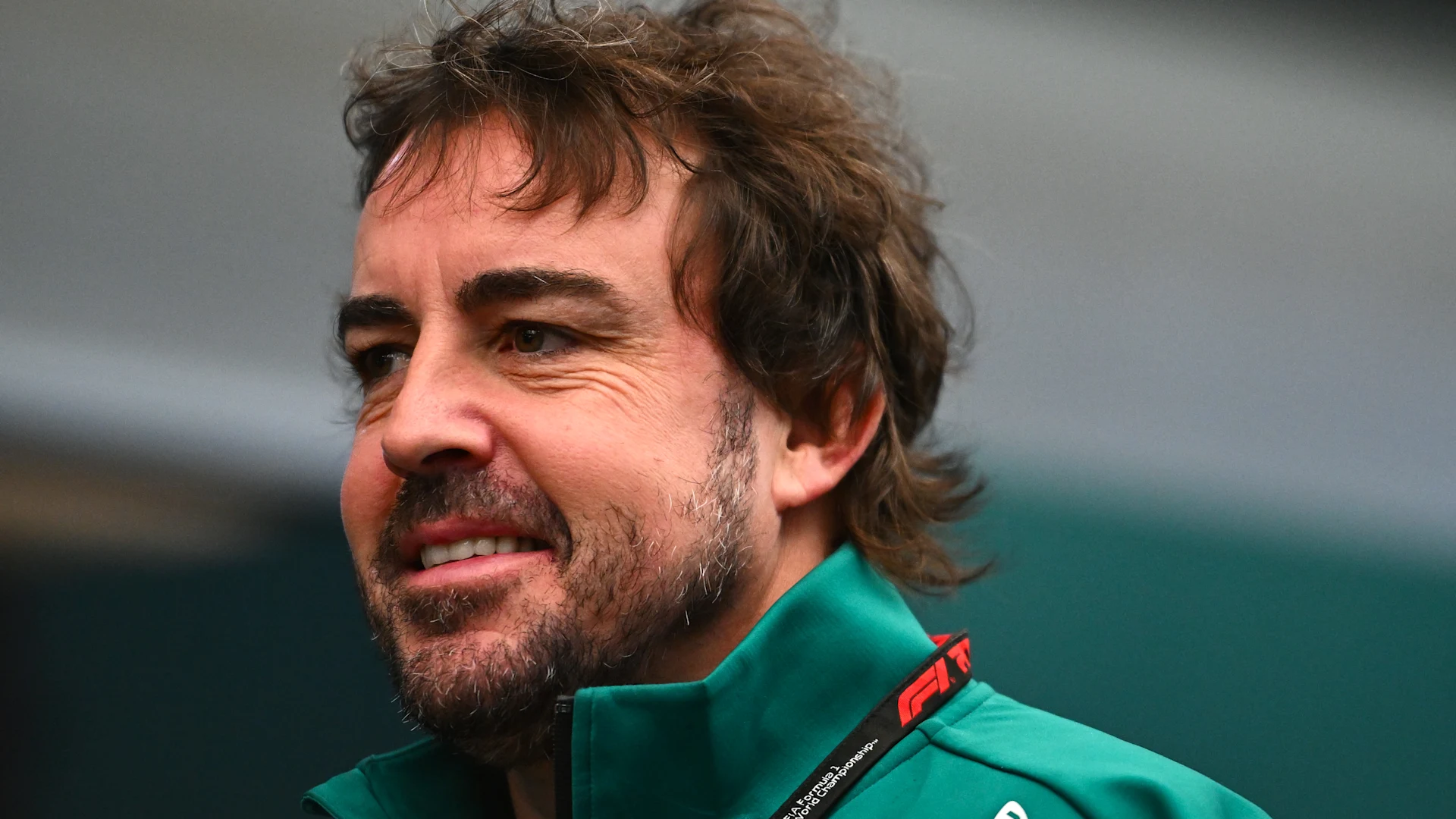
Aston Martin did not arrive at its current position because of one bad weekend. The new partnership with Honda has struggled for both speed and reliability in its first season, and the Silverstone team has been forced to develop the chassis around those limitations. The result is an especially frustrating kind of Formula 1 campaign: flashes of genuine handling improvement undermined by a power unit that is too often either slow, unreliable or both.
The team's major intervention came at the Hungarian Grand Prix. Aston Martin introduced an extensive update package involving 16 changes to its AMR26, a notable investment when its season was already going badly. The improvements helped Alonso reach the second part of qualifying for the team's first time that year, but the race ended with the cars only thirteenth and fourteenth. Better behavior was visible, yet it did not suddenly become a competitive points-scoring machine.
Honda was working on its own parallel answer. In late July, its revised power unit completed an initial run in the Aston Martin during a filming day at the Hungaroring, ahead of a planned racing introduction in the Netherlands. The significance was not merely the hardware. The carmaker and chassis team were trying to improve the coordination of work between Honda's Sakura operation, the Aston Martin factory and trackside engineers. A successful development partnership has to join those parts together, rather than allowing each to wait for the other to solve a bottleneck.
By November, the clearest demonstration of the contradictions came at Sao Paulo. Alonso qualified inside the top ten in wet conditions, his first top-ten qualifying performance of the season. In the race he ran competitively early on, fought cars that would normally be out of reach and at one stage passed Lewis Hamilton's Ferrari on merit. Those moments mattered because they suggested the chassis could work well when a circuit rewarded its strengths. A competitive driver was still sitting inside a car capable of surprising faster rivals.
GOATIFY
GOATIFY Formula 1
Browse GOATIFY F1 gear while Aston Martin works to turn development into reliable pace.


But the final result was twelfth, not points, and Alonso continued to describe a large weakness on the straights. The encouraging cornering balance could not erase the deficit where power and efficiency matter most. Meanwhile Stroll retired in Brazil with an ERS issue. That followed a Mexico City Grand Prix where both Aston Martins had retired with power-unit problems. The pattern explains why celebrating a good lap time is so different from demonstrating a recovery: an engine must perform over a complete race distance for that pace to mean anything on Sunday.
The arithmetic is brutal. Alonso can make a strong qualifying lap look heroic, but the championship does not award points for an encouraging sector or an exciting overtake that is later cancelled by lost speed. A race car needs sufficient straight-line performance to defend positions, enough efficiency to run useful strategies and enough reliability to reach the flag. Those are separate but linked engineering outcomes. Improving one without the others produces exactly the frustrating weekends Aston Martin has been experiencing.
Adrian Newey's leadership raises the ambition of the program, but not its exemption from physics or operational risk. The team's task is not to find a single breakthrough part that turns tenth place into first. It must understand the interactions between chassis and power unit, shorten the interval between identifying a weakness and supplying an effective solution, and then reproduce the improvement across tracks with different demands. The best possible sign heading into 2027 would be an AMR that is no longer dependent on rain, unusual circuit characteristics or Alonso's overachievement to look competitive.
That is why Button's emphasis on visible progress is sharper than it first sounds. It demands evidence, not promotional confidence. Hungary showed the team could introduce a major chassis update. Brazil showed that a good car balance can bring Alonso into unexpected battles. The next requirement is for Honda and Aston Martin to turn such isolated moments into reliable, routine race performance. Until that happens, the 2027 promise remains a technical objective rather than a sporting achievement.
Button knows the driver and the team: progress requires two voices
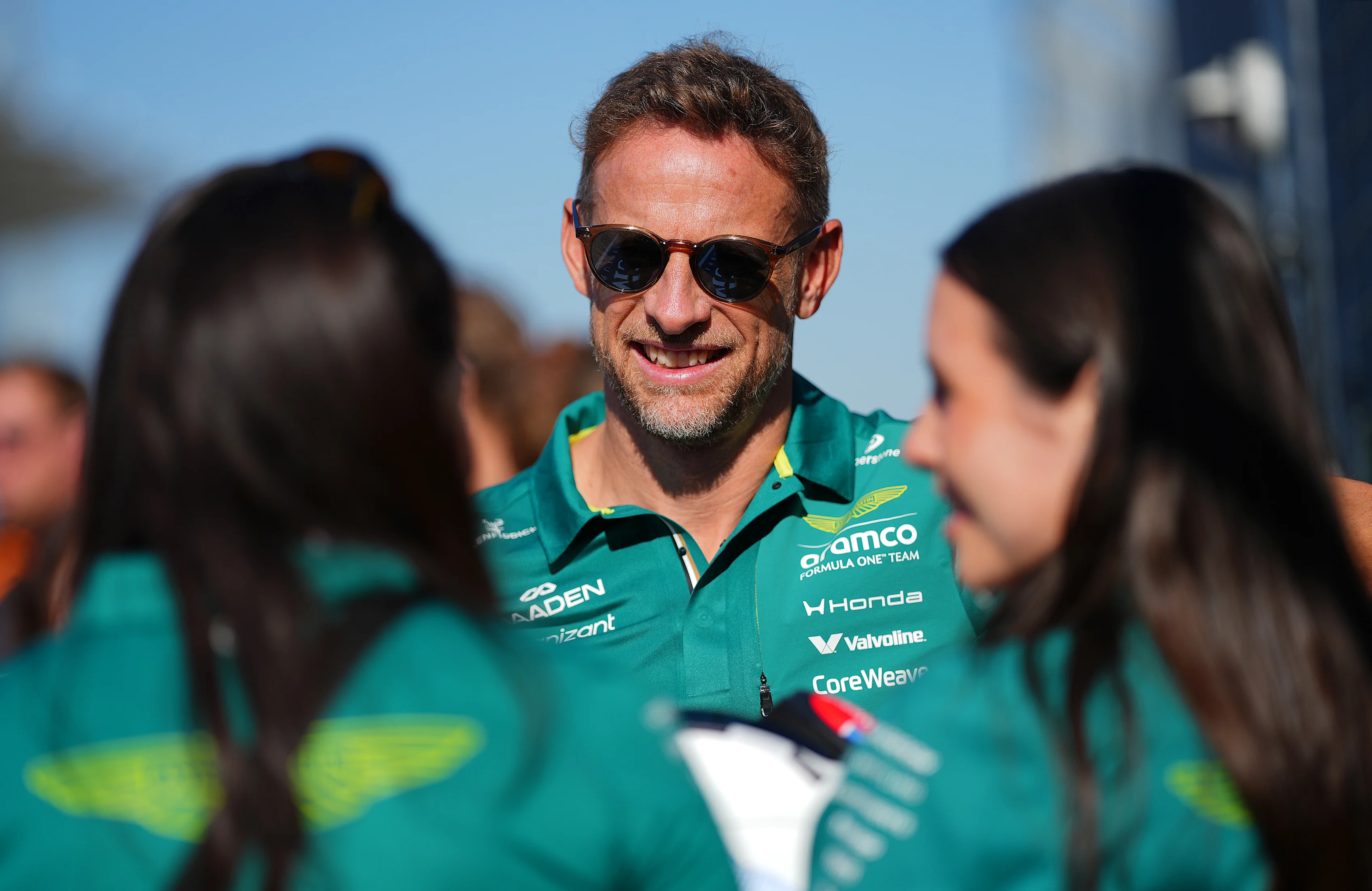
Button's perspective carries unusual weight because he has seen Alonso from several angles. They raced as McLaren teammates, and Button now works with Aston Martin as an ambassador. He understands the external fascination with Alonso's longevity, but he also knows that the driver's competitive habits are not the same as those of somebody making a ceremonial final tour. Alonso still races whenever he gets the opportunity, and Button described a man whose instinct is to keep improving rather than settle into the role of respected veteran.
There is an important difference between saying Alonso still has talent and measuring whether he is exactly as fast as he was in his championship years. Formula 1 cars, tires, circuits and competitive standards have changed enormously in two decades. Button explicitly resisted a simple comparison across eras. What he did identify was Alonso's distinctive style, visible in the small steering adjustments and constant work required to keep a car close to its limits. That ability can be particularly useful when a team is looking for the edge of a difficult machine rather than managing a dominant one.
Still, experience cannot be treated as a substitute for organization. The most revealing part of Button's comments concerned the environment around the drivers. Engineers need clear information, drivers need to believe their observations are understood, and the team needs enough trust to test ideas without turning every unsuccessful experiment into a blame exercise. When the car is not delivering, a fractured working relationship can slow development just as surely as a lack of resources.
GOATIFY
GOATIFY Formula 1
Shop GOATIFY Formula 1 styles as Button weighs the experience Alonso brings to 2027.


That is where Lance Stroll's continuity matters. His presence is sometimes overshadowed by Alonso's two titles and far longer career, yet Button specifically stressed that feedback from both drivers is needed. An upgrade that produces a benefit only under one driving style, or a handling fix that creates a new weakness for the other side of the garage, leaves a team with a smaller operating window than it wants. Two consistent perspectives can help engineers separate a fundamental car limitation from a setup compromise or an individual preference.
For Aston Martin, this is particularly relevant to the Honda program. When a driver reports a straight-line limitation or an unexpected behavior on power delivery, the response can involve different departments and even different companies. Getting the detail right requires a disciplined chain from onboard evidence and driver comments to telemetry analysis, engineering action and trackside verification. No one driver can solve that system on his own. What Alonso contributes is experienced feedback; what Aston Martin must contribute is an efficient way to turn that feedback into changes that survive a race weekend.
The human side is equally consequential. The early 2023 podium run demonstrated how energized the team could become when sporting momentum reinforced internal confidence. A season of retirement after retirement creates the reverse pressure: staff working hard for visible progress but watching any gains disappear before the finish. Button argued that Alonso seems comfortable in the Aston Martin environment. Preserving that trust during disappointing results is useful; rewarding it with a better car is essential.
The proper 2027 test, then, is more modest and more demanding than the language of a championship assault. Did the car complete the distance? Did two drivers identify the same strengths and weaknesses? Did qualifying progress carry into race pace? Did a midseason upgrade help at more than one unusual circuit? Did Honda deliver enough reliable performance that the team could plan strategy on normal terms? Those are observable measures of a program becoming credible again. If they improve, Alonso's choice to stay will appear entirely rational even without an immediate win.
Button's message is ultimately about a relationship between ambition and proof. Alonso's passion has survived years in uncompetitive machinery, several teams and major changes to the sport. Aston Martin has chosen to keep that knowledge inside its garage for another season. Now the team has to show that it values the driver's remaining time as much as he values the opportunity to race.
Alonso's age is the headline-grabbing number, but it is not the greatest risk in his 2027 deal. Aston Martin's risk is spending another year telling a driver of exceptional experience that improvement is coming while giving him only isolated glimpses of it. Button does not need the team to promise a miracle. He wants the direction of travel to be unmistakable.
The Hungary upgrade and the pace glimpsed in Brazil offer reasons not to write off the project. Honda's repeated reliability and speed problems offer equally strong reasons not to declare the rebuild complete. The task for 2027 is to close that gap between promise and reality. If Aston Martin delivers a car that can turn Alonso's talent into regular points rather than heroic twelfth places, the most surprising thing about his decision to stay may be how sensible it looks.
GOATIFY
GOATIFY Formula 1
Shop GOATIFY Formula 1 shirts, hoodies and racing stickers.


















