Arsenal Are Tracking Kofane — But the €70m Price and His Injury Complicate January
GOATIFYArsenal have reached the November international break with points on the board and a familiar question still hanging over their attack: how much more firepower does a title contender need? The club is continuing to monitor Christian Kofane, Bayer Leverkusen's 20-year-old Cameroon striker, as the January 2027 transfer window approaches. It is a compelling link because Arsenal have already watched him from very close range. Yet a scouting interest is not the same thing as a bid, and several details make a midseason move less straightforward than the headline suggests.
Kofane has scored three times in six appearances this season, but a hamstring problem has kept him out since October. Leverkusen have a contract running to 2029 and a player whose value has risen dramatically since he left Spain. Arsenal, meanwhile, are winning matches even while leaving their manager frustrated by the chances they do not convert. The relevant questions are less about whether Kofane is talented and more about his health, cost, role and the timing of an eventual deal.
Kofane's fast rise explains why Arsenal have kept watching
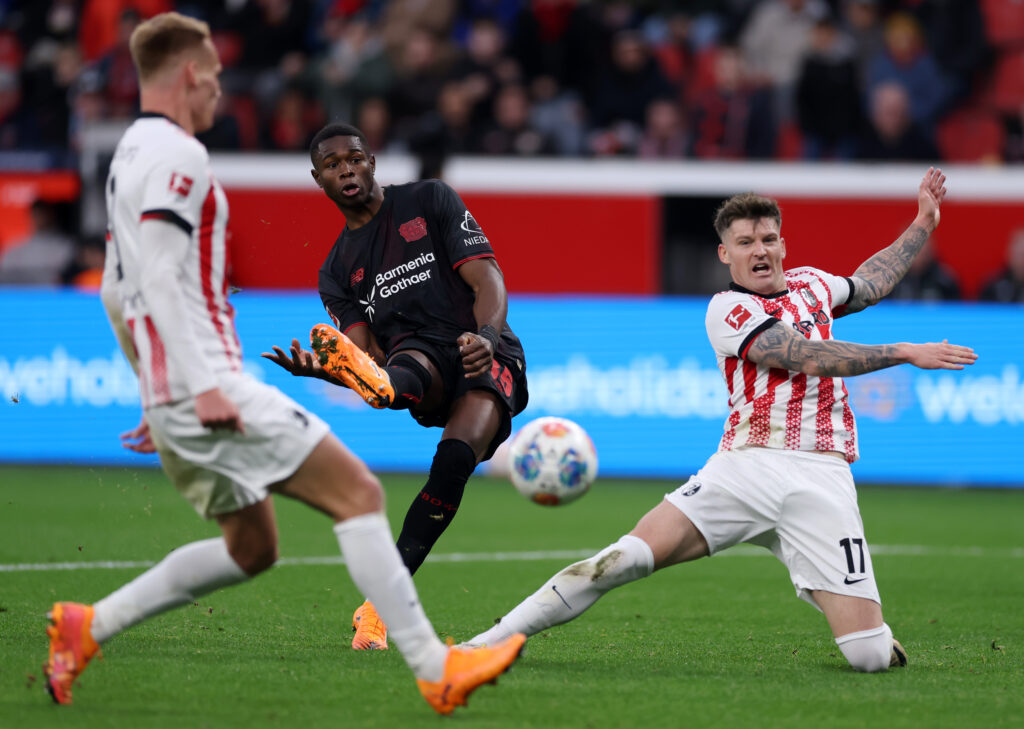
Kofane's story is moving faster than a conventional academy-to-first-team progression. After emerging from AS Nylon in Cameroon, he made his way into the Spanish second division with Albacete. Eight goals in 20 league appearances made the teenage forward far more than a development prospect. Leverkusen brought him to Germany in the summer of 2025 for a reported fee a little above €5 million, a price that now looks modest against the figures being discussed around his future.
His first full campaign in Germany provided the next test. He appeared 44 times across competitions, including 11 Champions League matches, and his production was not confined to penalties or moments against weak opposition. Accounts of that season credit him with seven goals and around eight or nine assists, depending on the statistical source. Those assist totals matter when judging a forward who also contributes with running, physical contests and combinations rather than existing only to finish chances.
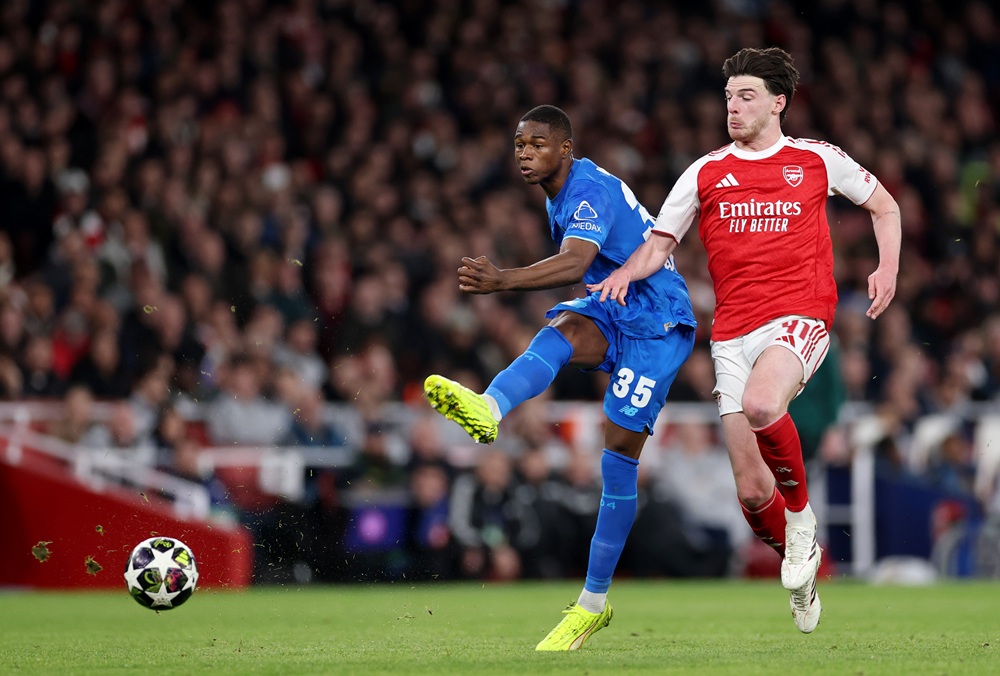
Arsenal do not need to rely solely on scouting clips. Their defenders faced Kofane across both legs of the Champions League last 16 in March 2026. He did not score, but his ability to occupy defenders, compete for space and carry the ball into dangerous areas gave Arteta's staff a firsthand look. Those two matches are a more meaningful reference than a highlight reel because they show his work against the sort of defensive standard he would routinely encounter in a title-chasing Premier League squad.
At 20, Kofane is still an unfinished centre-forward. He can stretch the space behind a back line, wrestle for position with established defenders and connect an attack with direct movement. But those traits do not automatically translate into an immediate twenty-goal Premier League season. The leap from a promising Bundesliga rotation attacker to a weekly starter for Arsenal would demand consistency without the ball, cleaner decision-making under pressure and a willingness to play within a tightly coached structure.
Early 2026-27 numbers were encouraging before his interruption: three goals in six competitive appearances. Small samples deserve caution, particularly when substitutes are deployed in favorable phases of matches, but the scoring rate helped keep his name on recruitment lists. The most interesting part of the Arsenal link is therefore not a sudden discovery. It is that the club's earlier interest appears to have survived the summer without becoming a completed deal.
GOATIFY
GOATIFY Soccer
From Leverkusen's emerging forward to Arsenal's long-term plans, explore GOATIFY football designs and fan favorites while the Kofane story develops.

Bottlers Arsenal Parody Football Decal London Sticker
Add football personality to your favourite gear.
Shop Now ↗
Glazers Out Manchester United Fan Protest Mug
Add football personality to your coffee break.
Shop Now ↗
Corner FC Arsenal Parody Football London Fans Sweatshirt
A football fan design for everyday wear.
Shop Now ↗

Fight Back Glazers Out - Manchester United Hoodie
A football fan design for everyday wear.
Shop Now ↗
A hamstring return, a contract to 2029 and a reported €70m obstacle
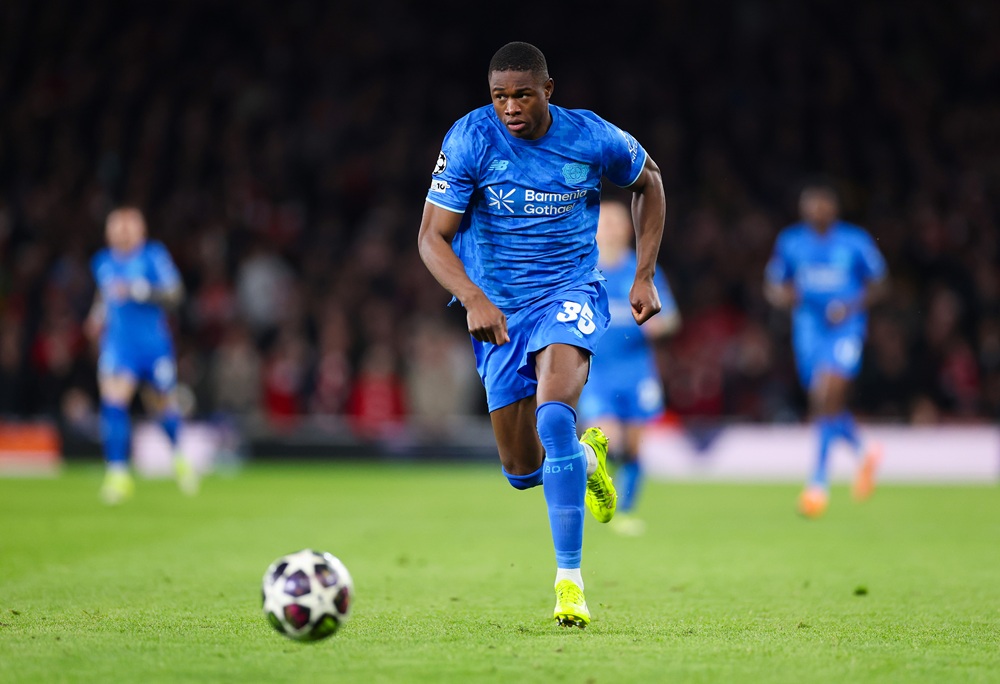
The immediate obstacle is medical, not tactical. Kofane has been sidelined by a hamstring injury since October 10. He has recently returned to full training, according to reporting on his recovery, but that is an encouraging stage rather than a guarantee that he can start high-intensity matches every few days. He was still unavailable for Leverkusen's match against Cologne on November 8 and was left out of Cameroon's international-break plans.
By this point the absence has stretched to roughly 38 days and nine games. For Leverkusen, the decision is whether to rebuild his competitive rhythm gradually. For a potential buyer, it raises a different question: how much useful information can be collected before the January window? An interested club would want to see him sprint, change direction and absorb full match loads without recurrence. A return to training is welcome evidence, but it cannot resolve that issue on its own.
Then comes the fee. Leverkusen are reported to have sought approximately €60 million to €70 million during previous discussions. His representative, Eric Depolo, has spoken in more ambitious terms about his valuation, but an agent's appraisal should not be mistaken for a formal asking price or accepted offer. No completed January agreement has been established in the reporting reviewed for this article. A serious deal would need a price both clubs accept, the player's agreement and a satisfactory medical assessment.
Leverkusen have important leverage: Kofane is under contract until 2029. Reports in Germany have also described conversations over improved terms and a possible extension to 2031, with the negotiations complicated by details of the proposed agreement. That does not prove a transfer is imminent. It may simply give the German club an opportunity to protect an appreciating asset while the player weighs longer-term options.
Competition makes the picture more complicated. Manchester United, Bayern Munich and Real Madrid have all been linked with monitoring his situation, and other Premier League clubs have surfaced in earlier reports. Such lists should be read as interest, not as a bidding war that has already begun. A player at this stage of development can attract frequent inquiries without any club being prepared to meet the price now.
For Arsenal, paying a large midseason premium for someone recovering from a muscle injury would be an unusual way to eliminate short-term uncertainty. The club would need to believe the long-term upside substantially outweighs the immediate risk. A summer pursuit, with more competitive minutes and a proper preseason ahead of the player, could be easier to evaluate. The January window may instead function as a test of seriousness: will monitoring turn into a concrete move, or stay on the recruitment board?
Arsenal's title push makes the striker decision harder, not simpler
Arsenal's position in the Premier League makes the transfer debate unusually delicate. They have won nine of their opening ten league games and are setting the pace, yet several of those wins have required patience against deep defensive blocks. Six were reportedly settled by a single goal. The November 7 home victory over Hull City is a useful illustration: Arsenal controlled stretches of play without creating a comfortable margin and needed Martin Ødegaard to capitalize on a goalkeeper's late error.
Arteta has spoken about the need to attack those situations with greater efficiency. When a league leader scores just enough to survive, the apparent solution is obvious: buy another goalscorer. But recruitment is not that simple. Against compact opponents, the quality of the final pass, the timing of runs into the penalty area and the team's ability to manufacture second balls can matter as much as the reputation of the No. 9. An additional striker who cannot immediately integrate with those patterns might not solve the precise issue.
Kai Havertz remains a major part of Arteta's offensive structure, helping connect midfielders and forwards while giving defenders problems through movement rather than static positioning. Viktor Gyökeres offers a more direct central reference. Reports have said the Swede scored 21 goals last season, but has had relatively few league starts this autumn, often finding himself behind Havertz. Those are two different tactical options already on the books, and neither disappears simply because a third forward is admired.
The squad's overall balance matters too. Bukayo Saka has dealt with a quad injury, and Arsenal have reshaped their attacking group through several recent departures. Whether a January signing is needed could depend on how quickly important players regain fitness, which competitions create the heaviest workload and whether Arteta wants a specialist finisher or a versatile forward capable of covering multiple roles. Buying Kofane would be a long-term investment in a centre-forward's development, not an automatic replacement for a fit winger or an instant answer to every low block.
The presence of other names on Arsenal's reported shortlist reinforces that recruitment is about options. Club Brugge forward Nicolò Tresoldi has been mentioned as another possible attacking target. Interest in multiple players is a normal part of building a market plan, and none of those names has to become a deal. It can also put competitive pressure on the existing group, particularly if the manager wants more urgency in the final third without rewriting a successful tactical system in the middle of a title race.
The decision to make is therefore twofold. If Arsenal want immediate cover, they should prioritize a fit, match-ready player whose role is clear from day one. If they see Kofane as a potential leading striker for several seasons, patience might deliver a cleaner medical assessment and a clearer view of Leverkusen's position. Trying to accomplish both objectives through one expensive January deal would leave little room for error.
GOATIFY
GOATIFY Soccer
Arteta's striker dilemma has Arsenal supporters debating what comes next. Browse GOATIFY's soccer collection for club-inspired tees, hoodies, accessories and stickers.

Next Season FC Arsenal Parody Football Decal Sticker
Add football personality to your favourite gear.
Shop Now ↗
Next Season FC Arsenal Parody Football London Hoodie
A football fan design for everyday wear.
Shop Now ↗
Next Season FC Arsenal Parody Football London Sweatshirt
A football fan design for everyday wear.
Shop Now ↗
Next Season FC Arsenal Parody Football London Tee
A football fan design for everyday wear.
Shop Now ↗

Arsenal's Kofane interest has a credible football explanation: a young Leverkusen forward has progressed quickly, impressed in Europe and offers qualities different from a conventional penalty-box finisher. The complication is the combination of his recovery, a contract with several years remaining and a reported price that would commit Arsenal to a significant long-term decision.
For now, the evidence supports continued scouting rather than an imminent transfer. His next appearances for Leverkusen will say more about January feasibility than any speculative headline. Arsenal's response to the international break, and whether Havertz and Gyökeres can turn territorial control into easier wins, will help reveal how urgently another striker is required.