Holmgren Out 8–10 Weeks — Thunder Now Missing Three Defensive Pillars
GOATIFYThe Oklahoma City Thunder were already trying to absorb two injuries that could reshape their season. On Friday, October 30, the situation became considerably worse. Chet Holmgren, the towering center who gives Oklahoma City its most distinctive defensive look, underwent treatment for a small tear in the patellar tendon of his right knee. The club expects him to return in eight to ten weeks. That is a defined window, but it is a long time for a team whose ambitions were built around having several elite defenders available together.
The timing is brutal. Jalen Williams has undergone surgery for a fractured fibula and dislocated ankle, while Cason Wallace had surgery on a torn labrum in his left shoulder on the same Friday as Holmgren's treatment. The Thunder are no longer confronting one unfortunate absence. They are confronting a chain reaction across their frontcourt, perimeter defense, rotation and championship timetable. Shai Gilgeous-Alexander remains the central constant, but even an MVP-level star cannot replace three different defensive jobs at once.
Holmgren's eight-to-ten-week window is a real deadline, not a quick rest
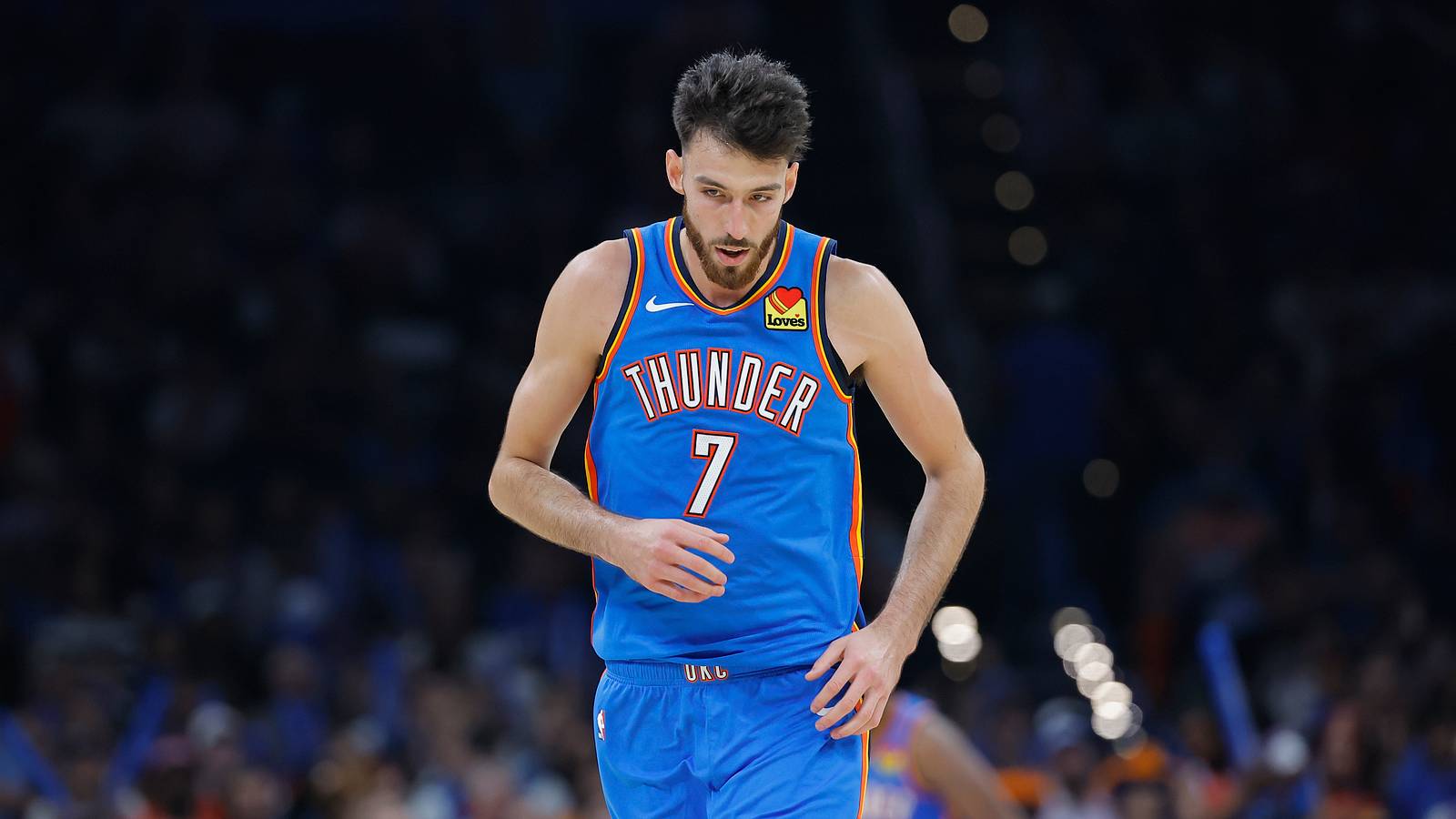
The first important distinction is between the announcement and what remains unknown. Holmgren reported mild right-knee discomfort on October 25. After consultations with specialists, the team chose a biological treatment on October 30 to address a small patellar tendon tear. Oklahoma City described the treatment as successful and said it expects a full recovery with a return to play in eight to ten weeks. That is the team's medical outlook, not a guarantee that he will be ready on a particular night or that he will immediately play his usual minutes.
The term biological treatment does not, by itself, identify every step of the procedure. There has been reporting that a platelet-rich plasma approach may have been involved, but the public team statement did not specify a complete protocol. There is no reason to invent an operation, rehabilitation milestone or diagnosis beyond the disclosed tendon injury. What matters for the basketball season is that the Thunder have lost their starting center for a substantial stretch and must plan without his unique combination of height, reach, mobility and shot-blocking.
Holmgren's impact is bigger than the traditional center statistics. When he is behind the first line of defense, guards can pressure the ball more aggressively because they know an opponent who gets past them still has to navigate an unusually long contest at the rim. He can protect the basket without permanently occupying the paint, which helps Oklahoma City switch and recover. On offense, his ability to space the floor and finish above the rim makes him more than a stationary screener. Replacing his points and rebounds is one problem; replacing the geometry he creates is another.
His October 22 performance against Denver offered a useful example of what disappears. He produced 12 points, 17 rebounds and four blocks as the Thunder beat the Nuggets 96-84. Those four blocks tell only part of the story: the threat of a contest can discourage drives before a shot is attempted. Oklahoma City can still deploy size with Isaiah Hartenstein, but it cannot simply substitute one big man and expect exactly the same defensive coverage, spacing or pace.
An eight-to-ten-week estimate points toward the turn of the calendar and the opening weeks of 2027. The team will have played a meaningful portion of its schedule before that window closes. The sensible approach is to treat every game without Holmgren as part of a longer adaptation, rather than assume the roster will be whole again as soon as the minimum estimate arrives.
Wallace's shoulder surgery strips away a second layer of defensive insurance
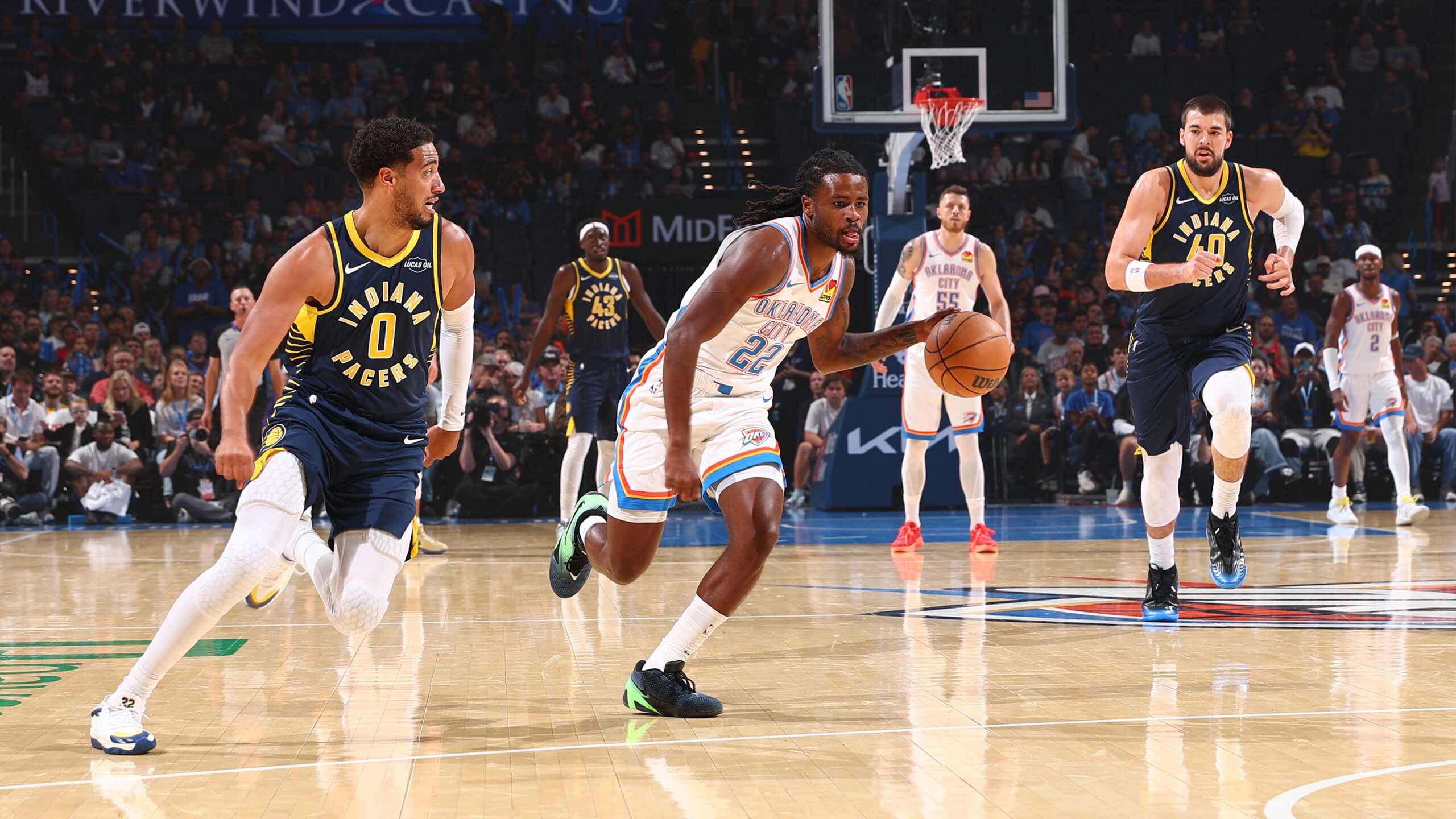
The same Friday brought a separate medical update on Cason Wallace. The young guard underwent surgery to address a labral tear in his left shoulder, with the procedure performed in Los Angeles. Oklahoma City said he will be re-evaluated before the end of the 2026-27 regular season. That wording matters: it does not promise a regular-season return, and it does not establish that Wallace is definitely out until the playoffs. It describes a later assessment, with the outcome still unknown.
Wallace's absence is especially damaging because he had grown into a primary point-of-attack defender. His job is to disrupt opposing guards before an offense reaches its preferred actions. That can mean fighting through screens, turning ball-handlers away from the middle, challenging passing lanes and recovering after the first move. Those possessions rarely generate the biggest highlight clips, but they are the foundation of the pressure that made Oklahoma City so difficult to play against.
The Thunder also changed their perimeter personnel during the offseason. Lu Dort and other established rotation pieces departed as the team managed its roster and financial commitments. Wallace was expected to take on an even larger responsibility alongside Gilgeous-Alexander. Instead, the team must ask its remaining guards to defend tougher matchups while still providing enough creation and shooting to prevent the offense from becoming predictable.
Alex Caruso would ordinarily be an obvious answer for some of those assignments, but he is also managing an ankle issue. The cumulative effect is important. When several elite defenders are available, a coach can stagger them and keep at least one specialist on the floor. When multiple specialists are missing, even a strong individual replacement cannot cover every minute or every matchup. The gaps become visible when the first defender is beaten and the rim protector who normally cleans up is also unavailable.
The temptation is to treat Wallace's injury as secondary because Holmgren is the more famous name. Strategically, that would miss how the injuries interact. A compromised perimeter defense increases the burden on the big men; a depleted frontcourt increases the cost of perimeter mistakes. Oklahoma City is losing protection at both ends of the same defensive sequence. That is why the medical updates cannot be evaluated as three isolated news items.

Williams' broken leg turns a depth problem into a roster-building test
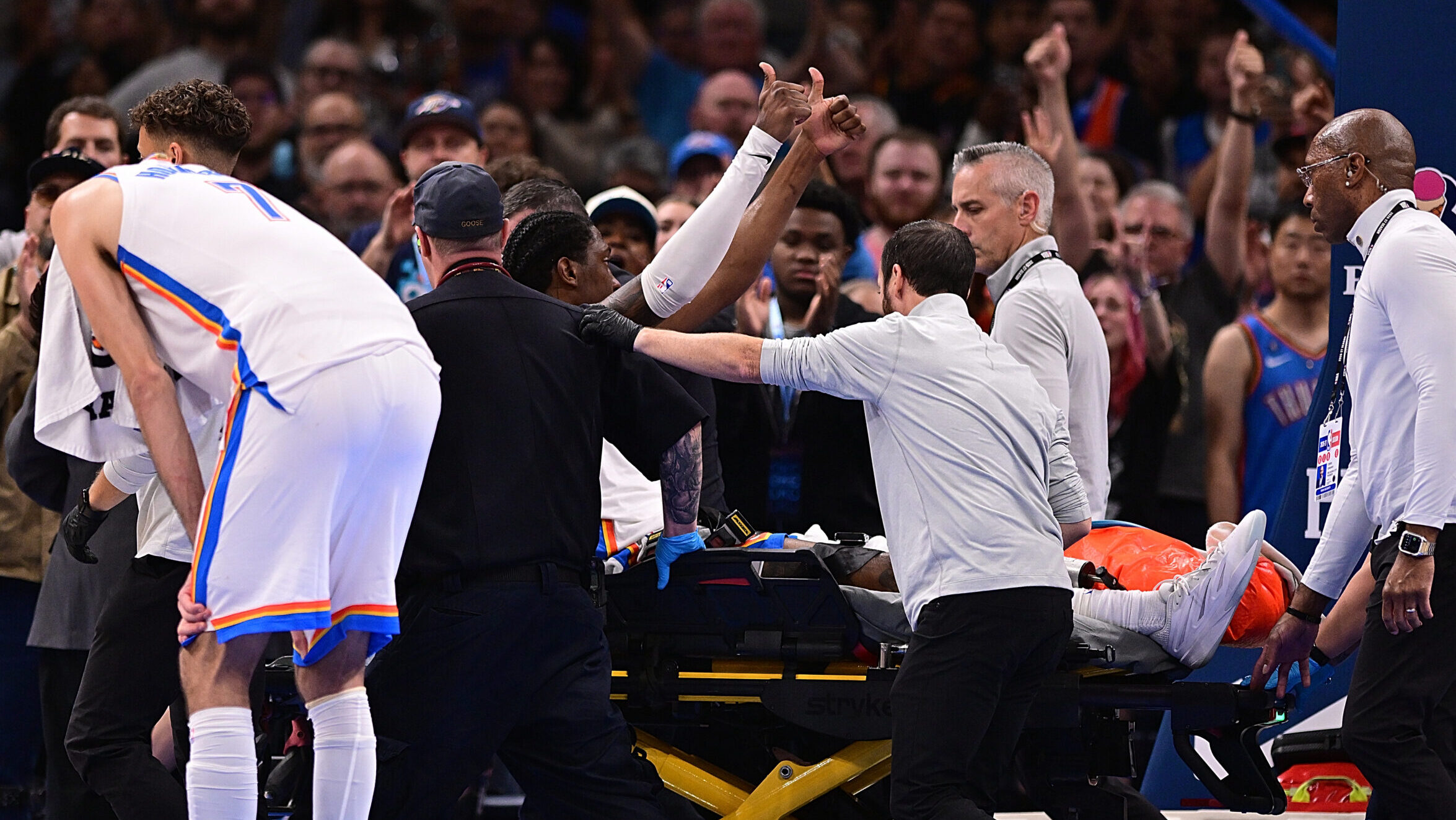
Jalen Williams is the third major piece of the puzzle, and in some respects the hardest to replace. The All-Star forward suffered a fractured left fibula and dislocated left ankle late in the October 25 victory over the Clippers. He underwent surgery, and the club has indicated that he will be re-evaluated before the regular season ends. There is no confirmed date for his return. A team can plan around an absence; it cannot safely build its entire spring strategy around a recovery date that has not been established.
Williams gives the Thunder a second high-level creator and a versatile defender who can take assignments across several positions. His ability to score, pass, defend and move without the ball prevents opponents from loading all their resources onto Gilgeous-Alexander. Losing him therefore affects both the way Oklahoma City generates good shots and the way it contains opponents' best wings. That two-way flexibility is not something a single reserve can imitate by increasing his minutes.
The frontcourt options are more straightforward on paper. Hartenstein can handle more of the traditional center work: screens, offensive rebounds, physical interior defense and quick passing from the middle of the floor. Jaylin Williams offers another experienced big-man option, while rookie Aday Mara brings size and developmental upside. But additional minutes do not automatically produce the same collective results. Coaches have to decide which combinations preserve spacing, which can survive against smaller lineups and which are ready for demanding late-game defensive assignments.
On the perimeter, Ajay Mitchell has already shown he can shoulder more offense. His 30-point performance against Phoenix helped Oklahoma City remain unbeaten earlier in the week, and he followed it with 29 points against Dallas. Those performances are encouraging evidence of genuine scoring ability, but they should not be mistaken for a promise that he can reproduce the full impact of Williams and Wallace over months. A young player taking on a larger role will face scouting adjustments, fatigue and the burden of more difficult defensive matchups.
The reported addition of Ochai Agbaji is another practical response to the shortage of wings. A new signing can provide needed minutes and defensive energy, but integrating him into an established system takes time. Oklahoma City's challenge is not merely finding five healthy starters. It is creating combinations that can function together for forty-eight minutes while avoiding the temptation to ask any one replacement to do the jobs of several injured players.
That is also why comparisons with last year's Thunder must be handled carefully. This is not the identical roster that weathered previous absences. Depth moved out during the offseason, and the injuries have landed on players whose responsibilities were expected to expand. The organization still has options, but every adjustment now carries a more visible tradeoff.

Gilgeous-Alexander can keep Oklahoma City afloat — but Houston will test the new reality
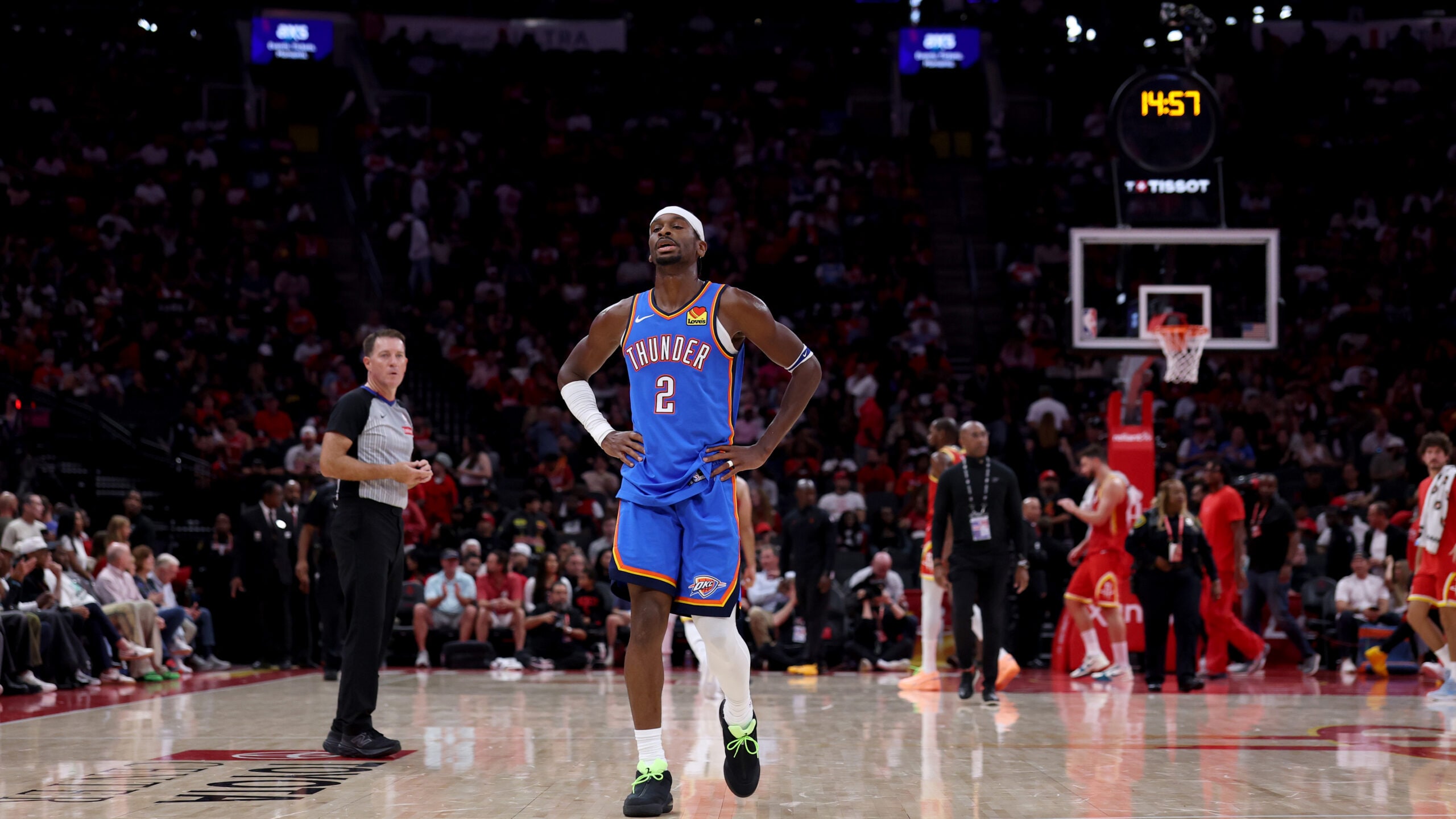
The strongest argument against writing off Oklahoma City is still Shai Gilgeous-Alexander. The two-time reigning MVP can create efficient offense when possessions break down, draw defenders into the lane and make teammates more dangerous simply by forcing help. He also sets a standard of composure that matters when a young roster is suddenly asked to play unfamiliar roles. Those qualities give the Thunder a credible chance to remain competitive even when the original rotation has been torn apart.
Yet the burden on Gilgeous-Alexander is changing. Without Williams, opponents can devote more attention to the primary scorer. Without Wallace, Shai's teammates have fewer elite perimeter stops to support him. Without Holmgren, there is less deterrence behind those defenders. The same player can be asked to carry more possessions on offense and to compensate for a less forgiving defensive environment. That is not an indictment of his ability; it is a reminder that basketball stars operate inside systems, not in isolation.
The Thunder were 4-1 entering Saturday's meeting with Houston after their first defeat came in Dallas. The loss to the Mavericks was a warning about how quickly a good start can become fragile, but five games are not a season. The Rockets matchup is the first immediate test of how the latest medical update changes Oklahoma City's practical rotation. Who starts at center? Which guard handles the toughest perimeter assignment? How many minutes can Mitchell sustain? Those decisions will be more revealing than any single headline about championship odds.
There is a longer-term strategic question too. Oklahoma City still has draft assets and flexibility that could support a trade if management decides reinforcements are necessary. But the price of a hurried deal can be high, especially when other teams know a contender is dealing with injuries. There is also a difference between adding a useful rotation player and finding someone capable of replacing an All-NBA-level contributor. The Thunder should not confuse activity with a solution.
The Western Conference will not wait for a full-strength Oklahoma City roster. San Antonio, Denver, Houston and the rest of the playoff field have their own ambitions, and every game can influence seeding. But the regular season also leaves room to experiment. A temporary lineup that develops chemistry now might become a valuable bench combination when players return. A younger contributor who earns trust in November could make the team more versatile in March.
The realistic goal is not to pretend that three major absences are irrelevant. It is to protect the season long enough for the medical picture to improve, preserve the health of the players still available and identify which tactical adjustments actually work. Gilgeous-Alexander gives the Thunder a reason to believe they can do that. Whether belief translates into a sustainable winning pace will be decided on the floor.

Oklahoma City's new injury crisis has a clear hierarchy of certainty. Holmgren has an eight-to-ten-week recovery expectation after treatment for a small right patellar tendon tear. Wallace and Williams have undergone surgery and face later re-evaluations without confirmed return dates. None of those announcements should be inflated into a guarantee, either optimistic or pessimistic.
The Thunder still have an MVP, experienced big men and young players with an opportunity to grow. What they no longer have is the luxury of assuming their best defensive combinations will be available every night. The next two months will test not only their depth but the judgment of everyone responsible for deploying it. For a team that entered the season thinking about a title, the immediate mission is simpler and harder: stay in the race.