

The Dolphins Lost Willis and Sieler on One Day. Now It’s Kyle McCord’s Turn.
GOATIFYMiami's quarterback question has become something much bigger than a depth-chart adjustment. The Dolphins placed starter Malik Willis and defensive lineman Zach Sieler on injured reserve Tuesday, November 10, removing two very different kinds of leaders from a team that is already 1-7. Cornerback Reese Taylor was waived in the same roster announcement, but the injuries to Willis and Sieler are the decisions that reshape the coming weeks.
Willis's groin injury has opened the way for 24-year-old Kyle McCord to prepare for his first NFL regular-season start, beginning with a November 15 matchup against Indianapolis. The shift affects how Miami can attack on offense, how much the defense may have to carry, and how the club evaluates its quarterback options beyond this week. Losing Sieler at the same time makes that balancing act considerably harder.
Willis's injury removes the offense's second dimension
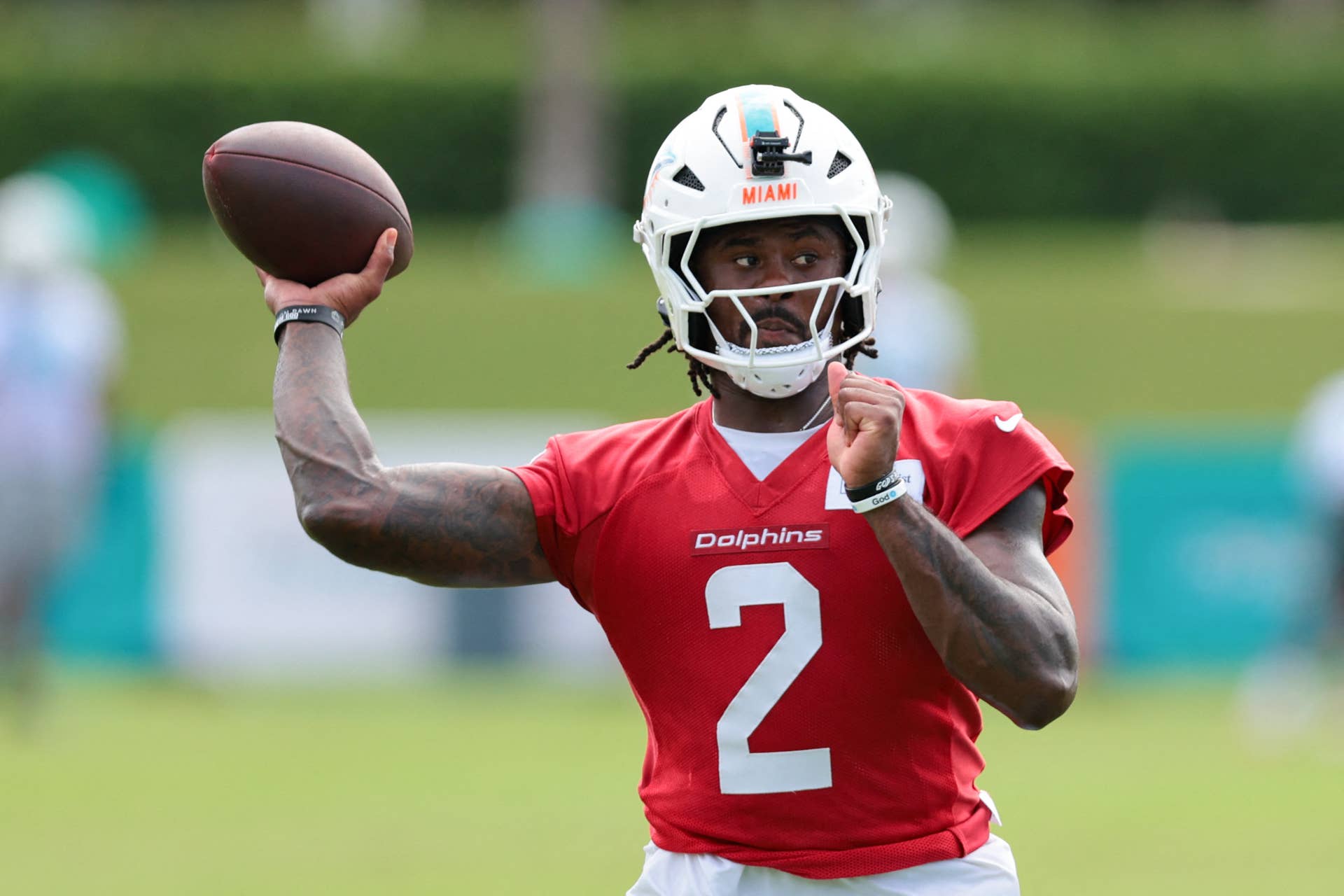
The timing tells much of the story. Willis entered the November 8 game against Detroit as Miami's starting quarterback, but the offense produced only nine points in a 19-9 loss. He completed 13 of 25 passes for 128 yards with an interception and rushed twice for seven yards. Those are not merely disappointing numbers for one afternoon; they show how constrained Miami becomes when the quarterback who normally threatens to run cannot make defenses respect that possibility.
Willis has thrown for 1,396 yards with six touchdowns and six interceptions across Miami's first eight games. His passing record is uneven, yet the attraction of his skill set was never solely about throwing into tight windows. Against the Jets on October 25, he completed 14 of 21 passes for 208 yards and two scores while adding 37 yards and a rushing touchdown. Earlier against Cincinnati, his 74 rushing yards supplied an entirely different route to productive possessions. Those contrasting performances help explain why the groin injury matters beyond the quarterback's individual health.
A zone-read keeper can freeze an edge defender. A quarterback scramble can convert a covered third down. Even the possibility of either makes defensive coordinators consider a wider menu of threats. When Willis is unable to accelerate, opponents can close those escape lanes and play the passing game more aggressively. Miami's recent offense was already struggling to create sustained drives, and removing a ball-carrier from the backfield changes the math on every obvious passing down.
Injured reserve means at least four games out, rather than an ordinary week-to-week absence. The upcoming stretch runs through Indianapolis, Buffalo, the Jets and Denver before a possible return window. That does not establish a recovery date; it establishes a minimum period in which Miami must prepare as though somebody else is its quarterback. Given the Dolphins' record, the decision is also a reminder that protecting the player's recovery can be more important than squeezing out one compromised appearance.
Willis's arrival in March was supposed to give a new coaching staff a mobile starter and a fresh direction under center. The first half of the season produced occasional flashes but little consistency. Now the team cannot simply ask him to solve those problems from the field. It has to find out which parts of the offense work without him.
Kyle McCord gets a first start, not a ready-made rescue mission
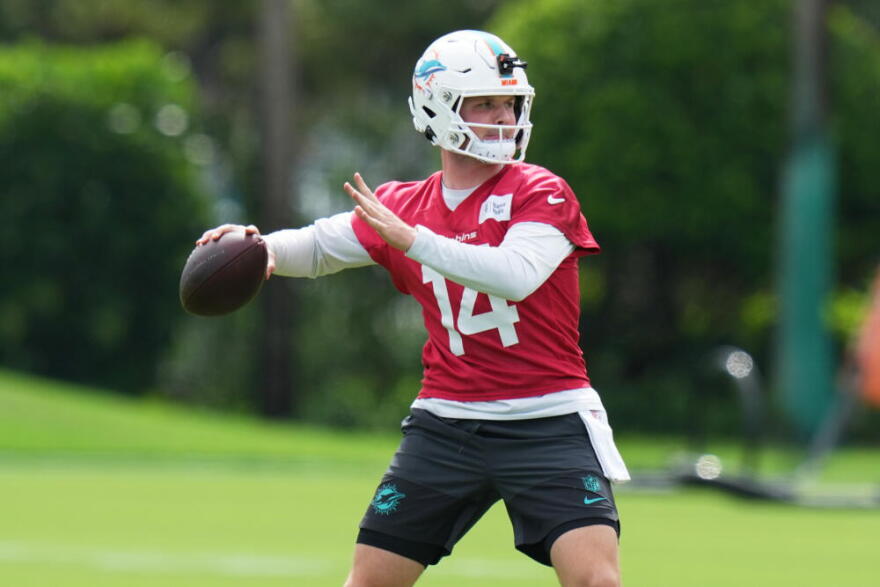
McCord has a familiar college name but almost no NFL regular-season résumé. Philadelphia selected him in the sixth round of the 2025 draft after his college career at Ohio State and Syracuse. He spent time on the Eagles' practice squad, moved to Green Bay in 2026 and joined Miami near the end of August. The result is a quarterback who has taken snaps in the professional preseason without having had to lead an NFL offense for four quarters in a regular-season game.
His Green Bay preseason work offered at least a reason for Miami to take the gamble. McCord completed 46 of 70 throws for 446 yards, four touchdowns and no interceptions across that summer's exhibition games. A strong preseason does not guarantee a smooth transition into a regular-season defensive game plan. It does suggest he has enough timing and command of the structure to give the Dolphins a functional way to begin, even if he cannot reproduce Willis's mobility.
The difference should show up in play selection. Miami cannot responsibly call the same quarterback-running package and assume identical results. It can instead lean on quicker decisions, manageable second downs and routes that let McCord identify his first read without holding the ball through multiple pressure looks. Establishing a run threat through the backs, rather than through the quarterback, would help keep Indianapolis from treating every snap as an opportunity to pressure the inexperienced starter.
The temptation is to label this a tryout for the long-term job, but that simplifies the challenge. A first start is as much a test of protection, coaching and supporting-cast execution as it is of the person receiving the snap. Drive-killing penalties and unblocked rushers can bury a developing passer before his decision-making has a fair chance to show. If Miami builds a manageable game instead of asking for highlight throws, it can learn more about McCord than a reckless downfield shootout would reveal.
Practice-squad quarterback Brady Cook has been mentioned as a potential backup option while Miami reorganizes its available personnel. That remains contingent on roster decisions. For McCord, the immediate task is simpler and harder: handle the calls, protect the football and finish possessions. For a 1-7 team, those fundamentals would amount to useful progress even if the score does not suddenly change direction.
GOATIFY
GOATIFY NFL
Quarterback changes demand a new game plan — explore GOATIFY American-football gear while Miami adjusts to the Willis injury.


Sieler's absence makes the quarterback transition less forgiving
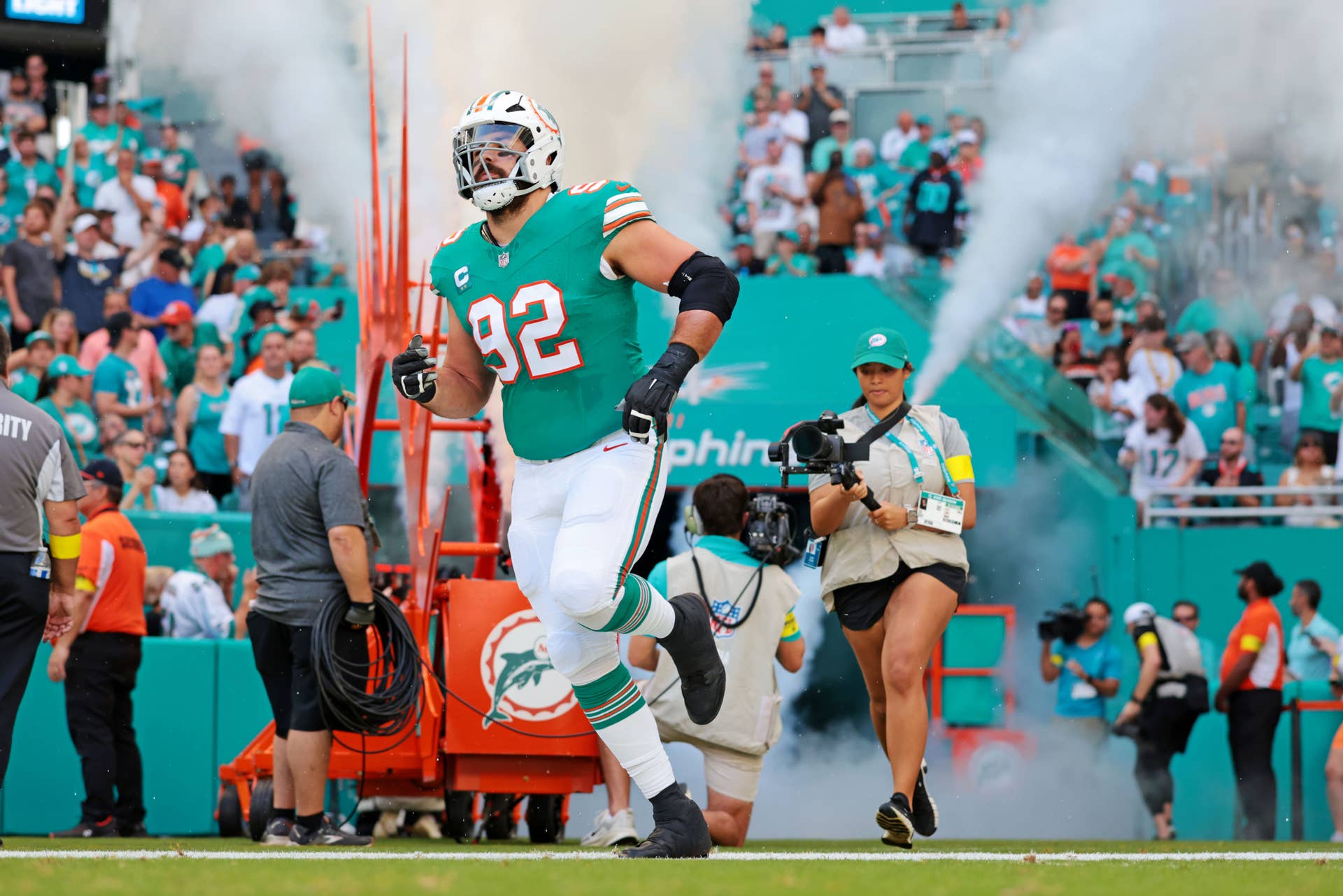
Sieler's injured-reserve placement could be just as disruptive as the change at quarterback. He does not attract the same headlines as the player who touches the ball on every offensive snap, but he supplies exactly the kind of reliability a struggling team needs. Miami's official roster record credits him with 381 career tackles, 37.5 sacks, five forced fumbles and two interceptions across 116 games, including 90 starts. He has been a Dolphins captain in each of the past three seasons and was named the club's 2024 Dan Marino Team MVP.
Those numbers describe more than one season's pass rush. Sieler has been with Miami since a waiver claim in 2019 after starting his NFL journey as Baltimore's seventh-round pick in 2018. He developed from a player fighting to secure a roster spot into a long-standing presence in the defensive front. That background matters when a unit is working through difficult games: a reliable veteran can get everyone lined up, play with sound technique and make younger teammates' jobs less complicated.
Replacing one defensive lineman is rarely a one-for-one transaction. Interior pressure comes from coordinated assignments, with one player's penetration creating space for another to finish a play. Sieler's absence may require more rotation, different stunt combinations or greater reliance on linebackers and edge defenders to disrupt a quarterback. That can leave the defensive staff trading aggressiveness for gap discipline. Miami must make those calculations without the established anchor who usually helps both.
There is a direct connection to the offensive switch. An inexperienced quarterback benefits from shorter fields and games in which a few well-executed drives can remain decisive. If opponents can run efficiently into Miami's defensive front, McCord is more likely to face long deficits and obvious passing situations. Turnovers, field position and third-down defense therefore become just as important to his development as passing statistics.
The same announcement also confirmed the release of cornerback Reese Taylor, whose recent contributions have been concentrated on special teams. His exit is a smaller part of the day's headline, but it underlines the wider roster churn. A 1-7 team cannot assume that simply moving players onto and off the depth chart will recreate the continuity lost when a captain and the starting quarterback disappear together. The coaching staff now has to build that continuity one assignment at a time.
GOATIFY
GOATIFY NFL
Miami's front now has to replace Sieler's experience. See GOATIFY NFL fan designs alongside our defensive breakdown.
The next four weeks will not be a referendum on whether McCord can immediately replace everything Willis offers. They will reveal whether Miami can create a coherent offense for a different style of quarterback while finding answers on defense without Sieler. The November 15 meeting with Indianapolis is the first test, and the approaching games against Buffalo, the Jets and Denver leave little room for a gradual handoff.
Willis's eventual return will depend on his recovery, not a headline or a projected calendar date. Sieler's absence creates its own unanswered question up front. Until those players are available again, the Dolphins' season is less about a sudden turnaround than about making intelligent adjustments, developing a young quarterback and establishing which pieces of the roster can be trusted when circumstances change.
Shop GOATIFY NFL and American football shirts, hoodies and stickers.

















