

Dvalishvili Helped Free Usman Nurmagomedov. He Still Won't Forgive Him.
GOATIFYMerab Dvalishvili wanted Usman Nurmagomedov out of an Abu Dhabi prison. That does not mean he wants him anywhere near a handshake. On November 17, 2026, a court decision reduced the penalties stemming from a hotel confrontation involving their camps, and Usman was released. It was a major change in a case that had turned a fight-week grudge into a criminal matter.
The twist is who pushed for clemency. Dvalishvili, one of the people at the center of the incident, publicly asked for the detained men to be freed. He then made clear that the appeal was not an invitation to repair the relationship. Helping someone avoid a longer sentence and respecting them again are entirely different acts.
That distinction matters beyond the personalities. Umar Nurmagomedov lost a scheduled crossover-wrestling appearance, a late substitute produced an upset, and Usman's professional future sits between conversations about a UFC move and a possible return to the PFL. The legal development is confirmed. Any announcement of a fresh fight contract, peace deal or guaranteed return date would be premature.
The court changed the sentence. It did not erase the brawl.
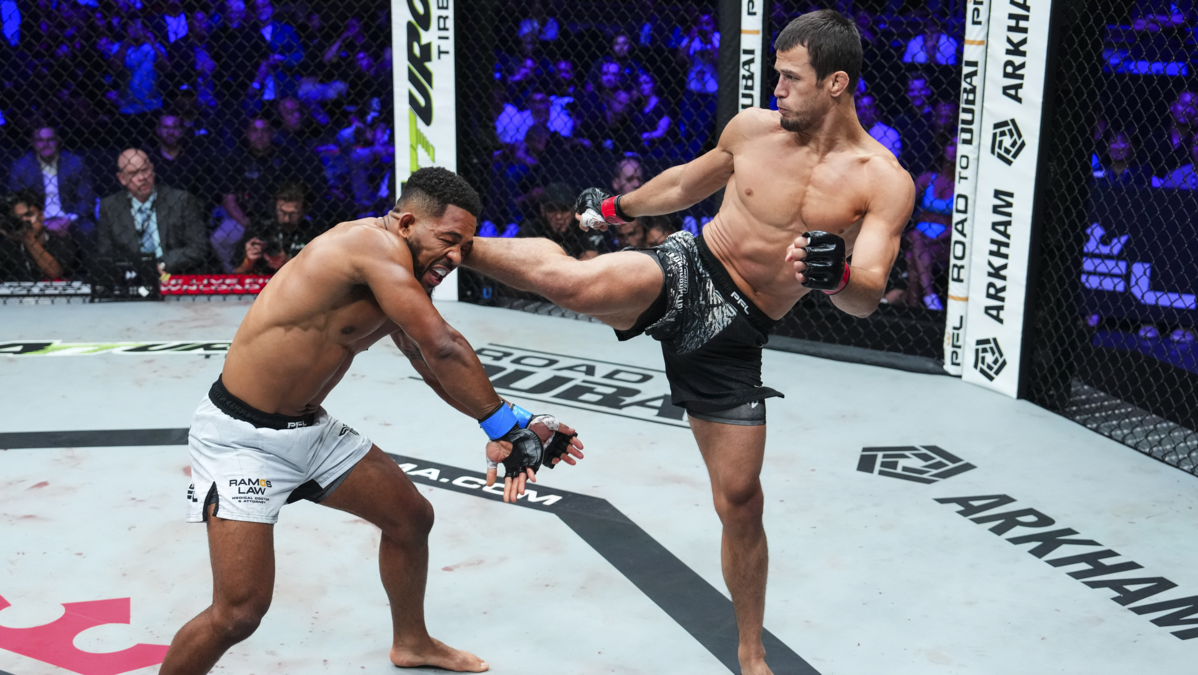
The biggest actual news on Tuesday was a judicial decision, not a promoter's statement or a viral clip. Abu Dhabi authorities adjusted the sentences handed down after the November 11 fight at the Yas Hilton, and Usman Nurmagomedov was released. His punishment had initially included six months' imprisonment and a fine of Dh300,000. The reported revised fine is Dh150,000 for each affected defendant. That is a material reduction, but it is not a finding that the confrontation never happened.
The original account described Usman and seven associates as receiving custodial sentences for their roles in the disturbance. The wider case also involved Georgian MMA fighter Merab Dvalishvili and Saba Lazishvili, whose earlier release followed separate Dh50,000 fines. Different initial reports counted defendants differently because some offenses related to the altercation while others related to filming and distributing footage. Treating every person mentioned as having received the same sentence would flatten important differences in the court proceedings.
According to the latest report, the Abu Dhabi Judicial Department cited reconciliation, withdrawal of claims and appeals by victims when explaining the changed outcome. That is the basis for the reported release. It is not a license to assign private motives to the court or to invent negotiations that have not been described publicly. A victim's request for leniency can influence a process without rewriting the facts that brought everyone into it.
The initial sentencing also included a deportation order after completion of the custodial term. The new reporting establishes release and reduced fines, but does not independently specify every remaining immigration consequence or the full amended order. Anyone claiming the entire judgment was wiped away, or that future entry to the UAE is guaranteed, is running ahead of the publicly available detail. Those are separate questions requiring actual court or immigration documentation.
The hotel incident happened before the Real American Freestyle event in Abu Dhabi. Video circulated showing a confrontation as Dvalishvili was recording material in the lobby. Reports describe Usman approaching and striking him, followed by a wider melee. The presence of famous fighters, cameras and a quickly circulating clip made this impossible to contain as a private argument between teams. Its legal and commercial consequences quickly eclipsed the original wrestling card.
GOATIFY
GOATIFY UFC & MMA
The court ruling is bigger than one fight-week argument. Browse GOATIFY UFC and MMA-inspired shirts, hoodies and accessories while following the latest story.

MMA GOAT Gold Middle Finger Fight Crewneck Sweatshirt
A MMA fan design for everyday wear.
Shop Now ↗


UFC GOAT Gold Middle Finger Fight Decal Sticker
Add MMA personality to your favourite gear.
Shop Now ↗

There is a temptation in fight culture to treat an out-of-cage clash as another round of promotion. That attitude misses a basic distinction. A UFC bout occurs under officials, rules, consent, medical supervision and a professional contract. A confrontation in a hotel does not. The legal system, not a referee, determines the consequences. That is why the revised ruling matters more than the number of times the footage has been replayed.
Usman's next move can now be discussed without pretending the same immediate detention barrier remains. But release is a first step, not a statement from a commission clearing him to compete, not a new promotional signing, and not an apology accepted by every person involved. The public record supports the narrower and more useful conclusion: his custody situation changed decisively on November 17 while several sporting and personal questions remained open.
The rivalry was already boiling before anyone entered that hotel lobby

The story did not begin in an Abu Dhabi corridor. Dvalishvili beat Umar Nurmagomedov by unanimous decision at UFC 311 in January 2025 to retain the UFC bantamweight championship. The decision gave him the formal sporting answer on that night, but the personal dispute around the two camps survived the bout. Earlier tension resurfaced around a Real American Freestyle event in Georgia in 2026 and spilled into social-media exchanges.
Usman is Umar's younger brother and the cousin of former UFC champion Khabib Nurmagomedov. Those relationships generate instant attention, but they also make it essential to keep the names and records straight. Usman built his reputation in lightweight MMA and the PFL. Umar competes in the UFC's bantamweight division. Merab is the Georgian rival who beat Umar in the Octagon. None of them is interchangeable, even when a headline simply says the Nurmagomedovs.
At the November event, Umar had been scheduled for a wrestling match with UFC Hall of Famer Urijah Faber. Merab was on the same program to face Marlon Moraes. Usman, by contrast, was in Abu Dhabi as a supporter rather than as a scheduled competitor. The confrontation therefore jeopardized an appearance that was already arranged for Umar; it was not a failed attempt to stage an Usman-versus-Merab bout.
The promotion had to rewrite its card amid the fallout. Umar did not compete in the scheduled contest against Faber. Saba Lazishvili, a friend of Dvalishvili who had also been caught up in the aftermath of the incident, was invited in as a late replacement. He went on to defeat Faber by a 12–7 score. That result belongs to the wrestling event, not the official UFC record of any of the men involved.
Merab also went ahead with his crossover appearance and beat Moraes by pinfall in the opening period. It was an oddly revealing pair of outcomes. A program that initially carried the star power of an expected Umar appearance still produced its own sporting narrative, while the week's largest headlines came from a hotel brawl and court proceedings. The replacement win was legitimate athletic work, not merely a subplot in someone else's feud.
This matters when assessing the effects on Umar. A missed crossover match is not equivalent to a UFC suspension, and no verified new UFC disciplinary decision is established by the release report. His next contracted MMA appearance, the conditions of his future travel and whatever private discussions his management is having must be treated independently. The collision between a wrestling booking and a criminal case shows how one arena of an athlete's life can interrupt another without automatically determining it.
The older fight result provides context for the animosity, but it is no excuse for physical violence outside competition. A loss by decision is settled inside the cage. Even a dispute about how a victory was celebrated does not become a second fight simply because cameras are present. The question now is whether the camps will continue to turn a settled sporting rivalry into a fresh public flashpoint.
GOATIFY
GOATIFY UFC & MMA
Merab and Umar's competitive rivalry has now spilled beyond a fight card. Explore GOATIFY fight-fan designs in the official UFC and MMA collection.


Rogainz Joe Rogan UFC MMA Martial Arts Sticker
Add MMA personality to your favourite gear.
Shop Now ↗

Merab asked for their freedom — and still refuses the handshake

The most striking part of the release story is not a contradiction at all once two different decisions are separated. Dvalishvili appealed for the detained men to be released after his RAF victory. Later, as news of the amended sentences emerged, he indicated that he would welcome their freedom but did not want personal reconciliation. He does not have to approve of what happened to believe a lengthy custodial outcome should be avoided.
That separation exposes a common mistake in the way combat-sports grudges are covered. When a fighter asks that a rival receive leniency, the gesture is immediately translated into friendship. When he then declines a handshake, the same audience calls it hypocrisy. Both readings are too simple. Mercy concerns what should happen to another person; trust concerns whether you want a relationship with that person again. One can be restored without the other.
Speaking to journalist Ariel Helwani, Merab said he and Lazishvili had not wanted to press charges and described losing respect for Usman. He also said Umar did not initially join the first group of men who approached him but became involved later. Those statements give Merab's account of the sequence and his feelings; they should not be treated as a full independent reconstruction of every individual's legal responsibility.
Asked about the possibility of burying the hatchet, Dvalishvili rejected it and questioned the character of the people involved. That answer will keep the argument alive online, especially among fans who have taken sides since UFC 311. But it should not drown out the more consequential part of his conduct: his stated preference was that the opposing men be released rather than remain incarcerated. That choice is worth acknowledging without presenting him as having forgiven them.
Merab has also discussed wanting Song Yadong next when he returns to the UFC. That is an expressed preference, not confirmation of a signed fight agreement, venue or date. Likewise, his reported lack of interest in another Umar rematch does not bind the UFC's matchmaking decisions. The sport's competitive machinery can continue even if two athletes never agree to stand together for a friendly photograph.
The release will probably make the feud easier to sensationalize. Every staredown, online comment and training-camp interaction now risks being interpreted through the hotel incident. For promoters, attention is an asset. But there is a ceiling on what can be safely encouraged: a rematch storyline does not require reliving an unsanctioned confrontation, and a press conference is not an acceptable substitute for a controlled sporting contest.
The cleanest test of whether the matter actually settles is behavioral, not theatrical. If both camps compete, travel and promote future events without another physical incident, their private opinions need not change at all. Merab can remain angry. Usman can pursue his career. Umar can chase another UFC opportunity. Peace, in that sense, is the absence of another brawl—not a staged handshake.
Usman's UFC future is open. The PFL has not disappeared.
Outside the courtroom, the unresolved question is where Usman Nurmagomedov actually fights next. He has already shown why major promotions would be interested. His lightweight run under the PFL banner has included high-level performances against serious opposition, including a first-round stoppage of Archie Colgan in New York in July 2026. He is not seeking a contract simply on the strength of the famous family name.
GOATIFY
GOATIFY UFC & MMA
The UFC rivalry is still alive despite Merab's appeal for release. Check out GOATIFY MMA fan gear while the next sanctioned matchups take shape.

UFC GOAT Gold Middle Finger Fight Decal Sticker
Add MMA personality to your favourite gear.
Shop Now ↗MMA GOAT Gold Middle Finger Fight Crewneck Sweatshirt
A MMA fan design for everyday wear.
Shop Now ↗That does not mean a UFC debut has been booked. Reports have linked Usman with the possibility of joining Umar on the UFC roster, but talks and interest are not a signed agreement. No confirmed opponent, weight-class booking or debut date was established by the November 17 release report. Promoting any of those as certain would mistake a plausible storyline for completed business.
There is also a real incumbent at the negotiating table. Nakisa Bidarian, speaking in his PFL and Most Valuable Promotions role, indicated on November 16 that the organization wanted to continue working with Usman. The crucial detail was that Usman remained inside an exclusive negotiating window even though he was not technically under the same active fighter contract. Those are different legal and commercial positions, and the window may affect how quickly other opportunities could become formal.
Bidarian's comments did not amount to blanket approval of the hotel conduct. His position was that he wanted the athlete to succeed both professionally and personally. Whether that produces a renewed deal is unknown. For the PFL, retaining an accomplished young lightweight would preserve star value in a competitive market. For Usman, staying could offer continuity, while a UFC move would create different opponents, promotional pressures and a different path to measuring his standing.
Both sides also have reasons to wait for clarity. A fighter negotiating across organizations needs concrete dates, travel eligibility, terms and the ability to complete a camp. A promoter needs confidence that an announced headline bout will actually happen. The revised sentence removes a major immediate obstacle, but it does not automatically answer contractual questions or every regulatory issue attached to future competition.
The numbers surrounding his situation should not be confused. Dh300,000 and Dh150,000 are reported court fines, not a fight purse. A six-month sentence was a criminal penalty, not a sporting suspension. A possible UFC contract is not a transfer fee already paid by another organization. Being precise about categories is especially important in a week when courtroom developments, wrestling scores and MMA matchmaking have been repeatedly bundled into the same headlines.
Sporting merit will still be part of the calculus. Usman needs matchups that test his lightweight abilities instead of simply replaying the family feud at every media appearance. If he returns to the PFL, the next defense or showcase should stand on its competitive meaning. If he signs with the UFC, observers should evaluate the opponent and division rather than assuming a belt challenge is owed to him on arrival. A remarkable pedigree gives him visibility, not automatic placement.
Usman Nurmagomedov's release is real news. The November 17 court adjustment changed his immediate legal position, and the reduced fines are concrete. Merab Dvalishvili's appeal mattered to the story, but his refusal to reconcile is just as clearly documented. Neither fact cancels the other.
The useful questions from here are practical: what the complete amended court order requires, whether Usman agrees to another PFL deal or an actual UFC contract, what Umar's next competition will be, and whether the rival camps can occupy the same fight-week spaces without another confrontation. Until those answers exist, a supposed peace deal or confirmed showdown is invention.
Combat sports already offers a legitimate way for rivals to settle competitive arguments. This week's outcome is an opportunity to return the focus to sanctioned contests, professional responsibility and real matchmaking. The freedom to fight again is not the same as the right to force another fight outside the cage.
GOATIFY
GOATIFY UFC & MMA
Shop GOATIFY UFC and MMA shirts, hoodies and fight fan gear.
Rogainz Joe Rogan UFC MMA Martial Arts Sticker
Add MMA personality to your favourite gear.
Shop Now ↗


















