Edwards Hit 26, LaMelo Added Seven Assists — the Knicks Have Questions
GOATIFYMinnesota did not need a regular-season game to make Madison Square Garden uncomfortable. The Timberwolves beat the defending champion New York Knicks 122–104 on October 12, and the score was only part of the message. Anthony Edwards supplied 26 points, LaMelo Ball added seven assists, and Jaden McDaniels hit four of five three-point attempts. Minnesota's new-look attack looked quicker and more varied than a preseason result usually allows anyone to claim.
New York, meanwhile, fell to 0–3 in exhibition play. That is not a championship crisis, especially with coach Mike Brown experimenting and keeping some of his regular offense under wraps. But the difference in movement, perimeter shooting and execution was difficult to miss. Minnesota made 18 threes to New York's eight and won the rebounding battle 39–28. The Knicks have time to correct those numbers; they do not have much time before the games start counting.
The useful takeaway is not that Minnesota is suddenly a finished contender or that the Knicks have forgotten how to win. It is that the Wolves already have a clearer picture of how their star creators can share the floor, while New York still needs to establish which preseason problems are harmless experimentation and which require immediate attention.
Edwards and Ball are already changing Minnesota's offensive geometry

Edwards remains the clearest source of Minnesota's half-court scoring, but Monday showed why the team wanted another genuine passer beside him. He scored 26 points on 8-of-16 shooting, including five made threes. That is impressive production in limited preseason work, yet the more interesting number may be Ball's seven assists. A second creator gives Edwards opportunities to attack a defense that has already been shifted rather than asking him to manufacture every advantage himself.
Ball's own scoring line was modest: 10 points on seven field-goal attempts, with five turnovers. Those giveaways matter. They also sit beside a style of play that encourages early outlets, ambitious passing angles and rapid decisions. The trick for Minnesota is keeping the speed without treating every possession like a highlight attempt. A pass that surprises the defense is valuable; a pass that surprises its intended recipient can erase the advantage just as quickly.
The opening half supplied a useful illustration. Minnesota led 62–50 at the break, and Edwards finished the second quarter with a pull-up three assisted by Ball. That possession captures the partnership's promise better than a highlight reel: Ball can start a sequence, move the defense and deliver Edwards the ball in rhythm. Edwards still has the freedom to create his own shot, but he does not have to be the first and last decision-maker on every trip.
Coach Chris Finch has been weighing the emotional effect of Ball's arrival as well as the tactical one. Minnesota's ball movement has an obvious energy to it, with teammates looking for chances to reward cutters and shooters. That enthusiasm can be an asset across a long season, particularly when injuries or fatigue force different combinations onto the floor. It is not a substitute for disciplined spacing. Ball and Edwards must learn when the spectacular pass is there and when a simple reversal creates a better shot.
The test against better-prepared regular-season defenses will be whether the Wolves can keep that pace after opponents begin switching more aggressively and loading up on Edwards. New York did not provide a complete answer. It did show why a two-creator offense can be more difficult to predict than one built around a single dominant scorer.

McDaniels' shooting and Dosunmu's flexibility make the depth question interesting

McDaniels was the player who made Minnesota's offensive balance look especially convincing. He finished with 22 points on 8-of-12 shooting and went 4-of-5 from beyond the arc. Those are the numbers that turn an already dangerous backcourt into a wider problem for opponents. When defenders shade toward Edwards or Ball, McDaniels has to make them pay before the defense can recover.
His role is more complicated than simply waiting in the corner. Minnesota wants McDaniels to handle more creation responsibility, including drives after closeouts and possessions in which he initiates the action. Some of that work was sharp against New York. Other possessions exposed a familiar issue: his handle and passing decisions are less polished than his shot-making. Four turnovers against two assists are a reminder that expanded responsibility does not automatically translate into more efficient offense.
That tension matters because Minnesota is asking McDaniels to solve problems at both ends. He spent time guarding Jalen Brunson, one of the league's most demanding perimeter assignments, while also being expected to contribute as a scorer and secondary handler. If he has to chase the opposing lead guard for long stretches, the Wolves may lose some of his value as a roaming defender who can disrupt passing lanes and help behind the initial point of attack.
Ayo Dosunmu offers one possible way to distribute that workload. He scored 11 points against the Knicks, making three of five three-point attempts, and gives Minnesota a guard who can cover multiple backcourt roles. His value is not measured only by whether he can imitate Ball or Edwards. It is whether the Wolves can survive a staggered rotation without asking one star to carry every possession or forcing McDaniels into too many difficult initiation duties.
Even the lineup choices were revealing. Jonathan Kuminga and TJ Shannon were held out, while Cody Williams moved into a starting role and scored six points. The minutes and hierarchy will change when everyone is available. Still, the Knicks game offered evidence that Minnesota has several credible ways to arrange its wings and guards. The next step is finding combinations that protect the ball while keeping enough shooting around the stars.
The Knicks' preseason record is harmless only if the habits improve
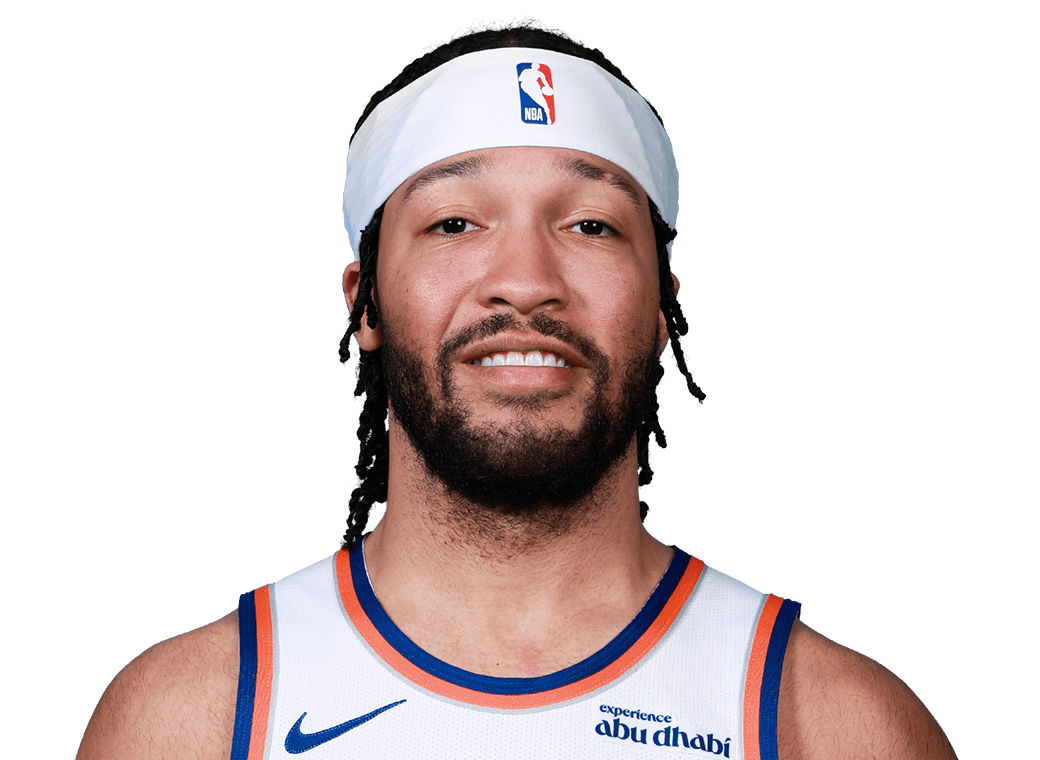
New York's 104 points should not be treated as proof that its title-winning formula has vanished. Brown has acknowledged that he is keeping parts of the offense deliberately basic during the preseason, in part to test how players respond when the opposition can anticipate the next action. That approach may help a coach evaluate reads and individual execution. It can also make a strong team look unusually static when the opponent is moving the ball freely.
The contrast was severe in the first half. Minnesota shot efficiently, Edwards piled up points and the Wolves carried a 12-point lead into halftime. New York was able to get individual offense from Brunson, who finished with 20 points, but the Knicks never established the same consistent rhythm. Minnesota's 18-of-34 three-point shooting compared with New York's 8-of-32 performance was a 30-point difference from the arc alone. That does not mean the gap will persist, but it explains why the game became difficult to chase.
The rebounding numbers add another concern. Minnesota collected 39 boards to New York's 28. A defending champion can live with a few missed preseason threes; giving up extra possessions while also failing to finish its own possessions is more damaging. Karl-Anthony Towns, OG Anunoby, Mikal Bridges and Josh Hart all have established roles, but those roles still need to produce coordinated box-outs, clean outlets and enough movement to keep Brunson from facing a loaded defense every time down.
There is an important distinction between a bad preseason score and a bad process. Brown is entitled to hide some of his regular-season counters, and New York has no reason to empty its tactical playbook in October. The process becomes a problem if players are slow to identify open teammates, if possessions repeatedly die after the first option is denied, or if transition defense collapses after turnovers. Those are habits that opponents will exploit regardless of the playbook.
The Knicks now have a short runway to separate intentional simplicity from genuine friction. Their next preseason trip to Toronto is another chance to sharpen timing, although several starters may not play. The regular-season opener on October 20 against Philadelphia will provide a much stronger measure. For Minnesota, the next home exhibition against Detroit on October 14 offers a different test: can the Wolves maintain their movement and energy without relying on a favorable shooting night?

Minnesota left the Garden with a useful combination of evidence and questions. Edwards can still take over as a scorer, Ball can create easier looks for him, and McDaniels is dangerous when opponents pay too much attention to the backcourt. The turnovers and defensive assignments remain real issues, but they are problems that can be addressed without stripping away the team's new identity.
For New York, the lesson is not to panic over an 0–3 preseason record. It is to recognize that the defending champions will be judged on execution as well as reputation. An 18-point loss in October changes nothing about the title they won; the decisions made in response could influence how prepared they are to defend it.