

Collin Morikawa's Irons Set Standards His Playing Partners Did Not Agree To
GOATIFYGOATIFY GOLF SATIRE / ROAST: Collin Morikawa has made a perfectly respectable living doing something deeply inconsiderate to other golfers: hitting iron shots that make the phrase “somewhere on the green” sound like a request for a disciplinary hearing. This is a comedy analysis of his public performances and documented equipment habits, not a claim that his real playing partners have complained, signed waivers, or contacted a therapist.
The real setup is already more ridiculous than the jokes. At the 2026 AT&T Pebble Beach Pro-Am, Morikawa shot a third-round 62 while finding all 18 greens in regulation. His approach play gained about 6.46 shots on the field that Saturday, a career-best round by his own elite standards. Then he won the tournament at 22 under par, ending a PGA TOUR victory drought stretching back to October 2023.
And the hardware is no less fussy. His Pebble-winning bag combined a driving iron, cavity-back mid-irons and old-school blades. Later in the season he tested alternative iron soles on a cart path to prepare for the firm ground at The Open. A regular golfer practices to avoid hitting concrete. Morikawa apparently saw concrete and asked whether it could join the equipment-testing department.
That contrast powers the roast: a genuinely exceptional golfer, a set of precision tools and the imaginary group behind him realizing they have been brought to a spreadsheet fight with a sandwich.
Eighteen greens, one round, and an unreasonable definition of acceptable
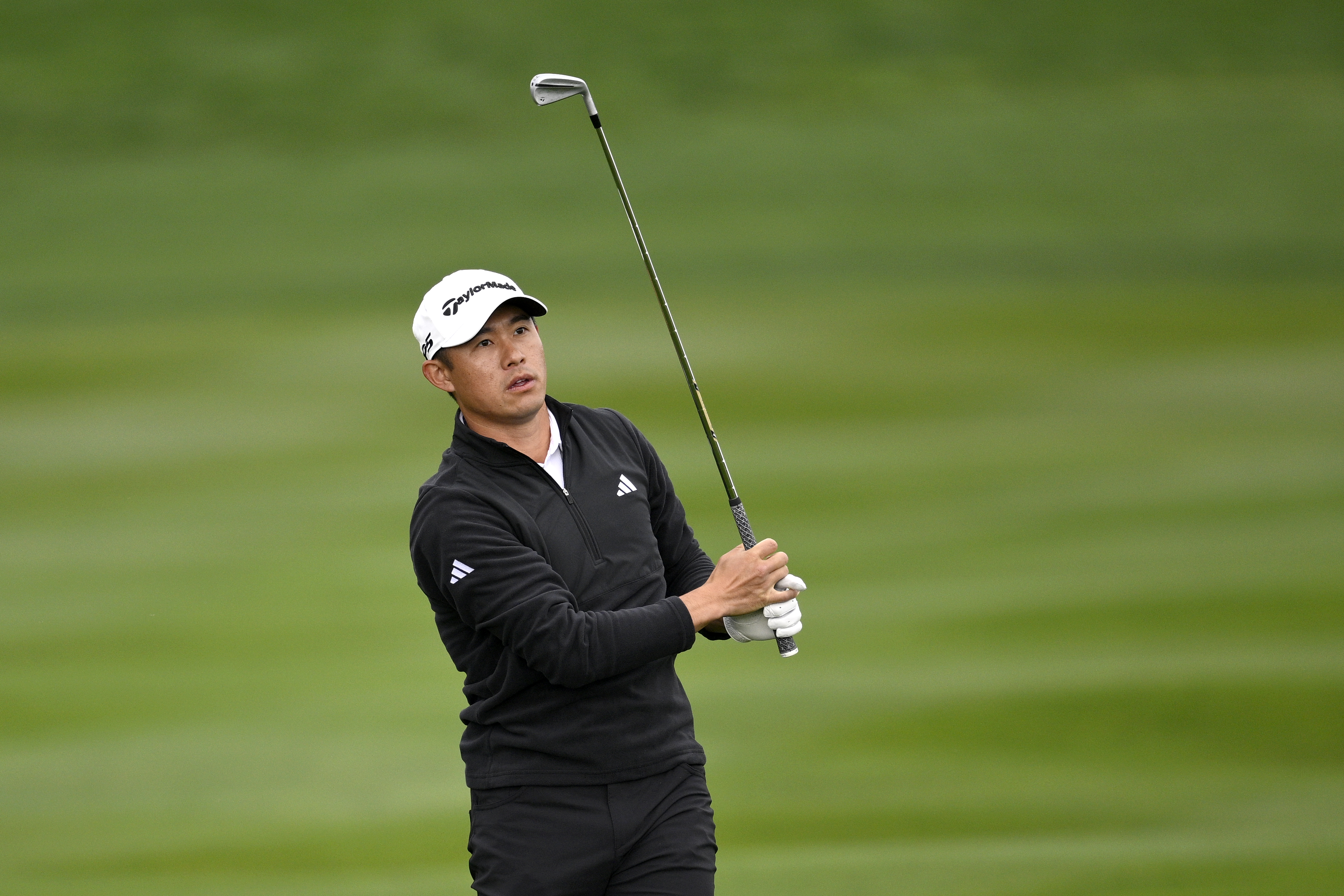
At Pebble Beach in February, the ordinary scoring phrase “hit the green” temporarily stopped being a useful description. Morikawa hit all 18 of them during Saturday's third round. He posted a 10-under 62 in wind and soft conditions while gaining roughly 6.46 strokes on approach alone. The golf ball was being delivered with the kind of reliability most airlines reserve for their marketing brochures, not their actual operations.
For perspective, greens in regulation are a measure of whether a player reaches a green in the prescribed number of strokes, not a guarantee that the resulting birdie putt is a tap-in. A high-class iron round still demands decisions about trajectories, spin, landing spots and misses. Morikawa did not merely point at eighteen pieces of grass and hope for agreement; he repeatedly produced controlled approaches under tournament pressure.
The genuinely comic detail is that he shot 62 while losing strokes with his putter. His irons spent the afternoon bringing gifts to the doorstep, and the putter occasionally answered the door by telling the delivery driver to come back tomorrow. Many golfers need one great club to rescue a round. Morikawa could lose ground in one category and still make the card look like it had been printed before he teed off.
Imagine an entirely fictional amateur partner who says, “I'll be happy if we both reach the green.” Morikawa reaches another one, then another, then another. By the back nine the hypothetical partner has changed the objective from making par to successfully displaying an emotion on camera that is not raw professional jealousy. This is a made-up reaction, not a quotation from any actual competitor or playing partner.
His late birdie run included approaches finishing inside easy putting range. Those shots are not created simply by buying the correct iron head. They require distance control and impact precision, plus the judgment to attack a pin without making a heroic number. Calling it “good ball-striking” is technically accurate in the same way describing the Pacific as “fairly damp” would be technically accurate.
GOATIFY
GOATIFY Golf
Shop GOATIFY golf shirts, hoodies and stickers.


The Sunday finish restored the part of the story that separates elegant data from real competition. Morikawa made crucial birdies, absorbed a bogey at the 17th and faced a long wait before his final approach on the par-5 18th. He hit a 4-iron toward the green, got down in two and secured a one-shot win over Min Woo Lee and Sepp Straka. The perfect Saturday was the headline statistic; the imperfect Sunday proved the numbers still had to survive actual stakes.
So the roast is not that every Morikawa iron shot is perfect. It is that his best examples are so precise they make a perfectly sound amateur goal look underfunded. Somewhere in this fictional scenario, an imaginary playing partner is asking whether “greens in regulation” can be renamed “greens in Morikawa's preferred delivery window.”
Three iron models: because a normal set would be dangerously simple

Morikawa's documented winning Pebble Beach iron setup was a TaylorMade PDHY 4-iron, P7CB irons at five and six, and P730 blades from seven through pitching wedge. Three different iron designs in the same bag. A regular club golfer sometimes cannot remember whether the seven-iron is in the cart. Morikawa has an apparent coalition government organized by loft.
The lineup is not random. Longer irons need useful launch and forgiveness when a player is trying to hold greens from distance; short irons reward a more specific blend of control, feel and shot shaping. A split set allows a golfer to take different performance characteristics from different designs. Morikawa's version is an especially visible example of a serious equipment-fitting principle, not an invitation to insist that everyone requires three matching invoices.
Still, the imaginary locker-room conversation is irresistible. Four-iron: utility specialist, works alone, does not attend staff meetings. Five and six: respectable mid-level managers ensuring the launch conditions are within policy. Seven through pitching wedge: antique-looking precision instruments quietly judging everyone else's divot pattern. The entire fictional bag needs an organizational chart and possibly a conflict-resolution consultant.
He has also examined alternatives at the long end, including a nine-wood option for certain conditions. That is worth more than a throwaway equipment trivia line. The transition between fairway woods and long irons involves carry distance, stopping power, trajectory and what the course requires. Keeping a flexible option is the sane part. Turning an equipment decision into a laboratory experiment while everyone else is deciding between two brands of rangefinder is the funny part.
The Pebble setup was not assembled by tapping “most expensive” on a retailer's sorting menu. It reflected years of finding the right flight and spin. Fans who copy the brand names but not the underlying club-fit logic might discover that the head model is only part of the answer. Loft, shaft, lie, swing speed, turf interaction and a player's actual shot pattern matter far more than another decorative reminder that a major champion uses them.
There is a commercial lesson here even inside a roast: a professional fitting and a sensible practice plan are much better gifts to a serious golfer than blindly purchasing an expensive set matched to somebody else's Tour bag. Gloves, lessons, launch-monitor sessions and useful course time can complement that. A golf-themed gift does not have to pass a ball-speed audit to be worthwhile.
To his credit, Morikawa has demonstrated that elite performance and equipment experimentation are not opposites. He won with a carefully blended setup, not with a mythical perfect club that fixes every swing. But please consider the emotional burden on the fictional person three fairways behind him who just discovered his favorite wedge has only one job title.
GOATIFY
GOATIFY Golf
Shop GOATIFY golf shirts, hoodies and stickers.
The cart path became an engineering lab. Municipal golf was not consulted
The best equipment story of Morikawa's 2026 season did not begin with a dramatic tee shot. It began with a surface most golfers understand as a place to walk, ride, or invoke a local relief rule. Ahead of The Open at Royal Birkdale, he tested iron sole designs against a cart path. The goal was to see wear patterns and understand how different club soles would interact with exceptionally firm links turf.
Two configurations were under consideration: custom P7CBs featuring altered leading edges and sole shaping, and the narrower-soled P7MCs. His team wanted a club that moved into and through the hard ground with less interference. Looking at the scuffing on the soles provided tactile evidence rather than relying on a promotional adjective like “buttery.” He chose the P7MC option for the championship.
At this point, golf's familiar advice to avoid cart paths starts sounding underqualified. We spend entire seasons trying to escape hardpan lies, then an elite ball-striker uses hard ground as a diagnostic instrument. In an entirely fictional scene, a club marshal spots someone swinging irons off the path and approaches with a stern expression; five minutes later the marshal is apparently being asked to annotate sole contact marks on a clipboard.
There is actual technique beneath the comedy. An iron's sole width, bounce and leading-edge geometry change how it interacts with turf. On very firm ground, a sole that glides through cleanly can help the player make predictable contact. Different designs respond differently to a steeper or shallower attack angle. That is why equipment choices can shift with course conditions without proving that last month's setup was somehow a fraud.
Royal Birkdale was a genuine test rather than a simple product launch. Morikawa's opening-round two-under 68 offered an encouraging competitive result, and contemporary reporting placed him highly for both greens in regulation and approach performance that day. It was evidence that the change was functioning under pressure, not proof that one cart-path experiment can guarantee a Claret Jug. He ultimately finished tied for 18th at The Open, a useful reminder that a tested iron sole does not automatically solve the entire championship.
For normal golfers, the lesson absolutely is not to hit brand-new clubs into pavement. A reputable fitter can assess impact with appropriate tools, lie boards or contact tape, and a golfer can test performance on the turf they actually play. Copy the question Morikawa was asking, not the unusual testing surface he had access to as a supported professional.
The cartoon villain in this story is the relentless search for tiny advantages. Morikawa apparently treats a small variation in sole geometry like a spacecraft being cleared for re-entry, while a recreational golfer is happy to find his ball in the rough without discovering three identical ones first. That is the gap we are roasting: not a person's character, but the gloriously disproportionate technical attention required at the top of the sport.
Even his off days come with a performance review nobody asked for
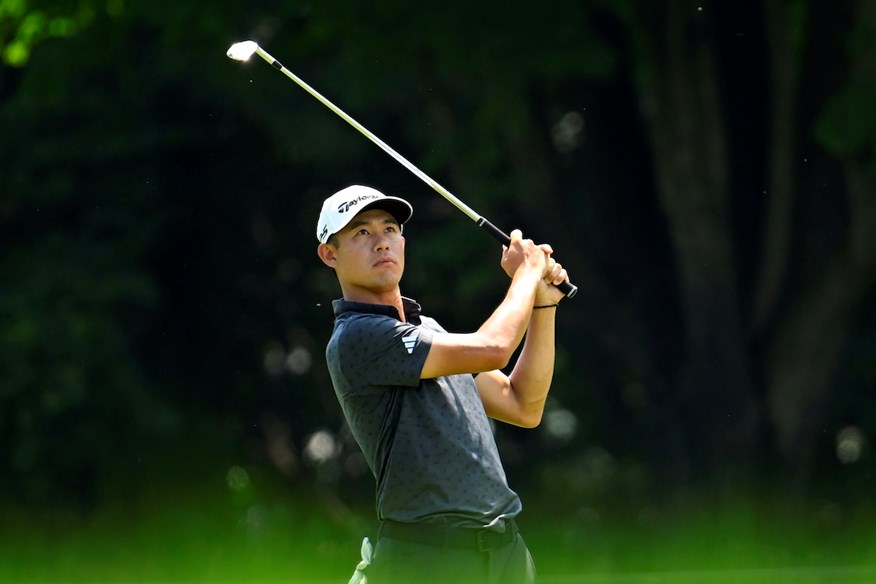
The important caveat in any roast of a world-class ball-striker is that the real person still has ordinary sporting problems, only at a very expensive altitude. Morikawa's 2026 season was not an eighteen-hole highlight reel replayed for twelve straight months. After the Pebble victory he dealt with a back issue, withdrew very early from THE PLAYERS Championship and had to manage his recovery and competition schedule.
GOATIFY
GOATIFY Golf
Shop GOATIFY golf shirts, hoodies and stickers.
His subsequent return offered a more interesting achievement than the fantasy of mechanical perfection. At the RBC Heritage in April, he recorded a top finish while explaining that he was limiting aspects of his swing as he built confidence in his back again. That week, despite the restricted feeling, his approach game was still among the strongest in the field. The actual story is not “nothing bothered him.” It is that excellent technique and realistic restraint coexisted.
This matters because a stat line can turn athletes into robots if the storyteller is too lazy. A professional is balancing physical condition, weather, course setup, equipment, putter performance and the risk of an aggressive target. Morikawa has experienced frustrating missed cuts and uneven stretches as well as signature victories and major titles. Even a premier iron player cannot simply select “precision” on a menu and demand that the next four rounds comply.
The parody version of a bad Morikawa day has his fictitious entourage filing a deviation report because the approach finished 22 feet away instead of eight. The reality is far less silly: on the PGA TOUR, that difference can affect scoring, placing and the likelihood of winning, even if both shots would be celebrated at a weekend fourball. The margins are small enough to be serious, which makes the effort to control them funny from the outside.
There is also a subtle reason the mixed set and cart-path test are endearing. They show the work behind a naturally gifted player's results. He isn't protecting some mystical “pure swing” by refusing to adapt. He experiments, checks the outcome, changes parts and competes with the result. That is an unusually transparent view into why elite sport stays demanding after the trophies and major championship wins.
For the fictional playing partner in this roast, that work ethic is probably the final indignity. You cannot comfortably explain away Morikawa's approach play as a lucky streak once the man is literally inspecting metal scuffs to prepare for a different type of grass. The joke's target is the ridiculous degree of attention devoted to one stroke. The admiration is for the skill and discipline it takes to make that attention matter.
His 2026 Pebble victory ended more than two years without a TOUR win, not because he forgot how to hit an iron in that interval but because winning four-round tournaments is hard. The gap between a technically excellent round and a trophy is not small. So let's grant him the human part: his standards are elite, his equipment room is a tiny research institute, and yes, sometimes golf still wins the argument.
Collin Morikawa's irons have not actually filed a complaint against the field, and no real playing partner has been identified here as a casualty of his ball-striking. The invented reactions are jokes. The facts are stranger and better: all eighteen greens on a Pebble Beach Saturday, a career-best approach performance, a seven-club iron configuration spanning three models at that event, and a cart path pressed into service as a sole-testing tool before The Open.
The useful lesson is that precision comes from repeatable skill, smart fitting, context and the willingness to change something when conditions demand it. The roast is that Morikawa behaves like distance control should be subject to a quarterly external audit. One golfer sees 165 yards and says, “Probably a seven.” Morikawa's imaginary iron committee requests soil composition, wind gradient and a revised project brief.
If that sounds exhausting, remember the point of the game: someone still has to put the ball in the hole. The rest of us can enjoy the madness, applaud the ball-striking and go back to praying our eight-iron clears the bunker.
GOATIFY
GOATIFY Golf
Shop GOATIFY golf shirts, hoodies and stickers.



















