

Josemaría Drops to No. 7 as Old Points Expire — Di Nenno Returns to Top 10
GOATIFYA ranking can look like a verdict on form. This week's padel numbers tell a stranger story: Paula Josemaría has slipped to world No. 7 even though the leading tour did not play last week, while Martín Di Nenno has moved back into the men's top ten without a new Premier Padel result to celebrate. The important action happened in the calendar, not on the court.
The November 9 update removed points from the 2025 World Pairs Championships in Kuwait as they passed out of the rolling rankings window. That adjustment puts Josemaría behind Claudia Fernández and Andrea Ustero, restores Di Nenno to tenth and pushes Miguel Yanguas into eleventh. As the Dubai P1 starts, the challenge is to understand what those positions actually measure—and what they do not say about the pairs fighting for the 2026 season's remaining trophies.
One tournament disappeared from the calculation—and the standings moved

When a player gains or loses a place, the usual explanation is straightforward: someone won matches, someone else fell early, and fresh points shifted the order. The November update works differently. In the equivalent week of 2025, the World Pairs Championships in Kuwait offered Major-level rewards, including 2,000 points to the champions. One year later, those points came off the players' rolling totals. Competitors who carried more from Kuwait were hit harder than those with less to defend.
Meanwhile, the 2026 World Team Championships in Doha occupied the leading players. Spain captured both national-team titles, but those team results did not add individual FIP ranking points. The result is a rare optical illusion: fans see a sizeable movement in a sport's hierarchy after a week in which the major stars had no fresh individual-tour event on which to be judged. A position can change for accounting reasons without proving that a player's level has suddenly changed.
That distinction matters more in doubles than it might appear. An individual ranking is attached to one athlete and reflects her or his accumulated results across eligible events. A partnership is two athletes' current project, with two separate records and a combined position for entering draws. The individual list can therefore tell a different story from a pair's present chemistry or its form in the biggest matches. Fernández, now ranked fifth on 12,357 points, and Sofia Araújo are one example of an established 2026 project whose weekly context cannot be reduced to a single arrow on a table.
The top line did not collapse. Gemma Triay and Delfi Brea remain jointly first on 16,394 points apiece. But the reshuffle below them is a useful reminder that the rankings are a moving twelve-month calculation, not a fresh vote on who looked best yesterday. That is why the next tournament, Dubai, offers a more informative test of current form than simply reading the movement column.
Josemaría is seventh, but that is not the same as a seventh-best season

Josemaría is the name that makes this update impossible to dismiss as statistical housekeeping. The former world No. 1 now sits seventh with 11,069 points, behind Fernández in fifth on 12,357 and Andrea Ustero in sixth on 12,109. Those are sizeable margins in the published table, and they will influence how casual followers read the sport. Yet none should be mistaken for a claim that Josemaría has stopped being a leading title threat.
Her partnership with Bea González has generated substantial 2026 results. The official player profile credits Josemaría with six Premier Padel titles during the season and a 56–15 win-loss record. In June, she and González defeated Ariana Sánchez and Ustero 6–4, 6–2 in the Valladolid final, lifting another trophy in a year when the women's field has been repeatedly rearranged by partnerships. That is a genuine performance record; a ranking reduction tied to last year's Kuwait championship is a separate fact.
There is also a built-in difficulty when comparing these athletes individually. González is third with 14,377 points, while her partner Josemaría has fallen to seventh. They still walk onto court as one team, sharing every tactical responsibility. The discrepancy says more about the players' different point-defense histories than it does about one partner carrying the other. It is the predictable result of a rolling system applied to athletes who accumulated points with different partners and at different times.
For Fernández, climbing to fifth is still meaningful. Ranking positions can affect perception, draws and the pressure of expectation, especially during the final months of a tightly contested season. For Ustero, holding sixth gives another young contender a visible benchmark. But Sunday's champion is not awarded a trophy by that list. Josemaría's most persuasive answer would be another deep tournament run with González, while Fernández and Araújo have their own chance to turn an improved number into a result. The rankings provide the backdrop; Dubai supplies the actual contest.
GOATIFY
GOATIFY Padel
The new women's rankings spark fresh rivalries on court. Explore GOATIFY Padel gear built for the season's next major moments.


Di Nenno gains an important number—and Yanguas loses it by 82 points
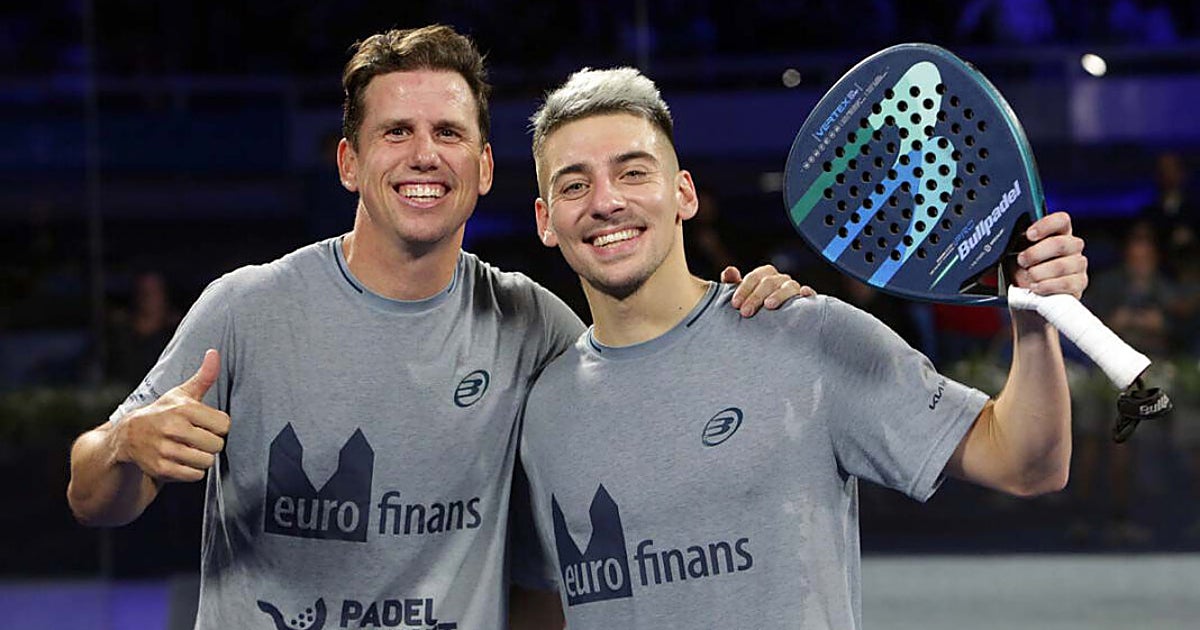
The men's headline is more modest in scale and more dramatic at the boundary. Martín Di Nenno has risen two places to tenth on 4,929 points. Miguel Yanguas has fallen one place to eleventh on 4,847. That is an 82-point difference separating the symbolic comfort of a top-ten ranking from a place immediately outside it. Both remain elite players; the line between ten and eleven has become the story because of the way the calendar reset their totals.
Di Nenno has good reason to value the return. His career-high ranking is third, but the official 2026 statistics show a more uneven season: 35 wins, 21 losses and no Premier Padel title on the listed season record. His official profile names Paquito Navarro among his 2026 partners. That context keeps the latest rise in perspective. A top-ten place recognizes his accumulated results, not proof that the partnership has suddenly solved every problem against the highest-seeded teams.
Yanguas offers the mirror image. He has 36 wins and 19 losses in the official 2026 profile, paired with Jorge Nieto, yet is now eleventh in the rolling list. His season win-loss percentage is not an automatic substitute for ranking points: opponents, tournament categories, stages reached and the age of each result all matter. Nor does an 82-point gap justify calling either man fundamentally superior. It is a narrow snapshot taken under a specific accounting method.
The top of the men's table remains a different world. Arturo Coello and Agustín Tapia share first place with 20,994 each; Alejandro Galán and Federico Chingotto are jointly third with 14,629. Those figures highlight the gap that both Di Nenno and Yanguas still face when chasing the very best pairs. The meaningful next step is not merely to protect tenth place for a week. It is to earn enough significant wins at Dubai and beyond that the next update reflects new competitive evidence rather than the disappearance of old points.
GOATIFY
GOATIFY Padel
From Di Nenno's top-ten return to Yanguas' fightback, celebrate padel's rising stakes with GOATIFY Padel picks.
The Barcelona Finals race tells a different story from the world list

The most useful corrective is to separate two competitions that are often discussed in the same breath. The FIP world ranking is rolling: older results expire and newer ones enter. The Race 2026 is season-specific, designed to measure what competitors have earned during the current campaign and to frame the pursuit of places at the Barcelona Premier Padel Finals. An athlete can be stronger in one list than the other, particularly after an unusually valuable event leaves the rolling calculation.
The official profiles illustrate that point unusually well this week. Di Nenno is world No. 10 but listed eleventh in the 2026 Race. Yanguas is world No. 11 yet eighth in the Race. A headline announcing that Yanguas has dropped out of the world's top ten is correct; an implication that he is therefore behind Di Nenno in every season-end measure is not. Pairs must also work within their own combined standings and the event's eligibility rules, rather than treating an individual rank as a guaranteed Finals place.
There is another distinction at the summit. Coello and Tapia have already established a formidable lead in the men's season-long battle, while Triay and Brea entered this stretch as the leading women's pair. Their position reflects months of winning and reaching finals; a one-week reshuffle of individual rolling points does not automatically reopen or settle those season races. The sharper drama may be lower down, where each round gained or lost changes the opportunities still available before Barcelona.
Dubai P1 runs November 8–15 and its main draw began November 10. It provides a practical bridge from accounting to competition: a strong showing earns new points and gives partners current evidence of how their games stand up to elite opposition. After Dubai, the calendar still includes late-season high-value events before the Finals. That makes every opening round consequential for contenders near the qualification margins, even when the world-number-one conversation has largely moved elsewhere.
For supporters, the right response is neither to ignore rankings nor to worship them. Use the November 9 FIP list to understand who is defending points; use the Race to understand the season's accumulated stakes; then use actual matches to judge form. Josemaría, Di Nenno and Yanguas have all seen their printed positions change. Their opportunity to change the sporting narrative comes when the next ball is struck.
The headline movement belongs to Josemaría and Di Nenno, but the bigger lesson belongs to the whole tour. A ranking table is a record with an expiry date. Josemaría's seventh place does not erase her 2026 trophies, Di Nenno's top-ten return does not guarantee a late-season surge, and Yanguas' eleventh place does not cancel his stronger Race position. Dubai now gives all of them a chance to replace the calendar's arithmetic with fresh results.
Shop GOATIFY padel products from the Padel-filtered collection scope.

















