
The NFL Will Review Jalen Hurts’ Blood Clots. The 60-Day Clock Hasn’t Started.
GOATIFYThe Jalen Hurts blood-clot story has reached a different phase. Philadelphia's quarterback is already expected to miss the rest of 2026; now the NFL and its players' union plan to have independent physicians review how the circumstances surrounding his diagnosis were handled. That is consequential news, but it is not a verdict against the Eagles, their doctors or anyone who treated him. The review has not even formally started.
In a response to Delaware Sen. Lisa Blunt Rochester, the league described a joint process with the NFL Players Association that could produce recommendations for future cases. The striking detail is the clock: neutral doctors have 60 days to deliver a written report after they are selected. That means it would be misleading to suggest a 60-day deadline is already running from Friday's announcement.
The questions are larger than Philadelphia's depth chart. They concern a sequence of evolving medical findings, long-distance travel, a player who appeared in an NFL game after an initial superficial-clot diagnosis, and the limits of what outsiders can know from a public timeline. Understanding the difference between those facts and the unanswered medical judgments is the key to evaluating what happens next.
A 60-day report deadline, but no doctors selected yet

The immediate development is procedural rather than disciplinary. The NFL told Sen. Lisa Blunt Rochester that it and the NFL Players Association had agreed on a joint review using independent medical experts selected by both sides. Those physicians are expected to examine the circumstances surrounding Hurts' diagnosis, then supply conclusions and recommendations to the league and union. It is a route toward answers, but not evidence by itself that an individual doctor, the club or the player made an improper decision.
There are two important stages before anyone can reasonably expect a result. First, the league and union must settle the review's parameters and agree on the neutral physicians. Reporting on November 14 indicated that the review had not formally commenced. Second, under the collective bargaining agreement, those selected doctors would have 60 days to issue a written report. The clock therefore runs from their selection, not from the day a senator received an NFL letter or the day headlines announced the review. That distinction matters because a fixed date for the findings has not yet been established.
The NFL's response came after Blunt Rochester sought information about the case in October. League executive Jeff Miller described a process in which both sides would review the physicians' findings and consider follow-up actions, including whether the experience exposes a need for broader league guidance. His response also said that the league's medical committee has tracked clotting disorders among players each season for at least a decade and shared that information with the union. Those are meaningful commitments to a process; they are not conclusions about what caused Hurts' illness or whether anyone missed a warning sign.
GOATIFY
GOATIFY NFL
Independent physicians are set to review how Hurts' case was handled. Explore GOATIFY NFL apparel and fan designs while the league and union establish the process.


It is also important not to collapse every reference to an investigation into the same thing. The NFLPA has a separate mechanism under Article 39 of the labor agreement to seek a formal examination of medical care provided by club-affiliated staff. The union had not invoked that mechanism when the new review was reported. A jointly agreed look at the circumstances can still be serious and capable of prompting recommendations, but the procedural distinction limits what can be inferred about disciplinary exposure or the scope of a possible complaint.
Questions about transparency will persist regardless of the label. Will the public learn what the independent panel was asked to decide? Will findings explain which facts were established and which remain uncertain? Will recommendations address monitoring, communication, travel or return-to-play procedures? None of those outcomes should be treated as promised. The value of the review ultimately rests less on the drama of the announcement than on the quality of its evidence, the expertise and independence of those chosen, and whether concrete lessons are shared beyond a private meeting.
The London trip and the medical timeline under scrutiny

Understanding the case begins with sequence rather than hindsight. On October 4, Hurts took a cleat to the calf in the Eagles' game against the Los Angeles Rams. He informed the team's medical personnel of the problem on October 8, according to the accounts later made public. By October 10, while Philadelphia was in London for its international game, an ultrasound identified a superficial blood clot. He then played against Jacksonville on October 11, with the Eagles losing 19-17. The presence of an early clot and the later serious diagnosis have understandably focused attention on the decisions made between those dates.
That timeline contains a central clinical distinction. A superficial vein thrombosis and a deep vein thrombosis do not describe the same location or carry automatically identical implications. The reported findings changed with additional assessment after the game. A follow-up scan in Philadelphia showed the clot had moved or extended, and on October 17 the Eagles placed Hurts on injured reserve. The team and his representative then disclosed that the diagnosis involved deep vein thrombosis and pulmonary emboli in both lungs. The seriousness of the later findings is not in doubt; whether the earlier information should have led to a different decision is exactly the type of question a properly constituted medical review can investigate.
The details that seem most dramatic from outside the building also require care. London meant an overseas trip, medical testing away from home and a football game shortly after the initial finding. Fans naturally ask about flights, overnight monitoring, physical exertion and the timing of repeat imaging. Yet a public itinerary does not establish which clinicians had what test results at any given hour, what options were considered, or what individualized advice was given. It would be irresponsible to declare that a single flight or snap caused the subsequent pulmonary clots without evidence.
GOATIFY
GOATIFY NFL
The Eagles' London trip now features in the conversation about the October medical timeline. Browse GOATIFY American football fan designs.
Independent context complicates an easy blame narrative. In October, the league's chief medical officer publicly defended the care and the available imaging. Separately, physicians consulted by news outlets explained that a superficial clot is not automatically a reason someone cannot travel; decisions depend on features not contained in a headline. Those statements are not a substitute for reviewing Hurts' clinical records, and neither amount to a definitive clearance of every decision. They show why the neutral physicians should reconstruct the actual chronology instead of judging it solely by the eventual outcome.
The practical impact of the diagnosis was immediate. Hurts has been treated with blood-thinning medication, and contact football is off the table while that treatment makes collision risk unacceptable. The Eagles and his agent said in October that his prognosis was very good and they anticipated a full recovery, with a potential return to contact when treatment permits. That encouraging prognosis should be preserved alongside the seriousness of the condition. The public does not need intimate medical data to understand the stakes, but any credible evaluation must distinguish early observations, later changes and the information available at each point.
What the findings could change — and what they cannot
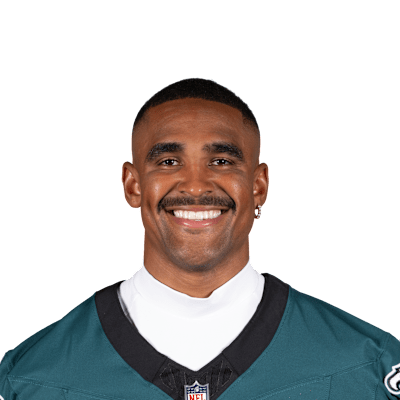
One reason the review matters beyond Philadelphia is that blood clots sit at an awkward intersection of ordinary medicine and an unusually physical profession. An NFL athlete can be elite in conditioning while still facing medical risks that demand specialized testing and individualized treatment. The collective bargaining agreement, club medical staffs, union representatives and independent specialists can all have roles in responding. The potential lesson is not that every player should receive the same answer, but that the path to decisions should be clear, documented and adaptable when evidence changes.
Blunt Rochester emphasized awareness of deep vein thrombosis and pulmonary embolism in reacting to the NFL's answer. That makes this more than a congressional request for a team-specific explanation. A condition that attracts widespread attention because of a famous quarterback can serve as a prompt to revisit how symptoms are recognized and escalated. The league says it already tracks clotting disorders through a medical subcommittee; an independent review could help distinguish whether that existing information is reaching the people who need it in usable form. There is no public finding yet that the tracking system failed.
Reasonable questions for the neutral doctors include how initial symptoms were documented, how responsibilities were handed between specialists and team clinicians during international travel, what precautions accompanied an initial superficial-clot diagnosis, and how follow-up testing was scheduled once the team returned. Their task may also reveal that decisions were medically defensible given the information available at the time. A review that clears certain decisions but identifies a small improvement in communication can still be worth doing. Equally, a request for better practice need not amount to misconduct or a claim of causation.
GOATIFY
GOATIFY NFL
Player safety and a possible set of league-wide lessons give the review significance beyond Philadelphia. See GOATIFY NFL shirts and accessories.
For Hurts himself, the most important endpoint is not a football deadline. He was only 28 when the clots were reported, and his representatives described an expectation of recovery, but the duration and details of treatment are medical matters rather than a coaching timetable. The injury disrupted a 2026 season in which he had thrown for 933 yards and eight touchdowns and added 107 rushing yards in the figures cited by the current report. Philadelphia can review its quarterback contingency plans; it cannot responsibly turn those numbers into a fixed return date for a player taking blood thinners.
The franchise-level stakes are nevertheless considerable. Hurts has been a Super Bowl MVP and a defining figure in this era of Eagles football. A long absence affects offensive identity, roster evaluation, leadership and eventually the shape of future conversations about the quarterback position. Contract speculation is a different subject from clinical recovery, however, and the independent review should not be treated as a negotiation tool or proof that a future season is in jeopardy. The team has to manage the football consequences while leaving medical decisions to qualified professionals.
The test of the NFL and NFLPA's response will come after the announcement fades. Neutrality is meaningful only if independent experts can inspect the relevant facts, articulate any uncertainty and produce recommendations the parties are willing to act on. Public disclosure may be constrained by patient privacy, but clear guidance about principles and procedures could still benefit players throughout the league. Until the panel is chosen and reports, the responsible conclusion is narrower: a new review has been promised, its findings are unknown, and the case has become an important opportunity to examine how player care is coordinated.
The review is a meaningful step because it offers a structured way to test a difficult sequence against clinical evidence rather than social-media certainty. It is not yet proof of error, a formal Article 39 case or a finished verdict. Its deadline begins when the neutral physicians have been selected, and the scope and results remain to be seen.
For now, Hurts' health must remain separate from the temptation to predict football consequences. The Eagles and his agent have communicated optimism about recovery, while his 2026 campaign has been interrupted by a condition requiring treatment incompatible with contact play. If the league and union use this case to improve monitoring and communication without overstating what any one decision caused, the benefits could extend well beyond Philadelphia. The next concrete milestones are the selection of the independent doctors, their written findings, and what the two sides actually do afterward.
GOATIFY
GOATIFY NFL
Shop GOATIFY NFL and American football shirts, hoodies and stickers.